
 Worksheets
Macros, Enzymes, Cells, Cell Transport Unit Test
Total questions: 57
Worksheet time: 1hrs 11mins
Which one of the macromolecules are instrumental in the cell membrane?
Carbohydrates
Lipids
Proteins
Nucleic acids
This macromolecules is responsible for providing our genetic material. Choose the macromolecule that best fits.
Carbohydrates
Lipids
Proteins
Nucleic acids
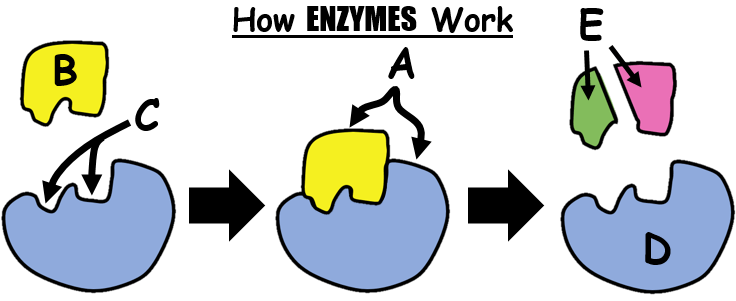
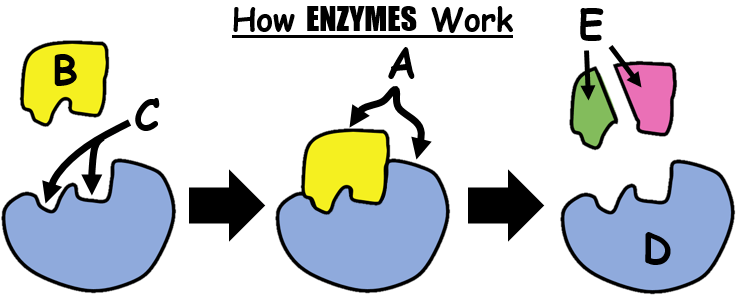
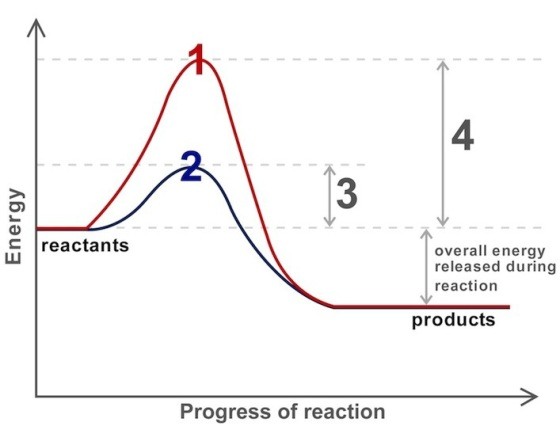
Which color line represents a reaction with an enzyme present?
Blue
Red
Both
Neither

Which pH will alkaline phosphatase work best at?
7
8
9
10
Enzymes are _______________ that _____________________ chemical reactions by ____________ the amount of activation energy required to start the reaction.
carbohydrates, slow down, lowering
proteins, speed up, increasing
lipids, speed up, lowering
proteins, speed up, lowering


There are some similarities between prokaryotic and eukaryotic cells. Which of the following structures is found in both prokaryotic and eukaryotic cells?
lysosome
mitochondrion
nucleus
ribosome

Some components of cells are listed.
Which of the components could be observed using a microscope in a prepared slide of leaf cells but not in a prepared slide of human cheek cells?
Components 2 and 3 only
Components 3 and 4 only
Components 1, 2, and 3 only
Components 1 and 5 only

The diagram illustrates the activity of vesicles during a cellular process.
Which statement best explains the function of the vesicles?
Delivering packaged materials to the Golgi apparatus for protein synthesis
Exchanging genetic information between the Golgi apparatuses of separate cells
Extracting portions of the Golgi apparatus to be regenerated for growth within the cell
Transporting packaged molecules from the Golgi apparatus to be released out of the cell
Which most accurately describes the relationship between cells and plasma membranes?
Only eukaryotic cells have plasma membranes that are composed of proteins and lipids.
Only prokaryotic cells have plasma membranes that are composed of proteins and lipids.
Both prokaryotic and eukaryotic cells have plasma membranes that are composed of proteins and lipids.
Both prokaryotic and eukaryotic cells have plasma membrane that are composed of carbohydrates and nucleic acids.
A cell is having difficulty with one of its organelles. Many proteins are not being produced to help with hair production and speeding up reactions. Which organelle is most likely damaged?
centriole
ribosome
mitochondrion
cell membrane
Antibiotics work by attaching to a bacteria's ribosomes and disabling them. Why is this harmful to the bacteria?
They cannot copy their DNA.
They cannot make the proteins they need.
They can no longer make food through photosynthesis.
They have plasmids which can no longer be shared with other bacteria.
Scientists discover a fossilized cell. While analyzing the cell, they find an organelle that has a double membrane and contains genetic material. Which cell organelle have they most likely found?
nucleus
ribosome
chromosome
plasma membrane
Changes in pH and temperature can ___________________ an enzyme which causes it to lose its shape and affects its function.
puncture
denature
double
delete

Beaker B demonstrates a ______________ solution.
Hypertonic
Hypotonic
Isotonic

In beaker C, water will _______ the cell.
Enter
Exit
Both exit and enter
In active transport, materials are moved from:
High to low concentration
Low to high concentration

The cell shows water moving in and out equally, which means it was placed in a ___ solution.
Isotonic
Hypertonic
Hypotonic
A freshwater plant is placed in a container of saltwater. What will most likely happen to the calls of the plant?
They will swell because water will move into them.
They will swell because salt will move into them.
They will shrink because water will move out of them.
They will shrink because salt will move out of them.


Some molecules are too big to pass through the phospholipid bilayer of the cell membrane. These molecules need to pass through ________________ that are embedded in the cell membrane.
proteins
ribosome
cell wall
carbohydrates

In nerve cells the sodium-potassium pump is used to generate gradients of both sodium and potassium ions to propagate electrical signals that travel along nerves. This is a(n)...
example of phagocytosis.
active transport mechanism.
passive transport mechanism.
example of movement with the concentration gradient.
Muscle cells require large amounts of energy to function. Which organelle is found in greater numbers in muscle cells than in other types of cells because of this large energy requirement?
Lysosomes
Mitochondria
Golgi Complex
Endoplasmic Reticulum
Enzymes are an example of
Lipids
Carbohydrate
Protein
Nucleic Acid
If the enzyme has a pH range of 7 to 9 what effect would a pH of 3 have on the enzyme?
Enzymes work best at an optimal temperature and pH
make it denature
no effect
make it work better
Which of the following organisms would not have a nucleus in their cells?
a pine tree
a bacteria cell
a mushroom
a tiger
Which of the following is not involved in protein production?
Golgi Apparatus
Nucleus
Ribosome
Rough Endoplasmic Reticulum
Smooth Endoplasmic Reticulum
What is the purpose of the rough endoplasmic reticulum?
make lipids and detoxify
make and transport proteins
hold genetic material
create energy
Which organelle can be compared to the post office since it packages, sorts, and ships proteins?
Ribosome
Rough endoplasmic Reticulum
Nucleus
Golgi apparatus
Which organelle is used for storage of materials such as food, water, and waste?
Vacuole
Nucleus
Vesicle
Lysosome
What is the purpose of the chloroplast?
to create energy
to make glucose through photosynthesis
to provide extra protection for the plant cell
to hold the organelles in place
How is passive transport different than active transport?
passive transport is the movement of water only
passive moves molecules into the cell, active moves molecules out of the cell
active is without energy, passive is with energy
active is with energy, passive is without energy
Which organelle breaks down glucose to make energy
mitochondria
chloroplast
nucleus
ribosome
Which is not found in all cells?
cell wall
cell membrane
ribosome
DNA
nucleus
Which macromole is the MAIN ENERGY source for all organisms
Nucleic Acid
Lipids
Carbohydrates
Protein
Functions include enzymes, muscle contraction, and cell transport (has many others too)
carbohydrates
lipids
proteins
nucleic acids
The function is energy storage, body insulation, and make up cell membranes.
carbohydrates
lipids
proteins
nucleic acids
Which has no true nucleus
eukaryote
prokaryotes
What macromolecule is made up of C,H,O,N?
Carbohydrates
Lipids
Proteins
Nucleic acids
The building blocks or monomers of carbohydrates (sugars) are?
amino acids
fatty acids
monosaccharides
nucleotides


What macromolecule is shown above?
Carbohydrate
Lipid
Protein
Nucleic Acid
After an enzyme catalyzes a reaction
it permanently changes shape
it can be reused
it is denatured
it becomes part of the product

