wayground logo

Free Printable Worksheets

Font size

S
M
L
XL
Worksheets

Unit 4 Review

Total questions: 114

Worksheet time: 3hrs 49mins
Name
Class
Date
1.

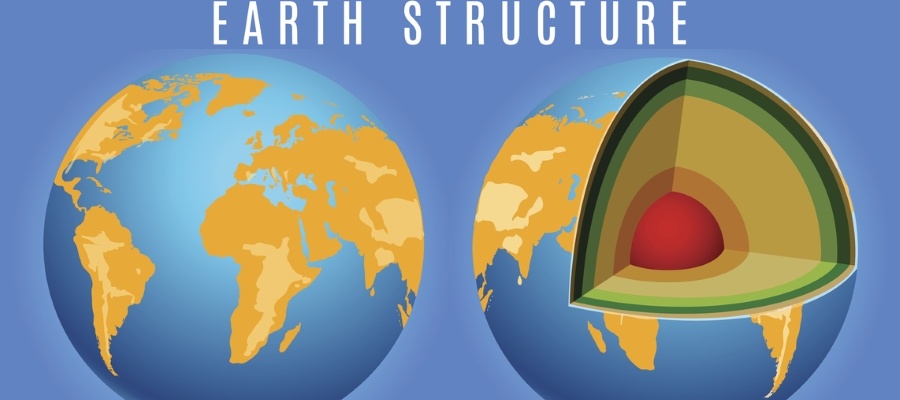
The surface of the earth, otherwise known as the ______, is broken into seven major pieces and sits atop a liquid layer called the _______

a)

lithosphere, asthenosphere

b)

astenosphere, mantle

c)

crust, litosphere

d)

asthenosphere, lithosphere

2.
This is the side of the mountain that is often drier and warmer.
a)
Leeward Side
b)
Wet Lapse Rate
c)
Windward Side
d)
Wild Side
3.
What is "upwelling"?
a)
when wind near a shore pushes surface water away, nutrient rich cold water rises from the depths
b)
water rises from springs at the bottom of lakes
c)
it is when cold water sinks in the Norwegian Sea
d)
It is when the Coriolis effect makes currents go around in a circle
4.
During __________ upwelling occurs off the coast of Peru.
a)
Normal Conditions
b)
El Nino
5.
One consequence of El Nino is _______ and increased rainfall in South America..
a)
flooding
b)
stronger Tradewinds
c)
strong winter storms
d)
drought
6.
All of the land that drains into a particular body of water is called a(n):
a)
watershed
b)
bedrock
c)
island
d)
aquifer
7.

In a transform plate boundary, the ...

a)

plates are the same age

b)

convergent plate is older, oceanic plate is younger

c)

convergent plate is younger, divergent plate is older

d)

closer the plates are the younger they are
8.
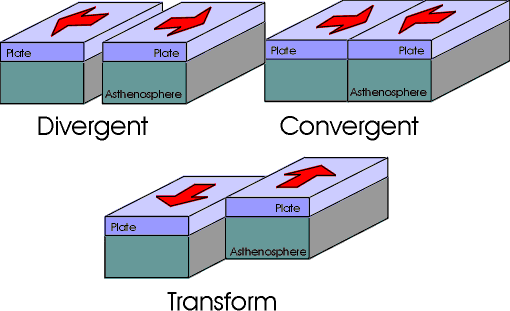
The San Andrea's Fault in California is which type of boundary?
a)
Convergent
b)
Divergent
c)
Subductive Zone
d)
Transform
9.
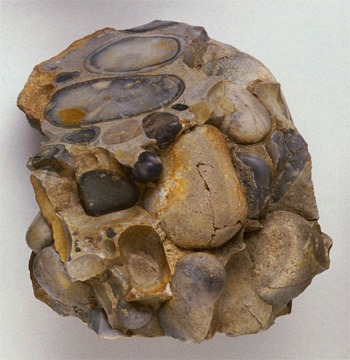
This rock was formed by smaller pieces of rock that settled at the bottom of a lake millions of years ago. What type of rock is this?
a)
Sedimentary
b)
Igneous
c)
Metamorphic
10.
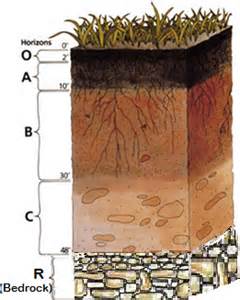
The layer of soil which the topsoil is found.
a)
Horizon A
b)
Horizon B
c)
Horizon C
d)
Horizon D or R
11.
Most of the freshwater around the world is used for the following purpose.
a)
industry
b)
residential
c)
agriculture
d)
recreation
12.

Sea surface temperature changes great than 0.5oC for greater than 5 months across the central tropical Pacific Ocean are known as

a)

the arctic effect

b)

the get stream

c)

a typhoon

d)

El Nino-Southern Oscillation

13.
Which of the following contributes to the unequal warming of earth?
I. variation in the angle of sunlight that reaches Earth
II. variation in the amount of surface area over which the Sun's rays are distributed
III. variation in the amount of sunlight reflected from clouds
a)
I only
b)
I and II only
c)
II and III only
d)
III only
14.
The Coriolis effect is responsible for
a)
the convergence of two ascending Hadley cells
b)
the location of atmospheric currents caused by the unequal heating of Earth
c)
the cooling effect of air as it rises and expands
d)
the deflection of atmospheric currents
15.
Which is the correct order of the convection cells starting from the equator?
a)
polar, ferrell, hadley
b)
ferrell, hadley, polar
c)
polar, hadley, ferrell
d)
hadley, ferrell, polar
16.

The type of plate boundary where two plates come together is a .....

a)

Convergent Boundary

b)

Divergent Boundary

c)

Transform Boundary

d)

Plate Boundary

17.

What type of event will occur at this boundary?

a)

Earthquake

b)

Volcano Eruption

c)

Tornado

d)

Mountain Building

18.

A divergent boundary occurs when plates ....

a)

Pull apart

b)

Come together

c)

Slide past each other

d)

subducting

19.

Mountains are created when....

a)

Two continental plates collide

b)

Two oceanic plates pull apart

c)

An Oceanic plate subducts under a Continental Plate

d)

Two continental plates pull apart

20.

The process by which the ocean floor sinks beneath a deep-ocean trench and back into the mantle is known as _______

a)

convection.

b)

continental drift.

c)

subduction.

d)

conduction.

21.

What is the correct order (starting from the surface) of Earth’s layers?

a)

crust, outer core, inner core, mantle

b)

mantle, outer core, inner core, crust

c)

crust, mantle, outer core, inner core

d)

outer core, inner core, crust, mantle
22.
The process when rocks break into smaller pieces due to exposure to natural elements is called
a)
erosion
b)
weathering
c)
sediments
23.
Which horizon is made up of partially weathered rocks?
a)
Horizon A
b)
Horizon B
c)
Horizon C
d)
Horizon D or R
24.
Which of the following is NOT one of the three types of soil?
a)
clay
b)
sand
c)
silt
d)
mud
25.
_______ is the type of soil used most often with plants. It is a mixture of clay, sand, and silt.
a)
loam
b)
humus
c)
mud
d)
dirt
26.
The two main agents of erosion are...
a)
wind and flowing water
b)
gravity and frost wedging
c)
oxygen and water
d)
carbon dioxiede and wind
27.
Which of the following is the correct order of soil particles in order of increasing particle size?
a)
clay-sand-silt
b)
sand-clay-silt
c)
silt-clay-sand
d)
clay-silt-sand
28.
Soil sample that is 60% clay, 30% silt, and 10% sand has which texture? 
a)
clay
b)
clay loam
c)
sandy loam
d)
silt 
29.
Which is the correct order of soil horizons starting at the surface?
a)
A, B, E,C, O
b)
O, A, B, C, E
c)
O, E, A, B, C
d)
O, A, E, B, C
30.

The rate at which water flows through the soil is called soil percolation or ______.

a)

Groundwater

b)

Permeability

c)

Soil Pores

d)

Porosity

31.
Which soil component has the least capacity for holding water?
a)
silt
b)
clay
c)
sand
d)
humus
32.
You dig a small hole in the soil and the next day it rains. The hole fills with water, but does not empty even after several days of dry weather. What is the soil mostly made of?
a)
clay
b)
sand
c)
humus
d)
silt
33.
Water gets into the cracks of rock and freezes, causing the rock to break.  What is this an example of?
a)
erosion
b)
weathering
34.
Soil is made of
a)
weathered rocks and minerals
b)
dead plants and animals
c)
air and water
d)
all of the above
35.

The movement of the tectonic plates is caused by

a)

the rotation of the Earth.

b)

convection currents in the Asthenosphere

c)

the gravity of the iron-nickel core.

d)

the Moho discontinuity.

36.

In some areas of the world, like California and Japan, earthquakes are a common occurrence. How can this best be explained?

a)

The strong ocean currents are undermining both areas causing earthquakes.

b)

Both areas are located near the edge of the Pacific Ocean, the unstable sand causes earthquakes.

c)

Both areas are subjected to strong ocean wind and waves that causes earthquakes.

d)

Both areas are on the boundary of active plates, the motion of the plates causes earthquakes.
37.

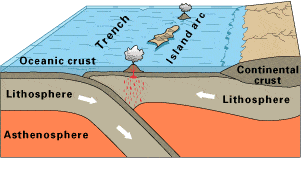
Observe this diagram of a plate boundary. One statement BEST describes what is happening. It is that

a)

the oceanic crust is melting.

b)

the denser ceanic crust is subducting under the less dense oceanic crust

c)

volcanic islands are forming.

d)

the tectonic plates are moving away from each other.
38.

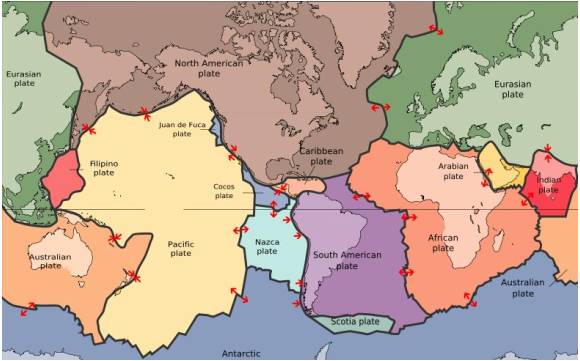
The map in the picture shows tectonic plate boundaries. This map would be useful in predicting the location of future

a)

droughts

b)

hurricanes

c)

earthquakes

d)

tornadoes

39.
Surface currents are a result of
a)
Global Wind Patterns
b)
Earth's Rotation
c)
Density
d)
All of the above
40.
Deep Ocean currents are a result of
a)
Global Wind Patterns
b)
Earth's Rotation
c)
Density
d)
All of the above
41.
The Coriolis Effect is caused by
a)
Earth rotating around the sun
b)
Earth rotating on its axis
c)
The tides
d)
Gravity
42.
The Gulf stream carries _____________ water from the east coast of The United States to the West coast of Europe.
a)
Cold
b)
Warm 
c)
Freezing
d)
Fresh
43.
Due to the Coriolis Effect, water in the northern hemisphere moves
a)
clockwise
b)
counter clockwise
c)
both
d)
neither
44.
Warm ocean currents generally come from
a)
The North Pole
b)
The South Pole
c)
The Equator
d)
Both A and B
45.
The California Current (west coast) carries _________ water from canada
a)
Cold 
b)
Warm
c)
Freezing
d)
Fresh
46.
Two types of water currents are
a)
local and global
b)
sea and land
c)
surface and deep
d)
warm and cold
47.
The sun's rays are least direct
a)
near the poles
b)
near the equator
c)
at high altitudes
d)
far from the ocean
48.

In which layer of the atmosphere does ozone help block UV radiation from striking the Earth?

a)

troposphere

b)

mesosphere

c)

stratosphere

d)

thermosphere

49.

In which layer of the atmosphere do all the pressure, wind, and precipitation changes occur?

a)

Outer space

b)

stratosphere

c)

troposphere

d)

mesosphere

50.
The Coriolis effect is responsible for
a)
the convergence of two ascending Hadley cells
b)
the location of atmospheric currents caused by the unequal heating of Earth
c)
the cooling effect of air as it rises and expands
d)
the deflection of atmospheric currents
51.
Which is the correct order of the convection cells starting from the equator?
a)
polar, ferrell, hadley
b)
ferrell, hadley, polar
c)
polar, hadley, ferrell
d)
hadley, ferrell, polar
52.

The type of plate boundary where two plates come together is a .....

a)

Convergent Boundary

b)

Divergent Boundary

c)

Transform Boundary

d)

Plate Boundary

53.

What type of event will occur at this boundary?

a)

Earthquake

b)

Volcano Eruption

c)

Tornado

d)

Mountain Building

54.

A divergent boundary occurs when plates ....

a)

Pull apart

b)

Come together

c)

Slide past each other

d)

subducting

55.
Which horizon is made up of partially weathered rocks?
a)
Horizon A
b)
Horizon B
c)
Horizon C
d)
Horizon D or R
56.
_______ is the type of soil used most often with plants. It is a mixture of clay, sand, and silt.
a)
loam
b)
humus
c)
mud
d)
dirt
57.
Soil sample that is 60% clay, 30% silt, and 10% sand has which texture? 
a)
clay
b)
clay loam
c)
sandy loam
d)
silt 
58.
Which is the correct order of soil horizons starting at the surface?
a)
A, B, E,C, O
b)
O, A, B, C, E
c)
O, E, A, B, C
d)
O, A, E, B, C
59.

The rate at which water flows through the soil is called soil percolation or ______.

a)

Groundwater

b)

Permeability

c)

Soil Pores

d)

Porosity

60.
Which soil component has the least capacity for holding water?
a)
silt
b)
clay
c)
sand
d)
humus
61.
You dig a small hole in the soil and the next day it rains. The hole fills with water, but does not empty even after several days of dry weather. What is the soil mostly made of?
a)
clay
b)
sand
c)
humus
d)
silt
62.

Observe this diagram of a plate boundary. One statement BEST describes what is happening. It is that

a)

the oceanic crust is melting.

b)

the denser ceanic crust is subducting under the less dense oceanic crust

c)

volcanic islands are forming.

d)

the tectonic plates are moving away from each other.

63.
The Coriolis Effect is caused by
a)
Earth rotating around the sun
b)
Earth rotating on its axis
c)
The tides
d)
Gravity
64.
What is "upwelling"?
a)
when wind near a shore pushes surface water away, nutrient rich cold water rises from the depths
b)
water rises from springs at the bottom of lakes
c)
it is when cold water sinks in the Norwegian Sea
d)
It is when the Coriolis effect makes currents go around in a circle
65.
This is the side of the mountain that is often drier and warmer.
a)
Leeward Side
b)
Wet Lapse Rate
c)
Windward Side
d)
Wild Side
66.

What are the proportions of sand, silt, and clay for the soil at point X ?

a)

5% Sand, 95% Silt, 5% Clay

b)

5% Sand, 20% Silt, 5% Clay

c)

65% Sand, 30% Silt, 10% Clay

d)

60% Sand, 30% Silt, 10% Clay

67.

What is the correct sequence of layers of the earth's atmosphere from earth's surface to space?

a)

troposphere, stratosphere, mesosphere, thermosphere.

b)

mesosphere, stratosphere, thermosphere, troposphere.

c)

troposphere, mesosphere, stratosphere, thermosphere.

d)

stratosphere, troposphere, mesosphere, thermosphere.

68.

Which two factors allow earth to experience four distinct seasons?

a)

latitude & solar intensity

b)

tilt of axis & rotation of axis

c)

tilt of axis & rotation around sun

d)

distance from sun & place in orbit around sun

69.

Which is a direct result of the Coriolis Effect?

a)

Upwellings

b)

tides

c)

ocean conveyor belt

d)

Tsunami

e)

Ocean gyres

70.

What type of plate boundary is shown here?

a)

Convergent

b)

Subduction

c)

Divergent

d)

Transform

71.

What type of plate boundary is shown here?

a)

Convergent

b)

Subduction

c)

Divergent

d)

Transform

72.

What type of plate boundary is most likely to cause earthquakes?

a)

Convergent

b)

Subduction

c)

Divergent

d)

Transform

73.

What type of plate boundary is most likely to cause the formation of a new landform?

a)

Convergent

b)

Subduction

c)

Divergent

d)

Transform

74.

Which soil particle is largest in diameter?

a)

Clay

b)

Silt

c)

Sand

d)

Loam

75.

In which layer of the atmosphere does weather take place?

a)

Troposphere

b)

Stratosphere

c)

Mesosphere

d)

Thermosphere

e)

Exosphere

76.

Which layer of the atmosphere contains the ozone layer?

a)

Troposphere

b)

Stratosphere

c)

Mesosphere

d)

Thermosphere

e)

Exosphere

77.

What is the ozone layer?

a)

A layer of pollution

b)

A layer of still air with no wind

c)

A zone that absorbs UV radiation from the sun

d)

A zone that absorbs air pollution

78.

Which wind system is closest to the equator?

a)

Doldrums

b)

Westerlies

c)

Polar easterlies

d)

Trade winds

79.

As altitude increases, what happens to temperature?

a)

Temperature increases

b)

Temperature decreases

c)

Temperature does not change with altitude

80.

Which gas is there the most of in the atmosphere?

a)

Oxygen

b)

Nitrogen

c)

Water vapor

d)

Carbon dioxide

81.

What is the shortest day of the year?

a)

Summer solstice

b)

Winter solstice

c)

Spring equinox

d)

Fall equinox

82.

Which of the following items has the highest albedo?

a)

Asphalt

b)

Grass

c)

Rooftops

d)

Snow

83.

ENSO events take place in which ocean basin?

a)

Atlantic

b)

Indian

c)

Pacific

d)

Arctic

84.

Why does the Earth have seasons?

a)

Tilt of the Earth on its axis

b)

Earth's shape

c)

Earth's rotation around the Sun

d)

Earth's rotation on its own axis

85.

What type of population growth is being shown in this population pyramid?

a)

Rapid growth

b)

Stable growth

c)

Declining growth

86.

Which month has the highest precipitation?

a)

July

b)

August

c)

September

d)

June

87.

Which of the following would NOT lead to a decrease in TFR?

a)

Increased access to birth control

b)

Increased women's rights

c)

Increased access to education

d)

Improved drinking water

88.

Which of the following is the largest carbon sink?

a)

Atmosphere

b)

Plants

c)

Animals

d)

Ocean

89.

If a primary consumer contains 1,000 kcal of energy, the secondary consumer gains how much energy when it eats the primary consumer?

a)

1,000 kcal

b)

100 kcal

c)

10 kcal

d)

10,000 kcal

90.
The Coriolis effect is responsible for
a)
the convergence of two ascending Hadley cells
b)
the location of atmospheric currents caused by the unequal heating of Earth
c)
the cooling effect of air as it rises and expands
d)
the deflection of atmospheric currents
91.
Which is the correct order of the convection cells starting from the equator?
a)
polar, ferrell, hadley
b)
ferrell, hadley, polar
c)
polar, hadley, ferrell
d)
hadley, ferrell, polar
92.

The type of plate boundary where two plates come together is a .....

a)

Convergent Boundary

b)

Divergent Boundary

c)

Transform Boundary

d)

Plate Boundary

93.

What type of event will occur at this boundary?

a)

Earthquake

b)

Volcano Eruption

c)

Tornado

d)

Mountain Building

94.

A divergent boundary occurs when plates ....

a)

Pull apart

b)

Come together

c)

Slide past each other

d)

subducting

95.
Which horizon is made up of partially weathered rocks?
a)
Horizon A
b)
Horizon B
c)
Horizon C
d)
Horizon D or R
96.
_______ is the type of soil used most often with plants. It is a mixture of clay, sand, and silt.
a)
loam
b)
humus
c)
mud
d)
dirt
97.
Soil sample that is 60% clay, 30% silt, and 10% sand has which texture? 
a)
clay
b)
clay loam
c)
sandy loam
d)
silt 
98.
Which is the correct order of soil horizons starting at the surface?
a)
A, B, E,C, O
b)
O, A, B, C, E
c)
O, E, A, B, C
d)
O, A, E, B, C
99.

The rate at which water flows through the soil is called soil percolation or ______.

a)

Groundwater

b)

Permeability

c)

Soil Pores

d)

Porosity

100.
Which soil component has the least capacity for holding water?
a)
silt
b)
clay
c)
sand
d)
humus
101.
You dig a small hole in the soil and the next day it rains. The hole fills with water, but does not empty even after several days of dry weather. What is the soil mostly made of?
a)
clay
b)
sand
c)
humus
d)
silt
102.

Observe this diagram of a plate boundary. One statement BEST describes what is happening. It is that

a)

the oceanic crust is melting.

b)

the denser ceanic crust is subducting under the less dense oceanic crust

c)

volcanic islands are forming.

d)

the tectonic plates are moving away from each other.

103.
The Coriolis Effect is caused by
a)
Earth rotating around the sun
b)
Earth rotating on its axis
c)
The tides
d)
Gravity
104.
What is "upwelling"?
a)
when wind near a shore pushes surface water away, nutrient rich cold water rises from the depths
b)
water rises from springs at the bottom of lakes
c)
it is when cold water sinks in the Norwegian Sea
d)
It is when the Coriolis effect makes currents go around in a circle
105.
This is the side of the mountain that is often drier and warmer.
a)
Leeward Side
b)
Wet Lapse Rate
c)
Windward Side
d)
Wild Side
106.

What are the proportions of sand, silt, and clay for the soil at point X ?

a)

5% Sand, 95% Silt, 5% Clay

b)

5% Sand, 20% Silt, 5% Clay

c)

65% Sand, 30% Silt, 10% Clay

d)

60% Sand, 30% Silt, 10% Clay

107.

What is the correct sequence of layers of the earth's atmosphere from earth's surface to space?

a)

troposphere, stratosphere, mesosphere, thermosphere.

b)

mesosphere, stratosphere, thermosphere, troposphere.

c)

troposphere, mesosphere, stratosphere, thermosphere.

d)

stratosphere, troposphere, mesosphere, thermosphere.

108.

Which two factors allow earth to experience four distinct seasons?

a)

latitude & solar intensity

b)

tilt of axis & rotation of axis

c)

tilt of axis & rotation around sun

d)

distance from sun & place in orbit around sun

109.

Which is a direct result of the Coriolis Effect?

a)

Upwellings

b)

tides

c)

ocean conveyor belt

d)

Tsunami

e)

Ocean gyres

110.

The SECOND most common gas in our atmosphere is ____.

a)

N

b)

O

c)

Ne

d)

Ar

111.

In which atmospheric layer do meteors burn up in?

a)

Mesosphere

b)

Exosphere

c)

Stratosphere

d)

Thermosphere

112.
Which soil component has the least capacity for holding water?
a)
silt
b)
clay
c)
sand
d)
humus
113.

Larger pore spaces generally create soils with

a)

high permeability.

b)

low permeability.

114.

Which soil has 40% sand, 30% silt, and 30% clay?

a)

Loam

b)

Clay Loam

c)

Sandy Clay Loam

d)

Sandy Clay