Wayground logo

Free Printable Worksheets

Font size

S
M
L
XL
Worksheets

Block Schedule Midterm review Biology part 1

Total questions: 100

Worksheet time: 1hrs 13mins

Name
Class
Date
1.
Which kingdoms are prokaryotic?
a)
Archaebacteria and Animalia
b)
Eubacteria and Archaebacteria
c)
Fungi and Protista
d)
Plantae and Eubacteria
2.
This domain is characterized by bacteria that can live in extreme environments, such as hot springs.
a)
Archaea
b)
Bacteria
c)
Eukarya
d)
Prokarya
3.
 You would find mushrooms and molds in which kingdom?
a)
Plantae
b)
Protists
c)
Fungi
d)
Animalia
4.
In which kingdom do I belong if I am unicellular, autotrophic, and eukaryotic?
a)
Archaebacteria
b)
Protista
c)
Animalia
d)
Plantae
5.
What is the difference between Archaebacteria and Eubacteria?
a)
Eubacteria are eukaryotic.
b)
Archaebacteria are multicellular.
c)
Archaebacteria can live in extreme environments.
d)
Archaebacteria are found everywhere.
6.
All of the following have a nucleus except...
a)
bacteria
b)
animals
c)
plants
d)
protists
7.

The Domain Eukarya contains the kingdom(s):

a)

Archaea

b)

Eubacteria

c)

Plants, Animals, Fungi, Protists

8.

Are Plants unicellular or multicellular?

a)

Unicellular

b)

Multicellular

c)

May be unicellular or multicellular

9.

Are Animals unicellular or multicellular?

a)

Unicellular

b)

Multicellular

c)

May be unicellular or multicellular

10.

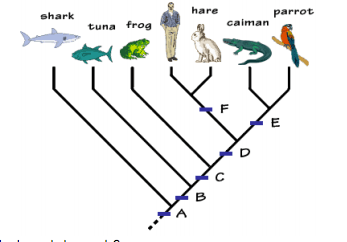
On the cladogram, which organism is the closest relative of the parrot?

a)

Frog

b)

Hare

c)

Caiman

d)

Parrot

11.
Why are advantageous traits more likely to be passed onto offspring?
a)
Because they are more likely to survive and reproduce.
b)
Because they come from dominant alleles.
c)
Because they come from recessive alleles.
d)
Because the trait is an acquired phenotype.
12.

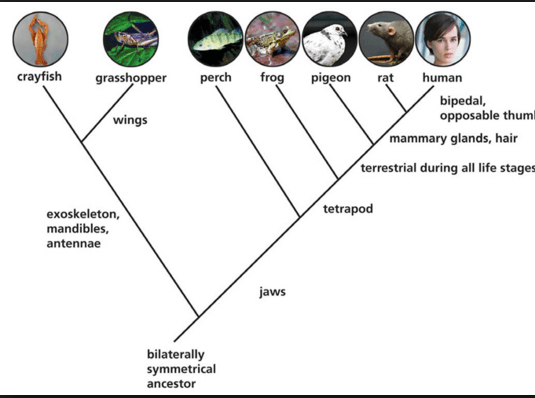
According to the cladogram, which organism is most distantly related to the human?

a)

crayfish

b)

grasshopper

c)

perch

d)

frog

13.

The lizard has all these derived characteristics EXCEPT

a)

Jaws

b)

Lungs

c)

Bipedal

14.

A virus is

a)

living

b)

non living

c)

dead

15.

Viruses need a ____________ in order to make copies of themselves.

a)

bacterial cell

b)

host cell

c)

capsid

d)

vaccine

16.

Has membrane bound organelles

a)

Prokaryote

b)

Eukaryote

c)

Both

17.

In what organelle is the genetic material found inside?

a)

Nucleus

b)

endoplasmic reticulum

c)

Mitochondria

d)

Lysosome

18.

What is the function of this organelle?

a)

Sac that stores water, nutrients, and waste products

b)

Regulates what enters and leaves the cell

c)

Structures that transport and ship proteins like UPS

d)

Cite of cellular respiration also known as the powerhouse of the cell

19.

I store water in both plant and animal cells. What am I?

a)

Mitochondria

b)

Lysosome

c)

Vacuole

d)

Cytoplasm

20.

What can only be found in plant cells?

a)

Chloroplast

b)

Vacuole

c)

Nucleus

d)

Cell membrane

21.

What is the function of this part of the cell?

a)

Structure

b)

Flexability

c)

Regulates what comes in and out of the cell

d)

Stores genetic information

22.
This small structures break down materials in the cell.
a)
Cholorplasts
b)
Ribosomes
c)
Lysosomes
d)
Golgi Body
23.
packages proteins for delivery
a)
Endoplasmic reticulum
b)
ribosomes
c)
golgi apparatus
d)
lysosomes
24.

Contains enzymes for breaking down food and other material

a)

Golgi Body/Apparatus

b)

Vacuole

c)

Lysosomes

d)

Ribosomes

25.

Cystic fibrosis is a genetic condition that is associated with defects in the CFTR protein found in the membrane. Which organelle synthesized the protein?

a)

Golgi Bodies

b)

Rough ER

c)

Smooth ER

d)

Lysosome

26.

Makes and stores lipids (fats). Also breaks down toxins.

a)

Rough ER

b)

Smooth ER

c)

Golgi Apparatus

d)

Vacuoles

27.

Particle of movement from an area of lower concentration to an area of higher concentration.

a)

Active transport

b)

Passive transport

28.

Particle of movement from an area of higher concentration to an area of lower concentration.

a)

Active transport

b)

Passive transport

29.
What process occurs when WATER diffuses across a membrane?
a)
endocytosis
b)
mitosis
c)
osmosis
d)
nuclear fission 
30.
When particles move from areas of high concentration to areas less concentrated, this has taken place.
a)
diffusion
b)
mitosis
c)
endocytosis
d)
photosynthesis
31.
What does selectively-permeable mean?
a)
The cell controls what passes in and out of the cell
b)
Nothing gets through
c)
The cell lets only large substances through
32.
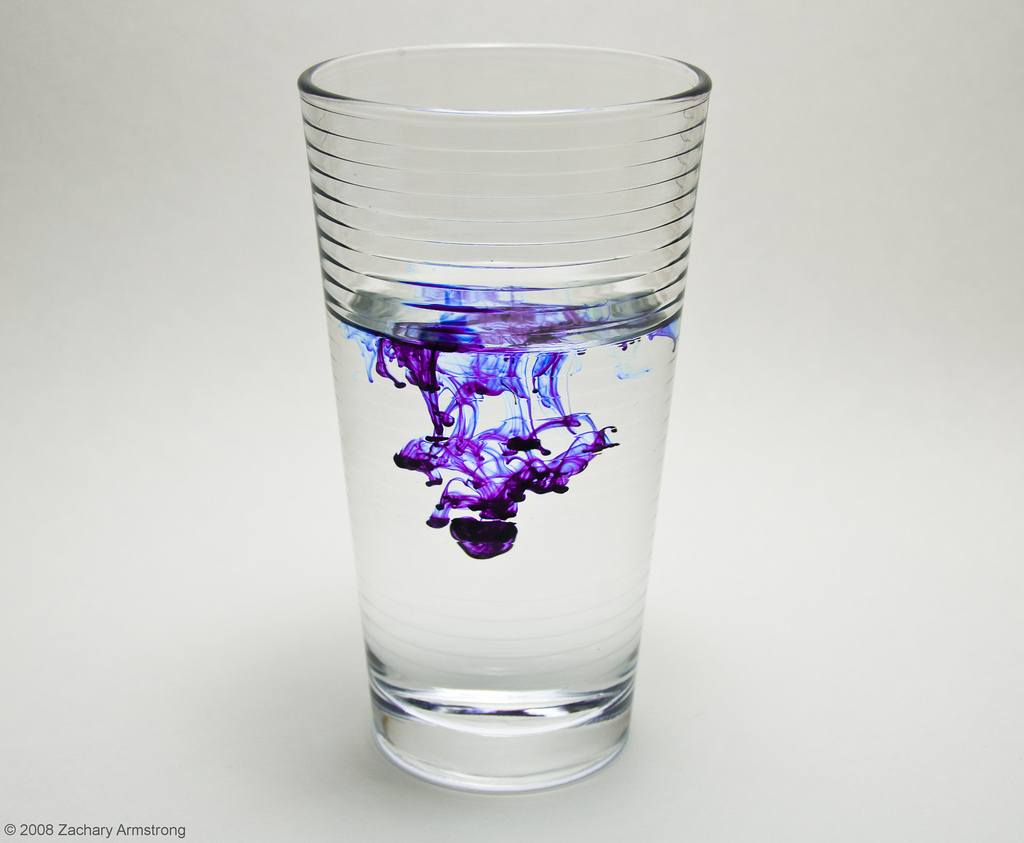
Where is there a low concentration of dye?
a)
at the bottom of cup
b)
in the color
c)
at the top of cup 
d)
no concenteraion gradient
33.
What is it called when molecules move across the cell membrane from an area of high concentration to an area of low concentration through a carrier protein?
a)
Diffusion
b)
Osmosis
c)
Active Transport
d)
Facilitated Diffusion
34.
This picture represents what type of cell transport?
a)
endocytosis
b)
exocytosis
c)
osmosis
d)
passive transport
35.
The cell below is in a _________ solution.
a)
Hypotonic
b)
Hypertonic
c)
Isotonic
36.
The cell below is in a _____________ solution.
a)
Hypertonic
b)
Hypotonic
c)
Isotonic
37.
A cell in an isotonic solution will
a)
swell
b)
shrink
c)
stay the same size
d)
impossible to tell
38.

What is the chemical equation for photosynthesis?

a)

A. CO2 + H2O -> C6H12O6 + O2

b)

B. C6H12O6 + O2 -> CO2 + H2O

c)

C. C6H12O6 + CO2 -> H2O + O2

d)

D. H2O + O2 -> CO2 + C6H12O6

39.

Where does photosynthesis primarily occur in plants?

a)

A. Stomata

b)

B. Roots

c)

C. Leaves

d)

D. Flowers

40.
The interior space of the chloroplast is called:
a)
Lamellae
b)
Grana
c)
Stroma
d)
Thylakoids
41.
What are the two products of the light reactions that are needed for the calvin cycle?
a)
NAD and NADPH
b)
NADP + and Glucose
c)
NADPH and ATP
d)
Oxygen and NADPH
42.

Autotrophs (producers) can perform photosynthesis because they have -

a)

Mitochondria

b)

Ribosomes

c)

A Nucleus

d)

Chloroplasts

43.
Leaves look green because.....
a)
they eat their vegetables
b)
to blend into their environment
c)
they contain a molecule named chlorophyll
d)
they are sick
44.
What are the products of photosynthesis?
a)
water and carbon dioxide
b)
oxygen and glucose
c)
oxygen and carbon dioxide
d)
oxygen and water
45.
What is the starting molecule for glycolysis?
a)
Glucose
b)
ADP
c)
Oxygen
d)
Pyruvic Acid
46.
Where does glycolysis occur?
a)
mitochondrial matrix
b)
cytoplasm
c)
inner membrane of mitochondria
d)
outer membrane of mitochondria
47.
What is Anaerobic Respiration?
a)
process of producing energy without oxygen.
b)
process of producing energy with oxygen.
48.
The number of ATP molecules produced out of Krebs Cycle is:
a)
2
b)
3
c)
4
d)
0
49.
After the Krebs Cycle only a small portion of the energy of glucose has been converted to ATP. At this point the majority of usable energy is contained in
a)
NADH and FADH2
b)
Carbon Dioxide 
c)
Acetyl-CoA
d)
Citrate
50.
NADH and FADH2 
a)
carry electrons to the ETC.
b)
bind with Acetyl CoA.
c)
supply energy for the cell.
d)
make water.
51.
The mitochondria is responsible for ...
a)
photosynthesis
b)
anaerobic respiration
c)
aerobic respiration
d)
fermentation
52.

Which of the below is a consequence of lactic acid production?

a)

Increased flexibility of muscles

b)

Increased strength

c)

Increased muscular pain & fatigue

53.

How many fermentation types are there?

a)

2

b)

5

c)

3

d)

6

54.
What is the most common product of yeast fermentation?
a)
Oxygen
b)
Cheese
c)
Carbon Dioxide
d)
Teeth.  Just, human teeth.  It's really strange.
55.
What process does a multi-cellular organism use to replace its damaged body cells?
a)
mitosis
b)
meiosis
c)
replication
d)
transcription
56.
Which of these lists presents the stages of the cell cycle in the correct order?
a)
interphase, mitosis, cytokinesis
b)
cytokinesis, mitosis, interphase
c)
mitosis, interphase, cytokinesis
d)
interphase, cytokinesis, mitosis
57.
Identify the stage of mitosis.
a)
interphase
b)
prophase
c)
metaphase
d)
anaphase
58.

What is the image above:

a)

Chromosome

b)

Chromotid

c)

Centromere

d)

Centriole

59.

What stage of mitosis is depicted here

a)

Prophase

b)

Anaphase

c)

Telophase

d)

Metaphase

60.

What stage of mitosis is depicted here

a)

Prophase

b)

Metaphase

c)

Anaphase

d)

Telophase

61.

What stage of mitosis is depicted here

a)

Prophase

b)

Metaphase

c)

Anaphase

d)

Telophase

62.

Centrioles pull the chromosomes apart towards the opposite sides of the cell describes:

a)

Prophase

b)

Metaphase

c)

Telophase

d)

Anaphase

63.

Centrioles pull the chromosomes apart towards the opposite sides of the cell describes:

a)

Prophase

b)

Metaphase

c)

Telophase

d)

Anaphase

64.

What phase of mitosis is in the picture?

a)

Interphase

b)

Prophase

c)

Metaphase

d)

Anaphase

e)

Telophase

65.

What phase of Mitosis is the picture showing?

a)

Interphase

b)

Prophase

c)

Telophase

d)

Metaphase

66.
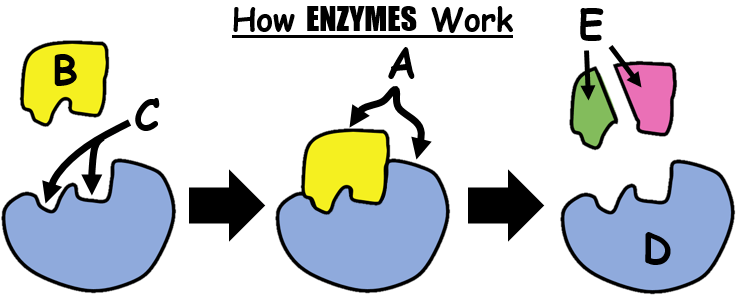
What is being represented by the letter A in the image?
a)
Substrate
b)
Enzyme
c)
Product
d)
Complex
67.
What is being represented by the letter B in the image?
a)
Substrate
b)
Enzyme
c)
Substrate
d)
Product
68.

Identify what is labeled with the letter D

a)

active site

b)

enzyme

c)

substrate

d)

products

69.
Enzymes have an area where reactants called substrates can be brought together in an enzyme-catalyzed reaction. This area on the enzyme is called the
a)
enzyme substrate complex.
b)
reaction site.
c)
active site.
d)
lock and key.
70.
What makes an enzyme specific?
a)
Size
b)
Shape
c)
Name
d)
Location it is found in
71.
Enzymes need certain environmental conditions in order to function properly.  What happens when enzymes are heated to a high temperature?
a)
they die
b)
they denature
c)
they change their amino acid sequence
d)
they work better
72.
Based on their role in the cell, enzymes can also be classified as –
a)
inhibitors
b)
catalysts
c)
sources of energy
d)
vitamins
73.
Enzymes are composed of which of the following monomers? 
a)
amino acids
b)
proteins
c)
nucleotides
d)
monosaccharides
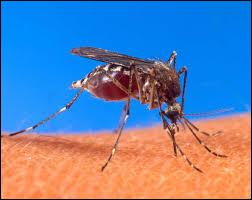
74.
Mosquito  belongs to what kingdom?
a)
Animal Kingdom
b)
Plant Kingdom
c)
Fungi Kingdom
d)
Protista Kingdom
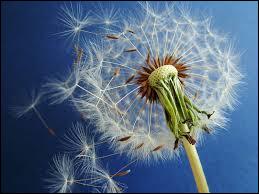
75.
Dandelion, What kingdom does it belongs to?
a)
Plant Kingdom
b)
Animal Kingdom
c)
Fungi Kingdom
d)
Protista Kingdom
76.

The scientific name for an organism is made from the:

a)

class and family name

b)

genus and species name

c)

domain and kingdom name

d)

kingdom and phylum name

77.

An example of an unicellular organism would be:

a)

monkey

b)

bacteria

c)

spider

d)

human

78.
Binomial nomenclature is the ____________ system for naming organisms.
a)
Numerical
b)
Symbolical
c)
two word
d)
alphabetical
79.
What kingdom's organisms often live in super harsh environments?
a)
archea
b)
animalia
c)
plantae
d)
protista
80.
Mushrooms are an example of this Kingdom?
a)
Animalia
b)
Protista 
c)
Archea 
d)
Fungi
81.

What do plants need for photosynthesis?

a)

Sunlight and C02

b)

Oxygen and fertilizer

82.

What enters and exits the Stomata?

a)

Oxygen and Carbon Dioxide

b)

Water and Nitrogen

c)

Sunlight and sugar

83.
The stacks of disks in the chloroplast are called:
a)
Lamellae
b)
Grana
c)
Stroma
d)
Thylakoid
84.
The interior space of the chloroplast is called:
a)
Lamellae
b)
Grana
c)
Stroma
d)
Thylakoids
85.
Where does the light independent reaction take place?
a)
Matrix
b)
Stroma
c)
Thylakoid membrane
d)
Cytoplasm
86.

Which of the following equations represents the overall chemical reaction for photosynthesis?

a)

6O2+ 6H2O → C6H12O6+ 6O2

b)

C6H12O6 + 6H2O→ 6O2+ 6O2

c)

6CO2+ 6H2O→ C6H12O6+ 6O2

d)

6O2 + 6H2O→ C6H12O6 + 6CO2

87.

The rate of photosynthesis can be influenced by...

a)

Temperature

b)

Carbon dioxide levels

c)

Light intensity

d)

Oxygen concentration

88.

What are the reactants in cell respiration?

a)

water, carbon dioxide, light

b)

oxygen, sugar

c)

sugar, water, carbon dioxide

89.

What is the energy that is produced in cell respiration?

a)

ADP

b)

Sugar

c)

ATP

90.

Aerobic means

a)

without oxygen

b)

with oxygen

c)

without effort

91.

If you wanted to produce more energy, what pathway would you choose?

a)

aerobic

b)

anaerobic

92.

What are the products of cell respiration?

a)

water, light, and sugar

b)

water, carbon dioxide, ATP

c)

oxygen, water, sugar

93.

Photosynthesis _________ the energy that cell respiration ______.

a)

builds ; breaks

b)

breaks ; build

c)

eats ; builds

94.

Plants can only go through photosynthesis not respiration.

a)

True

b)

False

95.

Where does anaerobic respiration occur?

a)

mitochondria matrix

b)

mitochondria inner membrane

c)

cytoplasm

96.
Lactic acid fermentation occurs in your muscles after a workout because your cells are struggling to get...
a)
Glucose
b)
Sunlight
c)
Oxygen
d)
Water
97.
Where does the Krebs Cycle take place?
a)
mitochondria
b)
chloroplast
c)
cytoplasm
d)
nucleus
98.
The first step in the break down of glucose is
a)
light reactions
b)
glycolysis
c)
Kreb's cycle
d)
Calvin Cycle
99.
Using the figure, which parts of the molecule must the bonds be broken to form an ADP molecule?
a)
A and B
b)
B and C
c)
C and D
d)
all of the above
100.
After strenuous exercise, a muscle cell would contain decreased amounts of ______ and increased amounts of ______ ____
a)
glucose, ATP
b)
ATP, glucose
c)
oxygen, lactic acid
d)
lactic acid, ATP