
Font size
 Worksheets
Biology & Botany FPSC Division of plants, angiosperm& Physiology
Total questions: 100
Worksheet time: 56mins
Which of the following is NOT a characteristic of plant that has monocotyledon seed?
Has parallel vein leaves
Has tap root
Has woody stem
Has one cotyledon
Paddy plant is an example of flowering plants. Choose one characteristic of paddy plant.
Has woody stem
Has leaves with parallel veins
Has tap root
Consist of two cotyledons

Which of the following characteristic describes the plant shown above ?
Fibrous root
One cotyledon
Leaves with parallel veins
Tap root
Which of the following is monocotyledon plant ?
Durian tree
Banana plant
Rose plant
Mango plant
What is the common characteristic of fern and conifer?
Non-vascular
Vascular
Reproduces through spores
Reproduces by bearing cones
Which of the following is non-flowering plant?
Paddy plant
Tomato plant
Fern
Mango tree
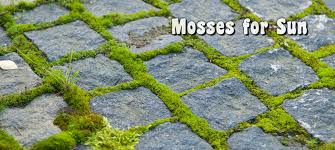
Liz took a walk and noticed a green, fuzzy plant growing on a rock. It was soft to touch. What could it be?
Pine Tree
Daisy Flower
Moss
Fern Plant
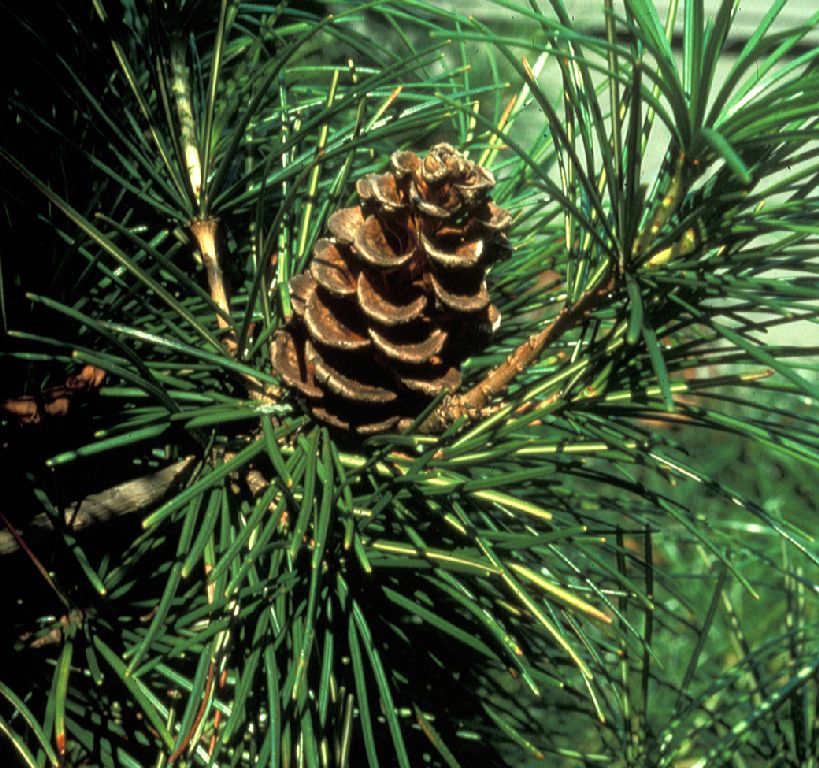
Sarah found a sunflower and a pine cone in her backyard. She realized that they both
make flowers
produce spores
make seeds
are part of large crops
Pine cones, acorns, and rose seeds were being studied by a 3rd grade class. How will the rose seed grow DIFFERENTLY than the others?
It is the only one with leaves.
It is the only one without roots.
It is the only one to produce flowers.
It is the only one that has spores
How is a pine tree different than an apple or banana tree?
Its leaves are huge,
It has green leaves.
It does not produce fruit.
it grows from a seed.
JJ brought his mom a plant for her birthday. The stem had thorns and its flower was a beautiful color pink. What could it be?
Fern
Moss
Rose
Pine Tree
On the way to school, Chad saw a plant that produced spores and had green frond leaves. What did he see?
Apple Tree
Tomato Plant
Palm Tree
Fern
Scientists classify plants in order to...
Study them more easily
Collect them more easily
Earn more money
Fight insects that damage them more easily
Climber examples is
Grapes
Mint
Basil
Rose
Plants are classified according to the way they get nutrients in ...
vascular and nonvascular
leaves and roots
sun and water
medicinal plants
cotton
basil
jute
mango
What 2 names are used in the Binomial System of Nomenclature?
Plant Group, Division
Genus, Species
Kingdom, Phylum
Species, Kingdom
Why are scientific names important?
Buyers need to know the correct plant species.
Scientists need accurate information about a plant species.
Common names can be confusing.
All of these are correct.
Which is the correct way to write the name of Red Oak?
quercus rubra
quercus Rubra
Quercus Rubra
Quercus rubra
Why might you see 3 names in a scientific name?
The 3rd name gives you the kingdom.
The 3rd name is for the variety or cultivar.
The 3rd name is for the plant group.
What is a cultivar?
It is a form of plant originating under cultivation and often is the result of plant breeding.
It is a naturally occurring native plant.
It has existed naturally for over 100 years.
What is the most specific taxonomy category?
Kingdom
Domain
Species
Order
Who created the system of Taxonomy?
Albert Einstein
Carolus Linnaeus
Aristotle
Copernicus
Which of the following is the correct order of the taxonomic hierarchy?
Kingdom, division, class, order, family, genus, species
Kingdom, division, class, order, family, species, genus
Kingdom, class, division, order, family, genus, species
Kingdom, division, order, class, family, genus, species



All plants are classified based on ...
Whether they have vascular tissue or not
Whether they have flowers or not
Whether they have cuticle or not
Whether they do photosynthesis or not
Scientists classify plants in order to...
Study them more easily
Collect them more easily
Earn more money
Fight insects that damage them more easily
How do we call plants that have seeds, but no flowers or fruit?
Nonvascular plants
Seedless vascular plants
Gymnosperms
Angiosperms
"Evergreen plants" is a common name for ...
Nonvascular plants
Seedless vascular plants
Gymnosperms
Angiosperms
The plants which have branches at the base are __________.
herbs
shrubs
creepers
trees
The plant which takes the support of structures and climbs up is _______________.
tree
shrub
creeper
climber
2. Strong and woody stem of a tree called ___________
climber
root
Trunk
shrub
3. Plants having weak stems which grow along the ground are called__________
trees
creepers
shrubs
climbers
5. choose the example of herbs.
watermelon
pumpkin
apple tree
mint

Plants have been broadly divided into how many groups or type?
2
3
5
4
Plants can be divided into two groups. Which of the following correctly states the two groups of plants?
Vegetables and fruits
Flowering and non-flowering
Grass and trees
Green leaves and purple leaves
Plants can be divided into three groups. Which of the following correctly states the two groups of plants?
Seeds, roots and stem
Flowering, non-flowering and evergreen
Trees, shrubs and herbs
Herbs, spices and salts
How can you tell if a plant is a herb?
It can bear flowers.
It is usually very tall and has a very thick stem.
It has many branches and a thin woody stem.
It has a thin flexible stem.
Which is not a part of a plant?
stem
root
soil
leaf
Which plant does not belong to the group?
coconut
papaya
narra
bitter gourd (ampalaya)

Peppermint belongs to the classification of _____.
trees
herbs
vines
shrubs
Which of the following is a deciduous tree?
Rice plant
Bean Plant
Water melon plant
Mango tree
Paddy plant is an example of flowering plants. Choose one characteristic of paddy plant.
Has woody stem
Has leaves with parallel veins
Has tap root
Consist of two cotyledons
Who classified five kingdom classification ?
J.J Thomsson
Goldstein
Robert whittaker
Rutherford
Plants can be flowering or non-flowering. Plants can reproduce using seeds or spores. This pea plant reproduces using ...
spores
seeds
stems
leaves
Plants such as peas, beans, tomatoes, and squash can be labeled as ....
flowering, vascular, seed bearing
non-flowering, non-vascular, spores
non-flowering, vascular, spores
flowering, non-vascular, seed bearing
Which plant kingdom can survive both on land and in the water?
(a) Tracheophyta
(b) Pteridophyta
(c) Thallophyta
(d) Bryophyta
Gymnosperms Plants having vascular tissue without seeds
(a) Angiosperm
(b) Pteridophytes
(c) Bryophytes
(d) Gymnosperms
Gymnosperms Plants having vascular tissue without seeds
(a) Angiosperm
(b) Pteridophytes
(c) Bryophytes
(d) Gymnosperms
Who coined the term biodiversity
Charles Darwin
Walter G Rosen
Walter D Rosen
None
A plant that has seeds but no flowers and fruits?
(a) Bryophytes
(b) Gymnosperms
(c) Mosses
(d) Pteridophytes
Algae and Fungi are in the division _________Viperidae
Thallophyta
Bryophyta
All of the above
None of the above
What is not possessed by bacteria?
a. membrane bound organelles
b. nucleus
c. nucleolus
d. all of these
First plants to inhabit the land
Angiosperms
Bryophytes
Gymnosperms
Pteridophytes
Which of the sub group in plant kingdom produces flowers
Fungi
Angiosperms
Mosses
Ferns
Which of the plant groups needs both land and water to complete their life cycle?
Angiosperms
Pteridophyta
Thallophyta
Bryophyta
Plants having vascular tissue without seeds
Angiosperm
Pteridophytes
Bryophytes
Gymnosperm
Which type of plant produces a flower?
angiosperm
gymnosperm
both
Which type of plant lives the longest?
annual
biennial
perennial
All plants
make sugar
have roots
make flowers
have stems
What structure protects the surface of the leaf?
cambium
phloem
cuticle
front
These are tubelike cells that transport water and nutrients
xylem
cambium
veins
vascular tissue
An opening in a leaf that allows gas exchange
guard cell
stoma
chloroplast
cuticle
A frond is a leaf from a
fern
pine tree
moss
This structure holds nonvascular seedless plants into the ground
roots
saprophyte
rhizoid
cones
This layer of tissue grows between the xylem and the phloem
angiosperm
gymnosperm
frond
cambium
The four features seed plants have in common are roots, stems, leaves, and
angiosperm
xylem
fronds
vascular tissue
The plant kingdom is organized into
divisions
phyla
What cell structure do plants use to obtain food?
chlorophyll
chloroplast
vacuole
cell wall
Angiosperms produce from
rhizoids
cones
fruit and flowers
Gymnosperms reproduce with
cones
fruit
flowers
The first stable product of fixation of atmospheric nitrogen in leguminous plants is ?
NO3-
Glutamate
Ammonia
NO2-
Which of the following biomolecules is common to respiration - mediated breakdown of fats , carbohydrates , and proteins?
Fructose 1-6 bisphosphate
Pyruvic acid
Acetyl CoA
Glucose 6 - phosphate
Phytochrome is a
Glycoprotein
Lipoprotein
Chromoprotein
Flavoprotein
In photosynthesis , the light independent reactions takes place at:
Photosystem- II
Stromal matrix
Thylakoid lumen
Photosystem-I
During biological nitrogen fixation , inactivation of nitrogenase by oxygen poisoning is prevented by?
Carotene
Cytochrome
Leghaemoglobin
Xanthophyll
Water soluble pigment found in plant cell vacuoles are;
Chlorophylls
Carotenoids
Anthocyanins
Xanthophylls
A plant in your garden avoids photorespiratory losses , has improved water use efficiency , shows high rate of photosynthesis at high temperatures and has improved efficiency of nitrogen utilisation. In which of the following physiological groups would you assign this plant?
C4
CAM
Nitrogen fixer
C3
Emerson's enhancement effect and Red drophave been instrumental in the discovery of ?
Two photosystems operating simultaneously
Photophosphorylation and cyclic electron transport
Oxidative photophosphorylation
Photophosphorylation and non - cyclic electron transport
In a chloroplast the highest number of protons are found in;
Lumen of thylakoids
Inter membrane space
Antennae complex
Stroma
The process which makes major difference between C3 and C4 plants is ;
Calvin cycle
Photorespiration
Respiration
Glycolysis
Which statement is wrong about Kreb's cycle?
There is one point in the cycle where FAD+ is reduced to FADH2
During conversion of succinyl CoA to succinic acid , a molecule of GTP is synthesised
The cycle starts with condensation of acetyl group (acetyl CoA) with pyruvic acid to yield citric acid
There are three points in the cycle where NAD+ is reduced to NADH + H+
Fruit and leaf drop at early stages can be prevented by the application of;
Ethylene
Auxins
Gibberellic acid
Cytokinins
Phosphoenol pyruvate (PEP) is the primary CO2 acceptor in?
C4 plants
C2 plants
C3 and C4 plants
C3 plants
Which of the following is not a product of light reaction of photosynthesis?
NADPH
NADH
Oxygen
ATP
Stomatal movement is not affected by ;
O2 concentration
CO2 concentration
Light
Temperature
World Ozone Day is celebrated on ;
16th September
22nd April
21st April
5th June
Which of these statements is incorrect?
Glycolysis operates as long as it is supplied with NADthat can pick up hydrogen atoms
Oxidative phosphorylation takes place in outer mitochondrial membrane
Glycolysis occurs in cytosol
Enzymes of TCA cycle are present in mitochondrial matrix
What is the site of perception of photoperiod necessary for induction of flowering in plants?
Shoot apex
Leaves
Lateral buds
Pulvinus
It takes a very long time for pineapple plants to produce flowers. Which combination of hormones can be applied to artificially induce flowering in pineapple plants through the year to increase yield?
Gibberellin and Abscisic acid
Cytokinin and Abscisic acid
Auxin and Ethylene
Gibberellin and Cytokinin
Conversion of glucose to glucose-6- phosphate , the first irreversible reaction of glycolysis , is catalyzed by?
Enolase
Phosphofructokinase
Aldolase
Hexokinase

