
 Worksheets
CSD 331 Exam 4
Total questions: 124
Worksheet time: 1hrs 10mins
What is Expiration Driven By?
Torque
Elasticity
Gravity
Weight
Four Stages Involved in the Process of Gas Exchange
Ventilation
Distribution
Perfusion
Diffusion
Actual Movement of Air Through the Respiratory Pathway
Distribution
Ventilation
Perfusion
Diffusion
The Actual gas Exchange Across the Alveolar Capillary Membrane
Distribution
Ventilation
Perfusion
Diffusion
Allocation of Distributed Air to Capillaries that Supply Alveoli
Distribution
Ventilation
Perfusion
Diffusion
Allocation of Ventilated Air to Alveoli
Distribution
Ventilation
Perfusion
Diffusion
Volume of Air Exchanged in One Cycle of Respiration
Tidal Volume
Expiratory Reserve Volume
Inspiratory Reserve Volume
Residual Volume
Volume of air that can be expired following a passive tidal expiration, also known as resting lung volume
Tidal Volume
Expiratory Reserve Volume
Inspiratory Reserve Volume
Residual Volume
Volume of air remaining in lungs after a maximum exhalation
Tidal Volume
Expiratory Reserve Volume
Inspiratory Reserve Volume
Residual Volume
Volume of air that can be inhaled after a tidal inspiration
Tidal Volume
Expiratory Reserve Volume
Inspiratory Reserve Volume
Residual Volume
The volume of air that can be inhaled following a maximal exhalation, includes both reserve volumes and tidal volume
Total Lung Capacity
Vital Capacity
Functional Residual Capacity
Inspiratory Capacity
The maximum inspiratory volume possible after tidal expiration
Total Lung Capacity
Vital Capacity
Functional Residual Capacity
Inspiratory Capacity
The volume of air in the body at the end of passive exhalation, includes expiratory reserve and residual volumes
Total Lung Capacity
Vital Capacity
Functional Residual Capacity
Inspiratory Capacity
The sum of inspiratory and expiratory reserve volume, and tidal and residual volume
Total Lung Capacity
Vital Capacity
Functional Residual Capacity
Inspiratory Capacity
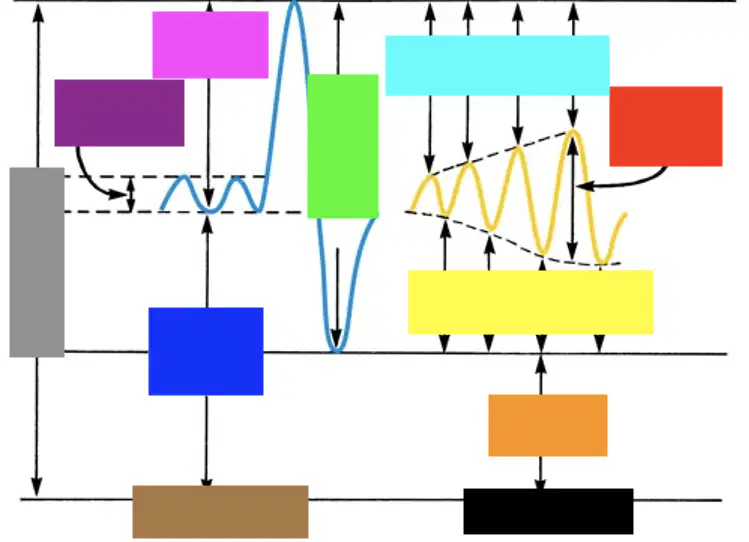
What is the Pink Square?
Vital Capacity
Inspiratory Capacity
Inspiratory Reserve Volume
Functional Residual Capacity
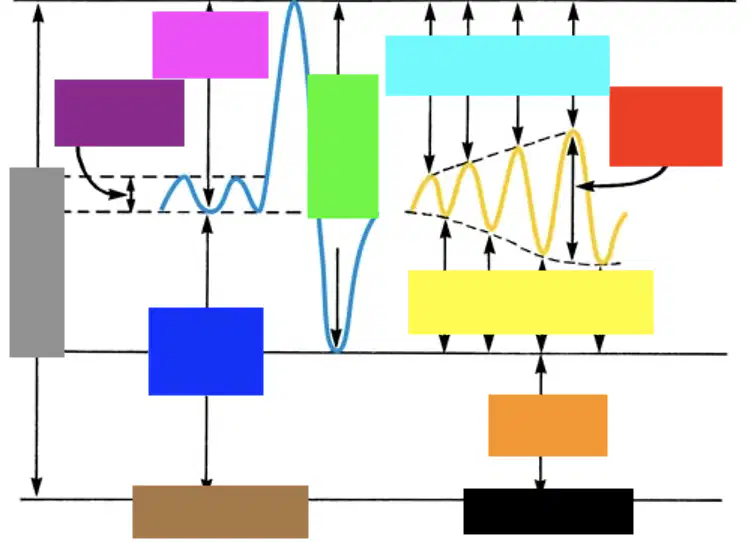
What is the Purple Square?
Vital Capacity
Tidal Volume
Inspiratory Capacity
Resting Tidal Volume
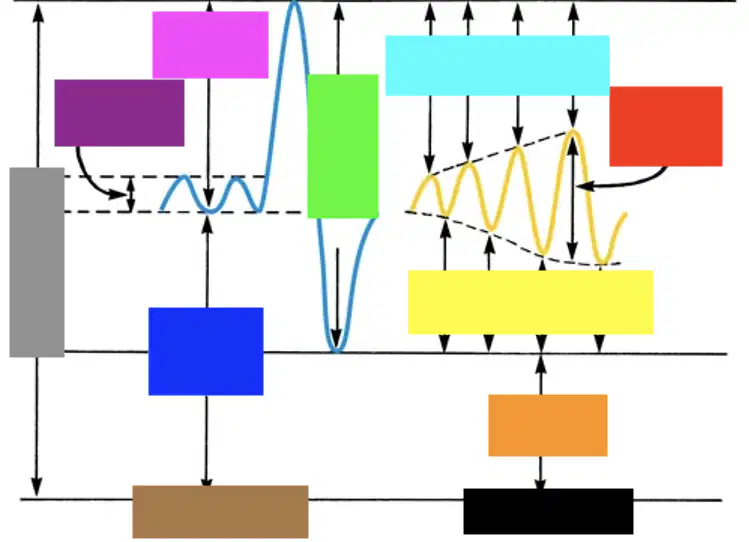
What is the Grey Square?
Total Lung Capacity
Residual Volume
Vital Capacity
Lung Volumes
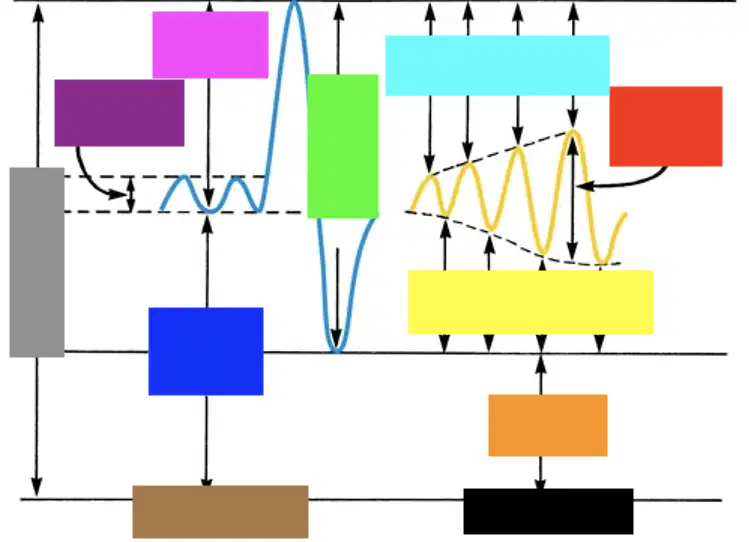
What is the Blue Square?
Residual Volume
Functional Residual Capacity
Expiratory Reserve Volume
Vital Capacity
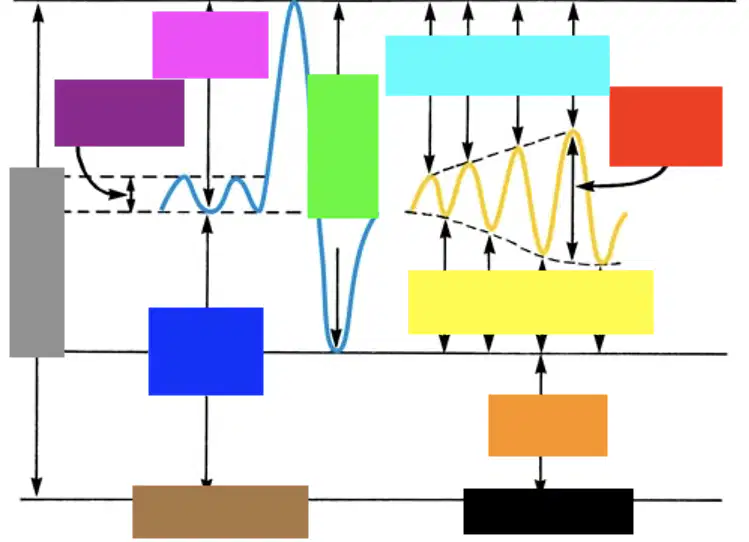
What is the Brown Square?
Lung Volumes
Lung Capacities
Vital Capacity
Total Lung Capacity
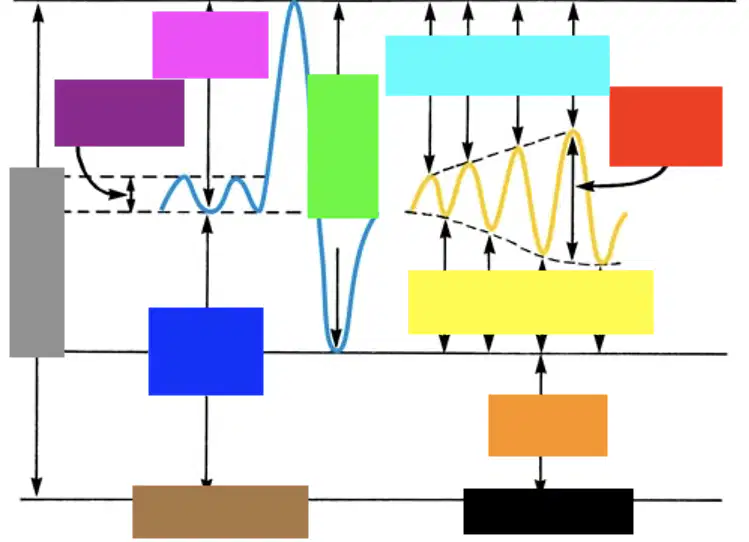
What is the Black Square?
Lung Volumes
Lung Capacities
Vital Capacity
Residual Volume
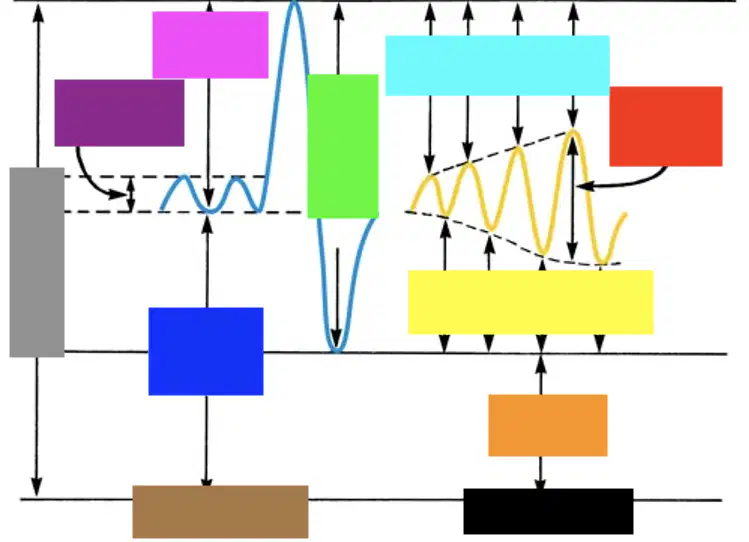
What is the Orange Square?
Residual Volume
Expiratory Reserve Volume
Reserve Volume
Inspiratory Reserve Volume
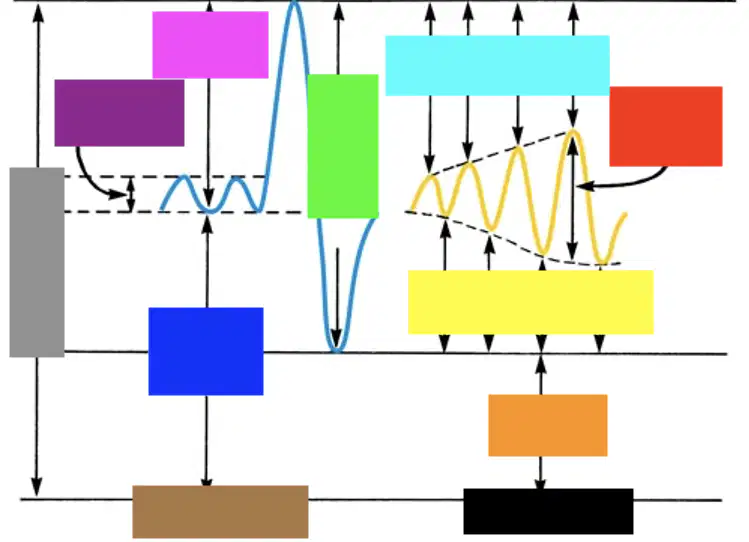
What is the Yellow Square?
Inspiratory Reserve Volume
Residual Volume
Expiratory Reserve Volume
Functional Reserve Capacity
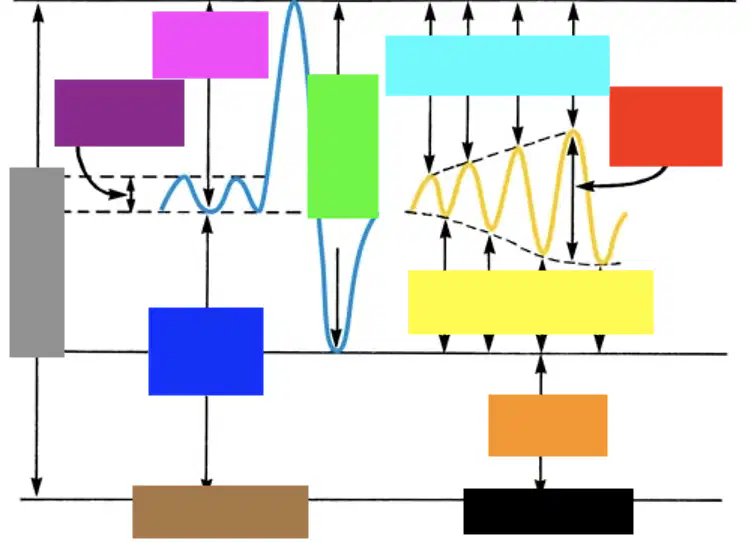
What is the Red Square?
Resting Tidal Volume
Tidal Volume
Inspiratory Reserve Capacity
Total Lung Capacity
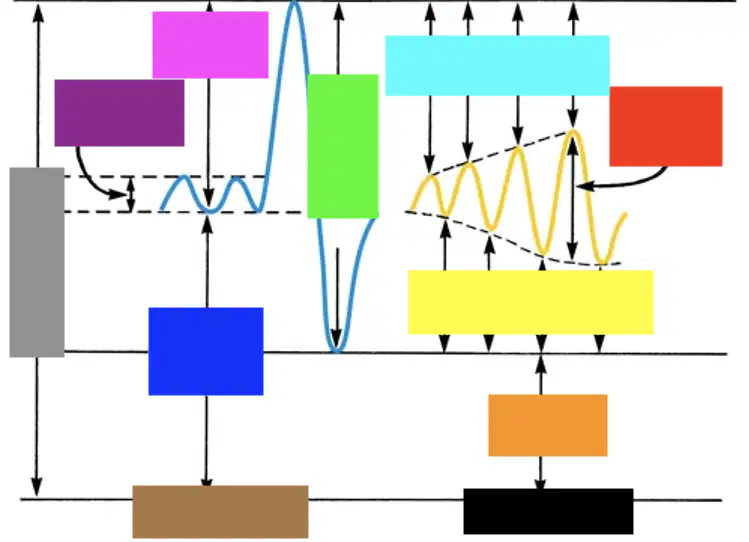
What is the Light Blue Square?
Inspiratory Reserve Volume
Expiratory Reserve Volume
Inspiratory Capacity
Residual Volume
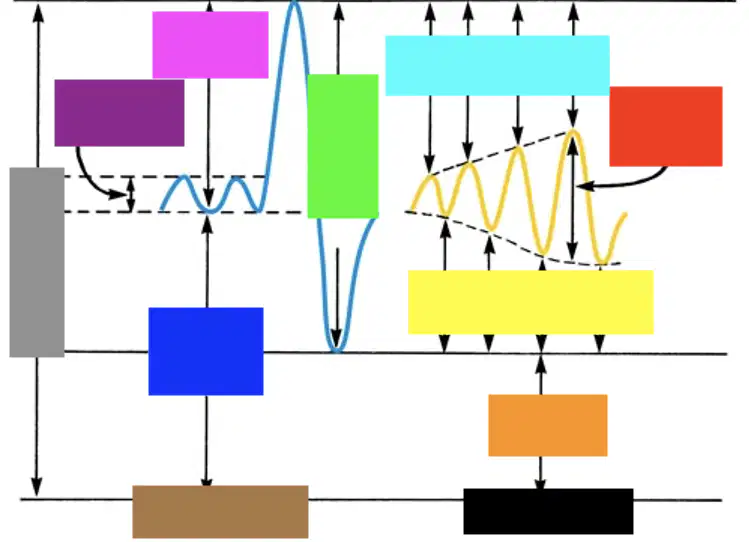
What is the Green Square?
Vital Capacity
Total Lung Capacity
Tidal Volume
Residual Volume
Adduction
The act of bringing the vocal folds together for phonation
The process of drawing the vocal folds apart to terminate phonation
Abduction
The act of bringing the vocal folds together for phonation
The process of drawing the vocal folds apart to terminate phonation
Junction of Cricoid cartilage and inferior cornu of thyroid, allows for changes in vocal pitch
Cricothyroid Joing
Cricoarytenoid Joint
What is the definition of phonation?
(a)
Where is the larynx located?
(a)
Biological Functions of the Larynx
Stops intrusion of foreign matter
Seals the respiratory system
Helps to "fix thorax" when vocal folds are closed
Moves up and down when breathing
What is not a major cartilage in the larynx?
Cricoid Cartilage
Thyroid Cartilage
Arytenoid Cartilages
Corniculate and Cuneiform Cartilages
Pharyngeal Cartilage
Cricoid Cartilage
Unpaired Cartilage
Paired Cartilage
Thyroid Cartilage
Unpaired Cartilage
Paired Cartilage
Largest of Laryngeal Cartilages
Thyroid
Arytenoid
Cricoid
Corniculate
Which is not a Landmarks of the Thyroid
Thyroid Laminae
Thyroid Angle
Thyroid Notch
Thyroid Joint
Inferior Cornu of Thyroid
Project down to articulate with cricoid
Project up to articulate with hyoid
Superior Cornu of the Thyroid
Project down to articulate with cricoid
Project up to articulate with hyoid
Arytenoids
Unpaired Cartilage
Paired Cartilage
Vocal Processes of Arytenoids
Project anteriorly toward the thyroid notch
Posterior part of the vocal cords attach to these
Project laterally
Muscles that open and close the vocal folds attach here
Muscular Processes of the Arytenoids
Project anteriorly toward the thyroid notch
Posterior part of the vocal cords attach to these
Project laterally
Muscles that open and close the vocal folds attach here
Hyoid Bone
Unpaired
Paired
Facts about the Hyoid Bone
Not a bone of the larynx
Only bone in body to not attach to another bone
U shaped and open in posterior
Attaches to thyroid cartilage
Thyrohyoid Membrane
Stretches from greater cornu of hyoid to lateral thyroid cartilage
Runs from superior cornu of thyroid to posterior tip of greater cornu of hyoid
Together these three things connect larynx and hyoid bone
Lateral Thyrohyoid Ligament
Stretches from greater cornu of hyoid to lateral thyroid cartilage
Runs from superior cornu of thyroid to posterior tip of greater cornu of hyoid
Together these 3 things connect larynx and hyoid bone
Median Thyrohyoid Ligament
Stretches from greater cornu of hyoid to lateral thyroid cartilage
Runs from superior cornu of thyroid to posterior tip of greater cornu of hyoid
Together these three things connect larynx and hyoid bone
Hyoepiglottic Ligament
Connects hyoid and epiglottis
Connects thyroid and epiglottis
Connect tongue and epiglottis
Thyroepiglottic Ligament
Connects hyoid and epiglottis
Connects thyroid and epiglottis
Connects tongue and epiglottis
Glossoepiglottic Ligaments
Connects hyoid and epiglottis
Connects thyroid and epiglottis
Connects tongue and epiglottis
Quadrangular Membranes
Undergirding layer of connective tissue running from arytenoids to epiglottis and thyroid cartilage forming false vocal folds
Ridges that mark the highest elevation of aryepiglottic muscles and course between epiglottis and arytenoids
Aryepiglottic Folds
Undergirding layer of connective tissue running from arytenoids to epiglottis and thyroid cartilage and forms the false vocal folds
Ridges that mark highest elevation of aryepiglottic muscles, course between epiglottis and arytenoids
Squamous Epithelium
Protect layer that keeps vocal folds moist
Elastin fibers that can be stretched easily, makes up vocal ligament, 3 different tissues
Made up of thyrovocalis and thyromuscularis, bulk of vocal fold
Lamina Propria
A protective layer that keeps vocal folds moist
Elastin fibers, makes up vocal ligament, 3 different tissues
Made up of thyrovocalis and thyromuscularis, is bulk of the vocal fold
Thyroarytenoid Muscle
A protective layer that keeps vocal folds moist
Elastin fibers, make up vocal ligaments, 3 different tissues
Made up of thyrovocalis and thyromuscularis, is bulk of the vocal fold
Aditus
Entry to the larynx from the pharynx above
First cavity of the larynx
Middle space of larynx
Vestibule
Entry to the larynx from pharynx above
First cavity of the larynx
Middle space of larynx
Laryngeal Ventricle
Entry to the larynx from pharynx above
First cavity of the larynx
Middle space of larynx
Origin is inner surface, thyroid cartilage near notch, insertion is lateral surface of the arytenoid vocal processes, tenses vocal folds, innervation is vagus nerve
Thyrovocalis
Cricothyroid
Thyromuscularis
Origin is inner surface of thyroid cartilage near notch, insertion is muscular process and base of arytenoids cartilage, tenses vocal folds, innervation is vagus X
Thyrovocalis
Cricothyroid
Thyromuscularis
Extrinsic Muscles
(a)
Elevators
Pull up on hyoid/larynx
Pull down on hyoid/larynx
Depressors
Pull up on hyoid/larynx
Pull down on hyoid/larynx
Is Digastricus an elevator or depressor?
Elevator
Depressor
Two part muscle, origin for anterior belly is lower border of mandible near symphysis and origin for posterior belly is mastoid process of temoporal bone, insertion for anterior belly is lesser horn of hyoid bone and insertion for posterior belly is greater horn of hyoid bone. Function is to pull hyoid anteriorly and up, pulls posteriorly and up, hyoid elevation occurs when both are contracted, anterior belly is innervated by V Trigeminal and posterior is innervated by VII Facial
Digastricus
Mylohyoid
Stylohyoid
Geniohyoid
Origin is styloid process of the temporal bone, courses medially and down, insertion is body of hyoid bone, function is to elevate and retract the hyoid bone, innervation is VII facial
Digastricus
Mylohyoid
Stylohyoid
Geniohyoid
Forms floor of oral cavity, origin is underside of mandible, insertion is hyoid, elevates hyoid, depresses mandible and elevates floor of mouth during 1st stage of swallow, innervated by V Trigeminal
Digastricus
Mylohyoid
Stylohyoid
Geniohyoid
Cylindrical muscle, origin is on the mental spine of the inner surface of the mandible, insertion is the anterior surface of the corpus of the hyoid, elevates hyoid bone and depress mandible, innervated by XII Hypoglossal
Digastricus
Mylohyoid
Stylohyoid
Geniohyoid
Origin is greater cornu of hyoid, insertion is side of tongue, elevates hyoid bone, depress tongue, innervated by XII Hypoglossal
Hyoglossus
Genioglossus
Thyropharyngeus
Origin is inner surface of mandible, insertion is tongue and corpus of hyoid, elevates hyoid bone, depress, retract, and protrude tongue, innervation is hypoglossal
Hyoglossus
Genioglossus
Thyropharyngeus
Makes up inferior pharyngeal constrictor, origin is posterior pharyngeal raphe, insertion is thyroid lamina and inferior cornu, elevates larynx and constrict pharynx, innervation is X Vagus
Hyoglossus
Genioglossus
Thyropharyngeus
Origin is on the posterior surface of the manubrium of the sternum and end of the clavicle, insertion is lower border of the hyoid bone, pulls down on the hyoid, innervation is spinal nerves
Sternohyoid
Omohyoid
Sternothyroid
Thyrohyoid
Deep to sternocleidomastoid, origin for superior belly is intermediate tendon, origin for inferior belly is upper border of scapula, insertion for superior body is hyoid and insertion for inferior body is intermediate tendon, depresses hyoid and larynx, innervation is spinal nerves
Sternohyoid
Omohyoid
Sternothyroid
Thyrohyoid
Long thin muscle lying on the anterior of the neck, origin is on the posterior surface of the manubrium of the sternum and the 1st costal cartilage, insertion is the oblique line of the thyroid, pulls down on the thyroid cartilage, active during swallowing, innervation is spinal nerves and XII Hypoglossal
Sternohyoid
Omohyoid
Sternothyroid
Thyrohyoid
Thin muscle that lies deep to the omohyoid and sternohyoid, origin is oblique line of the thyroid lamina, insertion is the lower border of the greater horn of the hyoid bone decreases the distance between the hyoid and thyroid, innervated by spinal nerves
Sternohyoid
Omohyoid
Sternothyroid
Thyrohyoid
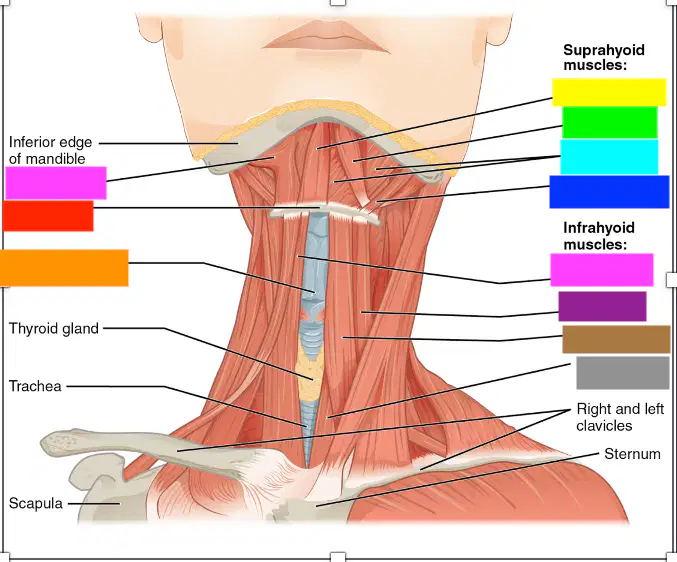
What is the pink box?
Styloglossus
Hyoid Bone
Thyroid cartilage of the larynx
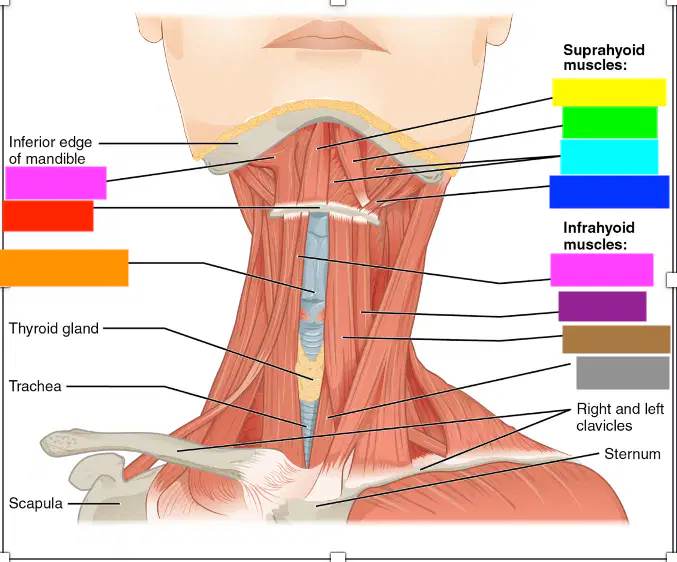
What is the red box?
Styloglossus
Hyoid Bone
Thyroid cartilage of larynx
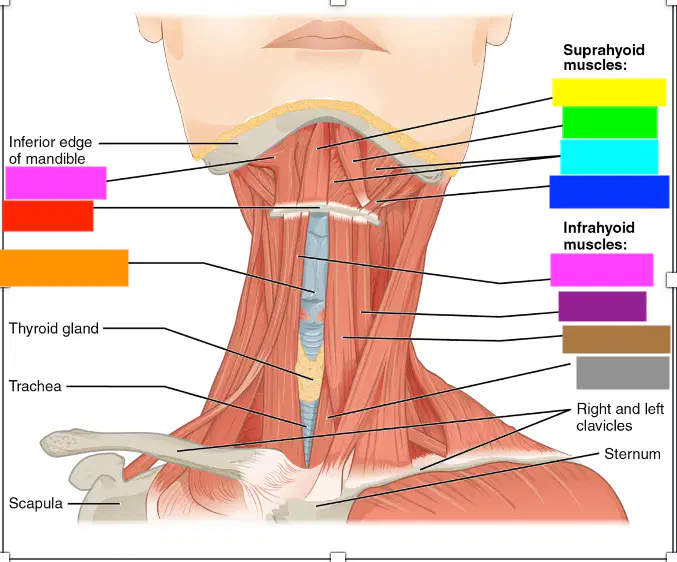
What is the orange box?
Styloglossus
Hyoid bone
Thyroid cartilage of larynx
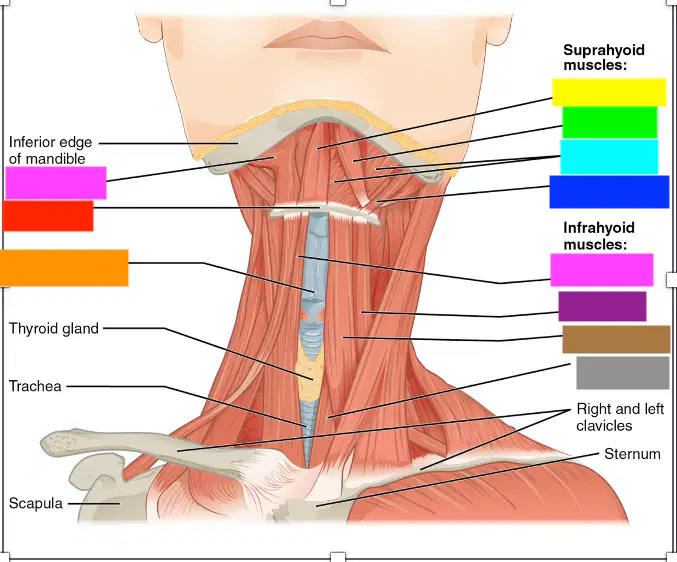
What is the yellow box?
Geniohyoid
Digastricus
Mylohyoid
Stylohyoid
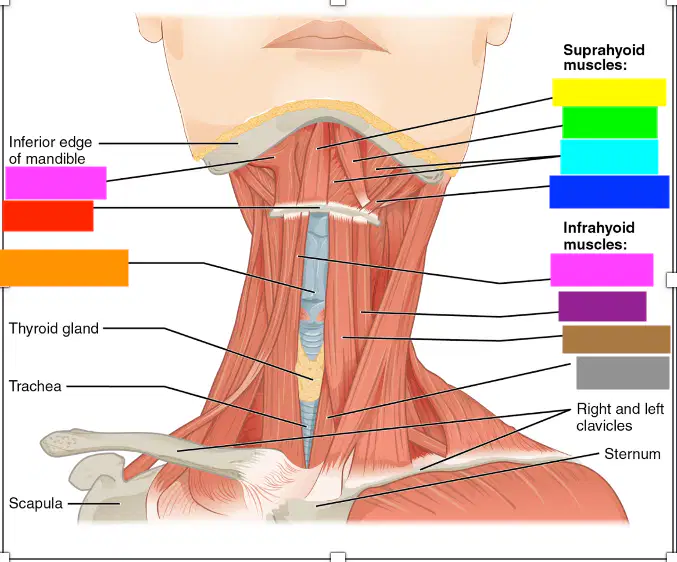
What is the green box?
Geniohyoid
Digastricus
Mylohyoid
Stylohyoid
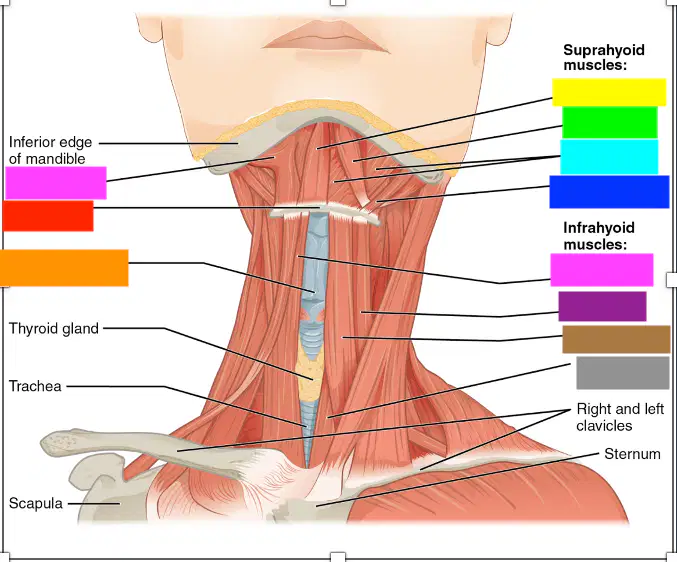
What is the light blue box?
Geniohyoid
Digastricus
Mylohyoid
Stylohyoid
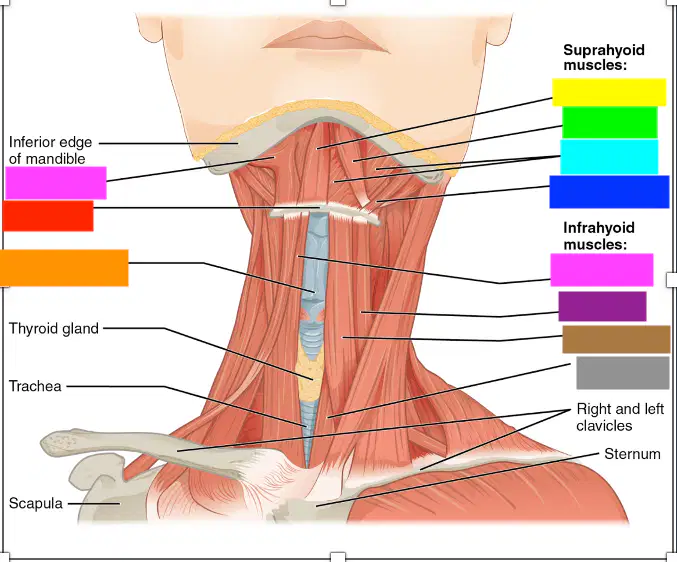
What is the dark blue box?
Geniohyoid
Digastricus
Mylohyoid
Stylohyoid
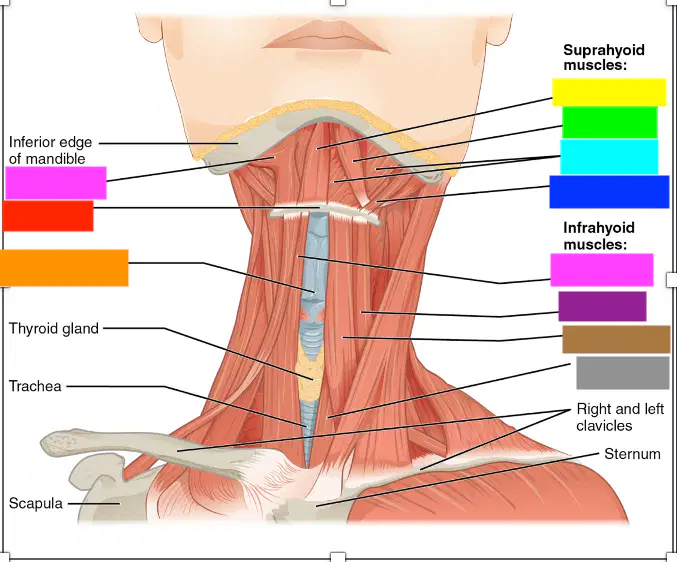
What is the right pink box?
Thyrohyoid
Omohyoid
Sternohyoid
Sternothyroid
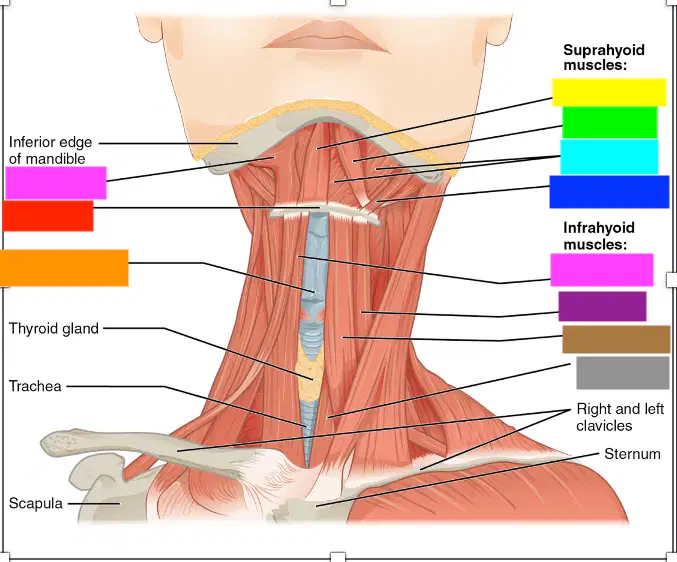
What is the purple box?
Thyrohyoid
Omohyoid
Sternohyoid
Sternothyroid
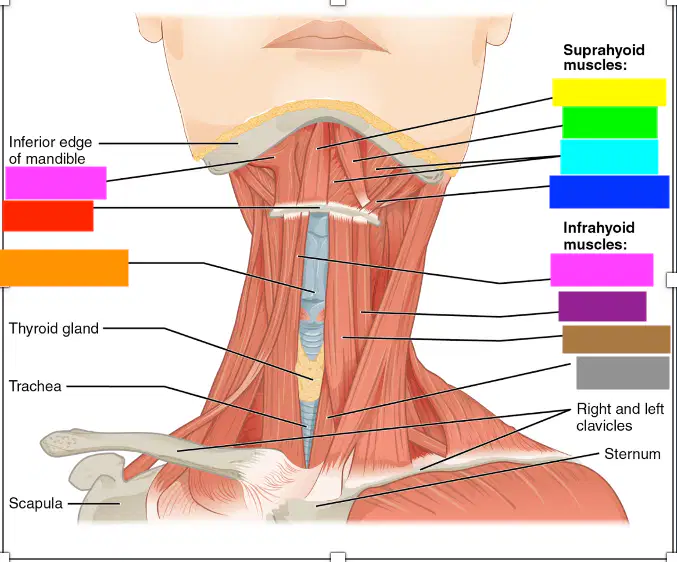
What is the brown box?
Thyrohyoid
Omohyoid
Sternohyoid
Sternothyroid
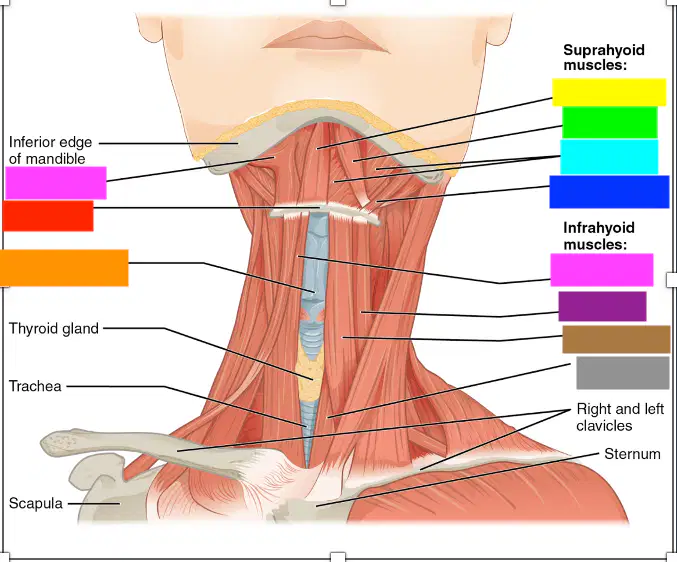
What is the gray box
Thyrohyoid
Omohyoid
Sternohyoid
Sternothyroid

What is the red box?
Epiglottis
Hyoid bone
Thyrohyoid membrane
Thyroid cartilage
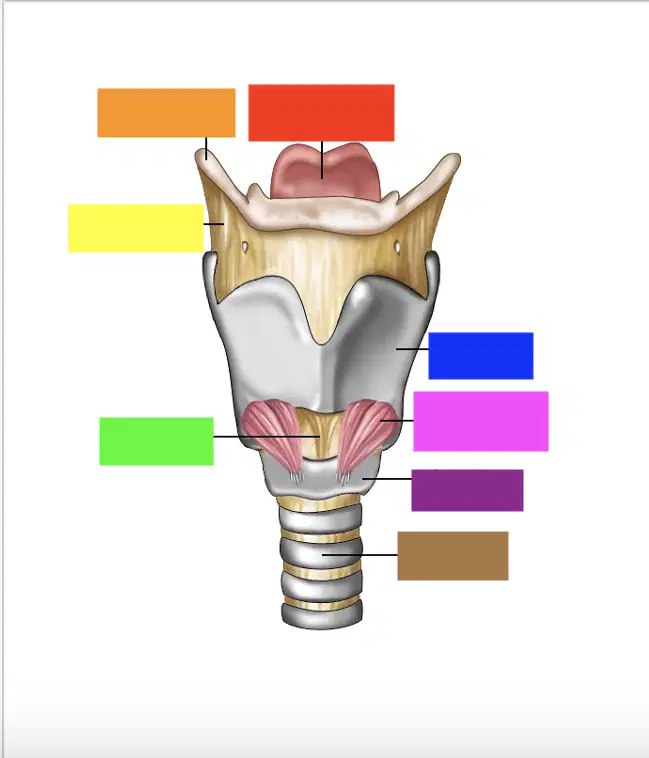
What is the orange box?
Epiglottis
Hyoid bone
Thyrohyoid membrane
Thyroid cartilage
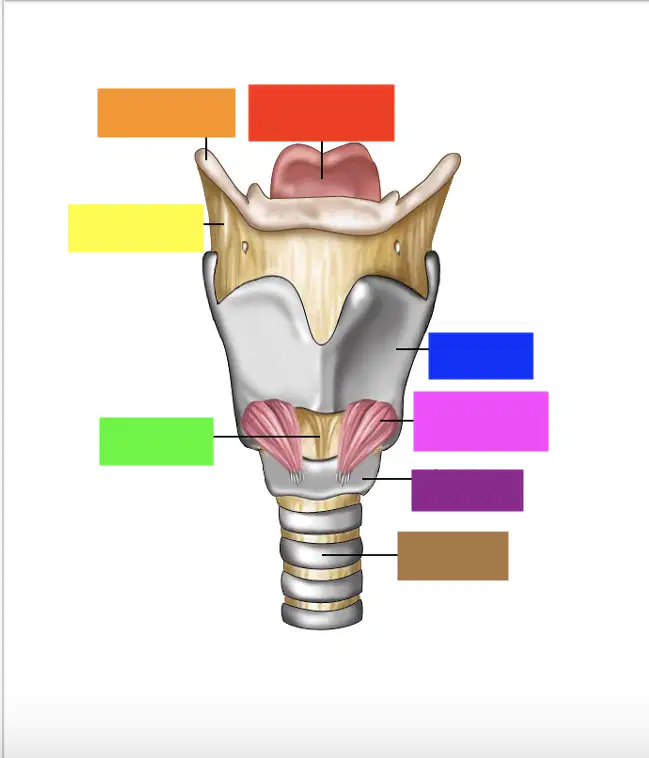
What is the yellow box?
Epiglottis
Hyoid bone
Thyrohyoid membrane
Thyroid cartilage
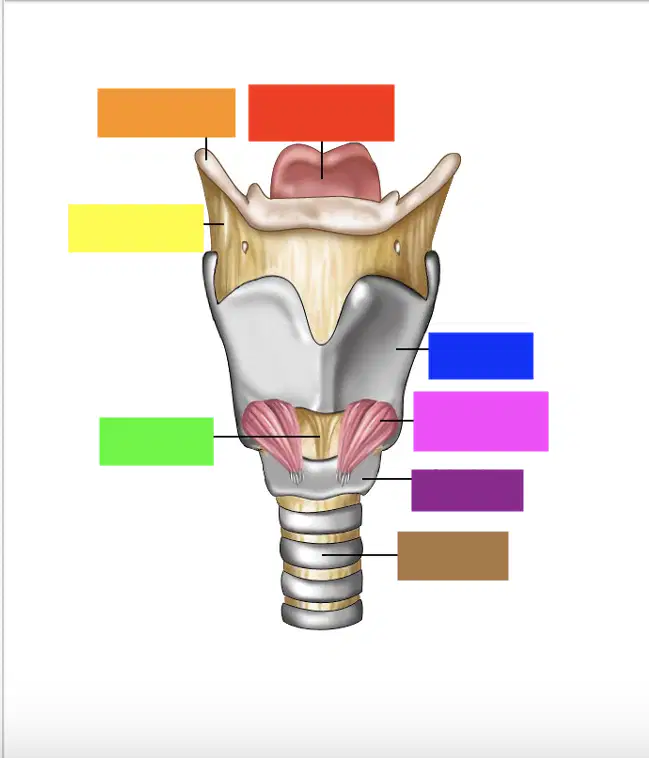
What is the green box?
Cricothyroid ligament
Cricothyroid muscles
cricoid cartilage
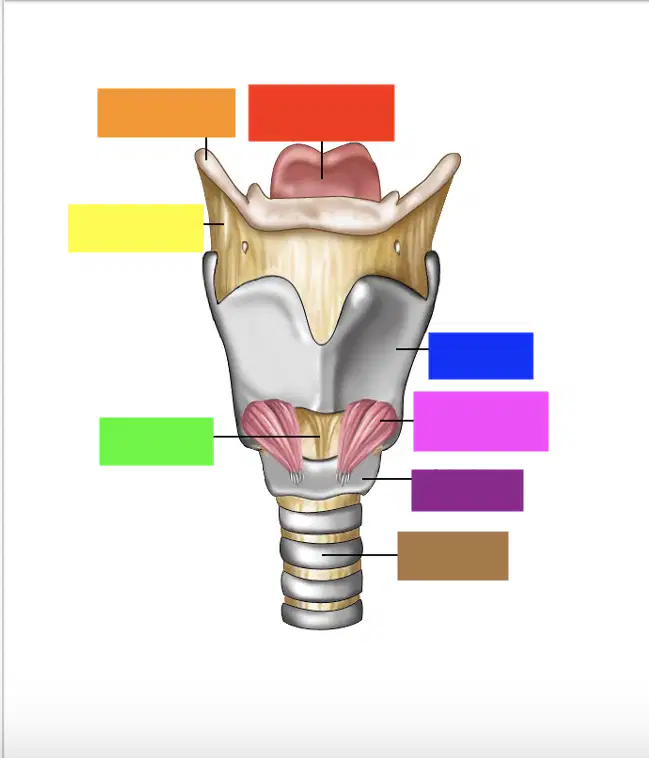
What is the purple box?
Cricothyroid ligament
Cricoid thyroid muscles
Cricoid cartilage
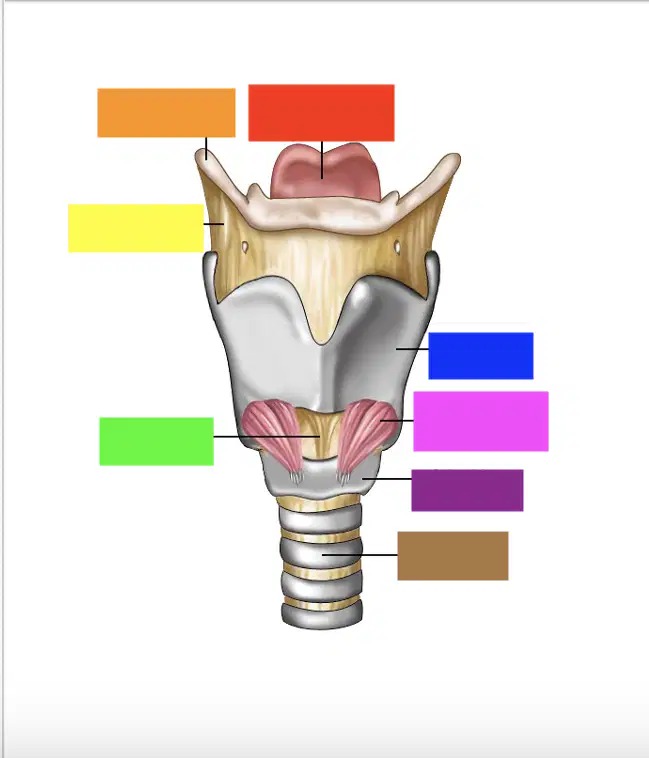
What is the pink box?
Cricothyroid ligament
Cricothyroid muscles
Cricoid cartilage
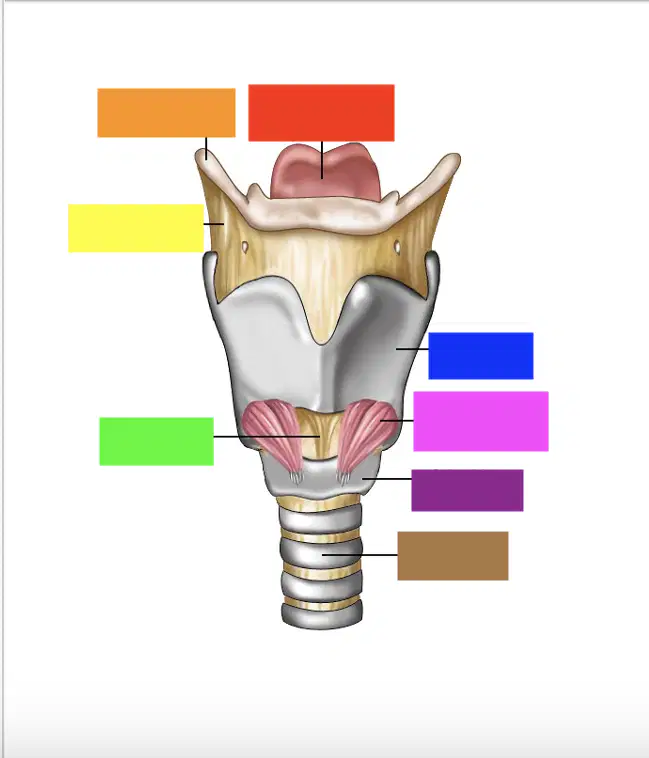
What is the blue box?
Epiglottis
Hyoid Bone
Thyrohyoid membrane
Thyroid cartilage
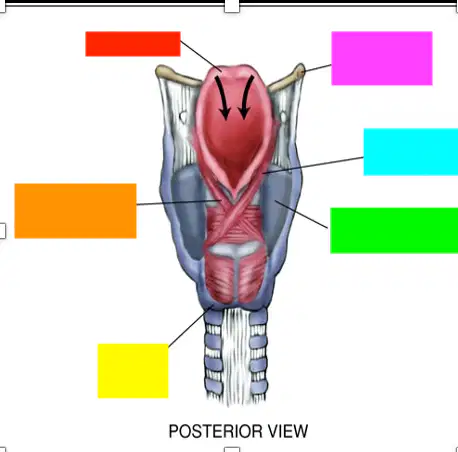
What is the red box?
Epiglottis
Hyoid bone
Oblique arytenoid muscle
Aryepiglottic muscle
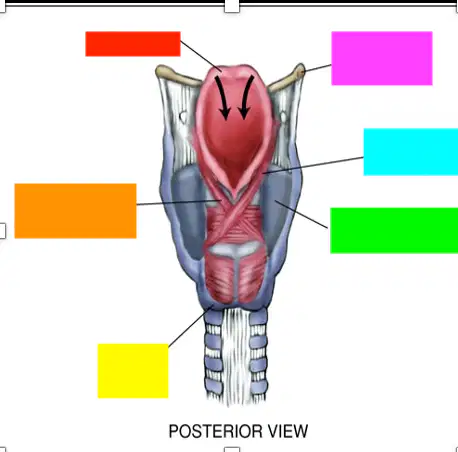
What is the orange box?
Oblique arytenoid muscle
Thyroid cartilage
Aryepiglottic muscle
Epiglottis
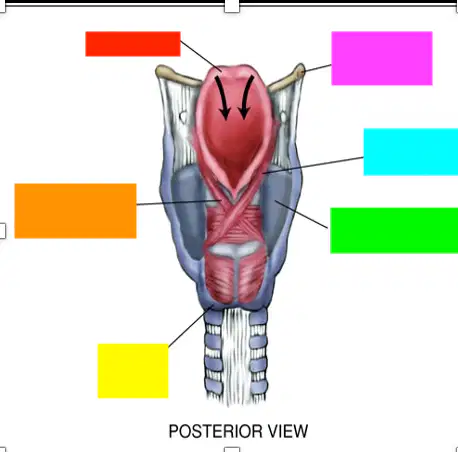
What is the yellow box?
Cricoid cartilage
Thyroid cartilage
Oblique arytenoid muscle
Epiglottis
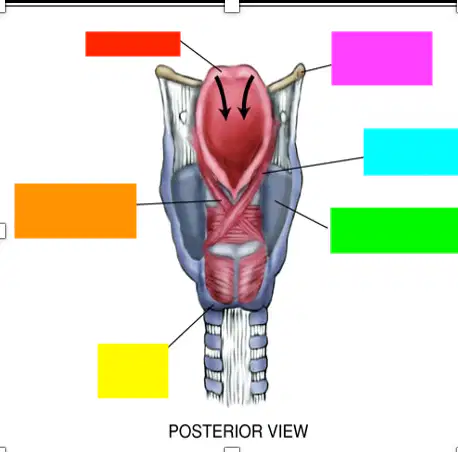
What is the green box?
Cricoid cartilage
Thyroid cartilage
Aryepiglottic muscle
Hyoid bone
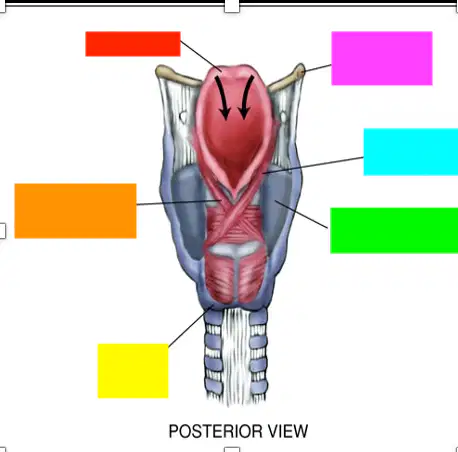
What is the blue box?
Oblique arytenoid muscle
Aryepiglottic muscle
Hyoid bone
Thyroid cartilage
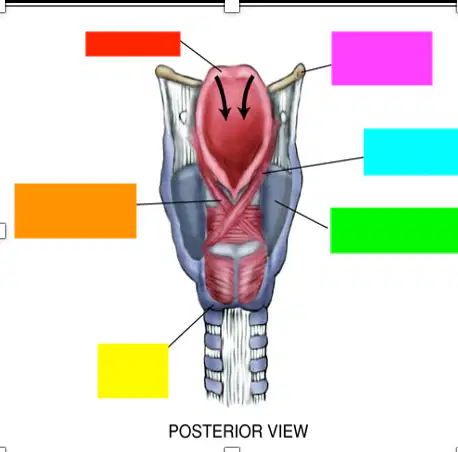
What is the pink box?
Hyoid bone
Thyroid cartilage
Aryepiglottic muscle
Oblique arytenoid muscle
Response by the tissue of the respiratory pathway to an irritant or foreign object, beneficial for life, problematic when continuous or frequent
Coughing
Throat clearing
Abdominal fixation
Swallowing reflex
Near cousin to coughing, more quiet but stressful and abusive to vocal folds
Coughing
Throat clearing
Abdominal fixation
Swallowing reflex
The process of capturing air within the thorax to provide muscles with a structure on which to push or pull
Coughing
Throat cleaing
Abdominal fixation
Swallowing reflex
Larynx elevates and vocal folds close to protect airway
Coughing
Throat clearing
Abdominal fixation
Swallowing reflex
What are the three laryngeal adjustments
Attack
Termination
Sustained phonation
Stalling
Vocal folds reach the critical degree of adduction at the same time as respiratory support is enough to support phonation
Simultaneous vocal attack
Breathy vocal attack
Glottal Attack
Starting airflow from lungs before adducting the vocal folds
Simultaneous vocal attack
Breathy vocal attack
Glottal attack
Adduction of vocal folds occurs prior to airflow
Simultaneous vocal attack
Breathy vocal attack
Glottal attack
Given a constant volume flow of air or fluid, at a point of constriction, there will be a decrease in air pressure perpendicular to the flow and an increase in velocity of the flow
(a)
Moving from one point in the vibratory pattern to same point again
Cycle of vibration
Mode of vibration
Register
The pattern of activity that the vocal folds undergo during one cycle of vibration
Cycle of vibration
Mode of vibration
Register
Differences in the mode of vibration of the vocal folds
Cycle of vibration
Mode of vibration
Register
Open from inferior to superior, close from inferior to superior also
Vertical dimension
Anterior posterior dimension
Vocal folds tend to open from posterior to anterior, tend to close in middle first, and posterior portion closes last
Vertical dimension
Anterior posterior dimension
Pattern of phonation used in daily conversation, needs about 3-5 cm of H2O of subglottal pressure to drive folds in this
(a)
Medial pressure is greatly increased, voice sounds more harsh, more abusive to the vocal folds
Pressed phonation
Breathy phonation
Glottal Fry
Falsetto
Vocal folds are inadequately approximated, excessive airflow between the vocal folds, air escaping, Marilyn Monroe type of voice, inefficient but not abusive
Pressed phonation
Breathy phonation
Glottal fry
Falsetto
Variation from modal register, also called pulse register, voice sounds crackly, low in pitch and sounds rough, requires low subglottal pressure to sustain, have a secondary "syncopated" mode of variation, is like an "extra beat"
Pressed phonation
Breathy phonation
Glottal fry
Falsetto
A variation from modal register, vocal folds lengthen and become extremely thin, vibrate along these tense and bowed margins, vocal folds make contact only briefly and degree of movement is reduced, sounds "thin" and high pitched
Pressed phonation
Breathy phonation
Glottal fry
Falsetto
The Psychological Correlate of frequency
(a)
The frequency of vocal fold vibration that is best (most appropriate) for a given individual
(a)
The frequency of vibration of vocal folds that is habitually used during speech
(a)
Frequency of vibration of sustained phonation
(a)
The range of fundamental frequency for an individual
(a)
When it contract, the thyroid tilts down, which lengthens the vocal folds, makes gross tension adjustments
(a)
Contraction of this muscle also tenses the vocal folds, fine tunes the gross adjustments
(a)

