wayground logo

Free Printable Worksheets

Font size

S
M
L
XL
Worksheets

Chemistry Semester 1 Final Exam 2023-2024

Total questions: 166

Worksheet time: 3hrs 56mins

Name
Class
Date
1.

Substances that are made up of ONLY one type of atom (element) or compound.

a)

Heterogeneous mixture

b)

Pure substance

c)

Suspension

d)

Homogeneous mixture

2.

Which of the following is classified as a pure substance?

a)

Lemonade

b)

Fruit punch

c)

ketchup

d)

Hydrogen

3.
What is matter?
a)
Anything that has mass and occupies space
b)
Anything that has mass
c)
Anything that is made of air
d)
ALL of them 
4.
Which of the following is a pure substance? 
a)
Water
b)
Sugar
c)

Gold

d)
ALL of them
5.

Which of the following is NOT a mixture?

a)

milk

b)

lemonade

c)

vegetable salad

d)

carbon

6.

Which of these is an element?

a)

Salt (NaCl)

b)

Water (H20)

c)

Oxygen (O)

d)

Carbon Dioxide (CO2)

7.

Which of these is a compound?

a)

Aluminium (Al)

b)

Carbon Dioxide (CO2)

c)

Nitrogen (N)

d)

Sand

8.

True or False: Elements and compounds are pure substances.

a)

True

b)

False

9.

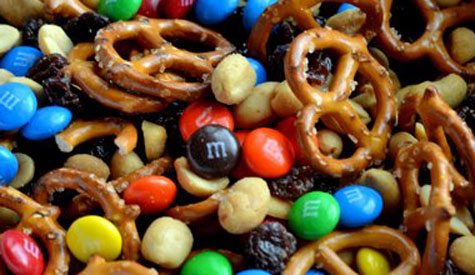
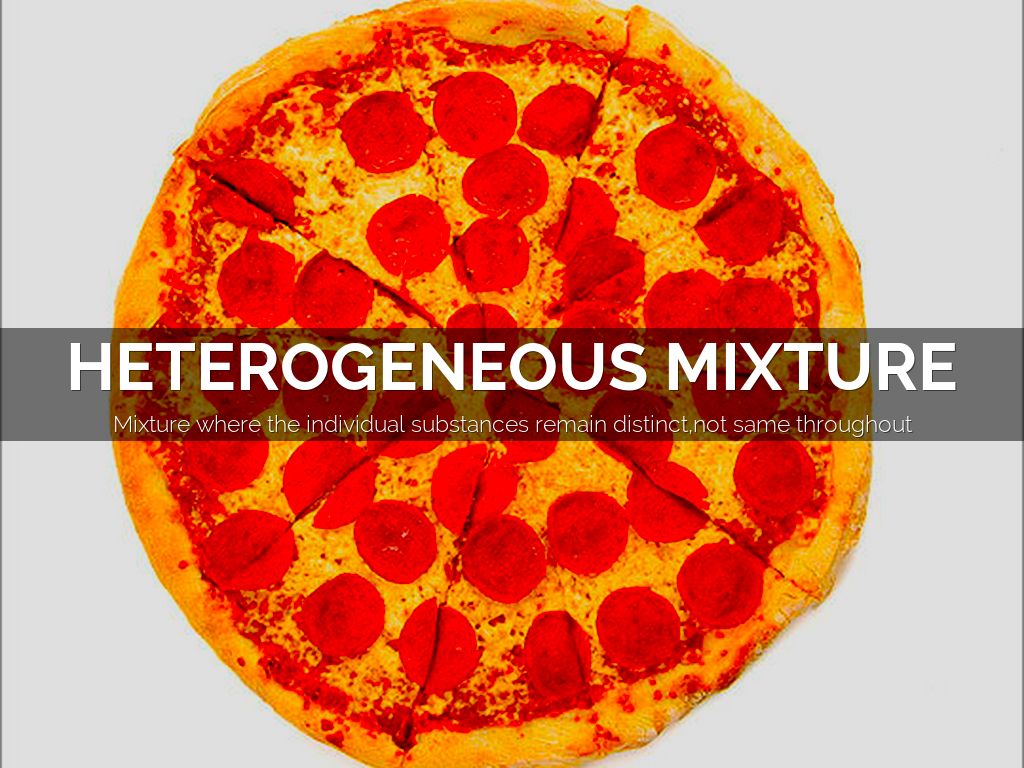
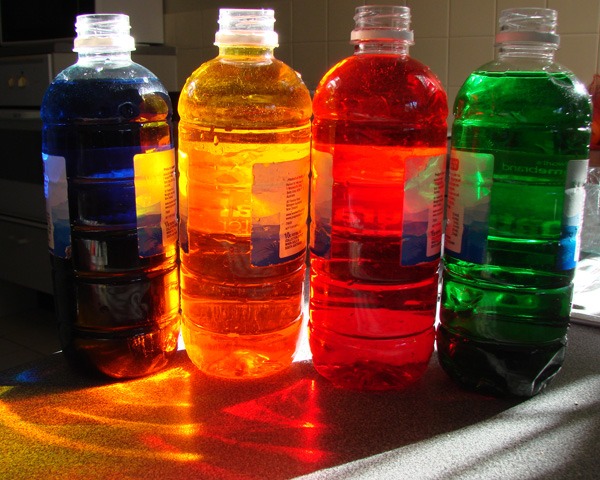
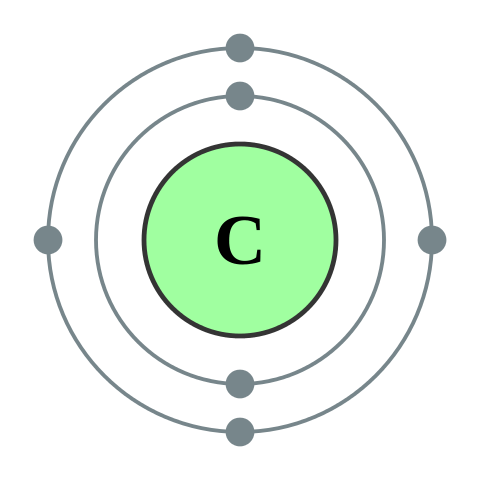
Identify which images are HETEROGENEOUS MIXTURES! (Check all that apply)

a)
b)
c)
d)
10.

Solutions are ___________ mixtures.

a)

Solid

b)

Homogenous

c)

Heterogeneous

d)

Gas

11.
Max is hungry and he prepares cereal with milk. This is an example of a: 
a)
Homogeneous mixture
b)
Heterogeneous mixture
12.
What are the two types of Mixtures
a)
Elements and Subatomic Particles
b)
Protons and Electrons
c)
Atoms and Compounds
d)
Homogenous and Heterogeneous
13.
Two substances physically combined and that appears the same throughout is classified as
a)
A homogeneous mixture
b)
A heterogeneous mixture
c)
An element
d)
  A compound
14.

What type of mixture does this diagram represent?

a)

Homogeneous

b)

Heterogeneous

15.

Which method can you use to separate sand and iron filings?

a)

Distillation

b)

Magnetism

c)

Filtration

d)

Evaporation

16.
What type of mixture is this?
a)
homogenous mixture
b)
chemical
c)
heterogeneous mixture 
d)
solid mix
17.

A mixture that contains two or more substances uniformly combined

a)

heterogeneous mixture

b)

homogeneous mixture

c)

suspension

d)

colloid

18.

Matter is classified in...

a)

Elements & Compounds

b)

Homogeneous & Heterogeneous

c)

Colloids & Suspensions

d)

Pure substances & Mixtures

19.
a)
heterogeneous mixture
b)
homogeneous mixture
20.
These are found on the Periodic Table.
a)
elements
b)
mixtures
c)
compounds
21.
If they are not the same throughout, they are called heterogeneous.
a)
elements
b)
mixtures
c)
compounds
22.
Examples are water (H2O) and carbon dioxide (CO2).
a)
elements
b)
mixtures
c)
compounds
23.
What is gold?
a)
element
b)
compound
c)
mixture
24.
What is salad?
a)
element
b)
compound
c)
mixture
25.

This type of mixture is the same throughout and you cannot see the different parts.

a)

heterogeneous mixture

b)

element

c)

homogeneous mixture

d)

compound

26.

Lucky Charms Cereal

a)

Compound

b)

Element

c)

Mixture

27.
A(n) ___________________ shows the elements in a compound and the number of the atoms for each element.
a)
Chemical Symbol
b)
Compound
c)
Chemical Formula
d)
Chemical Date
28.
Jay combines water, sugar, and lemon juice to form lemonade. What type of substance was made?
a)
Element
b)
Compound
c)
Mixture
29.

This type of mixture is NOT the same throughout; you can see the different parts.

a)

compound

b)

heterogeneous mixture

c)

homogeneous mixture

d)

solution

30.
Making a mixture results in ___________________ only.
a)
chemical reactions
b)
separate parts
c)
physical changes
d)
two subtances
31.
What are the two types of Mixtures
a)
Elements and Subatomic Particles
b)
Protons and Electrons
c)
Atoms and Compounds
d)
Homogenous and Heterogeneous
32.
Cookies and cream ice cream would be classified as
a)
A homogenous mixture
b)
A heterogenous mixture
c)
An element
d)
A compound
33.
Two substances physically combined and that appears the same throughout is classified as
a)
A homogeneous mixture
b)
A heterogeneous mixture
c)
An element
d)
  A compound
34.
What does it mean if a mixture is heterogeneous?
a)
you can see the different parts
b)
cannot tell one part from another
c)
very well blended
d)
made of elements
35.
What does it mean if a mixture is homogeneous?
a)
you can see the different parts
b)
cannot tell one part from another
c)
chunks of particles
d)
made of elements
36.
What type of mixture is this?
a)
heterogeneous 
b)
homogeneous
37.
What type of mixture is this?
a)
heterogeneous 
b)
homogeneous
38.
What type of mixture is this?
a)
heterogeneous 
b)
homogeneous
39.
What type of mixture is this?
a)
heterogeneous 
b)
homogeneous
40.
To separate the sugar and lemonade what method should you use?
a)
filtration 
b)
sorting
c)
magnet
d)
boiling
41.
To separate trail mix what method should you use?
a)
filtration 
b)
sorting
c)
magnet
d)
boiling
42.
To separate iron filings and sulfur what method should you use?
a)
filtration 
b)
sorting
c)
magnet
d)
boiling
43.
To separate noodles from water what method should you use?
a)
filtration with a strainer
b)
boiling while it is cooking
c)
magnet for the noodles
44.
Which mixture separation method uses a net?
a)
filtration 
b)
magnet
c)
boiling/evaporation
d)
sorting physically
45.
Which mixture separation method would work with picking up nails?
a)
filtration 
b)
magnet
c)
boiling/evaporation
d)
sorting physically
46.
Which mixture separation method would use to separate sugar from water?
a)
filtration 
b)
magnet
c)
boiling/evaporation
d)
sorting physically
47.
Which mixture separation method would use to sort trail mix?
a)
filtration 
b)
magnet
c)
boiling/evaporation
d)
sorting physically
48.
Elements and compounds are always ___.
a)
pure
b)
mixed
49.
Which list is made of mixtures?
a)
soil, water, soup
b)
carbon dioxide, soil, soup
c)
salt, water, air
d)
atoms, cereal, pizza
50.
What happens when you mix dirt and water?
a)
The dirt will float on top of the water.
b)
The dirt will settle to the bottom.
c)
The dirt will dissolve.
d)
The water will begin to bubble.
51.
Type of mixture that has the SAME COMPOSITION in every part.
a)
Homogenous
b)
Heterogeneous
52.
Type of mixture that DOESN'T HAVE the same composition in every part.
a)
Homogeneous
b)
Heterogeneous
53.
Salad is an example of a
a)
homogeneous mixture
b)
heterogeneous mixture
54.
Coloured water is an example of a
a)
homogeneous mixture
b)
heterogeneous mixture
55.
Soil is an example of a
a)
homogeneous mixture
b)
heterogeneous mixture
56.
Lemonade is an example of a
a)
homogeneous mixture
b)
heterogeneous mixture
57.
A mixtures is a combination of two or more____________ in which no new kinds of matter are formed.
a)
 subtances
b)
parts
c)
leaves
d)
pebbles
58.
Making a mixture results in ___________________ only.
a)
chemical reactions
b)
separate parts
c)
physical changes
d)
two subtances
59.
This is a mixture of two or more substances in which one or more of these substances (solutes) is dissolved in another substance.
a)
COMPOUND
b)
MOLECULE
c)
SOLUTION
d)
SOLVENT
60.
How do you separate iron filings from sand?
a)
You can use a filter.
b)
You can use a fagnet.
c)
You can use a magnet.
d)
You can use all of the methods!
61.
To separate iron filings and sulfur what method should you use?
a)
filtration 
b)
sorting
c)
magnet
d)
boiling
62.
Which of the following is a method of separating solutions?
a)
hand separation
b)
filtering
c)
decanting
d)
evaporation 
63.

How would you separate a mixture of sand and salt?

a)

Mix them with water and let the water evaporate

b)

Mix them with water, pour the mixture through a screen, then let the water evaporate

c)

Heat the sand and salt mixture for 5 minutes, then let it cool

d)

I would not do any of these because none of these options would work

64.
A way to separate a solid that has dissolved in a liquid solution is through ___________.
a)
Filtration
b)
Sifting
c)
Evaporation
d)
Flotation
65.

The mixture where one substance is dissolved in another is called a ...

a)

soluble

b)

solute

c)

solution

d)

dissolves

66.

When we want a substance to dissolve more quickly we should … the solution.

a)

stir

b)

saturate

c)

dissolve

d)

solve

67.

When dissolving sugar in water... sugar molecules spread out in the water.

a)

true

b)

false

68.

When dissolving sugar in water... the sugar can be separated from the water.

a)

true

b)

false

69.
The charge of a proton is 
a)
positive
b)
negative
c)
neutral (no charge)
70.
The mass of a proton is approximately the same as a mass of a 
a)
positron
b)
electron
c)
neutron
d)
beta particle
71.
Compared to the mass and charge of an electron, a proton has
a)
more mass same charge
b)
less mass same charge
c)
more mass opposite charge
d)
less mass no charge
72.
Which statement correctly describes the structure of an atom?
a)
Positively charged nucleus surrounded by positively charged electrons
b)
Positively charged nucleus surrounded by negatively charged electrons
c)
Negatively charged nucleus surrounded by negatively charged electrons
d)
Negatively charged nucleus surrounded by positively charged electrons
73.
In the diagram shown above, the green particle represents the:
a)
Proton
b)
Electron
c)
Neutron
d)
Nucleus
74.
In the diagram shown above, the electrons are
a)
Green
b)
Red
c)
Yellow
75.
In the diagram shown above, the green particle has:
a)
A mass of 1 amu and a charge of 0
b)
A mass of 1 amu and a charge of +1
c)
A mass of 0 amu and a charge of -1
d)
A mass of 0 amu and a charge of 0
76.
The net charge of the nucleus is
a)
+
b)
-
c)
0
77.
The nucleus contains
a)
Protons only
b)
Protons and neutrons only
c)
Protons neutrons and electrons
d)
Empty space
78.
These two particles have approximately the same mass
a)
protons & positrons
b)
protons & electrons
c)
Protons & neutrons
d)
Electrons & neutrons
79.
Which statement correctly describes the location of the protons and electrons within the atom?
a)
Protons and Electrons are located in the nucleus
b)
Protons are located in the nucleus and electrons are located in the orbitals
c)
Protons are located in the orbitals and electrons are located in the nucleus
d)
Protons and electrons are located in the orbitals
80.
Which subatomic particle has no mass but has charge?
a)
Proton
b)
Electron
c)
Neutron
81.
Which subatomic particle has a mass but no charge?
a)
Proton
b)
Electron
c)
Neutrons
82.
Which subatomic particle has a charge and is located in the nucleus?
a)
Proton
b)
Electron
c)
Neutron
83.
A neutron has a charge of
a)
+1
b)
+2
c)
-1
d)
0
84.
Which statement correctly matches the subatomic particle with its charge?
a)
A proton has a negative charge
b)
An electron has a negative charge
c)
A neutron has a positive charge
d)
An electron has a positive charge
85.
Which part of a Boron atom is positively charged?
a)
Electron
b)
Neutron
c)
Nucleus
d)
Orbital
86.
Which two subatomic particles have opposite charges?
a)
Protons and Electrons
b)
Protons and Neutrons
c)
Electrons and Neutrons
d)
Proton and Positron
87.
Which subatomic particle will be attracted to a positively charged object (remember: opposites attract)?
a)
Proton
b)
Electron
c)
Neutron
d)
Positron
88.
Which statement is true about a proton and an electron?
a)
They have the same mass and the same charge
b)
They have the same mass and different charges
c)
They have a different mass and the same charge
d)
They have a different mass and a different charge
89.
The subatomic particle of an atom that orbits around the nucleus and has a negative charge...
a)
Proton
b)
Neutron
c)
Electron
d)
Quark
90.
The subatomic particle that is located in the nucleus of an atom with a neutral charge...
a)
Proton
b)
Neutron
c)
Electron
d)
Quark
91.
These determine the reactivity of an element...
a)
Valence electrons
b)
Valence Protons
c)
Valence Neutrons
d)
Valence Quark
92.
How many protons are in Cadmium?
a)
112.411
b)
170
c)
64
d)
48
93.
How many neutrons does Argon have in it's nucleus?
a)
39.948
b)
58
c)
22
d)
18
94.
Lithium is located in Group 1 of the Periodic Table, which element has similar characteristics of Lithium?
a)
Cesium (Cs)
b)
Beryllium (Be)
c)
Neon (Ne)
d)
Magnesium (Mg)
95.
Arsenic is located in Group 15 of the Periodic Table.  How many valence electrons does the arsenic atom have?
a)
33
b)
5
c)
15
d)
75
96.
The ______________ is the number of protons + neutrons in the nucleus of an atom.
a)
atomic number
b)
net charge
c)
chemical symbol
d)
atomic mass
97.
Which element has 6 protons?
a)
N
b)
C
c)
O
d)
B
98.

Changing the number of protons in an atom will change the atom's _____

a)

color

b)

atomic weight/mass

c)

net charge

d)

identity (name of element)

99.
Calculate the atomic number of an atom with :
2 protons
3 neutrons
4 electrons
a)
2
b)
3
c)
4
d)
5
100.
Calculate the atomic weight/mass of an atom with:
11 protons
10 neutrons
11 electrons
a)
11
b)
21
c)
22
d)
10
101.

What is one difference between aluminum (Group 13) and magnesium's (Group 2) structure?

a)

Aluminum has more protons and fewer neutrons than magnesium.

b)

Magnesium has one more proton than aluminum.

c)

Magnesium's atomic mass is larger than aluminum's atomic mass.

d)

Magnesium has one less proton than aluminum.

102.

How many valence electrons are found in atoms of group 14?

a)

4

b)

3

c)

14

d)

16

103.
Which group has the greatest number of valence electrons?
a)
1
b)
14
c)
18
d)
16
104.
How many valence electrons are found in atoms of group 15?
a)
4
b)
5
c)
2
d)
3
105.
How many valence electrons are found in atoms of group 1?
a)
7
b)
6
c)
4
d)
1
106.

What are valence electrons?

a)

The total number of electrons in an atom

b)

The number of electrons in the outermost shell

c)

The number of electrons in the second shell

d)

The number of protons in the outermost shell

107.

Which elements have the most similar chemical properties?

a)

boron and carbon

b)

oxygen and sulfur

c)

aluminum and bromine

d)

argon and silicon

108.

All atoms are most stable with (or would "prefer") how many electrons in their valence shell?

a)

1

b)

2

c)

8

d)

18

109.
Valence electrons are: 
a)
Electrons farthest away from the nucleus
b)
Electrons closest to the nucleus
c)
Electrons that just come and go - they don't stay with the atom
d)
Electrons in the second shell
110.

When trying to identify an unknown element, a scientist determines what other elements reacts with chemically. Which property of the unknown element determines the other element it reacts with?

a)

The total number of neutrons in the unknown element

b)

The total number of particles in the nucleus of the unknown element

c)

The number of protons in the nucleus of the unknown element

d)

The number of valence electrons in the unknown element

111.

What group is the most reactive metals?

a)

2

b)

18

c)

1

d)

16

112.

What group is the most reactive non metals?

a)

1

b)

17

c)

2

d)

1

113.

Why are halogens so reactive?

a)

They want to get rid of their only valance electron

b)

They only need one more electron

c)

They are non reactive, they have a full shell

114.

How do electrons of an element determine that element's reactivity?

a)

If the valence shell has missing electrons it is very reactive to attract or lose more electrons.

b)

If the valence shell has a full ring of electrons it is very reactive because it needs more.

c)

If the valence shell has a full shell of electrons it is very reactive because it is already full.

d)

If the valence shell has missing electrons it is not reactive because it is missing electrons.

115.

Which of the following statements describes group 17 of the periodic table?

a)

Stable non-metals with 1 valence electron

b)

Stable Metals with 7 valence electrons

c)

Highly reactive non-metals with 7 valence electron.

d)

Highly reactive metals with 2 valence electrons.

116.
Describe this element.
a)
Highly reactive metal
b)
Highly reactive nonmetal
c)
Stable
d)
Less stable non metal
117.

What are valence electrons?

a)

The total number of electrons in an atom

b)

The number of electrons in the outermost shell

c)

The number of electrons in the second shell

d)

The number of protons in the outermost shell

118.
a)
2
b)
8
c)
3
d)
13
119.
a)
2
b)
3
c)
5
120.

How many valence electrons does carbon have?

a)

4

b)

5

c)

6

d)

7

121.
Rows on the period table are called _____ while columns are called _____.
a)
groups, families
b)
groups, periods
c)
periods, groups
d)
families, groups
122.

Appear Vertically on the periodic table

a)

Periods

b)

Groups

123.

Energy Levels best describe .....

a)

Periods

b)

Groups

124.

Elements that are similar in chemical reactivity

a)

Periods

b)

Groups

125.

Elements that appear horizontally on the periodic table

a)

Periods

b)

Groups

126.

Which two elements have properties in common?

a)

Nitrogen and Phosphorous

b)

Oxygen and Nitrogen

c)

Sulfur and Nitrogen

127.

How many protons does Lithium have?

a)

3

b)

4

c)

7

128.

These elements are in a:

a)

group

b)

period

129.

Do these elements have properties in common?

a)

yes

b)

no

130.

These elements are in a:

a)

group

b)

period

131.

Do these elements have properties in common?

a)

yes

b)

no

132.

Which elements are stable?

a)

Group 1

b)

Group 8

c)

Group 18

133.

How many valence electrons are in this element?

a)

7

b)

6

c)

5

d)

2

134.

What is the name of this element?

a)

Calcium

b)

Helium

c)

Lithium

d)

Boron

135.

Which element has the same number of electrons in the outer energy level as Oxygen?

a)

Boron, B

b)

Carbon, C

c)

Neon, Ne

d)

Sulfur, S

136.

How many energy levels does this element have?

a)

2

b)

5

c)

3

d)

1

137.

How many energy levels are in an atom of Neon?

a)

8

b)

2

c)

3

d)

10

138.

What group is Lithium located in?

a)

1

b)

3

c)

2

d)

7

139.

How many valence electrons does this element have?

a)

3

b)

4

c)

2

d)

1

140.

How many neutrons are in an atom of Sulfur, S

a)

17

b)

15

c)

16

d)

5

141.

How many valence electrons do elements in group 14, 4A contain?

a)

6

b)

12

c)

14

d)

4

142.

What Period is Chlorine, Cl, located in?

a)

2

b)

3

c)

17

d)

7

143.

Is this model correct for Carbon, C?

a)

Yes

b)

No

144.

How many protons are in an atom of Calcium, Ca?

a)

2

b)

20

c)

12

d)

40

145.

What period is this element located in?

a)

2

b)

20

c)

4

d)

3

146.

What group is this element located in?

a)

1

b)

2

c)

3

d)

4

147.

Which Element is this?

a)

Hydrogen (H)

b)

Helium (He)

c)

Lithium (Li)

d)

Neon (Ne)

148.

Which Element is this?

a)

Hydrogen (H)

b)

Helium (He)

c)

Lithium (Li)

d)

Beryllium (Be)

149.

Which Element is this?

a)

Carbon (C)

b)

Nitrogen (N)

c)

Lithium (Li)

d)

Beryllium (Be)

150.

Which Element is this?

a)

Carbon (C)

b)

Fluorine (F)

c)

Boron (B)

d)

Beryllium (Be)

151.

Which Element is this?

a)

Carbon (C)

b)

Fluorine (F)

c)

Boron (B)

d)

Sodium (Na)

152.

Which Element is this?

a)

Carbon (C)

b)

Magnesium (Mg)

c)

Beryllium (Be)

d)

Sodium (Na)

153.

Which Element is this?

a)

Lithium (Li)

b)

Boron (B)

c)

Silicon (Si)

d)

Nitrogen (N)

154.

Which Element is this?

a)

Lithium (Li)

b)

Boron (B)

c)

Oxygen (O)

d)

Carbon (C)

155.

Which Element is this?

a)

Potassium (K)

b)

Fluorine (F)

c)

Nitrogen (N)

d)

Neon (Ne)

156.

Which Element is this?

a)

Calcium (Ca)

b)

Fluorine (F)

c)

Potassium (K)

d)

Neon (Ne)

157.

Which Element is this?

a)

Vanadium (V)

b)

Boron (B)

c)

Sodium (Na)

d)

Magnesium (Mg)

158.

Which Element is this?

a)

Helium (He)

b)

Chromium (Cr)

c)

Carbon (C)

d)

Magnesium (Mg)

159.

Which Element is this?

a)

Cobalt (Co)

b)

Nitrogen (N)

c)

Silicon (Si)

d)

Aluminum (Al)

160.

Which Element is this?

a)

Nitrogen (N)

b)

Nickel (Ni)

c)

Silicon (Si)

d)

Aluminum (Al)

161.

Which Element is this?

a)

Oxygen (O)

b)

Sulfur (S)

c)

Phosphorus (P)

d)

Gallium (Ga)

162.

Which Element is this?

a)

Oxygen (O)

b)

Sulfur (S)

c)

Phosphorus (P)

d)

Germanium (Ge)

163.

Which Element is this?

a)

Chlorine (Cl)

b)

Bromine (Br)

c)

Argon (Ar)

d)

Fluorine (F)

164.

Which Element is this?

a)

Zirconium (Zr)

b)

Oxygen (O)

c)

Argon (Ar)

d)

Titanium (Ti)

165.

Which Element is this?

a)

Neon (Ne)

b)

Calcium (Ca)

c)

Potassium (K)

d)

Yttrium (Y)

166.

Which Element is this?

a)

Neon (Ne)

b)

Calcium (Ca)

c)

Potassium (K)

d)

Zirconium (Zr)