Wayground logo

Free Printable Worksheets

Font size

S
M
L
XL
Worksheets

Science 8 LT4 Revision

Total questions: 122

Worksheet time: 2hrs 32mins

Name
Class
Date
1.

What is the process called that describes the movement of carbon through different parts of the Earth?

a)

carbon cycle

b)

carbon transition

c)

carbon transfer

d)

carbon flow

2.

What are the two main processes involved in the carbon cycle?

a)

photosynthesis and respiration

b)

combustion and decomposition

c)

evaporation and condensation

d)

transpiration and precipitation

3.

What is the role of plants in the carbon cycle?

a)

Plants do not play a role in the carbon cycle.

b)

Plants absorb carbon dioxide and release oxygen during photosynthesis.

c)

Plants release carbon dioxide and nitrogen during photosynthesis.

d)

Plants release carbon dioxide and absorb oxygen during photosynthesis.

4.

What is the role of animals in the carbon cycle?

a)

Animals convert carbon dioxide into oxygen through photosynthesis.

b)

Animals absorb carbon dioxide from the atmosphere.

c)

Animals release carbon dioxide through respiration and decomposition of organic matter.

d)

Animals do not play a role in the carbon cycle.

5.

What is the rate of reaction?

a)

The rate of reaction is the speed at which a chemical reaction takes place.

b)

The rate of reaction is the color change observed during a chemical reaction.

c)

The rate of reaction is the temperature at which a chemical reaction occurs.

d)

The rate of reaction is the amount of reactants used up in a chemical reaction.

6.

What factors can affect the rate of a chemical reaction?

a)

Temperature, concentration, surface area, catalysts, pressure

b)

pH level, color, volume, time, light intensity

7.

What is sound?

a)

Sound is a form of light energy.

b)

Sound is a form of heat energy.

c)

Sound is a form of electromagnetic energy.

d)

Sound is a form of energy produced by vibrating objects and transmitted through a medium.

8.

Where does SOIL get its carbon from?

a)

The sky

b)

The sun

c)

Dead animals and plants

d)

Worms

9.

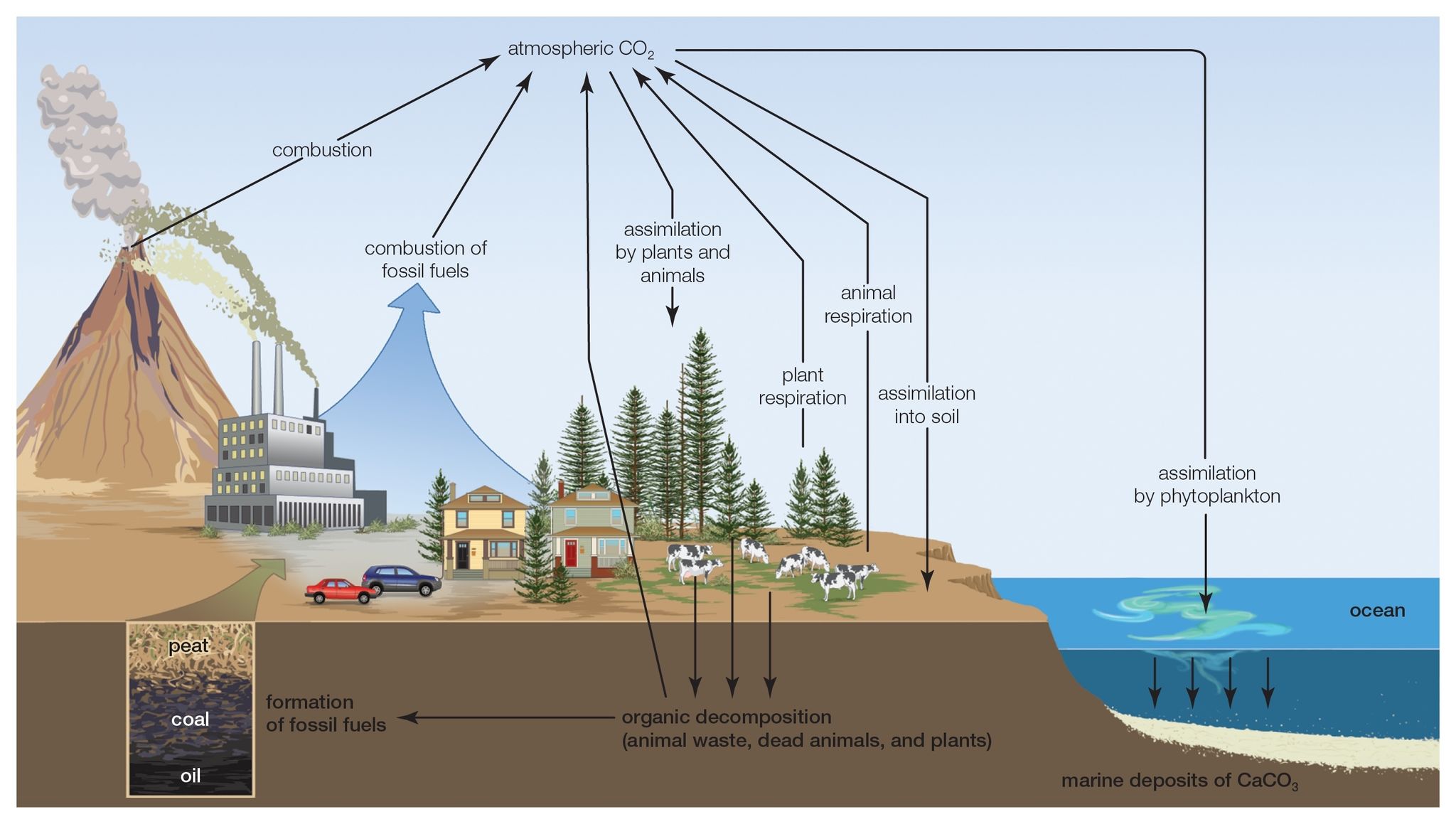
Label the following Carbon cycle.

10.

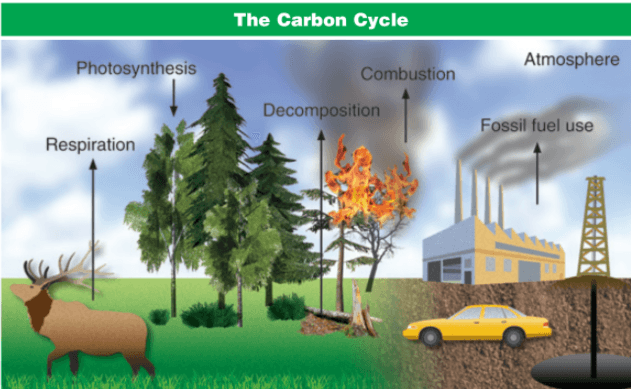
Label the following Carbon cycle.

11.
When humans burn fossil fuels, most of the carbon quickly enters the                       as carbon dioxide.
a)
Water
b)
Atmosphere
c)
Sun
d)
Air
12.
Which of the following add carbon dioxide to the atmosphere?
a)
volcanoes
b)
combustion of fossil fuels
c)
animal and plant respiration
d)
all of these
13.
Organisms that do not decompose can be buried and become what?
a)
water
b)
nutrients
c)
air
d)
fossil fuels
14.
The average temperature of the surface of Earth has increased approximately 1°C in the past century. Which reason best explains this increase in temperature?
a)
lower levels of ozone in the atmosphere
b)
lower levels of nitrogen in the atmosphere
c)
higher levels of carbon dioxide and other greenhouse gases in the atmosphere
d)
higher levels of oxygen in the atmosphere
15.

With the help of the Sun, through the process of photosynthesis, carbon dioxide is pulled from the air to make plant________

a)

leaves

b)

food

c)

roots

d)

nutrients

16.

Which process contributes carbon dioxide to the atmosphere?

a)

respiration

b)

photosynthesis

c)

tree farms

17.

Which process removes carbon dioxide from the atmosphere?

a)

deforestation

b)

tree farms

c)

burning fossil fuels

d)

cellular respiration

18.

What is the greatest contributor to atmospheric carbon?

a)

burning garbage

b)

burning biomass

c)

transportation

d)

household usage

19.

Respiration is the process by which animals take in _____ and release _____ to make energy. 

a)
photosynthesis, air
b)
carbon, oxygen
c)
oxygen
d)
oxygen, carbon dioxide
20.

Cellular Respiration involves the chemical breakdown of _____ to form ATP Energy

a)

Fats

b)

Fructose

c)

Glucose

d)

Proteins

21.
What does NOT produce carbon dioxide?
a)
Photosynthesis
b)
Burning Fossil Fuels
c)
Animal respiration
d)
Plants decaying
22.
Combustion is another word for __________.
a)
Transportation
b)
Respiration
c)
Fossil Fuels
d)
Burning
23.
What process occurs when coal (fossil fuel) is used for energy?
a)
Decomposition
b)
Combustion
c)
Pressurization 
d)
Respiration 
24.

Plants use ____________________ to make their own food.

a)

Carbon Dioxide

b)

Oxygen

c)

Materials

d)

Gravity

25.

How do animals get carbon?

a)

By eating plants and or other animals.

b)

They absorb it from the atmosphere.

c)

From the ground

d)

They do not get carbon from anywhere.

26.
How does the law of conservation of energy relates to photosynthesis?
a)
The energy from glucose is transform into light energy
b)
Light energy from the sun is converted into chemical energy in glucose 
c)
Energy from carbon dioxide is converted into chemical energy in Oxygen
d)
All other answers are correct
27.
What is the role of decomposers in an Ecosystem? 
a)
They recycle matter and nutrients to form fossil fuels
b)
They are burn and release as carbon dioxide
c)
Decomposers are responsible to turn oxygen into carbon dioxide
d)
They recycle energy back to the sun
28.
In the atmosphere, carbon attaches to oxygen to form _____.
a)
C
b)
O
c)
CO2 
d)
C6H12O6
29.
Burning fossil fuel has which effect in the carbon cycle?
a)
It removes carbon dioxide from the atmosphere.
b)
It puts carbon dioxide under the ground.
c)
It adds carbon dioxide to the atmosphere.
d)
It has no effect in the carbon cycle.
30.

Which is an important element for living things?

a)
Neon
b)
Hydrogen
c)
Helium
d)
Carbon
31.

Complete the following word equation:

Metal + Acid -->

a)

Salt + water

b)

Salt + hydrogen

c)

Salt + Water + Carbon dioxide

32.

Complete the following word equation:

Metal carbonate + acid -->

a)

Salt + Hydrogen

b)

Salt + Water + Carbon Dioxide

c)

Salt + Water

33.

How do you remove the water to leave solid copper sulfate crystals?

a)

Filter

b)

Evaporate

c)

Distill

34.
What salt is produced if you react sodium hydroxide with hydrochloric acid?
a)
sodium hydroxide
b)
sodium sulfate
c)
sodium nitrate
d)
sodium chloride
35.
Identify the 'evaporating basin' from the diagrams.
a)
A
b)
B
c)
C
d)
D
36.
Salts that are made with sulfuric acid are called ______________.
a)
chlorides
b)
sulfates
c)
nitrates
d)
carbonates
37.

What does the word insoluble mean?

a)

Does dissolve

b)

Doesn't dissolve

c)

Is part of a solid

38.

Crystallisation is used to separate ____ from a liquid.

a)

undissolved liquid

b)

dissolved liquid

c)

undissolved solid

d)

dissolved solid

39.

what two pieces of equipment are required for filtration?

a)

filter and evaporating dish

b)

filter and funnel

c)

evaporating dish and bunsen burner

d)

funnel and stirring rod

40.

What piece of equipment is required for crystallisation?

a)

filter paper

b)

funnel

c)

petri dish

d)

evaporating dish

41.

What is the correct order for making a salt?

a)

dissolve metal oxide in acid -> evaporate -> filter

b)

dissolve metal oxide in acid -> filter -> evaporate

c)

filter -> dissolve metal oxide in acid -> evaporate

d)

filter -> evaporate -> dissolve metal oxide in acid

42.
Salts that are made with hydrochloric acid are called ______________.
a)
chlorides
b)
sulfates
c)
nitrates
d)
carbonates
43.
Salts that are made with nitric acid are called ______________.
a)
chlorides
b)
sulfates
c)
nitrates
d)
carbonates
44.

Which two chemicals could you react to make only potassium chloride and water?

a)

Potassium and hydrochloric acid

b)

Potassium hydroxide and hydrochloric acid

c)

Potassium oxide and sulfuric acid

d)

Potassium and sulfuric acid

45.

_________________ + nitric acid --> calcium nitrate + water

a)

calcium sulfate

b)

calcium oxide

c)

calcium carbonate

d)

calcium

46.

Which salt would be formed by reacting cobalt carbonate and hydrochloric acid?

a)

Cobalt sulfate

b)

Cobalt chloride

c)

Cobalt hydroxide

d)

Cobalt sulfide

47.
Neutralization reactions
a)
formed from joining positive and negative ions 
b)
increases OH ions
c)
froms a salt and water
d)
increases H2O ions
48.
What does pH measure?
a)
how acidic a substance is
b)
how basic a substance is
c)
how acidic or basic substances are
d)
how many hydronium ions and acid produces
49.
If you combine an acid and a base, this occurs.
a)
acidification
b)
basification
c)
neutralization
d)
negativation
50.
Which is the stronger acid?
a)
pH 1
b)
pH 4
c)
pH 8
d)
pH 13
51.
What salt is produced if you react sodium hydroxide with hydrochloric acid?
a)
sodium hydroxide
b)
sodium sulfate
c)
sodium nitrate
d)
sodium chloride
52.
A salt is formed when nitric acid combines with sodium hydroxide. What is the name of the salt?
a)
Sodium chloride
b)
Sodium nitrate
c)
Hydrogen Nitrate
d)
Nirate
53.
Name the salt produced when reacting potassium hydroxide and phosphoric acid?
a)
Potassium chloride
b)
potassium nitrate
c)
potassium sulfate
d)
potassium phosphate
54.

What is the test for Hydrogen gas?

a)

Squeaky pop

b)

Lime water turning cloudy

c)

Add pH paper

55.

What is the test for Carbon Dioxide?

a)

Add Litmus paper

b)

Lime water turning milky

c)

Squeaky pop

56.
Salts that are made with hydrochloric acid are called ______________.
a)
chlorides
b)
sulfates
c)
nitrates
d)
carbonates
57.
Rate of chemical reaction means
a)
amount of product formed
b)
speed of reaction
c)
concentration of reacting particles
d)
combining reactants with products
58.
Which factors increase the rate of a reaction.
a)
increasing temperature
b)
increasing concentration
c)
increasing surface area
d)
all of these
59.
Increase in temperature of the reactants can do one of the following
a)
Slow collision frequency
b)
Allow less effective collision between the particles
c)
Neutralise the reaction
d)
increase collision between the particles thus increasing the rate.
60.
Why does a catalyst increase the rate of reaction?
a)
it produces extra energy for the reactants
b)
it increases the speed of the reactant particles
c)
it increases the frequency of particle collisions
d)
it reduces the activation energy of the reaction 
61.
Which of the following increase the reaction rate?
a)
less surface area
b)
lower temperature
c)
an inhibitor
d)
increased concentration
62.
Why does a higher temperature increase the rate of a reaction?
a)
it increases both the frequency and energy of particle collisions
b)
it only increases the frequency of particle collisions
c)
it only increases the energy of particle collisions
d)
it reduces the activation energy of the reaction
63.
This symbol indicates that a reaction is ____________
a)
reversible
b)
irreversible
64.
A substance that increases speed of chemical reaction without being changed is called:
a)
Catalyst
b)
Acid
c)
Base
d)
pressure
65.
Identify where the reaction has finished
a)
A
b)
B
c)
C
d)
D
66.

A temperature increase causes the particles to ......

a)

to slow down

b)

move faster

c)

collide higher

d)

in the right order

67.

Why does a higher concentration increase the rate of reaction?

a)

it increases the amount of reactants

b)

it lowers the activation energy

c)

it increases the energy of particle collisions

d)

it increases the frequency of particle collisions

68.

Breaking up a lump of potassium into smaller pieces increases the rate of reaction due to increased

a)

concentration

b)

surface area

c)

temperature

d)

reactants

69.

A temperature increase causes the particles ......

a)

to slow down

b)

move faster

c)

collide higher

d)

in the right order

70.

Decreasing the size of the reaction container means that particles are ___________ together.

a)

Happy

b)

Never

c)

Paired

d)

Closer

71.

Increasing the temperature gives particles more __________.

a)

Time

b)

Energy

c)

Space

d)

Frequency

72.
Why does breaking up a solid reactant increase the rate of reaction?
a)
it creates more solid
b)
it creates more energy
c)
it increases the surface area
d)
it increases the concentration
73.

What happens to the rate of a reaction when you decrease the temperature?

a)

decreases

b)

increases

c)

stays the same

74.

Which of the following changes will NOT increase the rate of a chemical reaction?

a)

increase temperature

b)

increase surface area

c)

increase concentration

d)

decrease concentration

75.

Which of the curves indicates the fastest reaction?

a)

A

b)

B

c)

C

76.

Which of the curves indicates the slowest reaction?

a)

A

b)

B

c)

C

77.

Sound is produced when an object...

a)

Moves

b)

Makes a noise

c)

Vibrates

d)

Falls

78.

When objects vibrate, they create regions of space in which the air particles are bunched together called...

a)

Conductions

b)

Compressions

c)

Rarefactions

d)

Close vibrations

79.

When objects vibrate, they create regions of space in which the air particles are spread out called...

a)

Conductions

b)

Compressions

c)

Rarefactions

d)

Loose vibrations

80.

True or False:

Sound energy needs a medium (solid, liquid or gas) to travel through.

a)

True

b)

False

81.

True or False:

Sound energy can travel through outer space (a vacuum).

a)

True

b)

False

82.

Reorder the following:

Which medium does sound travel further through, highest to lowest distance.

a)

Solids

b)

Liquids

c)

Gases

1)
2)
3)
83.

Why does sound travel a longer distance through solids?

a)

Because the particles are loosely bonded

b)

Because the particles are spread out

c)

Because the particles are tightly packed together
84.

Why does sound travel the shortest distance through gases?

a)

Because the particles are loosely bonded

b)

Because the particles are spread out

c)

Because the particles are tightly packed together
85.
You and your father inspect an empty house with the hopes of buying it. You walk through the rooms talking to one another, and you notice that your voices and footsteps are echoing in the big, empty house. What causes the echo?
a)
sound waves reflecting off smooth, flat surfaces throughout the house
b)
sound waves moving around the large rooms
c)
sound waves moving slowly through air
d)
sound waves refracting around corners in the empty rooms
86.
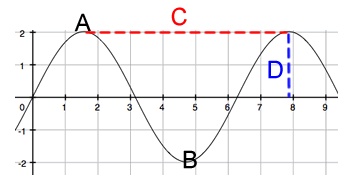
If distance C on the diagram increased, what would happen to the pitch? 
a)
The pitch would be louder. 
b)
The pitch would be softer. 
c)
The pitch would be higher. 
d)
The pitch would be lower. 
87.
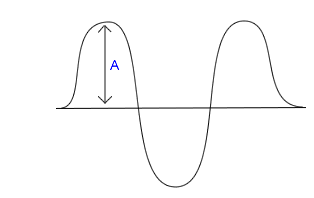
If the distance represented by the letter A were increased, how would it change the way the sound was heard?
a)
The sound would be higher. 
b)
The sound would be lower. 
c)
The sound would be softer. 
d)
The sound would be louder. 
88.
______ is how high or low a sound is; depends on the frequency.
a)
pitch
b)
frequency
c)
sound
d)
medium
89.
A soft, low pitch sound would have which of the following....
a)
low frequency 
high amplitude 
b)
high frequency 
high amplitude 
c)
low frequency 
low wavelength  
d)
low frequency
low amplitude 
90.
A reflected sound wave is know as a/an ___________.
a)
frequency
b)
pitch
c)
echo
d)
rarefaction
91.
If I increase the energy of a wave, what will happen to the pitch? 
a)
stays the same
b)
increases
(higher pitch)
c)
decreases
(lower pitch)
d)
goes up but levels off
92.
A soft, high pitch sound would have which of the following....
a)
low frequency 
high amplitude
b)
low frequency 
low wavelength 
c)
high frequency 
low amplitude
d)
high frequency 
high amplitude 
93.
______ is how loud or soft a sound is; depends on the amplitude.
a)
pitch
b)
frequency
c)
loudness
d)
medium
94.
How are light waves and sound waves similar?
a)
The both carry matter & energy
b)
They both carry energy.
c)
They both travel in vacuums.
d)
They both carry matter.
95.
Sound travels FASTEST through which of these materials?
a)
Air
b)
Empty space
c)
Metal
d)
Water
96.
What is vibration?
a)
how loud a sound is
b)
the back and forth movement of matter
c)
how high or low a sound is
d)
the loudness or softness of a sound
97.
Sound is a form of? 
a)
energy
b)
pitch
c)
volume
98.
A longer string makes a _______ pitch than a short string.
a)
louder
b)
softer
c)
higher
d)
lower
99.
To make a sound from a stringed instrument louder you must
a)
hit it
b)
pluck it harder
c)
hold it higher
d)
pluck it softer
100.
Measure of how high or low a sound is
a)
amplitude
b)
compression
c)
speed of sound
d)
pitch
101.
What is volume?
a)
how high or low a sound is
b)
the loudness or softness of a sound
c)
the number of vibrations per second
d)
vibrations
102.
What is frequency?
a)
the number of vibrations per second
b)
how high or low a sound is
c)
the loudness or softness of a sound
d)
the back and forth movement of matter
103.
Sound moves in a _________.
a)
Transverse wave
b)
Longitudinal wave
104.

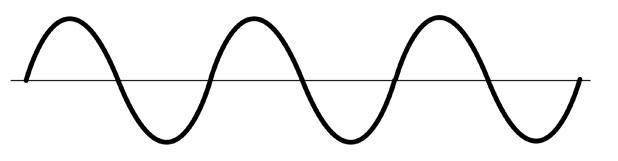
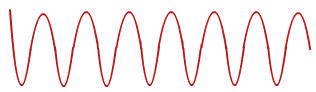
Which of these sound waves has the highest frequency?

a)
b)
c)
105.

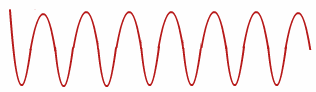
Which sound wave has the lowest pitch?
a)
b)
c)
106.

What part of the wave are the arrows pointing to?

a)

Crest

b)

Trough

c)

Amplitude

d)

Origin

107.

4. What do we hear thunder after we see a flash of lightning , usually some time later?

a)

Sound travels at a speed of 300,000,000 m/s. while light travels at a speed of 330 m/s.

b)

Sound travels at a speed of 330 m/s while light travels at a speed of 3,000,000 m/s.

c)

Sound travels at a speed of 330 m/s while light travels at a speed of 300,000,000 m/s.

d)

Because imagine dragons thunder, feel the thunder.

108.

What is the range of frequencies audible to the human ear

a)

lower than 20 Hz

b)

20 Hz - 20.000 Hz

c)

higher than 20.000 Hz

d)

0 Hz - infinite Hz

109.

What is ultrasound?

a)

Sound with a frequency higher than 20.000 Hz

b)

Sound with a frequency lower than 20 Hz

c)

Sound with a frequency 20 Hz

d)

sound with a frequency 20.000 Hz

110.

look at the picture. There are 4 sound wave with different amplitude and wavelength. Which sound wave has loudest sound?

a)

A

b)

B

c)

C

d)

D

111.

look at the picture. There are 4 sound wave with different amplitude and wavelength. Which sound wave has highest pitch?

a)

A

b)

B

c)

C

d)

D

112.

The delay time between light of thunder and sound of thunder is 2 seconds. If the speed of sound at the air is 340 m/s, how far the thunder from you?

a)

680 m

b)

170 m

c)

342 m

d)

338 m

113.
Question Image

Match these parts of a sound wave

a)

Amplitude

1.

volume

b)

Frequency

2.

pitch

c)

Compression

3.

wave close together

d)

rarefaction

4.

wave spread out

114.

Match these

a)

sound

1.

longitudinal wave

b)

light

2.

transverse wave

c)

energy

3.

the ability to do work

115.
Question Image

Match these parts of a light wave

a)

Amplitude

1.

height of the wave

b)

wavelength

2.

distance from wave to wave; gives light its color

c)

crest

3.

top

d)

trough

4.

bottom

e)

frequency

5.

how often waves occur

116.

match

a)

vibration

1.

move back and forth

b)

echo

2.

sound bounces back

c)

reflection

3.

light bounces back

d)

refraction

4.

light bends

117.

We measure pitch in....

a)

Volume

b)

Decibles

c)

Amplitude

d)

Hertz

118.

A place where no sound exists is...

a)

in the air

b)

under water

c)

space

d)

all of the above

119.

The part of the sound wave when particles are furthest apart

a)

compression

b)

rarefaction

120.

Light travels

a)

around corners

b)

in a straight line (transverse waves)

c)

in loops, like a slinky (longitudinal waves)

121.

pitch=

a)

amplitude

b)

frequency

122.

match these types of energy with how they can be used

a)

Infrared

1.

"seeing" the heat of a person or animal in the dark

b)

Radio

2.

music, communication

c)

Microwaves

3.

cooking

d)

Ultraviolet (UV)

4.

growing plants, tanning, cleaning

e)

X-Rays

5.

"seeing" inside the body (bones)