
 Worksheets
Plate Tectonics and Natural Disasters
Total questions: 160
Worksheet time: 5hrs 37mins
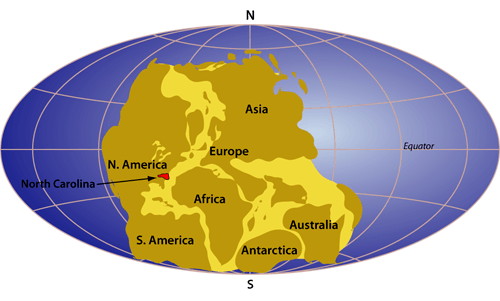
What is this a picture of?
plate tectonics
continental drift
Pangaea
glacier scaring
Which of the following is the best evidence that Earth's continents were once in vastly different positions than they are today?
Penguins only found in southern hemisphere
Fossils of tropical plants found on an island in Arctic Ocean.
Volcanoes encircling Pacific Ocean
Major rivers from deltas from continental erosion
Wegener used the fit of the continents as evidence to support his hypothesis of Continental Drift.
true
false
Wegener used matching matching fossils of the same organisms on different continents as evidence to support his hypothesis of Continental Drift.
true
false
Alfred Wegener thought South America and Africa have similar coastlines because...
the mesosaurus fossils were found on both continents
He noticed that similar rocks were found on both continents
he thought that the continents used be be joined together
Pangaea was 250 million years ago
What was Alfred Wegenerś Continental Drift theory?
The continents used to be joined together to form a supercontinent.
The continents have since drifted apart to their current location
Pangaea was formed around 250 million years ago
All of the above


What is the force that moves the continents?
Conduction
Convection
Radiation
Conveyor belts
Underwater mountain ranges are called ____________.
deep sea trenches
mid-ocean ridges
seafloor spreading
continental drift
The OLDEST rocks on the seafloor are located?
Closest to the mid-ocean ridge
Farthest from the mid-ocean ridge
The YOUNGEST rocks on the seafloor are located?
Closest to the mid-ocean ridge
Farthest from the mid-ocean ridge
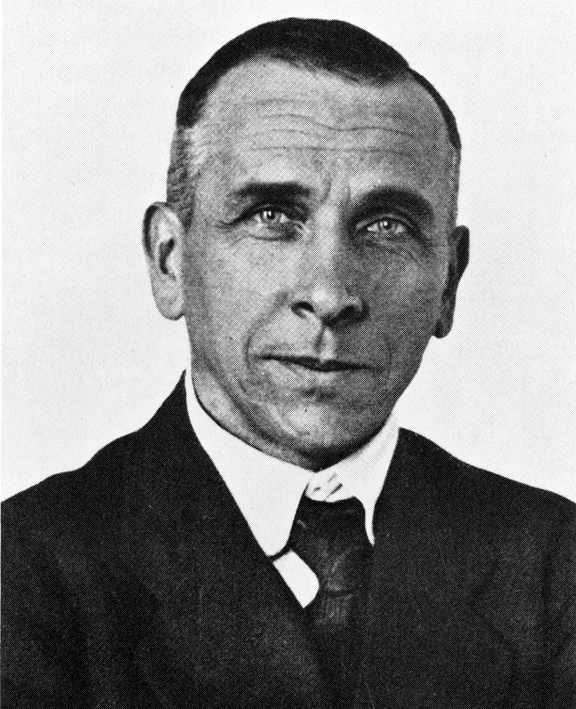
Who is the person credited with developing the theory of continental drift?
Harry Hess
Albert Einstein
Alfred Wegener
Isaac Newton
The cycle that powers the seafloor spreading, continental drift and tectonic plates it called
conduction currents
radiation
condition currents
convection currents
What 3 kinds of evidence were used to prove that the seafloor spread?
Rock formations, age of rocks, WWII shipwrecks
Age of rocks, magnetic seafloor stripes, WWII ship logs
Rock formations, magnetic seafloor stripes, age of rocks
Process by which new ocean crust forms.
Seafloor spreading
Continental drift
Mid-ocean ridge
Rift
_______ are mountain chains on the ocean floor.
Sea-floor ridges
Mid-ocean ridges
Tectonic plates
Photosynthesis
Mid-ocean ridges are the sites of intense _________ activity.
emotional
volcanic
earthquake
mathematical
A theory explaining how the tectonic plates (or lithosphere plates) on earth's surface move
answer the 4 questions down below
tectonic plates that make up the continents
the process of one tectonic plate sliding beneath another
oceanic plates
tectonic plates that make up the ocean floor
transform boundaries
boundaries where tectonic plates slide past each other horizontally
convergent boundaries
boundaries where tectonic plates collide or come together
A deep valley along the ocean floor beneath which oceanic crust slowly sinks toward the mantle
Mid-ocean ridge
Deep-ocean trench
Sea-floor spreading
The process by which oceanic crust sinks beneath a deep-ocean trench and back into the mantle at a convergent plate boundary
Convection
Subduction
Deduction

Tectonic Plate movement is caused by ______________.
the rotation of the Earth
ocean tides
convection currents in the mantle
the moon's gravity
The place where to plates meet?
Pattern
Plate Boundary
Mantle
Earthquake
A large ground-shaking event vertically displaces water sending a very energized wave toward shore?
Volcano
Earthquake
Tsunami
A mesosaurus splashing into the water
The pieces that make up Earth's surface?
Jigsaw puzzle
Pattern
Plate boundary
Tectonic Plates
Occurs when plates crash into or pull away from each other and hot magma from below rises up to the surface in an eruption?
Earthquake
Tsunami
Volcano
Liquid inner core explodes
Occurs when plate boundaries get stuck together, but the plates themselves keep moving?
Earthquakes
Volcano
Tsunami
Tectonic Plates
True or False: It is possible for the same species that once lived in the same place to be found on 2 separate continents?
True
False
Neither
A sudden shaking of Earth's surface?
Tsunami
Volcano
Earthquake
A mesosaurus walking by

When one tectonic plate is pulled under another and into the mantle, it's called:
A Subduction Zone
A Transform Boundary
A Ridge
A Folded Mountain

When a continental plates collide what may be formed?
islands
mountains
volcanoes
rift valleys

If a hot spot lasts long enough what may be created?
islands
mountains
deep ocean trench
mid-ocean ridge

When tectonic plates slide beside each other what type of boundary is it?
convergent
divergent
transform
slip and slide


Identify this type of plate boundary:
convergent
divergent
transform fault
none of these

Identify the type of boundary:
convergent
divergent
transform fault
none of these
What are the two types of Earth's crust?
lithosphere and asthenosphere
oceanic and continental
lithosphere and atmosphere
divergent and convergent
_____ boundaries in which tectonic plates that move away from each other.
divergent
convergent
transform
________ boundaries in which tectonic plates can move towards each other.
divergent
convergent
transform
______ boundaries in which tectonic plates slide pass each other.
divergent
convergent
transform
Underwater canyons are called ____________.
deep sea trenches
mid-ocean ridges
seafloor spreading
continental drift
Underwater mountain ranges are called ____________.
deep sea trenches
mid-ocean ridges
seafloor spreading
continental drift
Where is old oceanic crust recycled?
mid-ocean ridge
deep sea trench
Where is new oceanic crust formed?
mid-ocean ridge
deep sea trench
Hot magma (melted rock) is ______ dense than the solid crust.
more
Put the repeating steps of seafloor spreading in order.
Magma MOVES to the SURFACE
Magma FLOWS from the CRACKS
Magma COOLS to form new SEAFLOOR


Plates Rub Against Each Other
Convergent
Divergent
Transform
Plates Come Together
Convergent
Divergent
Transform
Plates Spread Apart
Convergent
Divergent
Transform
Match the plate boundary to its definition.
Plates spread apart
Divergent
Plates come together
Convergent
Plates rub against each other
Transform
Match the plate boundary to its diagram.

Divergent

Convergent

Transform
Match the plate boundary to the type of stress formed

Convergent

Divergent

Transform
Match the plate boundary to the type of fault formed

Convergent

Divergent

Transform
Forces that changes rock shape or volume is called
tension
compression
stress
Normal fault has a ______________________ boundary.
divergent
convergent
transform
Reverse fault has a ______________________ boundary.
divergent
convergent
transform
Reverse faults create _________________.
valleys
mountains
faults
Normal faults create _________________.
valleys
mountains
faults
Reverse faults ______________________ at an angle.
pull apart
push together
slip past each other
Normal faults ______________________ at an angle.
pull apart
push together
slip past each other
Strike slip faults move by ____________________.
pulling apart
pushing together
slipping past each other

This area is called the....
Arc of Volcanoes
Ring of Fire
Horseshoe of Magma

Which type of crust is the densest?
oceanic crust
continental crust
divergent crust
transform crust

The diagram shows a cross section of a tectonic plate boundary. Which terms best describes features 1,2 and 3?
1 continental crust, 2 mantle, 3 oceanic crust
1 mantle, 2 oceanic crust, 3 continental crust
1 oceanic crust, 2 mantle, 3 continental crust
1 continental crust, 2 oceanic crust, 3 mantle
A difference between the the oceanic crust and the continental crust is that the oceanic crust is
composed chiefly of sedimentary rocks
more dense than the continental crust
older than the continental crust
continually being created
Which type of crust is less dense?
Continental
Oceanic
They are the same
It depends

Crust can be either oceanic, which is thin and dense, or continental, which is thick and less dense; both are known as crust rock material.
True
False

Which box has a higher density?
A
B
They are the same
The Ring of Fire, where many earthquakes occur, is located around the rim of which ocean?
Atlantic
Artic
Indian
Pacific
Which seismic wave is the first to reach a seismic station?
P Wave
S Wave
Q Wave
Surface Wave
Which type of seismic wave causes the most destruction to property?
P Wave
S Wave
Q Wave
Surface Wave
Which type of seismic wave can move through solid layers of the earth but not through the liquid outer core?
P wave
S wave
Q Wave
Surface Wave
Which seismic waves are call "push/pull" because they compress and extend as they move through the earth?
P Wave
S Wave
Q Wave
Surface Wave
The point within the earth where the earthquake originates.
Epicenter
Fault
Focus
Strike-Slip

Match the stress on the rock with the type of Fault.
Compression
Shearing
Tension

Match the stress on the rock with the type of fault.
Compression
Shearing
Tension

Compression
Shearing
Tension

Where is the epicenter of this earthquake?
Salt Lake
Los Angeles
San Francisco
Portland
How is energy transferred from the focus underground
to the epicenter on the surface?
By waves
By teleporters
By gravity
Earthquakes happen near the Pacific Ocean because ____.
The Pacific Ocean includes many transform plate boundaries.
A magnet buried in the Pacific Ocean attracts waves of energy.
An angry Seamonster throws tantrums in the Pacific Ocean.
Which description of Earthquakes is most accurate?
Earthquakes are very rare, but when they happen they always cause severe damage.
Earthquakes happen every day, but most are too small to notice.
Earthquakes happen every day, so they are the number one cause of death in the US.
The vibrations in the earth caused by the sudden release of energy is called an ______________.
epicenter
aftershock
earthquake
tsunami
What is the point on the surface of the earth directly above the focus of an earthquake?
epicenter
fault
focus
intensity
What is a series of sea waves caused by underwater earthquakes called?
storm surge
rip current
tsunami
massive flooding
What is the zone of intense earthquake and volcanic activity called?
Circle of Fire
Oval of Fire
Ring of Fire
Earthquake Central


As the waves travel through shallow water toward the land they get
bigger
smaller
stay the same
Tsunami is a ________ word, meaning ____________.
Japanese, harbor wave
Japanese, tidal wave
Chinese, harbor wave
Chinese, egg roll
What is a Tsunami?
A large storm with high speed winds
A tropical cyclone that occurs in the Pacific Ocean
A large and powerful ocean wave
A type of tornado
Any earthquake that causes significant damage
Most Tsunamis occur in the
Amazon River
Atlantic Ocean
Indian Ocean
Pacific Ocean
A Tsunami can travel more than a mile onto land.
True
False
When a Tsunami approaches shore, the waves
Speed Up
Slow Down
Stay the Same Speed
A Tsunami wave can be as tall as
10 Feet
50 Feet
75 Feet
100 Feet
A Tsunami wave can move at over _______ miles per hour.
10
50
500
1000
Tsunamis are caused by
underwater disturbances such as earthquakes, landslides, and volcanoes.
wind and the gravitational pull of the moon.

Explosive eruption that hurls ash, hot gases, cinders, and bombs from the main vent and travels at fast speeds down the volcano is called a . . .
Volcano bomb
Geyser
Geothermal energy
Pyroclastic flow

Lava fragments that are like pebbles in size are called ______.
Volcanic ash
Cinders
Bomb
Lahar

Fragments that are about as small as grains of sand.
Volcanic ash
Cinders
Bombs
Lava

Large lava fragments that are like baseball in size.
Volcanic ash
Cinders
Bombs
A'a


What is the definition of an extinct volcano?
the volcano is active
the volcano is sleeping
will never erupt again
could erupt again
What is a dormant volcano?
molten rock
the center of a volcano
will never erupt again
a volcano that is sleeping, but could erupt agian

TRUE or FALSE: A volcano that erupts quietly will produce a lot of cinders, ash, and bombs
TRUE
FALSE


Magma becomes lava when it reaches a volcano's ______.
Vent
Cone
Chamber
Mantle
Rank the volcanic stages from LEAST likely to MOST likely to erupt.
active, dormant, extinct
extinct, dormant, active
dormant, extinct, active
dormant, active, extinct
Volcanoes that can erupt at any time
Active Volcano
Dormant Volcano
Extinct Volcano
Composite Volcano
Volcanoes that are “resting” but can wake up and erupt
Active Volcano
Dormant Volcano
Extinct Volcano
Composite Volcano
Gases bubble out gently, lava will ooze out of vent quietly and flow for many kilometers, how the Hawaiian Islands were formed
Explosive Eruption
Viscosity
Quiet Eruption
Shield Volcano
Trapped gases in the pipe of the volcano build up pressure until they explode which causes a pyroclastic flow that hurls out a mixture of hot gas, ash, cinders and bombs
Quiet Eruption
Explosive Eruption
Viscosity
Active Volcano
Do Shield Volcanos have explosive eruptions or non-explosive eruptions?
Explosive eruptions
Non-explosive eruptions
Do Composite Volcanos have explosive eruptions?
Explosive eruptions
Non-explosive eruptions
Are all volcanos violent?
No, shield volcanos erupt quietly, low silica = quiet
Yes, because all volcanos have pyroclastic flow and have explosive eruptions
Lava, rock fragments, gases and ash coming out in one spot on the surface of the Earth it forms a mountain and is called
magma.
an ocean.
a volcano.
a ring.
Smaller volcanoes that typically throw ash and other rock fragments into the air during eruption
cinder cone
shield
composite
fissure
Large, broad volcano that is formed from layers of lava.
cinder cone
shield
composite
fissure
Also known as Strato Volcanoes, this volcano is made from alternating layers of ash and lava is called a(n) _________________ volcano
composite
cinder cone
shield
fissure
When a volcano erupts explosively and quietly, it will make a (a)
When a volcano erupts explosively, what kind of mountain is formed? (a)
When a volcano erupts quietly, what kind of mountain forms? (a)
How well a liquid flows depends on its (a)
Magma leaves a volcano through a (a)

The part of the volcano labelled 2 is the (a) (Click the picture to make it bigger)
The part of the volcano labelled 1 is the (a) (Click the picture to make it bigger)
The part of the volcano labelled 3 is the (a) (Click the picture to make it bigger)
The part of the volcano labelled 4 is the (a) (Click the picture to make it bigger)
The part of the volcano labelled 5 is the (a) (Click the picture to make it bigger)
The part of the volcano labelled 6 is the (a) (Click the picture to make it bigger)
The part of the volcano labelled 7 is the (a) (Click the picture to make it bigger)
The part of the volcano labelled 8 is the (a) (Click the picture to make it bigger)
Match the volcano to its descriptions?

Shield

Cinder Cone

Composite

