
 Worksheets
Introduction to Biology Review
Total questions: 85
Worksheet time: 3hrs 50mins
Name
Class
Date
1.
Smallest taxonomic group with many similar characteristics is?
a)
domain
b)
kingdom
c)
species
d)
class
2.
Which 2 organisms have the fewest characteristics in common?
a)
2 organisms in the same kingdom
b)
2 organisms in the same genus
c)
2 organisms in the same species
d)
2 organisms in the same family
3.
Which 2 organisms would be able to reproduce and produce fertile offspring?
a)
2 organisms in the same class
b)
2 organisms in the same family
c)
2 organisms in the same genus
d)
2 organisms in the same species
4.
The scientific name for an organism is made from the:
a)
class and family name
b)
genus and species name
c)
domain and kingdom name
d)
kingdom and phylum name
5.
Algae, seaweeds, and protozoans belong to kingdom:
a)
Protista
b)
Animalia
c)
Plantae
d)
Fungi
6.
Members of this kingdom are multicellular and autotrophic
a)
Plantae
b)
Animalia
c)
Protista
d)
Fungi
7.
Members of this kingdom are multicellular and heterotrophic
a)
Plantae
b)
Protista
c)
Animalia
d)
Achaebacteria
8.
Members of this kingdom never have a cell wall
a)
Animalia
b)
Plantae
c)
Archaebacteria
d)
Protista
9.
Members of this kingdom live in unusual conditions such as deep ocean trenches or volcanoes
a)
Eubacteria
b)
Protista
c)
Fungi
d)
Archaebacteria
10.
Common bacteria are found in this kingdom
a)
Archaebacteria
b)
Eubacteria
c)
Protista
d)
Fungi
11.
Members of this kingdom have cell walls made of cellulose
a)
Eubacteria
b)
Protista
c)
Plantae
d)
Fungi
12.
Who developed our current classification system?
a)
Aristotle
b)
Linnaeus
13.
When a scientific name is typed, it should be:
a)
underlined
b)
italicized
c)
capitalized
d)
lower case
14.
Which kingdom contains members who are prokaryotic?
a)
Archaebacteria and Eubacteria
b)
Archaebacteria and Protista
c)
Eubacteria and Animalia
d)
Eubacteria and Fungi
15.
Molds, yeast, and mushroom belong to kingdom:
a)
Eubacteria
b)
Archaebacteria
c)
Protista
d)
Fungi
16.
Term given to describe the 2 name naming system is:
a)
dichotmous key
b)
binomial nomenclature
c)
2 scientific names
d)
binomial key
17.
Tool used by a taxonomist to identify an unknown organism is a:
a)
dichotomous key
b)
binomial nmenclature
c)
scientific name
d)
binomial key
18.
The science of classifying and naming organisms is called:
a)
biology
b)
taxonomy
c)
grouping
d)
scientific names
19.
Who first proposed binomial nomenclature as a way of classifying organisms?
a)
Carl Linnaeus
b)
Carl's Jr.
c)
Charles Darwin
d)
Henry Groseclose
20.
What is the proper way to write the scientific name of an organism?
a)
genus species
b)
Genus species
c)
Genus species (italicized)
d)
genus species (italicized)
21.
The common name of Canis familiaris is:
a)
Cat
b)
Dog
c)
Pig
d)
Cow
22.
The common name of Felis domesticus is:
a)
Cat
b)
Dog
c)
Pig
d)
Cow
23.
Protists are eukaryotic.
a)
True
b)
False
24.
Organisms in the Bacteria domain are prokaryotic.
a)
True
b)
False
25.
Fungi are autotrophic.
a)
True
b)
False
26.
Mildew is an example of Fungi.
a)
True
b)
False
27.
Plants are autotrophic.
a)
True
b)
False
28.
Animals are heterotrophic.
a)
True
b)
False
29.
What is a spontaneous generation
a)
The idea that non living things can arise from living things
b)
The idea that living things can arise from nonliving things.
c)
The idea that living things are extinct
d)
None of the above
30.
What is taxonomy?
a)
Scientific study on how living things are classify.
b)
A scientific study of earth
c)
Scientific study on human body
d)
All of the above
31.
Which level of taxonomy has the most specific groups of animals?
a)
Kingdom
b)
Order
c)
Species
d)
Family
32.
Which of the following is NOT one of the levels of taxonomy?
a)
Group
b)
Genus
c)
Phylum
d)
Class
33.
As you move down the levels of taxonomy, the groups of living things become more______.
a)
specific
b)
broad
c)
difficult
d)
easy
34.
An animal's scientific name is created from which two levels of taxonomy?
a)
Kingdom and Phylum
b)
Genus and Species
c)
Order and Class
d)
Genus and Family
35.
What type of animal has a backbone?
a)
vertebrate
b)
invertebrate
36.
Only SOME invertebrates have external skeletons called____________.
a)
endoskeletons
b)
exoskeletons
37.
The scientific name of an animal is based on its _____________.
a)
actions
b)
personality
c)
physical characteristics
d)
sounds
38.
What is taxonomy?
a)
study of population
b)
study of binomial nomenclature
c)
study of how living things are classified
d)
study of how ecosystems are classified
39.
If two organisms share the same species (in their binomial nomenclature) what can they do?
a)
Reproduce fertile offspring
b)
Live together
c)
They are family
d)
Have a mutual (mutualism) relationship
40.
Why do scientists classify organisms?
a)
It helps identify relationships between organisms.
b)
It requires them to clearly identify key characteristics of each organism.
c)
It avoids confusion.
d)
All of the choices are correct.
41.
An organisms scientific name represents:
a)
kingdom and order.
b)
family and genus.
c)
genus and species.
d)
genus and class.
42.
Taxonomists determine into which taxa to classify an organism based on:
a)
anatomical features and environment
b)
environment and general color
c)
anatomical features and genetics
d)
genetics and environment
43.
What language do we use when classifying organisms?
a)
Greek
b)
Latin
c)
English
d)
Dutch
44.
The father of taxonomy is:
a)
Christopher Columbus
b)
Plato
c)
Carolus Linnaeus
d)
None of the choices are correct
45.
What is one characteristic of all living things?
a)
composed of many cells
b)
creates energy
c)
responds to stimulus
d)
it is multicellular
46.
Which one of the choices are an example of stimulus?
a)
light
b)
eating
47.
What are autotrophs ?
a)
organisms that make their own food
b)
organisms that eat food to survive
c)
heterotrophs
d)
producers
48.
What are heterotrophs ?
a)
organisms that can't make their own food
b)
organisms that can make their own food
c)
organisms
d)
prokaryotes
49.
Which comes first in the binomial nomenclature
a)
genus
b)
species
50.
What does Classification mean?
a)
The systematic grouping of organisms into categories.
b)
Higher taxonomic rank.
51.
What does Phylum mean?
a)
A taxonomic rank below kingdom and above class.
b)
The systematic grouping of organisms into categories.
52.
In Science, what does Class mean?
a)
A taxonomic rankfitting between phylum and order.
b)
A group of peers who have been sorted into groups based on their grade level and intelligence.
53.
What does Fungi mean?
a)
A group of mushrooms.
b)
Group of eukaryotic organisms that includes unicellular microorganisms such as yeasts and molds, as well as multicellular fungi that produce familiar fruiting forms known as mushrooms.
54.
What does Plantae mean?
a)
The taxonomic kingdom comprising all plants.
b)
A type of plant.
55.
What does Protista mean?
a)
A taxonomic kingdom comprising the protists.
b)
An organism that harbors a parasite, or a mutual or commensal symbiont, typically providing nourishment and shelter.
56.
What does Animalia mean?
a)
A kingdom consisting of multicellular, eukaryotic organisms known as animals.
b)
A type of animal with 9 tails.
57.
What does Virus mean?
a)
A minute organism that consists of a core of nucleic acid surrounded by protein. They can grow and reproduce only inside living cells.
b)
A type of microscope.
58.
The correct order of species classification is:
a)
Kingdom, Phylum, Class, Order, Family, Genus, Species
b)
Kingdom, Phylum, Genus, Species, Class, Order, Family
c)
Kingdom, Family, Order, Class, Phylum, Genus, Species
d)
Order, Kingdom, Family, Class, Phylum, Genus, Species
59.
The correct way to write a scientific name is:
a)
Underlined or italicized, with the genus capitalized and the species lowercase.
b)
Underlined or capitalized, with the genus lowercase and the species capitalized.
c)
Underlined or capitalized, with the genus capitalized and the species lowercase.
d)
Underlined or italicized, with the genus and species capitalized.
60.
Largest taxonomic group with few common characteristics is?
a)
kingdom
b)
Family
c)
species
d)
Class
61.

Cattle egrets forage (feed) in fields among cattle. The egret gets easy access to flying insects stirred up by the cattle, and the cattle don't care if they are there or not.
a)
mutualism
b)
commensalism
c)
competition
d)
parasitism
62.
A relationship between two organisms in which one organism benefits and the other is unharmed...
a)
Mutualism
b)
Competition
c)
Parasitsm
d)
Commensalism
63.
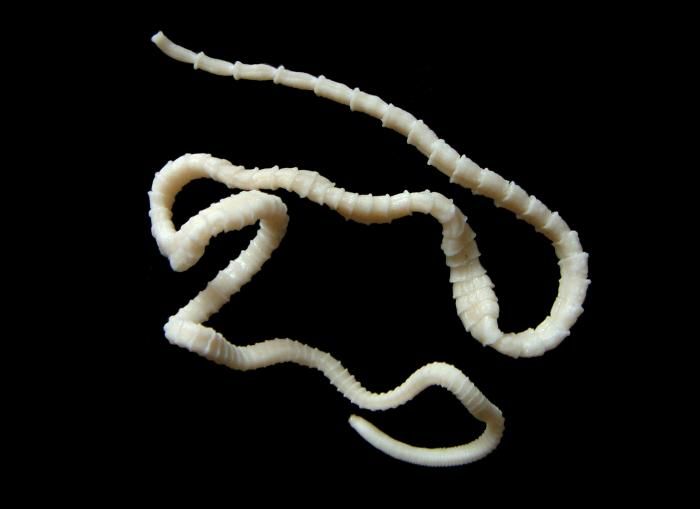
A tapeworm and a cat have this type of relationship.
a)
mutualism
b)
parasitism
c)
commensalism
d)
competition
64.
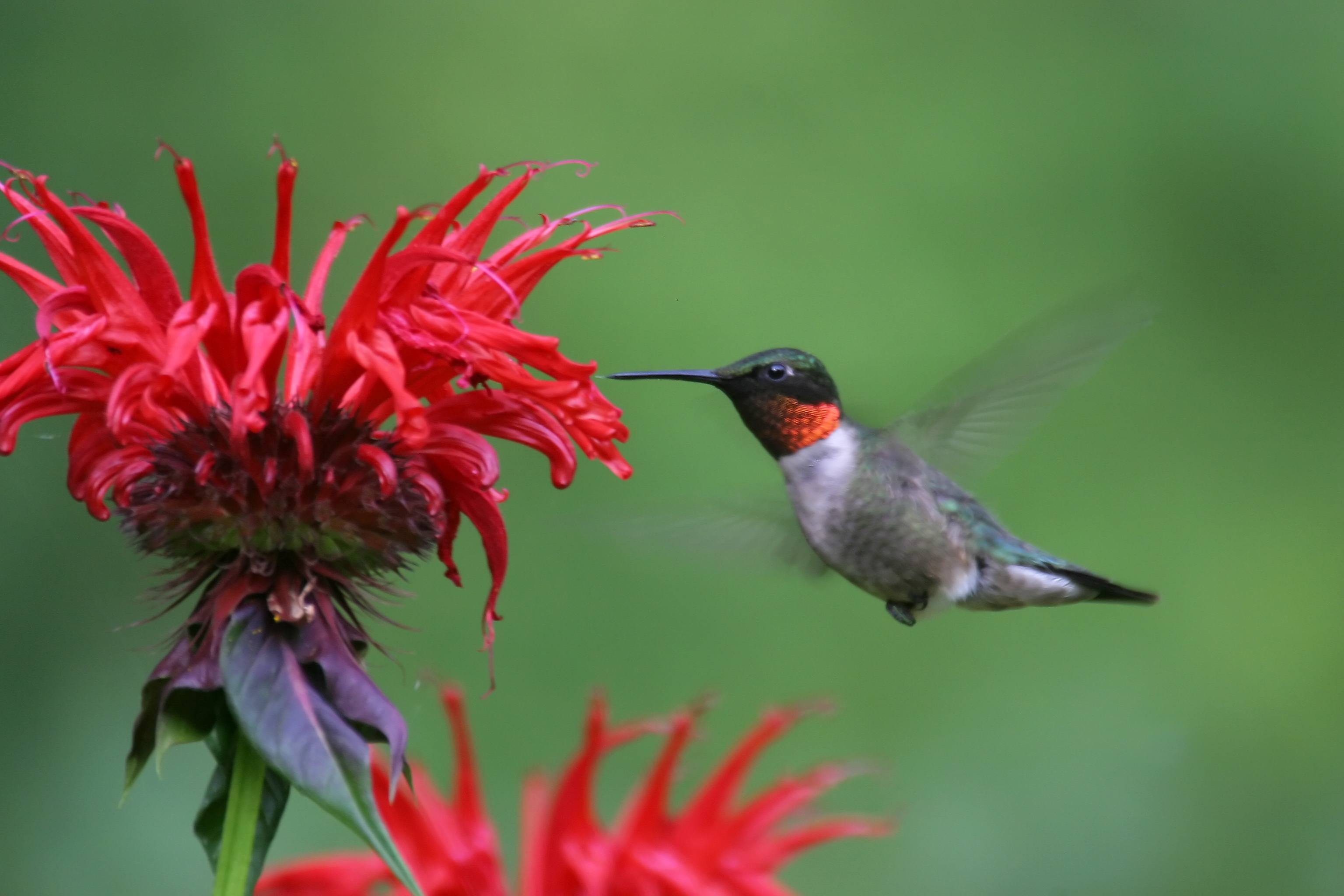
What type of symbiosis? Hummingbirds feed on nectar from flowers. The flowers are pollinated by hummingbirds as they move from flower to flower.
a)
commensalism
b)
mutualism
c)
parasitism
d)
predation
65.
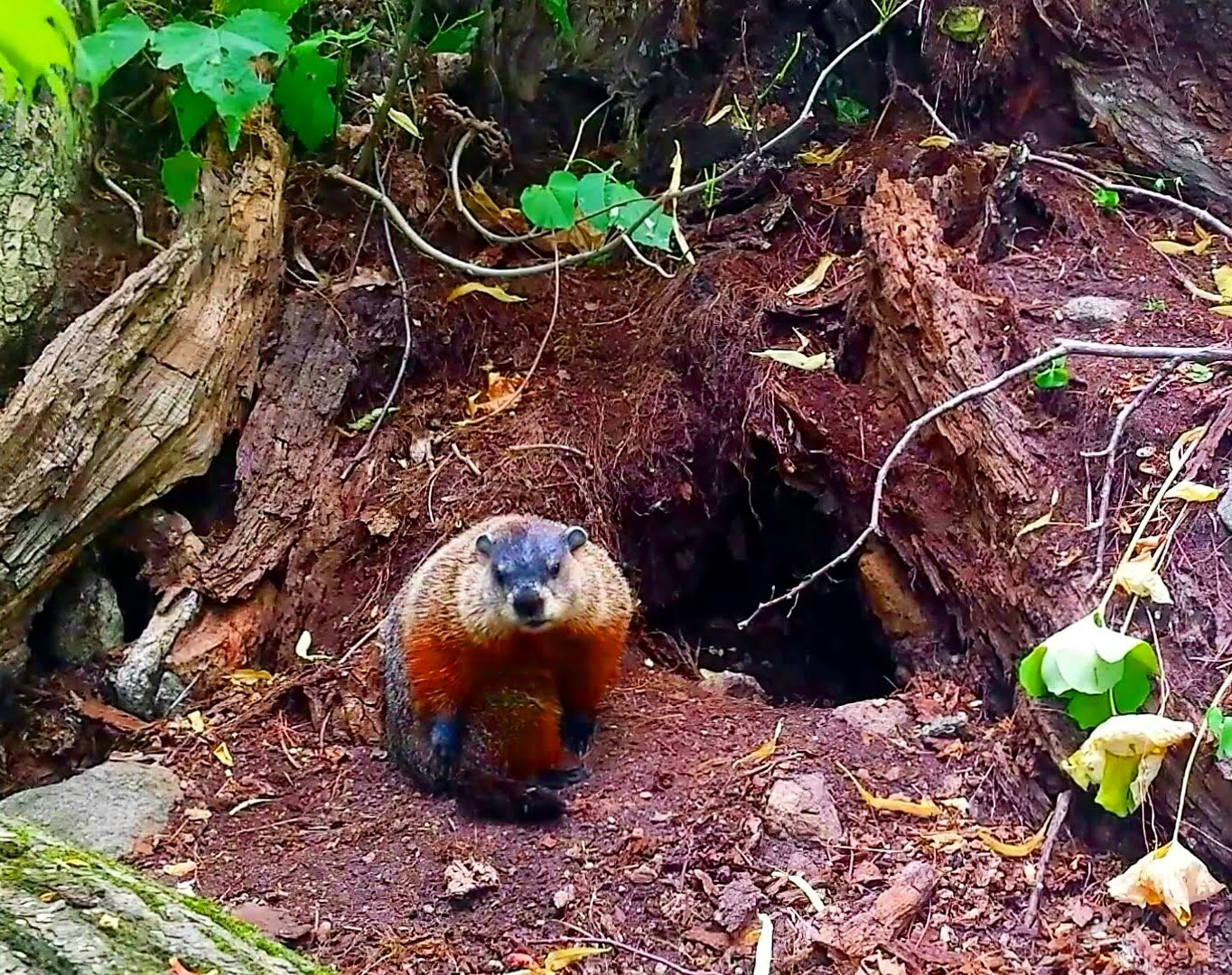
What type of symbiosis? Skunks often live in burrows that have been dug and abandoned by woodchucks.
a)
commensalism
b)
mutualism
c)
parasitism
d)
predation
66.
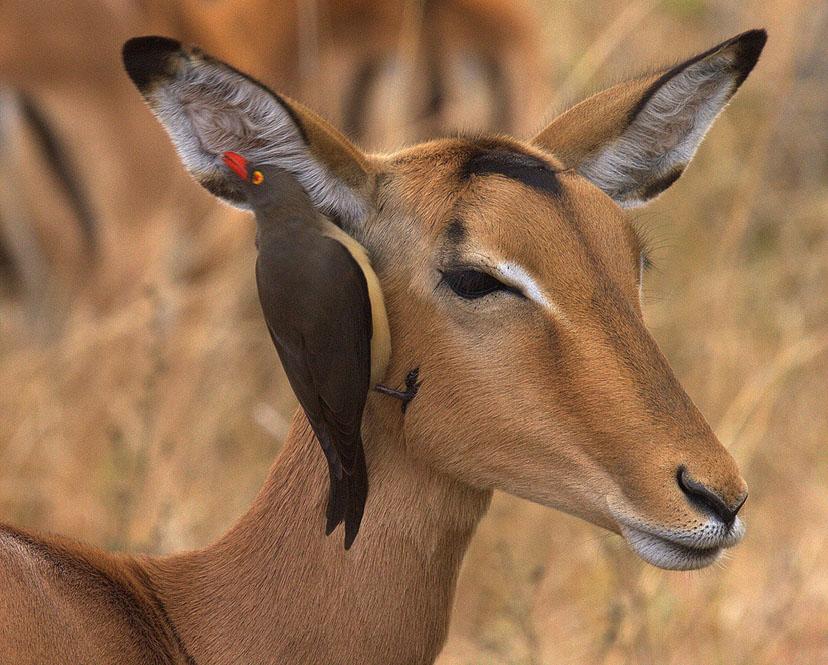
Red-billed oxpeckers are birds that often feed on parasites that infest impala. This is an example of _______.
a)
commensalism
b)
mutualism
c)
neutralism
d)
competition
67.
A relationship between two organisms in which both organisms benefit.
a)
Mutualism
b)
Competition
c)
Parasitsm
d)
Commensalism
68.
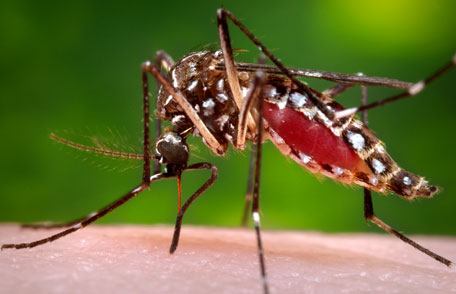
When a mosquito bites you, you are the __________ and the mosquito is the ____________.
a)
host, hostess
b)
parasite, host
c)
host, parasite
d)
prey, predator
69.

Aphids are tiny insects that live on and eat the leaves of plants, removing vital nutrients from the plants.
a)
Predation
b)
Parasitism
c)
Commensalism
d)
Mutualism
70.
What type of symbiosis?
*Mycorrhizal fungi invade and live in or among roots cells of many plants. The plant provides nutrients to the fungi.
*The Mycorrhizal fungi help the host plant absorb inorganic nitrogen and phosphorus from the soil. Some mycorrhizal fungi also secrete antibiotics which may help protect their host from invasion by parasitic fungi and bacteria.
*Mycorrhizal fungi invade and live in or among roots cells of many plants. The plant provides nutrients to the fungi.
*The Mycorrhizal fungi help the host plant absorb inorganic nitrogen and phosphorus from the soil. Some mycorrhizal fungi also secrete antibiotics which may help protect their host from invasion by parasitic fungi and bacteria.
a)
commensalism
b)
mutualism
c)
parasitism
d)
predation
71.
What type of symbiosis?
*Remora use suckers to attach temporarily to large marine animals such as sharks, manta rays, whales, turtles, or large fish.
*The shark provides free transportation, protection, and dropped food and feces which the remora feeds on. The host is not injured.
*Remora use suckers to attach temporarily to large marine animals such as sharks, manta rays, whales, turtles, or large fish.
*The shark provides free transportation, protection, and dropped food and feces which the remora feeds on. The host is not injured.
a)
commensalism
b)
mutualism
c)
parasitism
d)
predation
72.
What type of symbiosis?
*Fungi form lichens by living in a close relationship with an algae. The fungus provides a protective home for the algae, and gathers mineral nutrients from rainwater and from dissolving the rock underneath.
*The algae gathers energy from the sun using photosynthesis. Both organisms share their nutrients with each other.
*Fungi form lichens by living in a close relationship with an algae. The fungus provides a protective home for the algae, and gathers mineral nutrients from rainwater and from dissolving the rock underneath.
*The algae gathers energy from the sun using photosynthesis. Both organisms share their nutrients with each other.
a)
commensalism
b)
mutualism
c)
parasitism
d)
predation
73.
What type of symbiosis?
* Human intestine provides food for bacteria that live inside digestive system
*Beneficial bacteria live in the intestine of humans and help digest cellulose from plants which humans don’t have the enzymes to break down.
* Human intestine provides food for bacteria that live inside digestive system
*Beneficial bacteria live in the intestine of humans and help digest cellulose from plants which humans don’t have the enzymes to break down.
a)
commensalism
b)
mutualism
c)
parasititsm
d)
predation
74.
How many types of symbiosis are there?
a)
5
b)
7
c)
3
d)
If you pick this you're silly
1000
1000
75.
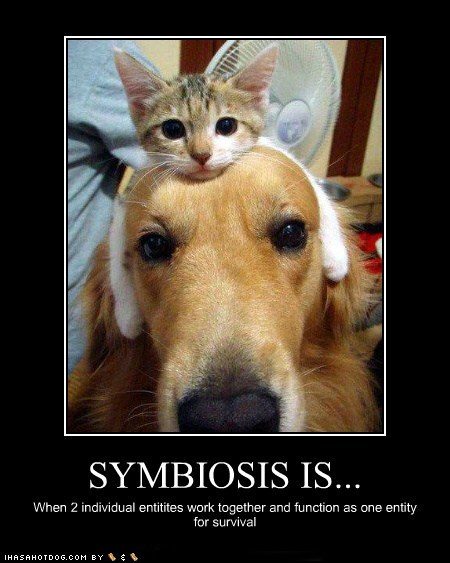
A relationship in which two species live closely together.
a)
resource
b)
mutualism
c)
succession
d)
symbiosis
76.
What do viruses need to reproduce?
a)
they need genetic material
b)
They need a host cell
c)
They need bacteria
d)
They need insulin
77.
What provides direct energy for the virus?
a)
food
b)
its host
c)
the sun
d)
a parasite
78.
Reasons that viruses are considered to be nonliving is because
a)
They are not cellular
b)
They cannot reproduce on their own
c)
They cannot make proteins
d)
all of the above
79.
Which of the following occurs after a virus attaches to a host cell in the viral reproduction process?
a)
The host cell dies
b)
The virus dies
c)
The virus inserts its genetic information into the host cell
d)
copies of the virus are immediately released from the host
80.
What is a Viroid made of?
a)
DNA
b)
DNA and RNA
c)
RNA
d)
virus
81.

Why are viruses like parasites?
a)
They harm the cells they enter
b)
They mutliply
c)
They use their own energy to develop
d)
They make their own food
82.
a prion is made only of proteins
a)
false
b)
true
83.
What's a viroid?
a)
single stranded RNA and causes diseases in a plant
b)
any things that causes a disease
c)
prion
d)
a living cell
84.
Prion diseases primarily affect the
a)
Gastro-intestinal tract
b)
Skin
c)
Kidneys
d)
Brain
85.
Rare disease that people can get from eating infected beef Carried in the brain and spinal cords of cattle, but cannot be spread through milk. Is caused when a normal prion protein changes into a harmful form that damages the central nervous system. To prevent the disease there are extreme restrictions on importing animals and packaging meats.
a)
Swine Flue
b)
Mad Cow Disease
c)
Dysentery
d)
Shigella
100 %

