
 Worksheets
Biology SE1 C4-C8 Revision Game
Total questions: 109
Worksheet time: 1hrs 7mins
Label the parts of the enzyme model
Click on the temperature that this enzyme is having optimum activity.
What is the purpose of an enzyme?
control how many reactions occur
raise activation energy
give permission for the reaction
speed up chemical reactions
Enzymes are (a) that (b) chemical reactions by (c) the amount of activation energy required to start the reaction.
Match the following Macromolecules to its structure

Carbohydrate

Lipid

Nucleic Acids

Protein
Enzyme can be used again and again
True
False
Substances with a pH of 7 are
Acidic
Basic
Neutral
Saturated
Changes in pH and temperature can ___________________ an enzyme which causes it to lose its shape and affects its function.
puncture
denature
double
delete

What is the optimal temperature of this enzyme?
60
40
70
30
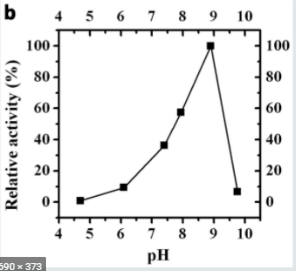
What is the optimal pH for this enzyme?
6
10
9
7
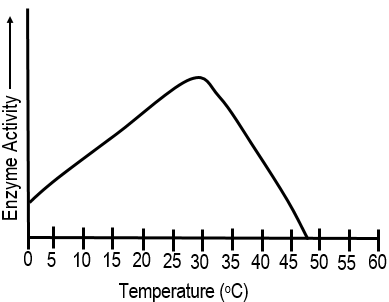
Which of the following are true about enzymes? (Choose all that apply)
Enzymes speed up chemical reactions.
Enzymes react best at a specific temperature.
Enzymes only control ONE type of reaction.
Enzymes are made of fatty acids.
Carbon dioxide is absorbed through the
Stoma
Cuticle
Vessel
Palisade Cells
Chlorophyll is the ___ pigment found in the chloroplast
Blue
Green
Red
Purple

The arrows in the diagram all point to the
Cytoplasm
Nucleus
Mitochondria
Chloroplast

The orange colored part of the leaf in the diagram refers to the
Vessels
Stoma
Epidermis
Mesophyll Layer
The following are leaf adaptations for photosynthesis EXCEPT
Thin
Contains Chlorophyll
Contains Root Hair
Contains Stoma and Guard Cells
The part of the leaf that enables it to hold water by stopping water from escaping through evaporation
Cuticle
Palisade Cells
Xylem
Epidermis
Part of the leaf which allows the diffusion of gases to occur
Palisade Cells
Spongy Mesophyll Cells
Epidermis
Phloem
The following compounds goes in and out of the stoma EXCEPT
Oxygen
Glucose
Carbon Dioxide
Water Vapour
What is the chemical symbol for Nitrogen?
N
Ni
K
P
Which of the following is known as the vascular system of the plant?
Leaves
Stem
Roots
Seeds
Where does photosynthesis occur?
Stem
Nucleus
Chloroplasts
Roots
Which of the following is not a requirement for plant growth?
Adequate water
Soil or media
Fertilizer
Adequate space
In which of the following places would hydroponics be most useful?
Places with limited space for growing plants
Areas with adequate soil for growing plants
Places with ample space for growing plants
Areas with high quality soil for growing plants
Which plant part absorbs light energy to produce plant sugar?
stem
leaves
roots
flower
Match the following
Root
responsible for anchoring the plant
stem
transports water and nutrients
Leaf
absorb light energy to produce sugar
fruit
fertilized or mature ovules
The correct formula for photosynthesis is 6CO2 + 6H2O → C6H12O6 + 6O2
True
False

What cell is this?
Animal cell
Plant cell

What's this?
(a)

What's this?
blood cells
leaf cells
nerve cells
white nerve cells

How is this cell specialised? Choose carefully!
It stores fat
It can swim
It can shrink (contract) and grow (relax)
It can swim and has powerful enzymes to break into an egg cell

How are these cells specialised?
They are bi-concave and have a large surface area and a pigment called haemoglobin which carries oxygen.
They are specialised to fight infection.
They carry carbon dioxide to the lungs.
They carry glucose in large amounts

Name this cell.
Pallisade cell
Guard cell
Root hair cell
Epithelial cell

Name the part of this cell, where the arrow points towards.
vacuole
chloroplast
cell wall
ribosome

What is the name of this specialised cell and where is it found
A root hair cell, in the root
A palisade cell in the bottom of a leaf.
A palisade cell at the top of a leaf.
In the middle of a plant stem.

How is this cell specialised?
It stores fat
It can swim
It can shrink (contract) and grow (relax)
It can carry oxygen very well.
What are stem cells?
The cells found in the stem of a plant.
A type of cell that can turn into any other type of cell
A cell that is specialised to perform a function.
A cell with no nucleus.
Where can stem cells be collected from?
Unborn embryos
Bone marrow
Donors
All of the above
Select the nerve cell


How is a leaf cell adapted for absorbing light efficiently?
It has a cellulose cell wall
It has a large vacuole
It has lots of chloroplasts
It has a large nucleus

How is a plant root hair cell adapted for absorbing water from the soil efficiently?
It has many chloroplasts
It has lots of mitochondria
It has a large surface area
It has a large vacuole
What it the correct order, from smallest to largest?
Cell
Organ
Tissue
Organ system
Organism
Tissue
Cell
Organ system
Organ
Organism
Cell
Tissue
Organ
Organ system
Organism
Cell
Tissue
Organ system
Organ
Organism

Which structure in a plant cell would you not find in a root hair cell?
Cell wall
Chloroplast
Vacuole
Cell membrane

What is this cell?
bone cells
cheek cells
muscle cells
red blood cells
which of the following is the correct function of bile
to emulsify protein
to provide enzyme
to neutralize alkaline condition of foods that entering duodenum
to increase the surface area for lipid digestion
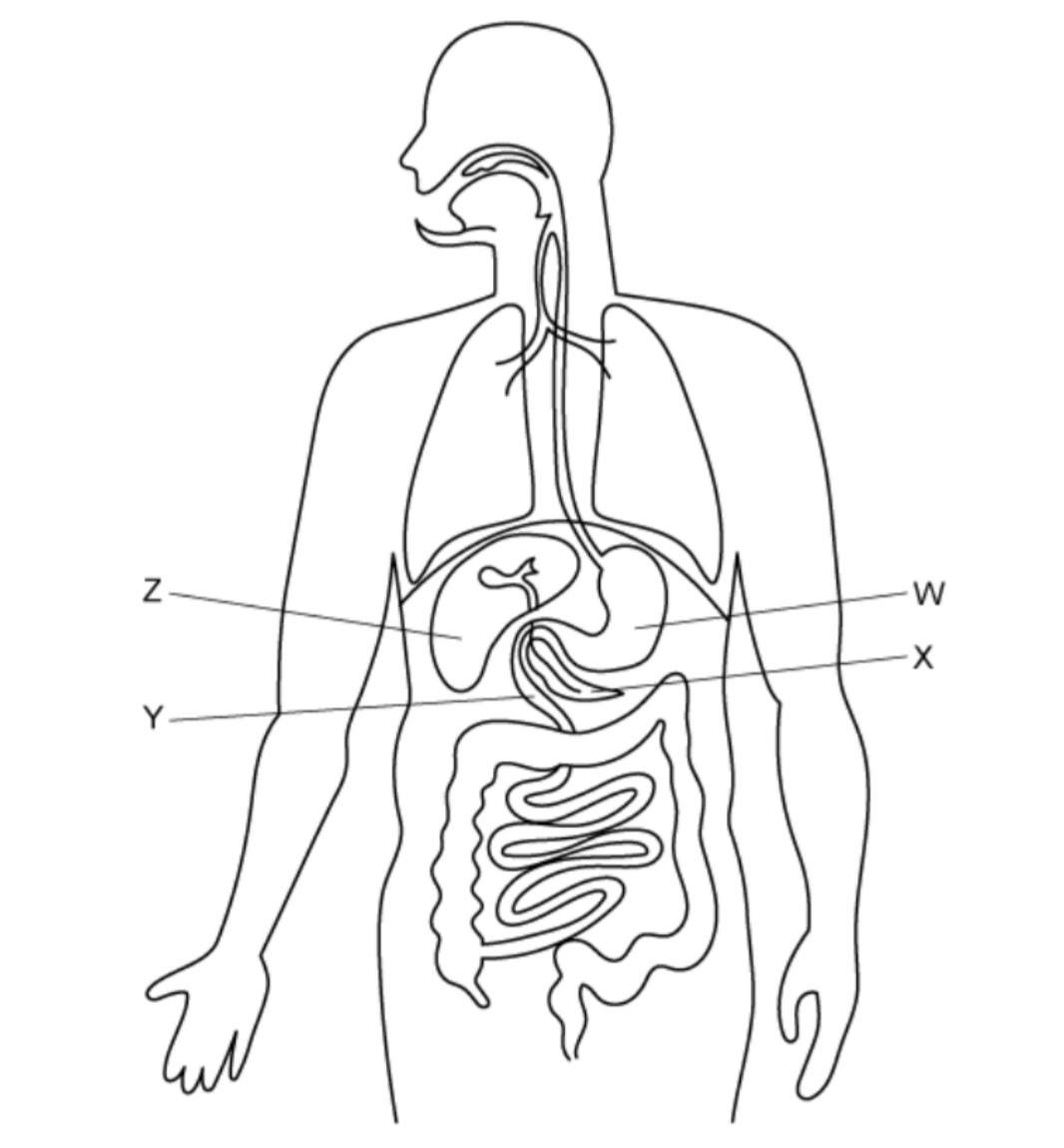
diagram show human digestive system. in which organs does digestion of protein take place
w and y
w only
x and z
y and x
what is produce by bacteria as by product of respiration and can cause tooth decay
alkaline
acid
tartar
plaque
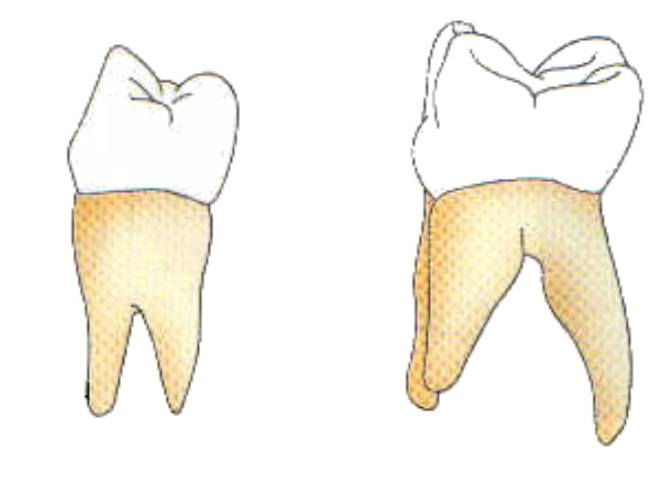
what is the function of these two teeth
grinding
holding
biting
cutting
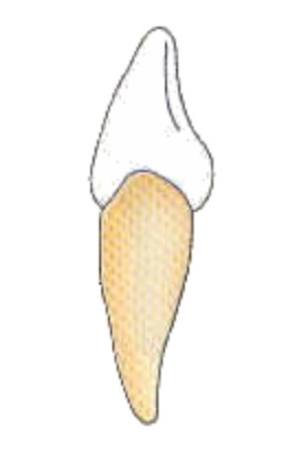
name the teeth
incisor
molar
premolar
canine

What is the function of the gall bladder? *2015 Q26
absorption of fat
digestion of fat
production of bile
storage of bile
Where does most of the digestive process take place?
Small intestine
Stomach
Large intestine
Bile is produced by ____, stored in ____, released by _____
liver; duodenum; bile duct
liver; gall bladder; bile duct
gall bladder; liver; bile duct
gall bladder; duodenum; bile duct
Peristalsis mixes food with gastric juice in the stomach
True
False
Where does ingestion begin?
duodenum
stomach
mouth
colon
What is the acid produced in the stomach?
Sulphuric acid
Nitric acid
Hydrochloric acid
Acetic acid
What part of the small intestine are nutrients absorbed into the blood?
Ilium
Duodenum
Gall Bladder
Liver
What word is used to describe food which has been mixed with stomach juices.
Chyme
Bolus
Churning
Mucus

Which term describes the movement of food down the oesophagus by a wave of muscular contraction
Diffusion
Peristalsis
Chyme
Bolus
Define the term chemical digestion
The breaking down of large food molecules by the use of enzymes.
The physical break down of food done by the teeth or the muscles in the stomach.
Define the term egestion
The movement of nutrients from the digestive system into the blood
The removal of undigested food from the body
The breaking down of large insoluble molecules into small soluble molecules
The taking in of nutrients.
You can find protein in...
dairy products.
fruit.
oil.
Oils and butter are rich in...
proteins.
fats.
carbohydrates.
Name the glands associated with the Human Digestive System?
Only salivary glands and pancreas
Only salivary glands and liver
Only liver and pancreas
Salivary Glands, Liver and Pancreas
What is the function of dietary fibre in the human body?
Provides energy
Fights infection and disease
Keeps the digestive system healthy
Promotes healthy hair and nails
What is a function of protein?
Repair and build muscle
Keep the body warm
Help with the digestive system
Cures asthma
Maltose is digested into glucose by maltase
True
False
Absorption of digested food molecules occur at the villi
True
False
Oxygen and Sugar
When light is abundant, .........................................................
(Choose the correct statement to complete the sentence.)
it becomes a limiting factor.
carbon dioxide concentration or temperature is the limiting factor.
stomata are closed.
transpiration drops.
What ion is needed to manufacture chlorophyll?
potassium
phosphate
magnesium
calcium
This nutrient is needed for growth, tissue repair, making enzymes and producing hair and nails. What nutrient is this?
protein
carbohydrate
fats
lipids
What vitamin our body can synthesise by exposing ourselves to the sun's UV rays?
A
B
C
D
Which digestive enzyme is present in the saliva?
protease
maltase
sucrase
amylase
Which aspect of food is increased by mechanical digestion?
solubility in water
surface area
nutritional value
cellulose content
Which ones are alimentary canal?
oesophagus
stomach
pancreas
liver
small intestine
In what state does water escape the leaves during transpiration?
solid
liquid
gas
What is a balanced diet?
A diet that contains only carbohydrates
A diet that contains all the needed nutrients in correct amounts
A diet that contains only proteins
A diet that contains only fats
Which factor affects the dietary needs of humans?
Age
Gender
Activity
All of the above
What is the effect of too little food?
Starvation
Coronary heart disease
Obesity
Constipation
What is the effect of too much food or large amounts of foods that are high in fat or sugar?
Starvation
Coronary heart disease
Obesity
Constipation
What is the condition of the digestive system where an individual has hard faeces that are difficult to be excreted?
Starvation
Coronary heart disease
Obesity
Constipation
What is the deficiency disease caused by lack of Vitamin C?
Scurvy
Rickets
Anaemia
Kwashiorkor
What is the deficiency disease caused by lack of Iron?
Scurvy
Rickets
Anaemia
Kwashiorkor
What is caused by deficiency of protein and calories?
rickets
kwashiorkor
marasmus
scurvy
What is caused by deficiency of protein?
rickets
kwashiorkor
marasmus
scurvy
Which of the following contains the MOST protein?
cup of rice
1/2 cup of lentils
one egg
butter
What food substance is made by plants during photosynthesis?
Carbon dioxide
Glucose
Granulated sugar
Oxygen

The xylem and phloem together are know as
vascular bundles.
the mesophyll.
stomates.
guard cells.

Stomata are made of specialized cells called ______ which surround a tiny pore/opening
stoma
guard cells
epidermal cells
diffusion channels
Glucose
Water
Sucrose
Glycogen
Translocation is the
transport of water in the xylem
transport of water in the phloem
transport of sugar in the xylem
transport of sugar in the phloem
Describe the flow of water through the plant.
Water enters through the root hairs
Water travels up the xylem of the stem through cohesion and adhesion
Water travels through the xylem into the central vein of the leaf
Water exits through the stoma on the bottom of the leaf
How does water enter the roots from the soil?
diffusion
osmosis
transpiration
active transport
What happens to the transpiration rate as light intensity increases?
It increases.
It decreases.
It stays the same.
Match the following
Diffusion of water vapour from the leaves
Transpiration
Change of liquid to gaseous state
Evaporation
Increase surface area
Root hair cells
Measure of how much water vapour in the air
Humidity
Evaporation occurs here
Cell wall
What can trigger the closure of stomata?
extreme drought
light intensity
moderate temperature
slightly increased carbon dioxide concentration
Position the labels correctly for both axes of the graph.
rate of transpiration
humidity
Which description of translocation is correct?
movement of glucose and amino acids from a sink to a source
movement of glucose and amino acids from a source to a sink
movement of sucrose and amino acids from a sink to a source
movement of sucrose and amino acids from a source to a sink

