
 Worksheets
Test: DNA, The Central Dogma
Total questions: 106
Worksheet time: 8hrs 40mins


TGGCAA
Ribose sugar is part of...
Thymine
DNA
RNA
Adenine
Translate the mRNA molecule for this gene:
C-A-T-G-T-A-A-A-C
T-C-G-A-T-U-U-C-C
G-G-G-A-T-C-U-U-T
G-U-A-C-A-U-U-U-G
G-T-A-C-A-T-T-T-G
What is the difference between mRNA and DNA?
DNA is a double helix, mRNA is a single strand
DNA has deoxyribose sugar, and mRNA has ribose sugar
DNA uses Thymine, and mRNA uses Uracil
All of the above

GTAGTCA


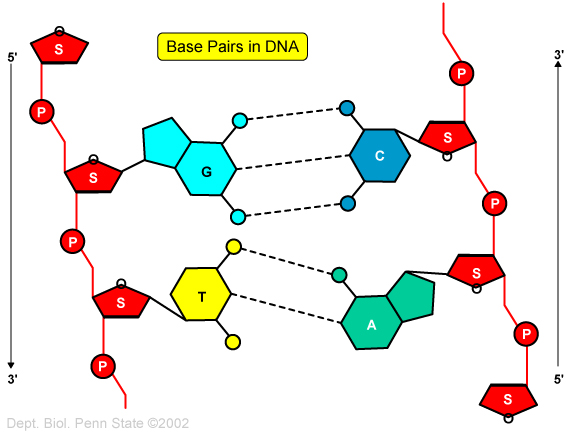

Replicate the following strand of DNA by selecting the complementary base pairs:
AATCATGGA
AATCATGGA
TTAGTACCT
UUAGUACCU
GGATAUCUA
DNA replication results in two DNA molecules, considered semi-conservative because...
each one with two original strands
each one with two new strands
each one with one new strand and one original strand
one with two new strands and the other with two original strands
What is the central dogma of genetics?
DNA is based on a code.
Genes on DNA are transcribed into RNA which is then translated into proteins
Traits determine the DNA that a person has
Proteins are what determine traits.
Which term best fits the following definition: The chemicals that make up the rungs of the DNA ladder, A-T and C-G match.
protein
Nitrogen Base
Codon
Nucleotide
Name the process where DNA is copied
Translation
Transcription
Replication
mutation
The process whereby the DNA sequence in a gene is copied into mRNA is called:
Transcription
Translation
Replication
Mutation
During the first stage of protein synthesis, a gene of DNA has to be converted into an RNA complement. What is the name of this phase?
Translation
Transcription
Duplication
Replication
Which of the following regarding the basic mechanism of gene expression is correct?
DNA ―> RNA ―> protein
DNA ―> protein ―> RNA
RNA ―> DNA ―> mRNA ―> protein
RNA ―> DNA ―> tRNA ―> protein
In the cytoplasm, the mRNA is converted into an amino acid chain, which later folds to become a protein. What is the name for this phase of protein synthesis?
Translation
Transcription
Replication
Regeneration
Which enzyme is involved in the synthesis of the RNA over a DNA template?
DNA polymerase
RNA polymerase
DNA helicase
RNA helicase
Which of the following sequences of processes correctly reflects the order of events in the central dogma?

Which of the following polypeptides is coded for by the mRNA sequence in the diagram?
Val, Lys, Phe, Gly, Ser
Met. Asp, Phe, Ala, Arg
Met, Val, Lys, Arg, Gln, Ser
Which DNA strand is complimentary to the one shown?
TTA CCG ACG TAG
AAU GGC UGC AUC
TTA CCG ACG TAG
AAT GGC TGC ATC
AAU GGC UGC AUC
Where are proteins made?
nucleus
mitochondria
ribosomes
Golgi body

DNA replication is called semi-conservative replication because each of the new copies of DNA has one _________ strand and one _________ strand.
original, new
RNA, DNA
original, RNA
original, amino acid
What is the job of tRNA?
assembles amino acids
transfers the message from the genetic code
transfers the amino acids to the ribosome

What is the purpose of this process?
To replicate the DNA of an organism before cell division
To assemble nucleotides in an mRNA chain along a DNA template
To synthesize amino acids used to unzip strands of DNA and copy the genetic code
To translate the genetic code into a specific sequence of amino acids


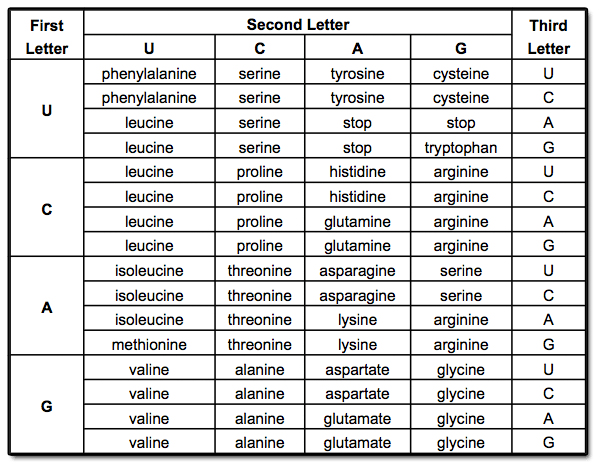

Which mRNA sequence/s code for glutamine? There might be more than one.
CGU
CAG
CUA
CAA
Which sequence of DNA bases would be complement to this partial strand of DNA? ATG TGA CAG
Which best describes the location in which translation occurs?

What does the diagram suggests?
Central Dogma of Molecular Biology
Gene Therapy
DNA Replication
Law of Independent Assortment

The picture below shows an enzyme unwinding and unzipping DNA.
What is the name of this enzyme?
DNA Helicase
DNA Ligase
DNA polyermase
RNA Polymerase

Why does DNA replicate?
To create a duplicate copy in case the original gets damaged
New cells will have a copy of the DNA
To create a new copy to replace the damaged original
What is the Order of Central Dogma
Transcription, Replication, Translation
Replication, Translation, Transcription,
Replication, Transcription, Translation
Transcription, Translation, Replication
What unwinds the DNA strand
Helicase
Topermoriase
Ligase
Single Stranded Binding Proteins
The (a) strand is sythnesized continously in the same direction
Which enzyme is the scissors responsible for separating double stranded bonds
DNA Ligase
RNA Primase
DNA Polymerase
DNA Helicase
The Okazaki Fragments are formed durning the discontinuous synthesis of the (a) strand durning DNA Replication
What does the A base pair with in Transcription
(a)
What are the stop codons (*select all that apply)
UAG
UGA
UUA
UAA
What is the start codon
(a)
What reads and binds to the mRNA
Polypetide chain
Codons
Ribosome
Anti-codons
Write the Anticodon for:
AUU
(a)
Write Anticodons for:
AUG, UUC, ACC, UGA
(a)
What are the codons for:
GCU
(a)
Which amino acid sequence does the mRNA sequence UUUCCUCAA make?
leu-thr-glu
phe-pro-gln
phe-pro-his
ser-his-gln
What is the name for the theory that states that genetic information flows only in one direction from DNA to RNA to a protein.
transcription
the genetic process
the central dogma
translation
Dr. Tanaka discovered a new virus, but does not know if it has DNA or RNA. After running tests, she concludes that it is DNA. Which of the following would lead her to that conclusion?
It contains uracil
It contains adenine
It contains thymine
It contains cytosine
What is the correct amino acid sequence that is coded from the mRNA sequence UGGCAGAUU?
val-gly-trp
met-his-ser
tyr-pro-asn
trp-gln-ile
Transcription of the sequence TTAAG produces which sequence?
TTAAG
UUAAG
AAUUC
AATTC
Which of the following is made from amino acids?
tRNA
mRNA
ribosomes
proteins
What is the name for the synthesis of mRNA using DNA as a template?
Transcription
Translation
RNA processing
Replication
If the sequence of nucleotides in the original DNA molecule was A-T-T-C-C-G, then the sequence of the complementary DNA strand would be:
T-A-A-G-G-C
C-G-G-T-T-A
A-U-U-G-G-C
U-A-A-G-G-C
Which of the following is true of RNA:
it is double stranded like DNA
it has the same four nitrogen bases as DNA
it contains uracil (U)
it contains thymine (T)
Which molecule was coded for by the longest strand of DNA?
An mRNA molecule with 20 codons
A polysaccharide with 60 sugars
An mRNA molecule with 45 nucleotide bases (letters)
A protein with 25 amino acids
Which of the following best explains why different cells (skin, muscle, nerve, etc.) from the same organism look different and have different functions.
The cells have different DNA.
The cells have the same DNA, but use different segments and therefore produce different proteins.
DNA houses the instructions for making...
fats
polysaccharides
nucleic acids
proteins
Replicate TCG GCA ATC
AGC CGT TAG
AGC CGU UAG
AGC CGA ATC
CTC CGA GAA
During translation, what delivers the amino acids to the ribosome so that the proper protein can be synthesized?
DNA
mRNA
tRNA
Proteins
A codon is a specific group of:
3 sequential bases of mRNA
3 sequential bases of tRNA
3 sequential bases of rRNA
3 sequential bases of DNA
The sides or backbone of DNA are made of
mRNA
Nitrogen Bases
Sugar & Phosphate
Phosphate only
Nucleic acids are large molecules which are made up of repeating subunits (monomers) called...
amino acids
polymers
nucleotides
DNA
As ______ is sent through a ribosome, codons are translated into amino acids
mRNA
rRNA
a polypeptide
tRNA
Genes code for specifically structured
acids
lipids
sugars
proteins
According to the mRNA Codon Chart, which of the following statements is true?
Some codons code for the same amino acid
The codon UAC codes for Met
All codons code for a unique amino acid
Codons are made from 3 bases of DNA
According to the central dogma, genetic information flows from:
mRNA → DNA → proteins
DNA → proteins → mRNA
DNA → mRNA → proteins
Proteins → DNA → mRNA
What amino acid codes for the mRNA strand UGG?
PRO
LEU
PHE
TRP
What amino acid is made from CUA?
PHE
LEU
GLN
SER
Label the nucleotide:
Sugar
Phosphate
Nitrogenous Base
Place the descriptions into the appropriate category.
Occurs in the nucleus
Ends with the production of mRNA
Ends with the production of a protein
Occurs at the ribosome
Match the following:
Stores the genetic information of the cell.
Nucleus
Enzyme that breaks two DNA strands apart by breaking the hydrogen bonds.
Helicase
Enzyme that makes mRNA using DNA as a template.
RNA Polymerase
The location of protein production
Ribosome
Enzyme that makes the complementary strand of DNA to make DNA double stranded.
DNA Polymerase

