
 Worksheets
High School Biology Review
Total questions: 110
Worksheet time: 3hrs 0mins




Which of the following is NOT evidence for endosymbiosis?
Chloroplasts & mitochondria have DNA similar to prokaryotes
Chloroplasts & mitochondria reproduce by binary fission similar to prokaryotes
Chloroplasts & mitochondria contain 70s ribosomes similar to prokaryotes
Chloroplasts & mitochondria move around the cell freely
Chloroplasts & mitochondria can survive independently outside of the eukaryotic cell


The mode of nutrition in which organisms make food themselves from simple substances is called( )
Autotrophic nutrition
Heterotrophic nutrition
Saprotrophic nutrition
All of the above
Animals have _____ mode of nutrition
Autotrophic
Heterotrophic
None
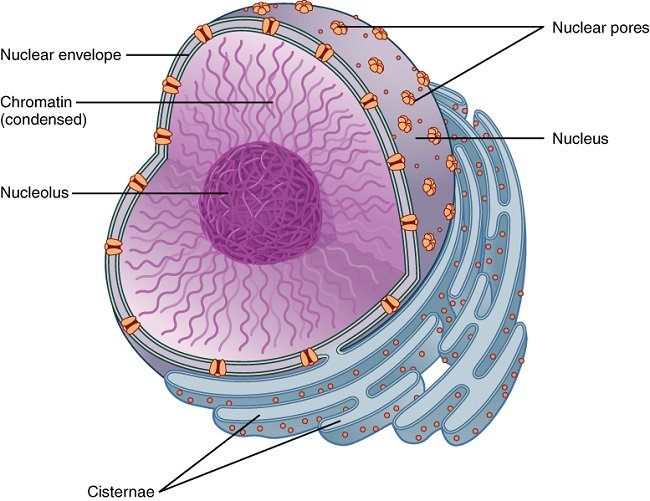
The control center of the cell.
cytoplasm
nucleus
nucleoplasm
chromatin
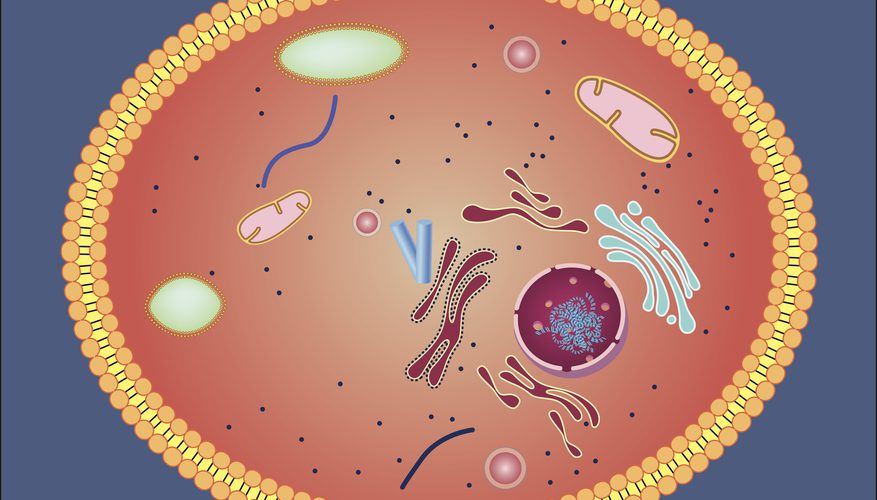
A jelly-like fluid that lls all the empty space in the cell, giving it shape and keeping everything in place.
chromatin
cytoplasm
nucleus
nucleoplasm
What is the powerhouse of a cell
Mitochondria
Cell membrane
Nucleus
Both
All is wrong
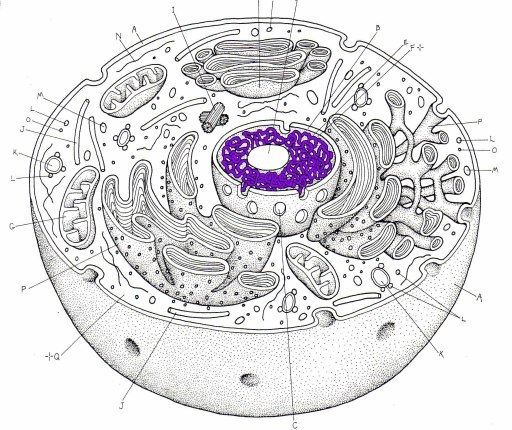
Which cell is larger?
Prokaryotic
Eukaryotic

This cell has a nucleus, that means it is ...
Prokaryotic
Eukaryotic
Which domain has organisms that live in harsh environments?
Bacteria
Archaea
Both
Fungal cells contain nuclei, which makes them classified as:
prokaryotic
eukaryotic
parasitics
saprophytic

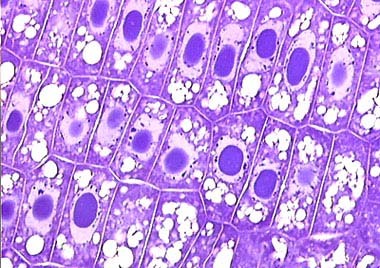
Which of the following would help you determine if the image shown comes from a plant or an animal?
the presence of chloroplasts
the size of the vacuole
the presence of a cell wall
all of these could be used
The idea that all living things are composed of cells, the cell is the basic unit of structure and function, and all cells come from cells is known as the
Theory of relativity
Agenda Theory
Cell Theory
Theory of naturalization

This paramecium has a purple nucleus holding DNA. This tells us the paramecium is
a eukaryote
a prokaryote
a virus
a plant
Which type of cell has DNA that is NOT in a nucleus?
Prokaryotic
Eukaryotic
an optical instrument used for viewing very small objects, such as mineral samples or animal or plant cells, typically magnified several hundred times.
Thermometer
Microscope
Compass
Stopwatch
WATER
NO2
One of the few compounds found in a liquid state over the earths surface.
A substance or matter in a state in which it will expand freely to fill the whole of a container, having no fixed shape
firm and stable in shape, 3D
This causes on end of the molecule to be negative, while the other is positive.
hydrogen bond
moleculer bond
negative
polarity

hydrogen nucleus
iron
calcium
water
salt
______ can make 4 different bond with 4 different things
water
carbon
starch
proteins
Why is ice less dense than water?
Covalent Bonding
Ionic Bonding
Hydrogen Bonding
Polar Bonding
covalent bonds
involves a transfer of an electron, so one atom gains an electron while one atom loses an electron
involves the sharing of electrons between two atoms
Two atoms connected by a covalent bond may exert different attractions for the electrons in the bond, producing an unevenly distributed charge.
Because they’re polarized, two adjacent H2O (water) molecules can form a linkage
water expands upon freezing because of
polar bonding
covalent bonding
ionic bonding
hydrogen bonding
Carbon has a strong bond to other carbon atoms
True
False
Peptide Bond
is formed between a metal and a non-metal.
a weak bond between two molecules resulting from an electrostatic attraction between a proton in one molecule and an electronegative atom in the other.
consist of pairs of electrons shared by two atoms, and bind the atoms in a fixed orientation
a chemical bond formed between two molecules when the carboxyl group of one molecule reacts with the amino group of the other molecule, releasing a molecule of water
Amino acids have a chain like bond
True
False
A chemical bond in which a hydrogen atom of one molecule is attracted to an electronegative atom, especially a nitrogen, oxygen, or fluorine atom, usually of another molecule.
Hydrogen Bond
covalent bond
ionic bond
polarity bond
energy source for all living things
photosynthesis
glucose
carbon
water
What make up a polymer?
miopolymer
monomers
biopolymer
triomer
_________ are the solid part to plants
biopolymers
monomers
trimers
polymers
Name the number one energy sources for all living things
Glucose
water
protein
sunlight
Peptides are the building blocks of
glucose
proteins
carbon
covalent bonds
_______ role in the body are chemical messengers, store and provide energy, maintain temperature.
hydrogen
Glucose
Proteins
Lipids
the 4 major groups of macromolecules found in living things are
carbohydrates, glucose, lipids, & proteins
glucose, lipids, nucleic acids, & proteins
carbohydrates, lipids, nucleic acids, & proteins
RNA is
ribonextose acid
ribonucleic association
ribonucleic acid
DNA is
deoxytoxic acid
deoxyribonucleic acid
dionyiassoc apple
What are the RNA that contains the sugar ribose & DNA that contains the sugar deoxyribose?
sugars
amino acids
proteins
nucleotides
macromolecules that contain nitrogen as well as carbon, hydrogen, & oxygen
glucose
proteins
amino acids
nucleic acids
compounds with an -NH2 on 1 end a -COOH on the other end
glucose
amino acids
proteins
nucleic acids
Covalent bonds called peptide bonds link amino acids together to form a polypeptide, a type of ________ molecule
protein
glucose
carbohydrate
starch
proteins have how many levels of structure?
4
3
2
1

The graph below shows atmospheric carbon dioxide levels since the year 1880.Which of the following conclusions can be drawn from this graph?
Atmospheric carbon dioxide levels are responsible for global temperature change.
Atmospheric carbon dioxide levels have been rising at an increasingly higher rate.
Atmospheric carbon dioxide levels have remained the same over the past century.
Atmospheric carbon dioxide levels have fell as renewable energy resources are

Enzymes are molecules that help speed up reactions in your body. The graphs show the reaction rate for an enzyme across a range of temperatures and pH.Based on these data, this enzyme functions best at what temperature and pH?
Temperature of 10 C and a Ph of 1
Temperature of 37°C and a pH of 6
Temperature of 40°C and a pH of 8
Temperature of 50°C and a pH of 10

A population of rabbits in an area of Northern Florida was monitored to learn more about thefactors that affect the population size. The graph below shows data collected about the rabbitpopulation size for 30 generations. Based on the data above, which of the following would be a scientific question that could beanswered with the given data?
Why are the rabbits average weight declining?
What types of shleters are available for the rabbits?
How do the rabbits acquire food in their environment?
Has the rabbit population been impacted by recent construction?
An ecologist is examining a field with wild flowers. They want to know what types of pollinators carry the most pollen among flowers in the field. In order to determine how much pollen is being carried by each pollinator, the ecologist must examine the entire bodies of multiple organisms, before releasing them back into the wild flower field.What microscope would best assist the ecologist in this task?
Light Microscope
Dissecting Microscope
Scanning Electron Microscope
Transmission Electron Microscope

Taq polymerase is an enzyme used in the polymerase chain reaction (PCR) to replicate fragments of DNA. A study published in 1976 examined the properties of Taq polymerase after the enzyme was isolated from Thermus aquaticus, a thermophilic bacterium that lives in the hot springs of Yellowstone National Park. The graph shows one of the results of the study.Which statement about enzyme activity is best supported by this graph?
An enzyme functions best under specific temperature conditions.
An enzyme’s rate of activity increases with time until it becomes inactive.
An enzyme must be composed of multiple polypeptides, or subunits, to be active.
An enzyme works equally well in bacteria that are adapted to high temperatures and in human cells

Below shows data collected for populations of damselflies from August 1st until October 16th.What conclusion can be drawn based on the data?
Only embanked ponds result in protozoa infection.
Creek-fed ponds are producing healthier damselflies.
Rate of infection in embanked ponds has increased over time.
The later in the year the high the infection rate in creek-fed ponds.

The graph shows how a Serengeti buffalo population changed over a period of years. During this time period, the buffalo were affected by the rinderpest virus, a debilitating disease with a high mortality (death) rate. However, the virus was eventually eliminated from the population. Which of the following inferences is supported by the graph?
The virus was eliminated during year 3.
The ecosystem sustain, at most, 50,000 buffalo.
A new predator moved into the ecosystem in year 16.
The ecosystem is healthiest with a population of 30,000 buffalo.

The graph shown represents data collected that compares the various concentrations of cardenolides (a type of steroid) found in different milkweed plants, and concentrations found in adult monarch butterflies that fed on milkweed plants as caterpillars. Scientists concluded that cardenolide concentrations are maintained throughout the life of the monarch butterfly. Based on the graph, which statement best defends the scientists’conclusion?
The cardenolide concentration in the milkweed decreased and the plants grew larger.
The cardenolide concentration decreased in the monarchs as it decreased in the milkweed
The cardenolide concentration in the adult monarchs is dependent on the concentration found in the milkweed.
The cardenolide concentration was found in the adult monarchs regardless of the

An enzyme is a molecule that speeds up a reaction. In living things temperature and pH affect an enzyme's ability to to speed up a reaction. The graph below displays the effects of temperature on enzyme activity. Which of the following is a piece of evidence that is found within the graph?
This enzyme will only work at a temperature of 35° C.
This enzyme only functions at temperatures above 50° C.
The higher the temperature the better the enzyme will function.
The activity level of the enzyme is directly influenced by the temperature.

Crystal violet is a dye that is used to stain the outer layer of certain bacterial cells and differentiate them from other types of cells. Below is an image of bacteria cells that have been stained with crystal violet. What type of microscope would be used to obtain this type of image?
Light Microscope
Dissecting Microscope
Scanning Electron Microscope
Transmission Electron Microscope

Use the graph below to answer the question. Which population description is most likely represented by the graph?
A population of wolves slowly increases but then increases rapidly.
A population of birds increases but then becomes stable.
A population of mice slowly increases but then fluctuates seasonally.
A population of fish quickly increases in the spring but then decreases quickly in the fall.
An ecologist is studying Dunaliella salina a single celled algae in a local pond. The pond is located near a construction site and the ecologist wants to know what affect, if any, the construction site is having on the pond, as there has been a steady decline in the Dunaliella salina population. In order to complete their study the ecologist would like to examine the organelles inside Dunaliella salina. If they would like to examine the inner structure of the chloroplasts of an already dead Dunaliella salina, what microscope would be best suited for this task?
Light Microscope
Dissecting Microscope
Transmission Electron Microscope
Scanning Electron Microscope
Which of the following describes high blood viscosity?
There is a high concentration of blood cells and solutes
The blood is more thick and the heart has to pump harder
Blood pressure goes up
All are correct
Which statement best describes blood pressure?
The force applied by the heart and amount of blood pumped determine blood pressure.
It’s normal and healthy to have extended periods of high blood pressure.
Your blood pressure is higher when you sleep.
Being nervous can decrease your blood pressure.
When an individual has high cholesterol, certain substances, such as calcium and fats, form plaque in arteries. How is this plaque, known as arterial plaque, most likely to affect blood flow?
Arterial plaque clogs the arteries, limiting or stopping blood flow
Arterial plaque changes the direction of blood flow, which forces oxygenated blood to the heart.
Arterial plaque changes the size of blood cells, which prevents blood from flowing in the arteries.
Arterial plaque clears the arteries, increasing blood flow.
Which of the following statements best describes blood flow in the human body?
As the thickness of the blood decreases, the rate of blood flow increases.
As the diameter of a blood vessel decreases, the rate of blood flow increases.
As the length of a vein decreases, the resistance to blood flow decreases
As blood pressure increases, the rate of blood flow decreases.
Blood pressure will increase with an increase of what?
heart rate
inactivity
blood volume
oxygen levels
Blood volume and blood pressure are related. What happens to pressure and cardiac output when volume of fluid increases?
increased fluid, decreased cardiac output, and decreased pressure
increased fluid, decreased cardiac output, and increased pressure
increased fluid, increased cardiac output, and decreased pressure
increased fluid, increased cardiac output, and increased pressure

