
Font size
 Worksheets
Naya Science Exam quiz
Total questions: 127
Worksheet time: 2hrs 46mins
Which is true about active transport?
requires energy
does not require energy
moves substances down the concentration gradient
moves material from high to low concentration

Which way would the purple molecules move through the semi permeable membrane?
From the A side to the B side
From the B side to the A side
None of the purple molecules would move.
When both inside and outside of a cell have the same amount of water it is said that the cell has reached a state of...
Osmosis
Diffusion
Dynamic Equilibrium


Which cell is the animal cell?
Cell 1
Cell 2

What is this?
A chloroplast
A mitochondrion
A ribosome
A nucleus
Which part of a cell controls the entry and exit of substances?
Cell wall
Cytoplasm
Cell membrane
Ribosomes

What are F, G and H?
cell membrane, ribosome, mitochondrion
cell wall, nucleus, cell membrane
cell membrane, mitochondrion, permanent vacuole
cell wall, chloroplast, permanent vacuole

What is this?
a plant cell
an animal cell
a chloroplast
a mitochondrion

Which of the answers is in the correct size order? smallest to biggest? (picture is NOT to scale)
Bacteria cell, animal cell, plant cell
Animal cell, bacterial cell, plant cell
Bacteria cell, plant cell, animal cell
Plant cell, animal cell, bacteria cell

Which cell component (part) contains DNA?
B
E
G
H

What is represented by the letter C?
ribosome
permanent vacuole
cytoplasm
cell wall
Which cell component makes proteins?
Mitochondria
Chloroplasts
Nucleus
Ribosomes

Which letter represents part of a cell that contains cellulose?
D
F
G
H

Where would you find cell sap?
A
C
E
H
Which cell component strengthens the cell and provides support?
cell membrane
mitochondria
nucleus
cell wall
Which of the following would you NOT find in a bacterial cell
cytoplasm
nucleus
ribosomes
mitochondria

What is the structure with a question mark called?
plasmid
cell membrane
flagellum
chromosome
Recall the meaning of the term independent variable
The variable that you keep the same
The variable that you change
Th variable that you monitor
The variable that you measure
Recall the meaning of the term dependent variable
The variable that you keep the same
The variable that you change
Th variable that you monitor
The variable that you measure
Recall the meaning of the term control variable
The variable that you keep the same
The variable that you change
Th variable that you monitor
The variable that you measure
A low solute (sucrose) solution =
a high water concentration
a low water concentration
Recall two factors you must control when investigating osmosis in potatoes
the amount of sucrose
volume of the sucrose solution
surface area of the potato
the volume of water
Recall the definition of Osmosis
Recall the definition of Osmosis
The pieces of potato are blotted dry before they are re-weighed to remove excess (a) .
Give one way in which the accuracy of results could be increased in an investigation
Take your time to complete the investigation
Repeat the investigation
Repeat the investigation and calculate an average
Do a trial run first to get all the errors out of your system

Calculate the % change in mass for Chip 6 in the table.
Give your answer to an appropriate number of decimal places.
% change in mass = (change in mass ÷ starting mass) x 100
-27.0
27.03
27.0
27.03
What piece of equipment would you use to measure the volume of water
Measuring cylinder
Conical flask
Pipette
Weighing scales
What piece of equipment would you use to determine the mass of the potato chips?
Weighing scales
Measuring cylinder
Pipette
Conical flask
What three pieces of equipment do you need to ensure that each potato chip has the same surface area?
Knife
Ruler
Potato corer/cork borer
Scales
Potato
The potato chips must be left for at least 15 minutes in the sucrose to allow (a) to occur.
Calculate the % change in mass for Chip 2 in the table.
Give your answer to an appropriate number of decimal places.
% change in mass = (change in mass ÷ starting mass) x 100
16.6
16.59919028
-16.6
-17.0


What is an ion?
A Charged Atom
A Large Atom
A Small Atom
A Cute Atom
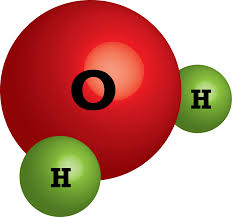
How many atoms are in this molecule?
1
2
3
4


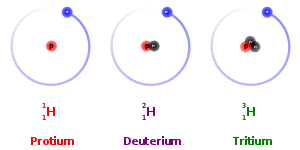
Different isotopes have...
different masses
different atomic numbers
different electrons
different protons

Who discovered particles in the nucleus of atoms, neutrons
Niels Bohr
Ernest Rutherford
J.J. Thomson
James Chadwick

Electrons orbit the nucleus in shells. Each shell can only hold a maximum number of electrons . Argon has an atomic number of 18. What would be its electrons arrangement.
2,16
2,4,6,6
8,8,2
2,8,8

Group 1 Metals in the periodic table are called
Alkali metals
Halogens
Noble gases
Transition metals
Group 1 Metals have how many electrons in their outer shell?
4
3
2
1
Which of these scientists were involved in the development of the Periodic Table?
Isaac Newton
Dmitri Mendeleev
Charles Darwin
Stephen Hawking

The nucleon number and proton number of the lithium atom are shown by the symbol.
What is the correct symbol for the lithium ion in lithium chloride?


What happens when magnesium loses 2 electrons?
It stabilizes to a net charge of 0
It turns into an atom
It becomes negatively charged
It becomes positively charged
In the modern periodic table elements are arranged by:
atomic mass
atomic number
valence electrons
number of isotopes
What is the equation linking kinetic energy, mass and velocity?
Energy = mass x velocity2
Energy = mass / velocity
Energy = 0.5 x mass x velocity2
Energy = mass x velocity
What are the units for energy?
Joules (J)
Watts (W)
Kilograms (kg)
Newtons (N)
What are the units of mass?
Joules (J)
Watts (W)
Kilograms (kg)
Newtons (N)
What are the units for velocity?
mph
m/s
m/s2
km/h
What is the equation linking gravitational field strength, gravitational potential energy and height?
Gravitational field strength = mass x gravitational potential energy x height
Gravitational potential energy = mass x gravitational field strength x height
Height = mass x gravitational field strength
What are the units of gravitational field strength?
Newtons (N)
Kilograms (kg)
Kilograms per newton (kg/N)
Newtons per kilo (N/kg)
What is the equation linking energy transferred, power and time?
Power = energy x time
Power = energy / time
Energy = time / power
What are the units of work done?
Joules (J)
Watts (W)
Kilograms (kg)
Newtons (N)
Food, batteries, fuel and muscles store which energy type?
Elastic potential energy
Kinetic energy
Thermal energy
Chemical energy
Which energy store changes as height of an object changes?
Kinetic energy
Gravitational potential energy
Elastic potential energy
Sound energy
Which energy store is linked with springs and catapults?
Nuclear energy
Light energy
Kinetic energy
Elastic potential energy
Which two energy stores change depending on the position of an object?
Electrical energy
Elastic potential energy
Gravitational potential energy
Chemical energy
What is the relationship between KE and GPE?
Direct proportion - they both increase at the same rate
Direct proportion - as KE increases, GPE decreases
Inverse proportion - they both increase at the same rate
Inverse proportion - as KE increases, GPE decreases
What is the specific heat capacity of a material?
The amount of energy required to heat up a material.
The amount of energy required to raise the temperature of material.
The amount of energy required to raise the temperature of 1kg of a material.
The amount of energy required to raise the temperature of 1kg of a material by 1⁰C.
Which equation is used to calculate specific heat capacity?
Change in thermal energy = mass x specific heat capacity x change in temperature
Change in temperature = mass x specific heat capacity x change in thermal energy
Change in thermal energy = mass x specific heat capacity x temperature of a material
Which type of energy is stored in an inflated balloon
Gravitational potential energy
Elastic potential energy
Strain energy
Chemical energy
When measuring the specific heat capacity of a metal block, what is the function of the ammeter?
To measure the voltage
To measure the power
To measure the current
To measure the energy
When measuring the specific heat capacity of a metal block, how can we increase the accuracy of our results?
Insulate the metal block
Add water to the hole with the thermometer
Place the metal block on a heat proof mat
All of the above
Change in thermal energy = mass x specific heat capacity x change in temperature
Calculate the energy transferred to a metal block that has a specific heat capacity of 380J/kg⁰C, has a temperature change of 15⁰C and a mass of 2.7kg
68.4J
68,400J
15,390J
15.39J
What is the definition of efficiency?
A measure of how much energy is wasted by an appliance
A measure of how quickly energy is transferred to an appliance
A measure of the energy transferred usefully to an appliance
A measure of the energy given off to the surroundings by an appliance
What is the equation used to calculate efficiency?
Efficiency = total energy input / total energy output
Efficiency = useful energy output / total energy input
Efficiency = useful energy input / useful energy output
Efficiency = total energy input / useful energy output
Which of the following can also be used to calculate efficiency?
Current
Voltage
Mass
Power
Which key term is used to describe energy being spread out or wasted?
Efficient
Deficient
Dissipate
Elevate
What term is used to describe a method for reducing unwanted energy transfers by reducing friction?
Insulation
Titration
Lubrication
Dissipation
What is a thermal insulator?
A non-conductive material
A conductive material
What is the name of the method of reducing unwanted energy transfers by the use of non-conductive materials?
Insulation
Titration
Lubrication
Dissipation
What is the law of conservation of energy?
Energy is created and transferred
Energy is created and stored
Energy is stored and destroyed
Energy is stored and transferred
How does thermal conductivity of a material affect the rate of conduction across that material?
The higher the conductivity, the faster the rate of conduction
The higher the conductivity, the slower the rate of conduction
The lower the conductivity the faster the rate of conduction
What are the units of power?
Joules (J)
Watts (W)
Kilograms (kg)
Newtons (N)
What is the definition of power?
How much electricity passes through an appliance
The amount of energy wasted by an appliance
The rate of energy transfer or the rate of doing work
The rate of electron transfer
What is the equation linking power, time and work done?
Power = work done / time
Power = work done x time
Work done = power / time
Which energy transfers relate to an object being projected upwards?
Increase chemical, increase KE, increase sound
Increase GPE, decrease KE, increase thermal
Increased KE, decreased GPE
Decrease GPE, increase KE, increase thermal
Which energy transfers relate to a moving object hitting an obstacle?
Decrease sound, decrease chemical, decrease thermal
Increase sound, decrease chemical, increase thermal
Decrease KE, increase sound, increase thermal
Increase KE, increase chemical, decrease thermal
Which energy transfers relate to a vehicle accelerating?
Increase chemical, increase elastic, increase sound
Decrease chemical, decrease KE, increase thermal
Decrease chemical, increase KE, increase thermal
Which energy transfers relate to a vehicle decelerating?
Increase chemical, increase elastic, increase sound
Decrease chemical, decrease KE, increase thermal
Decrease chemical, increase KE, increase thermal
Which energy transfers relate to a boiling kettle?
Decrease electrical, increase thermal, increase sound
Decrease electrical, increase thermal, increase chemical
Increase electrical decrease thermal, increase sound
What does it mean if a resource is renewable?
The resource is replenished
The resource will eventually run out
The resource will always release energy
The resource relies on external factors
What does it mean if a resource is reliable?
The resource is replenished
The resource will eventually run out
The resource will always release energy
The resource relies on external factors
What does it mean if a resource is non-renewable?
The resource is replenished
The resource will eventually run out
The resource will always release energy
The resource relies on external factors
Which resource is renewable?
Coal
Natural gas
Nuclear
Biofuel
Which resource does not release carbon dioxide?
Coal
Natural gas
Nuclear
Biofuel
Which resource is reliable?
Solar
Wind
Wave
Tidal
Which resource contributes damage to the ecosystem?
Solar
Wind
Wave
Tidal
Which resource is described as carbon neutral?
Biofuel
Fossil fuels
Nuclear
Hydeoelectric

