
Font size
 Worksheets
Endocrine, Circulatory and Respiratory Summative Review
Total questions: 124
Worksheet time: 3hrs 46mins
endo- means:
end
beside
within
behind
gluc/o means:
glue
pancreas
stomach
sugar
exo- means:
extra
without
outward
exit
-crine means:
to process
to secrete
hormone
transfer
ren/o means:
outward
inward
retract
kidney
aden/o means:
to secrete
gland
kidney
cortex
Endocrine glands secrete _
Hormones
Neurotransmitters
A wide range of chemical substances
What is the main function of the endocrine system?
It creates chemicals, or hormones, that are sent around the body to maintain homeostasis.
It creates electrical messages that are sent around the body to maintain homeostasis.
It maintains the correct level of oxygen in the body to maintain homeostasis.
It releases waste from the body to maintain homeostasis.


Letter J is pointing to
Ovaries
Pineal Gland
Adrenal
Testes

The gland labeled 4 in the diagram is?
the thymus gland
the thyroid gland
the parathyroid glands
the adrenal glands
The process by which an organism’s internal environment is kept stable in spite of changes in the external environment.
Positive Feedback
Negative Feedback
Homeostasis
Targeted Cells
When you get cut, your skin cells release hormones that signal platelets to come and stop the bleeding. Platelets then release more hormones that signal even more platelets to help stop bleeding. The hormone signals continue until the cut is closed. This is an example of what type of feedback?
Positive Feedback Response
Negative Feedback Loop
Cells that have receptors for a particular hormone.
gland cells
neurons
hormones
target cells

This structure releases what hormones?
insulin and glucagon
calcitonin and estrogen
Parathyroid hormone and antidiuretic hormone
epinephrine and testosterone
The _________________ gland(s) sit on top of the kidneys, protect us from stress and produce cortisol (adrenaline).
thyroid
pituitary
parathyroid
adrenal
The ____________________ gland(s) are found behind the thyroid and control the calcium in the blood and bones.
testes
ovaries
adrenal
parathyroid
The ____________________ gland(s) is found in the neck and controls the rate of energy needed (metabolism), shaped like a butterfly.
pituitary
parathyroid
thyroid
adrenal
Too much human growth hormone in children causes ______________________.
dwarfism
goiter
gigantism
tall syndrome
Too little human growth hormone in children causes _____________________.
dwarfism
acromegaly
gigantism
short syndrome
The __________________gland(s) is found under the brain and produces eight very important hormones - called the BOSS gland.
thyroid
parathyroid
adrenal
pituitary
The testes produce ___________________.
estrogen
lactating hormone
progesterone
testosterone
__________________________ keeps bones strong and creates female characteristics.
androgen
testosterone
estrogen
progesterone
Feedback loops are special processes in the endocrine system that tell the body when to start and stop making _____________.
glands
energy
hormones
blood cells
Regulation of body processes is the function of the __________________________ system.
nervous
lymphatic
endocrine
digestive
__________________________ are specialized groups of cells that produce hormones and release them into the blood stream.
tissues
neurons
nephrons
glands
What organ makes insulin to regulate blood sugar?
thyroid
pancreas
glands
pineal
The endocrine system works to maintain stable internal conditions (balance).
Hormones
Homeostasis
Hypothyroidism
Hidrosis
Cells in the body that contain receptors that match certain hormones.
Target Cells
Receptors
Glands
Thymus
Where would you NOT find epithelial tissue?
skin
glands
heart
lining of hollow organs


Which one speed up the heart beat rate
more carbon dioxide
more oxygen
lack of adrenalin
all of the above


Blood clots can cause a heart attack
True
False


These vessels carry blood away from the heart.
arteries
veins
capillaries
superior vena cava
The exchange of oxygen and carbon dioxide takes place in these vessels.
arteries
veins
inferior vena cava
lung capillaries
Brings blood to the heart from the upper portion of the body.
pulmonary artery
superior vena cava
pulmonary vein
inferior vena cava
Valve between the left atrium and the left ventricle.
tricuspid valve
mitral valve
pulmonary valve
aortic valve
These vessels carry blood to each lung from the right ventricle.
superior vena cava
pulmonary arteries
pulmonary veins
aorta
Blood in the right atrium:
Oxygenated
Deoxygenated
Blood in the left ventricle:
Oxygenated
Deoxygenated
Blood in the pulmonary artery:
Oxygenated
Deoxygenated
Blood in the pulmonary veins:
Oxygenated
Deoxygenated
Blood in the aorta:
Oxygenated
Deoxygenated
Blood in the left atrium:
Oxygenated
Deoxygenated
Blood in the Inferior Vena Cava:
Oxygenated
Deoxygenated
Which of the following is NOT a typical early sign or symptom of a myocardial infarction?
bradycardia
persistent chest pain, radiating to the left arm
pallor
rapid, weak pulse
The heart is made of ______ muscle
skeletal
cardiac
smooth
One of the body's largest blood vessels that transports blood from the body region below the diaphragm to the heart
superior vena cava
inferior vena cava
pulmonary trunk
pulmonary veins
These are the smallest blood vessels with the thinnest walls in order to maximize diffusion of nutrients in and out of the interstitial fluid
arteries
veins
capillaries
aorta
What makes up around 55% of the blood?
Plasma
Red Blood Cells
White Blood Cells
Platelets
What carries oxygen around the body?
Plasma
Red Blood Cells
Platelets
White Blood Cells
What causes the blood to be the distinct red colour?
Haemoglobin
Glucose
Hormones
Oxygen
What is the function (job) of the plasma?
To release antibodies to fight infections.
To transport oxygen around the body.
To carry dissolved nutrients and sugars.
To transport oxygen around the body.

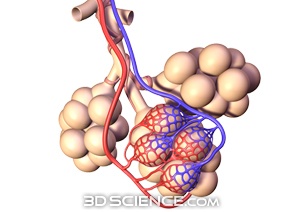
What part of the respiratory system is shown in the picture?
trachea
lungs
alveoli
pharynx
Which structure closes off the trachea during swallowing?
glottis
epiglottis
esophagus
palate
The larynx:
contains vocal cords
is a muscle
helps digest food
contains alveoli
The diaphragm:
is the membrane around the lungs
contracts and relaxes when you breathe in and out
absorbs oxygen
All of these

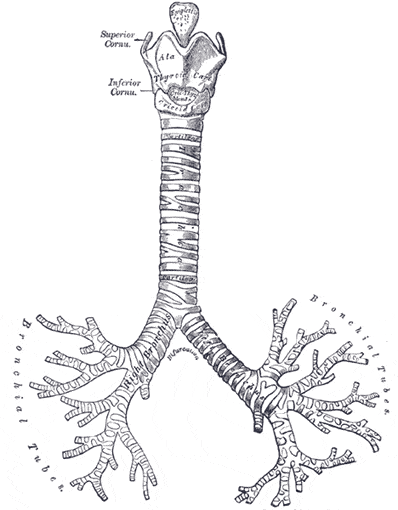
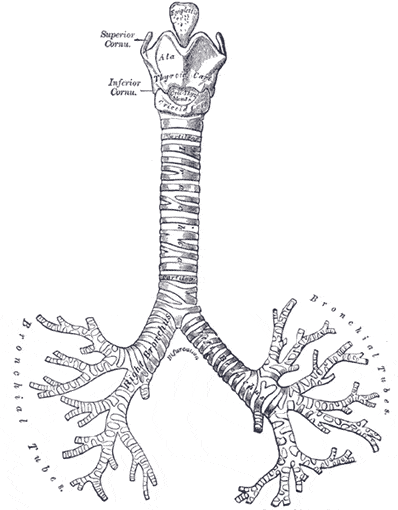
The passageway that is shared by both the digestive and respiratory system is the:
larynx
pharynx
trachea
nose
Your lungs are ___________ air
My lungs are __________________ air.
The first place air enters in the respiratory system is
trachea
primary bronchus
pharynx
nostrils
Humans can make sounds by controlling air moving over the:
vocal cords
pleural membranes
sinuses
trachea
This structure produces mucus that moistens the nose and traps dirt and germs:
sinuses
bronchi
larynx
pharynx


1. larynx
2. nasal cavity
3. pharynx
4. trachea
Which of the following is the correct order that air would flow during inhalation.

What organ of the respiratory system is in blue.
pharynx
trachea
larynx
epiglottis
What organ of the respiratory system is in purple.
pharynx
trachea
larynx
epiglottis
What do we let out when we exhale?
oxygen
Carbon dioxide
lungs
What are leukocytes?
red blood vessels
plasma
white blood cells
platelest
What are the 4 major blood types?
Blood type A
Blood type B
Blood type C
Blood type AB
Blood type O
Name the proteins on the surface of red blood cells.
Antibodies
Antigens
Plasma
Collagen
What type of antigens can be found on the surface of RBC's when someone has blood type O?
A
B
AB
none
Where are antibodies located?
surface of red blood cells
surface of white blood cells
plasma
surface of platelets
Someone with blood type B has B antigens on their RBC's and B antibodies in their plasma.
true
false
What antibodies can be found in the plasma when someone has blood type A?
none
A
B
A and B
Why is AB blood type unique?
can only have RH antigens
doesn't have any A nor B antigens on the RBC's
doesn't produce A nor B antigens
doesn't produce A nor B antibodies
What is the function of white blood cells?
carry oxygen
fight infection
carry nutrients
clot blood
What are the components of blood?
white blood cells
red blood cells
platelets
plasma
Vasodilation is
the process of diffusion of blood into the heart
the process of forming new blood cells
the process of dilating blood vessels
the process of expanding blood vessels
What process narrows blood vessels diameter.
vasodilation
vasoconstriction
vasocompression
vasocontraction
What cells produce antibodies?
red blood cells
white blood cells
Plasma cells
Platelets
If a person's erythrocytes have the "A" antigen, then their blood type is definitely
A
A or O
A or AB
B or O
If a person's erythrocytes have the "D" antigen (usually called the "Rh" antigen) then they are
Rh positive
Rh negative
D positive
D negative
If you are type O -, you can only receive blood from someone who is
O -
B -
A -
O +
If you are type O -, you can donate blood to someone who is
AB +
A -
B +
O +
If you are type A+, you can donate blood to someone who is
AB +
A -
AB -
O +
If you are type B+, you can receive blood from someone who is
AB -
B -
A -
O +
Can an AB+ person be the recipient of AB- blood?
yes
no

