
 Worksheets
2nd Nine Weeks Review
Total questions: 101
Worksheet time: 25hrs 15mins
The cell membrane main purpose is...
Selective Permeability
Energy Production
Locomotive
Looking good


What is the outer most part of a cell?
cell wall
nucleus
cell membrane
cell skin
True or False: Lipids are insoluble
True
False
True or False: The main function of a lipid is to store energy.
True
False
The units of protein are
Amino acids
Glucose
Fatty acid
Peptides
The structure of a Plasma Membrane has what 2 parts
Made of Phospholipid Bilayer
Glycerol
2 Layers of lipids + proteins + carbohydrates
Fatty Acids
Condensed Chromatin
Nucleaus
Microfilaments
Chromosomes
Flagella
Endoplasmic Reticulum
Membrane system of folded sacs and interconnected channels
Rough ER
Synthesizes Proteins
Smooth ER
Synthesizes Lipids; detoxifies drugs
Golgi Apparatus
Modify, Sort & Package Proteins (FedEx of the Cell)
Vesicles
Membrane bound sacs used for transport - (semi-trucks)
Mitochondria
Converts chemical energy from food into a usable form - (power plant)
Vacuoles
Storage containers - Only found in plant cells
Lysomes
Breakdown lipids, carbs, proteins (Recycling center)
Centrome
Small region of cell that produces microtubles
Centrioles
Short microtubles arragned in a cylindrical tube
Passive Transport
No energy required from the cell
Diffusion
Net movement of particles from an area of high concentration to low
Dynamic Equilibrium
Continuous movement of molecules, BUT, no overall change
Facilitated Diffusion
Diffusion through transport proteins
Osmosis
Diffusion of water across a semipermeable membrane
Isotonic
Soln. w/ same concentration of solutes as cytoplasm
Hypertonic
Soln w/ higher concentration of solutes than cytoplams
Hypotonic
Soln w/ lower concentration of solutes than cytoplasm
Active Transport Requires: (3)
Energy
Against concentration gradient
Exocytosis
Molecular Transport - through transport proteins or pumps
2 parts of Active Transport
Osmosis
Endocytosis
Exocytosis
Isotonic
Endocytosis
Taking in material by folding membrane inward
Phagocytosis
Taking in FOOD
Pinocytosis
Taking in LIQUID
Exocytosis
Forcing materials OUT of the cells
Cytoplasm
Semifluid materials inside the membrane
Robert Hook
Coined the term "cell"
Anton von Leeuwenhoek
1st to see microscoptic pond life
Cell Theory
All cells come from preexisting cells
Fluid mosaic model
parts of a cell membrane can slide and move passed each other
Cell membrane
Outer covering of a cell
Robert Hook
Coined the term "cell"
Anton von Leeuwenhoek
1st to see microscoptic pond life
Cell Theory
All cells come from preexisting cells
Fluid mosaic model
parts of a cell membrane can slide and move passed each other
Cell membrane
Outer covering of a cell
Fatty Acid Tails
Phospholipid bilayer that repeals wateer
Selective Permiability
cell membranes only allow certain things to pass in and out
Mitochondria
Provides energy to the cell
Nucleus
Cell growth, DNA and reproduction
Cytoplasm
Water based where all organelles are suspended
Cell membrane
Oraganelle that seperates the interior of the cell from the outside
mitochondria
Organelle has it's own DNA stored in it
golgi bodies
Organelle functions to package and deliver proteins
ribosome
Organelle that is a protein factory
a phospholipid bilayer
all organelles are contained in it
Which process is used to make mRNA from the DNA in the nucleus?
transcription
translation
replication
Where does transcription take place in EUKARYOTIC cells?
nucleus
cytoplasm
ribosome
What is the difference between the sugar in DNA and RNA?
In DNA, the sugar is Deoxyribose while in RNA the sugar is Ribose
In DNA, the sugar is Ribose while in RNA the sugar is Deoxyribose
In DNA, it is a 5 carbon sugar while in RNA it is only a 4 carbon sugar.
There is no difference between the sugars
TRANSCRIBE this DNA sequence into RNA: AUG CGC TCT
AUG CAA UGA
ATG CAA TGA
UAC GCG AGA
TAC GTT ACT
Where does transcription take place in PROKARYOTIC cells?
nucleus
cytoplasm
ribosome
Nucleic acids are the building blocks of...
DNA
RNA
Atoms
Nucleotides
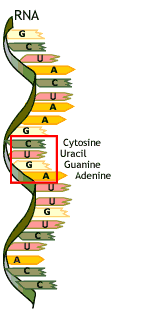
TRANSCRIBE this DNA sequence into RNA: TAC GTT ACT
AUG CAA UGA
ATG CAA TGA
AUG GAT UGA
TAC GTT ACT
How many nucleotides equal make up a codon?
1
2
3
4
Where does TRANSCRIPTION occur in EUKARYOTIC cells?
Nucleus
Ribosome
Cytoplasm
Mitochondria
Which RNA carries the message from the DNA molecule out of the nucleus?
mRNA
rRNA
tRNA
Transcribe the following DNA sequence into RNA:
AAT TAG GGC TCG
AAT TAG GGC TCG
TTA ATC CCG AGC
UUA AUC CCG AGC
TTU UTC CCG UGC

ATG GGA ACT CCA
Amino Acids
Fatty Acids
Nucleotids
Monosaccharides

protein
carbohydrate
lipid
nucleic acid

This is a nucelotide monomer. What polymer is made when these monomers are joined together?
protein
carbohydrate
lipid
nucleic acid
Unsaturated fats are lipids that are ____ at room temperature?
solid.
liquid.
gas.
All of the following are functions of proteins EXCEPT
catalyze/speed up chemical reactions
provide quick energy
make up muscles, hair, and bones
support the immune system
What happens to an enzyme when it denatures?
The activation energy of the reaction is doubled.
The activation energy of the reaction is lowered.
It's optimal conditions for temperature of the enzyme are doubled.
The shape of the enzyme molecule is changed.
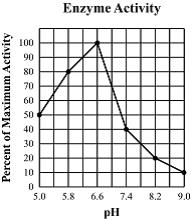
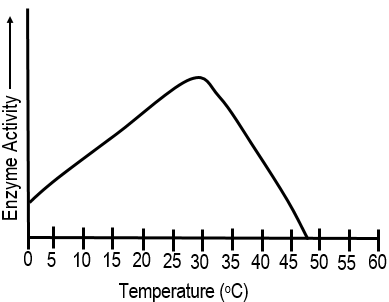
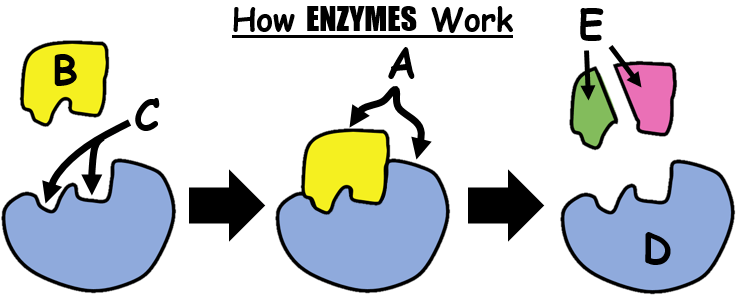
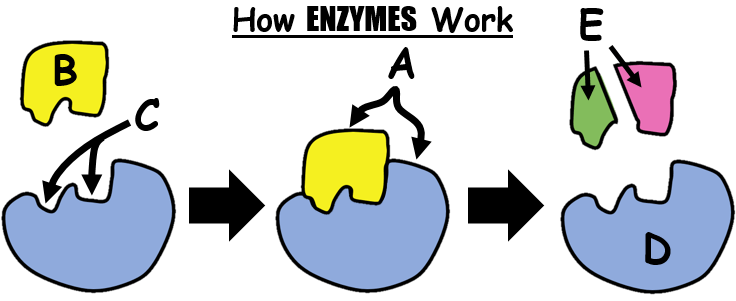
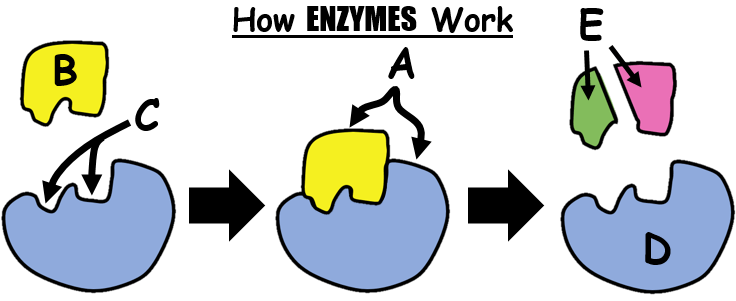
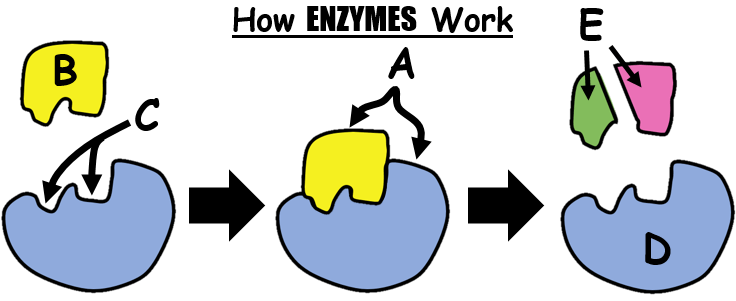
Which 2 factors can affect the rate of enzyme activity?
Light intensity
Temperature
pH
Oxygen concentration
Cellular respiration is the process that releases energy from food in the presence of
carbon dioxide
oxygen
glucose
ATP
The first set of reactions in cellular respiration is
the Krebs cycle
electron transport
glycolysis
the Calvin cycle
Which stage of cellular respiration is an anaerobic process?
the Krebs cycle
electron transport
glycolysis
the Calvin cycle


On a pedigree, this symbol represents a ---
not affected female.
not affected male.
affected male.
affected female.

How many individuals are there in the 3rd generation?
1
2
4
6

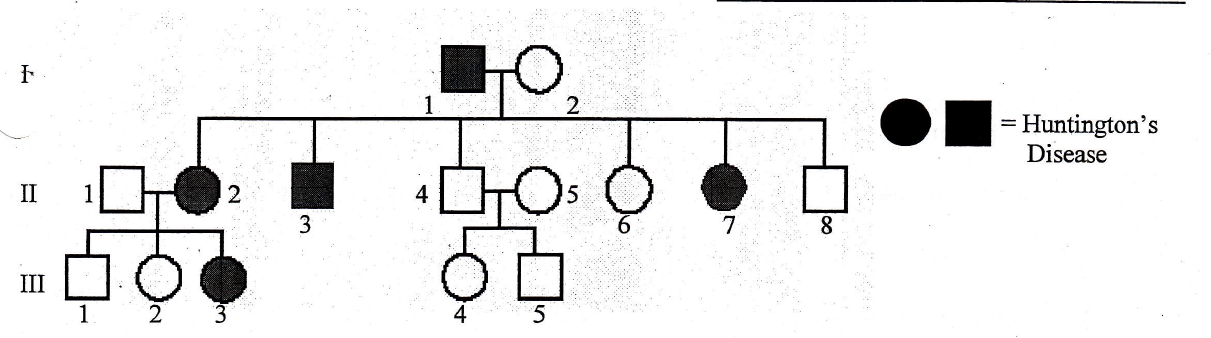

What is the gender of this person?
Male
Female

What phase is shown here? Hint: you are starting to see the nuclear membrane again!
Metaphase II
Telophase I
Telophase II
Metaphase I

What phase is this?
Hint: membrane is disappearing
Interphase II
Prophase I
Metaphase I
Anaphase II


CROSSING OVER INCREASES
LIFE SPAN
GENETIC VARIATION
THE NUMBER OF OFF-SPRING
ALL ARE TRUE

Is this person a male or female?
Male
Female

Is this a male or female?
Male
Female
Karyotypes are pictures of
Cells
Specific genes
Chromosomes
Proteins

Label #2 is likely the...
Centromere
p-arm
q-arm
Telomere
Chromomere

How many chromosomes are in this image?
1
2
3
4

Together these TWO chromosomes are called _______ chromosomes
Homologous
Heterozygous
Parental
Autosomal
The failure of one or more pairs of homologous chromosomes or sister chromatids to separate "normally" during meiosis is called _____________________.
nondisjunction
anaphase I
nondiploidy
karyotype

Which would be considered a gamete ?
Sperm cell
Egg Cell
Skin Cell
All of these
How many chromosomes are in a typical human somatic (body) cell?
23
22
44
46
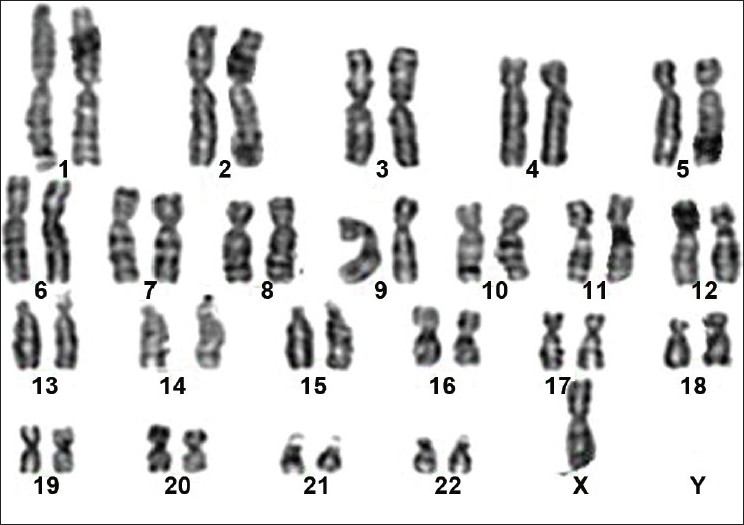
This karyotype shows an extra chromosome 21 (Trisomy 21)
This karyotype has no abnormality
This karyotype is missing a sex chromosome (monosomy x)
This karyotype is from a gamete
This karyotype shows an extra chromosome 21 (Trisomy 21)
This karyotype has no abnormality
This karyotype is missing a sex chromosome (monosomy x)
This karyotype is from a gamete

An extra sex chromosome
A missing sex chromosome
A missing autosome (Monosomy)
An extra autosome (Trisomy)


When red cows are crossed with white cow, the offspring have a mix of red hair and white hair. These cows are called roan. This is an example of:
complete dominance
incomplete dominance
codominance
polygenic inheritance
multiple alleles

When red snapdragons are crossed with white snapdragons, the offspring produce pink flowers. This is an example of:
complete dominance
incomplete dominance
codominance
polygenic inheritance
multiple alleles

