
 Worksheets
Chapter 23 Practice Test: Rise to World Power US HISTORY
Total questions: 113
Worksheet time: 1hrs 17mins
The policy of extending a nation's rule over other territories and countries:
Imperialism
Sphere of Influence
Isolationism
Expansionism
Section of a country in which a foreign nation enjoys special rights and powers:
Imperialism
Sphere of Influence
Isolationism
Expansionism
The belief that a nation should stay out of the affairs of other nations:
Imperialism
Sphere of Influence
Isolationism
Expansionism
The practice of spreading a nation's territorial or economic control beyond its borders:
Imperialism
Sphere of Influence
Isolationism
Expansionism
An area completely controlled by another country:
Territory
Protectorate
Dollar Diplomacy
Isthmus
A country under the control of a different country:
Territory
Protectorate
Dollar Diplomacy
Isthmus
The policy of using economic investment to protect U.S. interests abroad:
Territory
Protectorate
Dollar Diplomacy
Isthmus
A narrow strip of land connecting two larger bodies of land:
Territory
Protectorate
Dollar Diplomacy
Isthmus
A temporary government:
Provisional Government
Anarchy
Armistice
Dollar Diplomacy
Disorder and lawlessness caused by lack of effective government:
Provisional Government
Anarchy
Armistice
Dollar Diplomacy
An agreement to end fighting:
Provisional Government
Anarchy
Armistice
Dollar Diplomacy
To ask for something or discuss something:
Communication
Consult
Exploit
Eliminate
To exchange information or send messages:
Communication
Consult
Exploit
Eliminate
To use, specifically to take advantage of:
Communication
Consult
Exploit
Eliminate
To get rid of, remove, expel, or destroy:
Communication
Consult
Exploit
Eliminate
A plan or aim, a dream:
Vision
Trigger
Eventual
Annual
To start or initiate, to set off:
Vision
Trigger
Eventual
Annual
At a later time, in the future:
Vision
Trigger
Eventual
Annual
Yearly, once a year:
Vision
Trigger
Eventual
Annual
What is the policy of extending a country's power by taking over a smaller, weaker nation?
Militarism
Alliance
Imperialism
Nationalism
A policy proposed by U.S. giving all nations equal opportunities to trade in China called __________, tried to stop ____________________, an area in which one nation controls trade and investment.
Imperialism; Lay investiture
Open Door Policy; Spheres of Influence
Nationalism; Boxer Rebellion
Reparations; Treaty of Versailles
What was the goal of President Taft's Dollar Diplomacy?
Help US allies by increasing readiness of armed forces
Raise living standards of people in poverty-stricken countries
Support development of democracies in Central America
Benefit US economic interests by loaning money
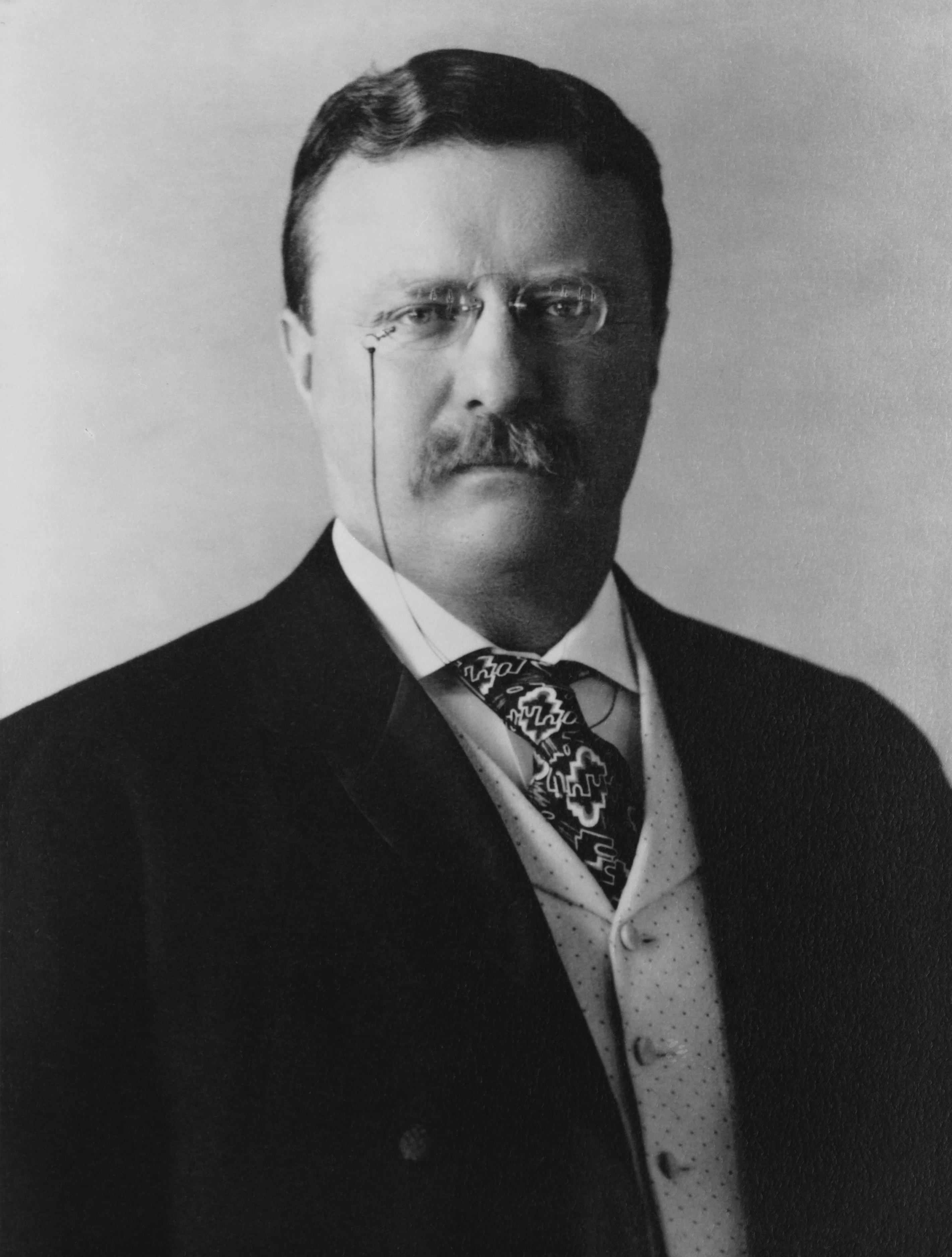


What new lands did the US take over because of the Spanish American War?
Spain
Cuba
Guam
Phillipines
Puerto Rico

This foreign policy was aimed at protecting US business in Latin America.
Moral Diplomacy
Big Stick Policy
Roosevelt Corollary
Dollar Diplomacy
Open Door Policy

This foreign policy by Theodore Roosevelt was used to secure the Panama Canal. The US will negotiate, but we also have a "Great White Fleet".
Moral Diplomacy
Big Stick Policy
Roosevelt Corollary
Dollar Diplomacy
Open Door Policy
This foreign policy was supported by Woodrow Wilson. The US would only support nations with the same moral beliefs in democracy as the US.
Moral Diplomacy
Big Stick Policy
Roosevelt Corollary
Dollar Diplomacy
Open Door Policy
This foreign policy made the US a "police force" of the Western Hemisphere.
Moral Diplomacy
Big Stick Policy
Roosevelt Corollary
Dollar Diplomacy
Open Door Policy

The Spanish-American War (1898) marked a turning point in American foreign policy because the United States-
developed a plan for peaceful coexistence
emerged as a new world power with an overseas empire
pledged neutrality in future European conflicts
refused to become a colonial power

A. The United States claims the Hawaiian Islands.
B. Puerto Rico becomes a United States territory.
C. The United States fights an insurrection in the Philippine Islands.
D. The United States Senate ratifies the Panama Canal treaty.
Which is the best heading for the actions above?
Rise of American Imperialism
Causes of World War I
Enforcement of the Monroe Doctrine
Trade Expansion in East Asia

The headline in this newspaper are an example of
yellow journalism
muckraking literature
investigative reporting
government censorship
Why did the U.S. annex Hawaii during the Spanish-American war?
to move captured Spanish soldiers there
to hide weapons from the Spanish
to add more land to the U.S.
to use it as a fueling station for the Navy
Who was blamed for the sinking of the U.S.S Maine ship?
Cuba
China
Great Britain
Spain
Where did a revolution take place that drew the US into the Spanish-American War in 1898?
Cuba
America
Hawaii
Spain

This diplomatic policy helped bring US economic interests into China.
Dollar Diplomacy
Open Door Policy
Moral Diplomacy
Big Stick Diplomacy
Actions that a nation takes when dealing with other nations.
domestic policy
foreign policy
diplomatic immunity

This map would be useful as a source of information about
American imperialism in the late 1800s
Reconstruction after the Civil War
Progressive reforms in response to industrialization

This territory added millions of acres to the U.S., it was purchased from Russia in 1867 for $7.2 million, and many Americans saw it as a mistake at the time.
Hawaii
Puerto Rico
Alaska
Which of the following was a major cause of the Spanish American War?
support for isolationism in Congress
yellow journalism publishing stories of Spanish mistreatment of Cubans
desire to improve relations with Latin America
Which of the following territories was acquired by the U.S. as a result of the Spanish American War?
Midway, Hawaii, and Samoa
Puerto Rico, the Philippines, and Guam
the Panama Canal Zone
-Desire to spread western culture
-Acquire overseas markets for manufactured goods
-Acquire access to harbors for refueling trade and naval ships
All of the above are factors that contributed to a American policy of
imperialism
containment of communism
protectionism
What agreement did Matthew C. Perry negotiate with Japan to open trade in 1854?
Good Neighbor Policy
Open Door Policy
Treaty of Kanagawa
Secretary of State John Hay established the Open Door Policy in 1899 to ensure the U.S. equal trading rights in
Cuba
China
Colombia

Newspapers used exaggerated headlines about the explosion of the Maine in order to
convince people that the U.S. should not pursue a policy of imperialism
encourage Americans to support the expansion of the navy
influence public opinion in support of war with Spain

The cartoon was created in response to Teddy Roosevelt's efforts to
build the Panama Canal
pass the Meat Inspection Act
organize the Rough Riders to fight in the Spanish American War
The Panama Canal was created in order to provide a shorter route between what two bodies of water?
the Mediterranean Sea and the Red Sea
the Atlantic Ocean and the Great Lakes
the Caribbean Sea and the Pacific Ocean
Teddy Roosevelt's use of the threat of force to encourage a Panamanian revolt is an example of what presidential foreign policy?
Big Stick Diplomacy
Dollar Diplomacy
Moral Diplomacy

1) What caused the United States to increase the size and power of its navy?
A desire to outdo the British Navy
To match the strength of Germany's fleet
Alfred Thayer Mahan's book Influence of Sea Power on History
A desire to reach Japan and China for trade

2) Choose 3:What territories did the US gain from Spain? (1898)?
Guam
Puerto Rico
The Phillipines
Hawaii

1) Who helped annex Hawaii into the United States?
William McKinley
Teddy Roosevelt
William Howard Taft
Sanford B Dole

2) Why was the Spanish American War a turning point for the United States after 1898?
It gained access to new markets and became a world power
It became the world's only superpower
It became a leading member of the League of Nations
It became the largest country in the world

3) Which describes the Roosevelt Corollary? (What it says and why)
The US can use military intervention in Latin America when it wants/ stop European intervention and takeover of Latin America
All countries should be able to trade with China/stop Europe from closing China to the U.S.
The US will donate money to Latin America in exchange for some power/ help fix Latin American countries and not use military force

The headlines in this newspaper are an example of –
Muckraking Literature
Government Censorship
Yellow Journalism
Investigative Reporting
What U.S. ship was sunk in Havana Harbor prior to the war starting?
Washington
Maine
Lusitania
Titanic
What future president led the Rough Riders into battle?
Theodore Roosevelt
William Taft
William McKinley

What was the impact of newspaper headlines such as this one?
It led to the U.S. to draft soldiers in the Army.
It led to the segregation of African Americans in the U.S. Army.
It influenced public opinion and Americans pushed for war with Spain
What US President was started the Panama Canal?
FDR
JFK
Teddy Roosevelt
Taft
Why did Roosevelt want a canal built in Panama?
To boost trade for Latin American countries
To make it easy for US Navy to move between Pacific and Atlantic Oceans
To create jobs for Latin American countries
To divide Central America in two.
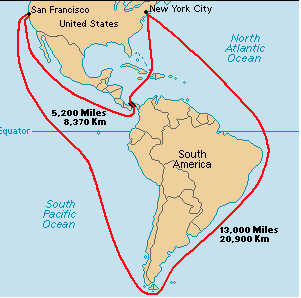
Why did the United States acquire Hawaii?
The US wanted volcanoes
To use the islands as a naval base, and for its sugar
to create a naval base during World War II
to assist Queen Liliuokalani take control of the islands
After the Spanish American War, the U.S. Directly controlled all of the following territories EXCEPT
The Philippines
Guam
Puerto Rico
Cuba
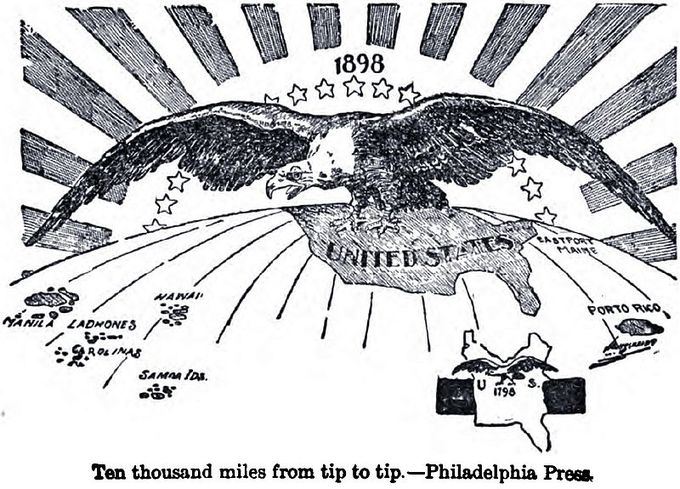
This image is a representation of...
US Exploration
US Diplomacy
US War Relations
US Imperialism
What territorial acquisition was labeled “Seward’s Folly” by the American public?
Hawaii
Alaska
Philippines
Cuba
What is the takeover of weaker nations by stronger nations called?
Imperialism
Defense
Free Market
Nationalism
American planters living in what area overthrew the local government and subsequently requested annexation to the United States?
Cuba
Nicaragua
Hawaii
Philippines
Industrialists supported U.S. imperialism because they were interested in finding new:
defenses.
markets.
imperialism.
allies.
Many Americans supported American expansion for reasons of:
national defense.
missionary work.
spreading Christianity.
gaining territory.
This term is used to describe a type of sensational journalism that was popular in the late 1800s.
Yellow Journalism
tabloids
broadcast Journalism
Trade Journalism
In 1898, the United States declared war on:
Spain
Cuba
Philippines
Mexico
As a result of the Spanish-American War, the United States acquired control over all of the following territories EXCEPT:
Puerto Rico
Cuba
Mexico
Philippines
What happened to the U.S.S. Maine?
It was sunk accidentally by friendly fire.
It was captured by Filipino rebels.
It was blockaded by Russian vessels.
It exploded in Havana Harbor.
All of the following are associated with the Spanish-American War EXCEPT:
Teddy Roosevelt
poor conditions for soldiers.
U.S. acquisition of Hawaii
Cuba
The Platt Amendment prevented _________ from incurring a large debt and prevented it from making treaties that might threaten their independence.
Panama
Mexico
Haiti
Cuba
The United States took a more active role in world affairs during President Roosevelt's time in office.
True
False
The Panama Canal...
linked the Atlantic Ocean and the Indian Ocean.
linked the Mississippi River with the Gulf of Mexico.
linked the Atlantic Ocean and Pacific Oceans.
linked the Gulf of Mexico with the Mediterranean Sea.
The Roosevelt Corollary...
Was the name of the treaty ending the Russo-Japanese War
Stated U.S. intentions to intervene in Latin America if their stability was threatened
Was the term for the agreement between the U.S. and Cuba regarding its independence
Stated U.S. intentions to build a canal in Panama
The Open Door Policy dealt with __________ issues in China.
territory
political
trade
border
What type of foreign policy is associated with William Howard Taft?
Big Stick Philosophy
Dollar Diplomacy
Moral Diplomacy
Open Door Policy
What type of foreign policy is associated with Woodrow Wilson?
Dollar Diplomacy
Big Stick Philosophy
Moral Diplomacy
Open Door Policy
President Taft attempted to gain control over:
Nicaraguan Democracy.
Russian and Chinese railways.
Cuban Rebels.
spheres of influence in China.
Which President opposed U.S. intervention in foreign nations?
Theodore Roosevelt
William Howard Taft
Woodrow Wilson
William Mckinley
What does the term imperialism refer to?
A policy of giving away a country’s power to another nation as a gift
A policy of extending a country’s power and influence through diplomacy or military force
A policy of trading goods between two states or nations
A policy in which the government debates over paying someone to purchase another country
Which of the following terms best describes the pride and commitment to one’s nation?
Socialism
Social Darwinism
Nationalism
Jingoism
The belief that the United States was destined to control the continent from the Atlantic to the Pacific is best described as _________________.
Protestant Reformation
Gilded Age
Manifest Destiny
The Crusades
The _______________ was a foreign policy statement issued in 1823 stating that the U.S. would oppose any intervention by European nations to control nations in the Western Hemisphere.
Monroe Doctrine
Articles of Confederation
Mayflower Compact
Treaty of Paris
Why was Cuba considered the most logical imperialist choice for America?
Cuba was the closest island to the U.S. not already controlled
The Cuban people had already been in a rebellion against Spanish rule
The Cuban Missile Crisis had Americans wanting a war with Cuba
None of these
Hostility towards Spain increased as Americans were persuaded by _____________, which is a style of newspaper reporting that emphasizes sensational news.
Muckraking
Yellow Fever
Yellow Journalism
Wall Street Journal
Prior to the Spanish-American War, William R. Hearst published a letter known as the _______________ written by the Spanish minister to the U.S. which was insulting to President McKinley.
McKinley Letter
de Lome letter
Hearst Letter
Pulitzer Memoirs
Leading up to the Spanish-American War, the sudden explosion of the _____________ off of the coast of Cuba led Americans to believe that _______________ was to blame, despite there being no concrete evidence.
U.S.S. Maine; Cuba
U.S.S. Alabama; Spain
U.S.S. Maine; Spain
U.S.S. Maryland; France
The most well-known battle of the Spanish-American War took place in Cuba at _____________.
San Juan Hill
The Alamo
Gettysburg
Havana Harbor
The _______________ was a volunteer regiment that served during the Spanish-American War and was organized by future president ______________ .
Rough Riders; Franklin Delano Roosevelt
Tuskegee Airmen; Theodore Roosevelt
Progressive Party; William Taft
Rough Riders; Theodore Roosevelt
The first military action of the Spanish-American War took place in 1898 in the Philippines at the _____________________.
Battle of Horseshoe Bend
Battle of Manila Bay
Battle of San Juan Hill
Battle of Antietam
The ___________________ was signed in 1898, ending the Spanish-American War and rewarding the United States with the islands of Guam, Puerto Rico, and the Philippines.
Treaty of Paris
Treaty of Versailles
Treaty of Velasco
Treaty of Guadalupe Hidalgo
In 1901, the __________________ made Cuba a legal protectorate of the United States.
20th Amendment
16th Amendment
Platt Amendment
Elastic Clause
The _____________________, led by Emilio Aguinaldo, included fighting such as guerilla warfare by Filipino rebels and brutal tactics by the U.S. soldiers, ultimately costing the Americans around 4,000 lives.
Cuban Revolution
Philippine Insurrection
Cuban Missile Crisis
None of these
Joseph Wheeler served in several capacities in Alabama and is known for all of the following EXCEPT:
One of two Confederate Generals buried in Arlington National Cemetery
Served as a major general during the Spanish-American War
Third Governor of the state of Alabama
Leader of an Alabama regiment during the Civil War
The ________________ was an extension of the Monroe Doctrine and enabled the United States to intervene in Latin American countries struggling with unstable conditions.
Yellow Journalism
Great White Fleet
Rough Riders
Roosevelt Corollary
An _________________ for trade allowed the United States and other nations to trade “openly” with the Chinese and other countries.
Closed Door Policy
Open Door Policy
Roosevelt Corollary
American Expansionist
After attempts were abandoned by the French, the United States attempted to purchase the rights to complete the building of the ______________ in order to connect the Atlantic and Pacific Oceans.
Roosevelt Corollary
Panama Canal
Hay-Bunau-Varilla Canal
Philippine Canal
The United States negotiated the __________________ with the newly independent government of Panama to purchase the land to build the Panama Canal.
Treaty of Paris
Treaty of Versailles
Hay-Bunau-Varilla Treaty
Treaty of Manila Bay
Alabama native, _________________, served the state of Alabama as a U.S. Senator for six terms following the Civil War and was a strong proponent for American expansionism.
Joseph Wheeler
Roy Moore
John Tyler Morgan
Samuel Hunt
The term ________________ refers to the idea that through financial investment in foreign nations, the United States would develop a scope of influence that would provide both stability and economic opportunity.
Roosevelt Corollary
Dollar diplomacy
Open Door Policy
Interventionist
All of the following were policies reversed by President Woodrow Wilson EXCEPT:
Withdrawing financial support to China
The addition of the 21st Amendment
Signing the Jones Act of 1916
Repealing the Panama Canal Tolls Act
Which of the following presidents was considered an anti-imperialist and a non interventionist, meaning that he opposed U.S. expansion into foreign nations?
Theodore Roosevelt
William Taft
William McKinley
Woodrow Wilson

