
 Worksheets
Forensics Midterm REVIEW
Total questions: 70
Worksheet time: 1hrs 11mins
Hair is composed of
keratin.
protein.
both of these are correct

The medullary index is used to determine if a hair is from an animal or human. To calculate it, one should divide the diameter of the...
Hair is what type of evidence without the follicle?
Class
Individual
unknown
all of the above
Hair is what type of evidence with the follicle?
Class
Individual
unknown
all of the above
What are the three cuticle patterns?
Coronal, spinous, imbricate
flowery, circular, triangular
square, round, diamond
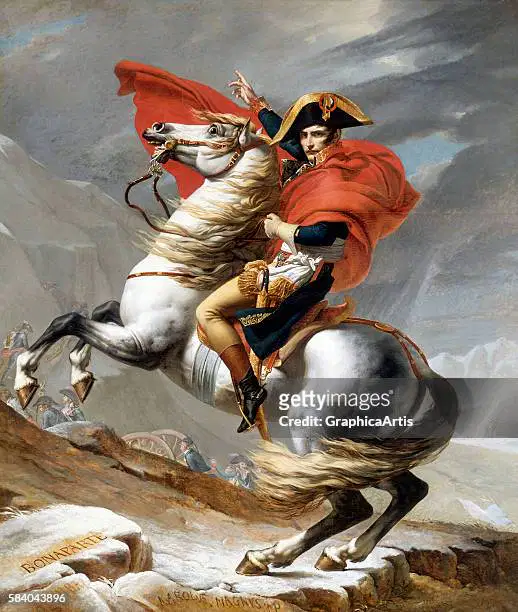
A controversial theory that ___ was slowly poisoned to death was apparently confirmed by a forensic study of his hair. Pascal Kintz of the Strasbourg Forensic Institute in France studied hairs taken from the former emperor’s head after he died and found levels of arsenic seven to 38 times higher than normal. Kintz concluded this must be the result of poisoning.
Napoleon
Henry V
President Kennedy
King Philip
The body of a woman was found in the woods. Some hair fibers found on the body were sent to the crime lab for analysis. The ends of the hair attached to the body were gray, but showed that that it had been dyed. The distance from the root of the hair to the beginning of the dyed area measured 6 mm. Investigators determined that the victim's hair had last been dyed on July 1, 2004.
Assuming the hair grows at a rate of 0.22 mm per day, approximately what date did the woman die?
July 28, 2004
July 18, 2004
January 28, 2005
July 2, 2004
The number of threads that are packed together for any given amount of fabric is known as ___________.
abaca
linen
thread count
satin
tabby
A blue polyester fiber found at the crime scene matches the outfit the suspect was wearing at the time they allegedly committed the crime. What type of evidence is this?
Individual Evidence
Direct Evidence
Testimonial Evidence
Circumstantial Evidence
A forensic scientist performs a burn test and finds that the fiber melts when it is put in the flame. This suggests that the fiber is…
A synthetic fiber
A natural fiber

The vertical thread count on this fabric is:
7
8
12
none of these

Who stated when two people come in contact with each other, a physical transfer occurs.
August Vollmer
Edmond Locard
A fibrous protein that makes up the majority of the cortex of the hair
keratin
melanin
cellulose
lipids
If hair is forcibly removed from a victim, the tip of the hair may contain DNA. This region is called?
Shirt Tag
Price tag
Follicular tag
hair tag
Fiber and hair evidence is put in?
Bundle
Bindle
Binder
What is the outside covering the hair shaft
Medulla
Cuticle
Cortex

The first officer arriving at a crime scene, after providing or obtaining medical assistance for the injured and effecting an arrest of suspects (if possible), should immediately:
photograph the scene.
search for evidence.
make a rough sketch of the scene.
secure the scene.
small but measurable amounts of physical or biological material found at a crime scene
individual evidence
class evidence
direct evidence
trace evidence
All evidence gathered at a crime scene must
document the location where the evidence was found.
be packaged properly.
maintain proper chain of custody
all of the above
deriving the conclusion from the facts using a series of logical steps
A written record of all people who have had possession of an item of evidence.
Chain of Custody
Trace Evidence
Locard exchange
The first person on the scene
Medical examiner
CSI investigator
First Responder
This person documents the crime scene and collect physical evidence
Crime Scene investigator
First responder
Specialist
The reason it is important to separate the witnesses at the crime scene is to
prevent contamination of the evidence
prevent fighting among the witnesses
prevent the witnesses from talking to each other
protect them from the perpetrator
True or False: Pictures are taken before a sketch is made.
True
False
Which form of evidence can be associated with a group?
Class
Inidiviudal
Testimonial
Transient
This evidence can be traced to a single source.
Transient
Individual
Class
Circumstantial
What type of evidence is shoe size?
Class
Individual
A fingerprint could be an example of
common evidence
biological evidence
individual evidence
class evidence
Which of these is NOT part of a Medical Examiner's job?
Going to the death scene
Performing an autopsy
Collecting evidence from the crime scene
Helping to determine Cause of Death
Which of the following evidence is considered to be biological?
impressions
Fingerprints
Shell Casings
Hair
The word forensics refers to the application of science to solve crimes.
True
False
The Innocence Project found that mostly faulty convictions were based on ______
Out of date investigation equipment
Untrained C.S.I
Inaccurate eyewitness accounts
Officers not following the 7 S's of C.S.I
Which of the following best describes the difference between circumstantial evidence and direct evidence?
Direct evidence can lead to the conviction of a suspect, while circumstantial evidence cannot.
Direct evidence is not admissible in court; however, circumstantial evidence is admissible with the approval of a judge.
Direct evidence is used to imply a fact, while circumstantial evidence proves an alleged fact.
Direct evidence proves and alleged fact, while circumstantial evidence is used to imply a fact.
A ruling regarding the admissibility of expert witness testimony.
Daubert Ruling
6th Admendment
plea bargain
deliberation
The results of scientific tests or procedures are admissible as evidence only when the tests or procedures have gained general acceptance in the particular field to which they belong. Also called the ____.
Frye rule
Daubert
verdict
law
The ___ is a rule of evidence regarding the admissibility of expert witness testimony.
Daubert standard
Frye rule
law
verdict
A belief founded on judgement rather than direct knowledge or experience.
Logic
opinion
Deductive Reasoning
Fact
Information that can be verified.
Logic
Eyewitness
Deductive Reasoning
Fact
Deriving a conclusion from facts using logical steps.
Logic
Eyewitness
Deductive Reasoning
Fact
Deriving a conclusion from facts using logical steps.
Logic
Eyewitness
Deductive Reasoning
Fact
A proper or reasonable way of thinking or understanding something.
Logic
Eyewitness
Deductive Reasoning
Fact
A perception is what a person perceives using sight, taste, hearing, smell and touch.
false
true
Using the scientific method requires the scientist or investigator to form a hypothesis that is based on prior knowledge or observation.
true
false
The Innocence Project started in
2008
1896
1986
1992
Good observation skills come naturally to investigators, they do not need to be trained.
false
true
The word Forensics refers to the application of science to solve crimes.
true
false
The ability to identify a concept or problem, isolate its component parts, organize information for decision making, establish for evaluation, and draw conclusions is having
qualitative reasoning
analytical skill
experiential proficiency
quantitative reasoning
The first step in a forensic investigation is
careful and accurate observation
sketch the scene
secure the scene
call 911
How the brain processes information (observations):
1-Information from our senses
2-Perception
3-What we pay attention to
4-Short term memory
5-long term memory
This is the proper order.
this is incorrect

