Wayground logo

Free Printable Worksheets

Font size

S
M
L
XL
Worksheets

Unit 3: Atoms, Elements, and the Periodic Table

Total questions: 100

Worksheet time: 3hrs 14mins

Name
Class
Date
1.

Which of the following is the best definition for matter?

a)

anything that has mass and volume

b)

the amount of space a substance occupies

c)

how much something weighs on earth

2.

True or False:

Atoms are the basic building blocks of most of the matter around you.

a)

true

b)

false

3.

Which of the following make up parts of an atom?

a)

neutron

b)

proton

c)

electron

d)

ultron

4.

Which of the following parts of an atom are positively charged?

a)

neutron

b)

proton

c)

electron

d)

nucleus

5.

What measure does the Atomic Number show?

(a)  

6.

Which of the following best describes atomic mass?

a)

the total mass of protons, neutrons, and electrons in an atom

b)

the code used to represent an element

c)

matter that is made up of the same chemical compostition and cannot be separated into parts by physical means

7.

What are the subatomic particles?

a)

Protons, Electrons, Neutrons

b)

Molecules, and atoms

c)

Electrons, Protons, Nucleus

d)

Nucleus, and Electrons

8.

What is this subatomic particle that has negative charge?

a)

Electron

b)

Neutron

c)

Proton

d)

Megatron

9.

What is the smallest particle of an ELEMENT, and it has also all the properties of it?

a)

Molecules

b)

Nucleus

c)

Subatomic particle

d)

Atoms

10.

What is the small, DENSE REGION consisting of protons and neutrons at the CENTER of an atom?

a)

Molecules

b)

Nucleus

c)

Subatomic particle

d)

Atoms

11.
True or False - Protons and Neutrons have about the same mass.
a)
True - They have about the same mass
b)
False - They do not have about the same mass
12.
Which two subatomic particles make up the nucleus of an atom?
a)
Protons and Electrons
b)
Neutrons and Electrons
c)
Electrons and Protons
d)
Protons and Neutrons
13.
Where are the Electrons found in the structure of an atom?
a)
In the nucleus
b)
In spaces around the nucleus
14.
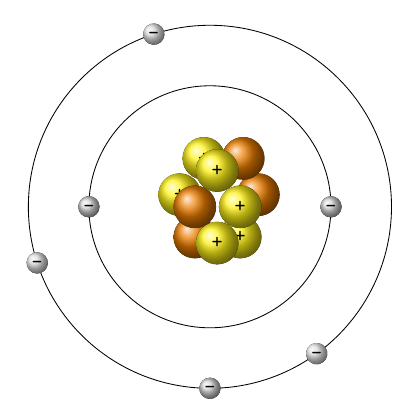
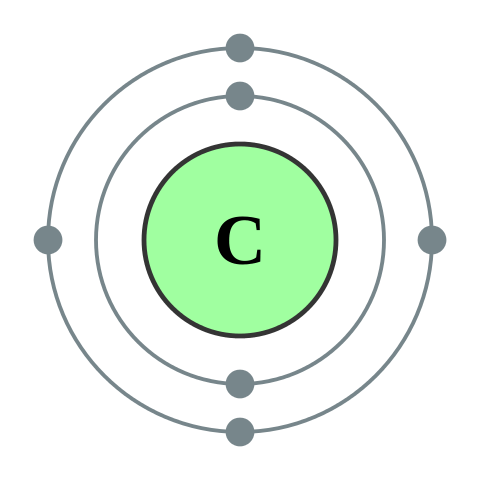
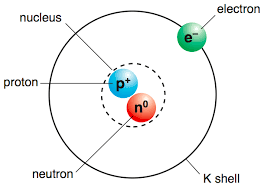
How many protons does this atom have?
a)
3
b)
6
c)
4
d)
2
15.

At what part of the atom is the arrow pointing?

a)

nucleus

b)

energy level

c)

electron

d)

proton

16.

The mass of an atom is

a)

equal to the number of protons

b)

the protons + electrons

c)

the protons + neutrons

d)

the protons + neutrons + electrons

17.
Value representing the number of protons in an element
a)
Atomic Mass
b)
Mass Number
c)
Valence Electrons
d)
Atomic Number
18.
Subatomic particles that are neutral in charge
a)
Neutrons
b)
Protons
c)
Nucleus 
d)
Electrons
19.
A tiny but very dense, positively charged portion of the atom that holds most of the atomic mass
a)
Electron Shells
b)
Orbitals
c)
Electron Cloud
d)
Nucleus
20.

What is the atomic number?

a)

35

b)

18

c)

17

d)

52

21.

What is the atomic mass of Neon?

a)

10

b)

20

c)

30

22.

How many neutrons does calcium have?

a)

20

b)

40

c)

60

d)

0

23.
What number indicates the nucleus?
a)
1
b)
2
c)
3
d)
4
24.
What number indicates an electron?
a)
1
b)
2
c)
3
d)
4
25.
Referring to the table, what is the relative mass of a proton?
a)
10
b)
1
c)
0.1
d)
0.01
26.

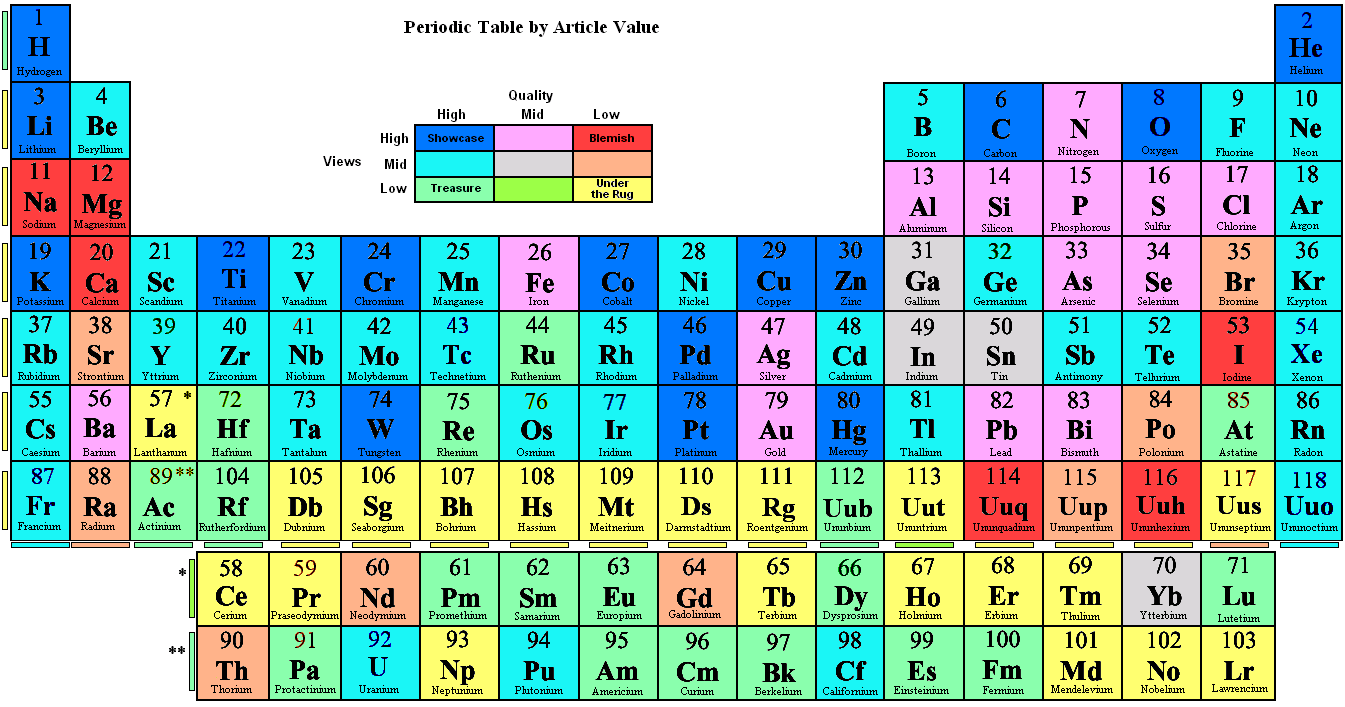
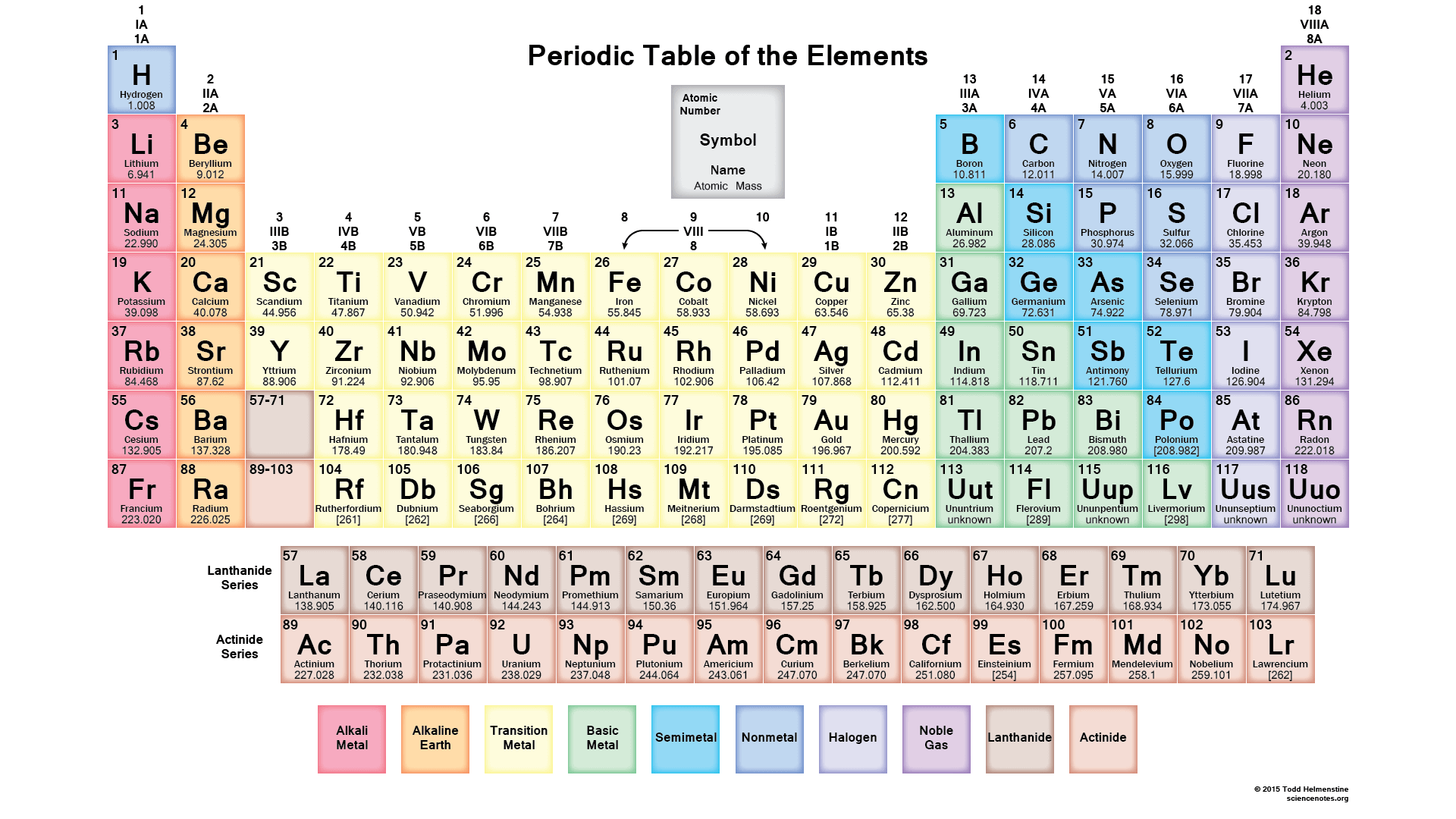
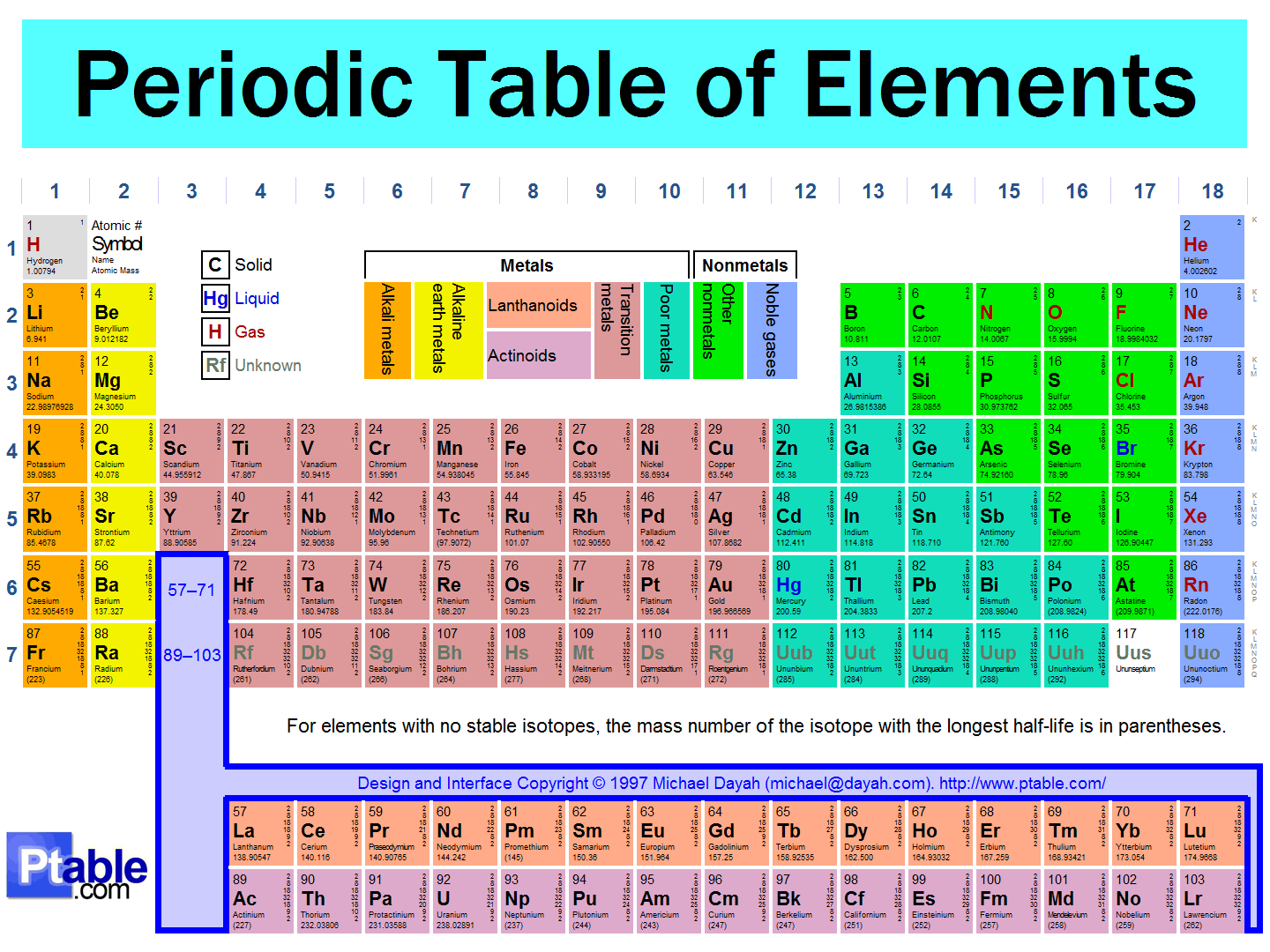
The vertical (up and down) columns in the Periodic Table are called

a)

groups

b)

towers

c)

periods

d)

atomic numbers

27.
The Modern Periodic Table of Elements is arranged by
a)
atomic mass
b)
atomic number
c)
valence electrons
d)
number of isotopes
28.
Sodium (Na) is found in period 
a)
3
b)
2
c)
4
d)
1
29.
Sodium (Na) is found in group 
a)
1
b)
2
c)
3
d)
4
30.
What does the atomic mass tell you? 
a)
Basically,the number of electrons and protons
b)
The number of neutrons
c)
Basically, the number of protons and neutrons
d)
The number of protons.
31.
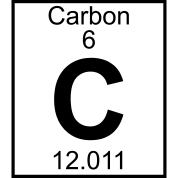
What does the 6 represent?
a)
atomic mass
b)
atomic number
c)
element name
d)
chemical symbol 
32.
What does 12.011 represent?
a)
atomic mass
b)
atomic number
c)
element name
d)
chemical symbol 
33.

The horizontal (side to side) rows in the Periodic Table are called

a)

groups

b)

families

c)

periods

d)

atomic numbers

34.

neutron

a)

A subatomic particle that has a positive charge and that is found in the nucleus of an atom

b)

not able to conduct heat or electricity, little to no metallic luster

c)

A subatomic particle that has a negative charge

d)

A small particle in the nucleus of the atom, with no electrical charge
35.
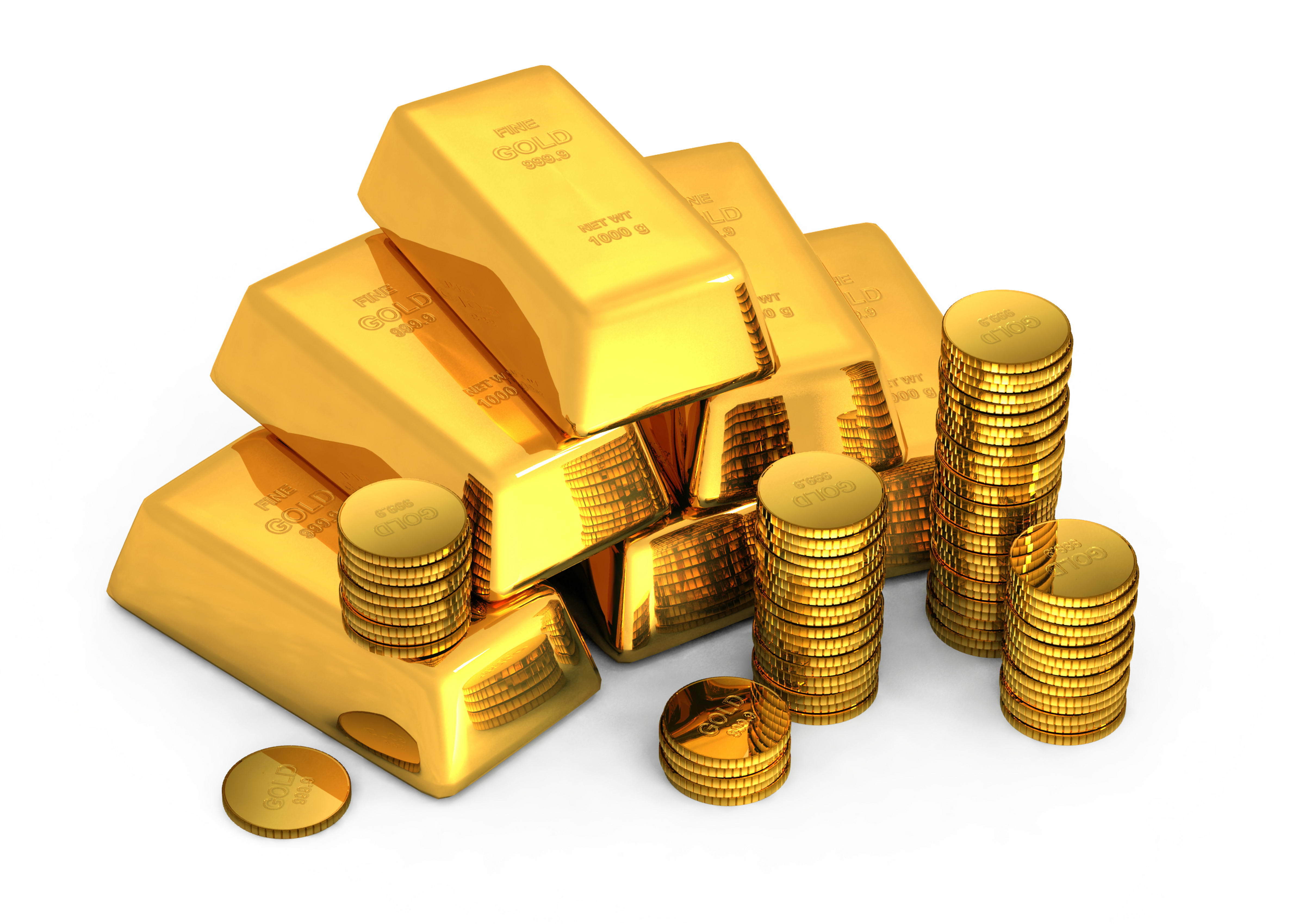
What is the atomic number of this element?
a)
4
b)
80
c)
79
d)
8
36.
Which one of these is not a noble gas?
a)
Helium
b)
Radon
c)
Iodine
d)
Krypton
37.
What is the atomic number of Rubidium?
a)
37
b)
44
c)
45
d)
86
38.
What is the atomic number of Oxygen?
a)
6
b)
7
c)
8
d)
9
39.
What family is Sodium a part of?
a)
Transition Metals
b)
Halogens
c)
Alkali Metals
d)
Alkaline Earth Metals
40.
What two elements come together to make this substance in the picture?
a)
Oxygen and Carbon
b)
Sodium and Calcium
c)
Sodium and Chlorine
d)
Helium and Nitrogen
41.
What family is silver a part of?
a)
Transition Metals
b)
Noble Gases
c)
Alkali Metals
d)
Alkaline Earth Metals
42.
What family is Cadmium a part of?
a)
Noble Gases
b)
Metalloids
c)
Transition Metals
d)
Actinoids
43.
Silicon is a 
a)
Metal
b)
Nonmetal
c)
Metalloid
d)
Halogen
44.
__________ would have some characteristics of metals and some characteristics of nonmetals.
a)
Gold
b)
Sodium
c)
Arsenic
d)
Bismuth
45.
___________ is the only metal that is a liquid at room temperature.
a)
Platinum
b)
Water
c)
Tin
d)
Mercury
46.
Which element that starts with a B is an Alkaline Earth Metal?
a)
Barium
b)
Boron
c)
Bread
d)
Bromine
47.
a)
Group 1
b)
Group 17
c)
Group 18
d)
Group 2
48.
a)
Group 1
b)
Group 17
c)
Group 18
d)
Group 2
49.
a)
Metals
b)
Nonmetals
c)
Metalloids
50.
a)
Metals
b)
Nonmetals
c)
Metalloids
51.
a)
Metals
b)
Nonmetals
c)
Metalloids
52.
a)
Metals
b)
Nonmetals
c)
Metalloids
53.
a)
Metals
b)
Nonmetals
c)
Metalloids
54.
a)
Metals
b)
Nonmetals
c)
Metalloids
55.
a)
2
b)
8
c)
3
d)
13
56.
a)
12
b)
7
c)
8
d)
14
57.
Valence electrons are the...
a)
Innermost electrons
b)
Middle electrons
c)
Outermost electrons
d)
Any electrons
58.

How many valence electrons does carbon have?

a)

4

b)

5

c)

6

d)

7

59.

USE THE PERIODIC TABLE

How many valence electrons does sodium have?

a)

1

b)

2

c)

3

d)

4

60.

USE THE PERIODIC TABLE

How many valence electrons does Phosphorus have?

a)

31

b)

5

c)

15

d)

4

61.

USE THE PERIODIC TABLE

How many valence electrons does Phosphorus have?

a)

31

b)

5

c)

15

d)

4

62.
How many valence electrons are found in atoms of group 14?
a)
4
b)
3
c)
14
d)
16
63.
True or False: The elements, on the periodic table, are arranged in order of increasing atomic number.  
a)
True 
b)
False
64.
Which group contains 1 electron in the outer level and is very reactive? 
a)
Groups 3-12  
b)
Group 2 
c)
Group 1 
65.
Which group has 4 electrons in the outer level?
a)
Group 14 
b)
Group 1 
c)
Group 15
66.
Which group has 7 electrons in the outer energy level? 
a)
Alkaline-Earth Metals 
b)
Halogens 
c)
Noble Gases 
67.
Which group(s) contain elements that are unreactive?
a)
The Oxygen Group 
b)
The Boron Group 
c)
The Noble Gases Group 
68.
Which group contains nonmetals that have 8 electrons in their outer energy level? 
a)
Alkali Metals
b)
Noble Gases 
c)
Halogens
69.
What two group are the most reactive groups on the periodic table? 
a)
Alkali Metals and Alkaline-Earth Metals 
b)
Transition Metals and Alkali Metals  
c)
Noble Gases and Halogens 
70.
The horizontal row on the periodic table is called a
a)
group
b)
family
c)
period
d)
atomic number
71.
A vertical column is called...
a)
group
b)
tower
c)
period
d)
crew
72.
What group on the periodic table is stable on its own because they have all their valence electrons?
a)
Noble Gases
b)
Halogens
c)
Alkali
d)
Alkaline Earth
73.
What does the nucleus of an atom contain?
a)
protons and electrons
b)
protons and neutrons
c)
electrons and neutrons
d)
protons, neutrons and electrons
74.
What's a valence electron?
a)
electrons in the second energy level
b)
electrons in the outermost energy level
c)
the atomic number
d)
electrons in the first level
75.
What is the location of the electron?
a)
the free floating negatively charged electron cloud
b)
the free floating positively charged electron cloud
c)
the very dense positively charged electron orbital
d)
the positively charged very dense nucleus
76.
How many electrons does an atom with 8 protons have?
a)
8
b)
16
c)
15.99
d)
24
77.

How many valence electrons do the alkali metals have?

a)

1

b)

2

c)

3

d)

4

78.

Which term describes an atom with a number of neutrons that is different from the expected number, based on the Periodic Table?

a)

ion

b)

isotope

c)

both ion and isotope

d)

stable

79.
all matter is made of what 
a)
energy 
b)
atoms 
c)
electrons 
d)
compounds 
80.
Particles in an atom that are neutral and have no charge are 
a)
negatrons 
b)
electrons 
c)
neutrons 
d)
protons 
81.
An atoms overall charge is 
a)
positive 
b)
depends on its mood 
c)
neutral 
d)
negative 
82.
If an atom has 3 electrons, how many protons does it have?
a)
1
b)
2
c)
4
d)
3
83.
Atoms have no electric charge because they...
a)
have an equal number of charged and non charged particles
b)
have neutrons in their nuclei
c)
have an equal number of electrons and protons
d)
have an equal number of neutrons and protons
84.
Anything that has mass and takes up space is called
a)
heterogeneous
b)
homogeneous
c)
matter
d)
density
85.
How many electrons does Si contain? (click to see image)
a)
14
b)
28
c)
2
d)
None of these
86.
How many electrons does potassium K contain? (click to see image)
a)
19
b)
39
c)
20
d)
40
87.
The majority of an atom's mass exists where?
a)
In the nucleus
b)
In the electron cloud
c)
In the space between the nucleus and the electrons
d)
In the neutrons
88.
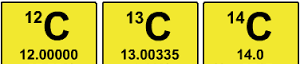
What do these isotopes of carbon all have in common?
a)
neutrons & mass number
b)
atomic number and neutrons
c)
atomic number and electrons
d)
protons, atomic number, and mass number
89.
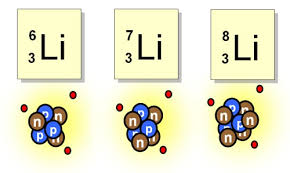
How many neutrons does the isotope of lithium have?
a)
8
b)
3
c)
4
d)
5
90.
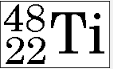
How many protons does this isotope of titanium have?
a)
48
b)
22
c)
26
d)
70
91.
What quantities vary between isotopes of an element?
a)
protons, electrons, and atomic mass
b)
protons, electrons, and atomic number
c)
neutrons and electrons
d)
neutrons and atomic mass
92.
which atom has  4 neutrons?
a)
Li-6
b)
Li-7
c)
Li-8
d)
they have the same # of neutrons
93.
What is the name of the pictured isotope?
a)
Chlorine-Schmorine
b)
Chlorine-17
c)
Chlorine-35
d)
Chlorine-18
94.
What is the name of the pictured isotope?
a)
Carbon-12
b)
Carbon-13
c)
Carbon-14
d)
Carbon-15
95.
How many neutrons does B (Boron) contain?
a)
5
b)
11
c)
6
d)
10.811
96.
Carbon-14 is an example of a(n)
a)
Positive ion
b)
Negative ion
c)
Isotope
d)
Neutral Atom
97.
Which answer choice describes the subatomic particles and their respective charges?
a)
p-    e+    n
b)
p+    e     n-
c)
p+    e-    n
d)
p-     e+    n
98.
Which subatomic particles contribute the most to the mass of an atom?
a)
Protons, Neutrons, Electrons
b)
Protons only
c)
Protons and Electrons
d)
Protons and Neutrons
99.
In order for me to find the number of neutrons, I must round the atomic mass and then do what?
a)
atomic number-atomic mass
b)
atomic number x atomic mass
c)
atomic mass + atomic number
d)
atomic mass - atomic number
100.

What is the mass number of this atom?

a)

1

b)

3

c)

4

d)

7