
 Worksheets
Fall FInal Review 23-24
Total questions: 153
Worksheet time: 3hrs 54mins
Why don't populations grow indefinitely(forever)?
limiting factors
only biotic factors
only abiotic factors
none of the above

What is an example of a density-independent (Abiotic) limiting factor?
food
parasites
disease
pollution

What is the arrow pointing at?
carrying capacity
biotic potential
density-independent
density dependent

parasites, disease, predators, are examples of what type of limiting factors?
density dependent AND biotic
density independent AND biotic
density dependent AND abiotic
density independent AND abiotic

What is the carrying capacity mean?
The number of individuals an area can carry
the number of births
The number of deaths an area has
not sure
Populations do not continue to grow to an unlimited size. Their environment, including food and other natural resources, limits their size eventually. This limit is called the
differential population
carrying capacity
prey maximum
predator limit
Researchers have found that a local squirrel population fluctuates from year to year, increasing one year and decreasing the next. Which of the following factors would cause the squirrel population to grow?
the birth rate is equal to the death rate
emigration is greater than immigration
the death rate is higher than the birth rate
the birth rate is greater than the death rate

Which of the following phrases best describes line K in the graph above?
The rate of population growth
The carrying capacity of the environment
The time it takes for the population to double in size
The number of individuals in the population at the beginning of the study
Which of the following shows a population's lag phase?
A
B
C
D
Which of the following shows a point in time where the population is too large for the ecosystem to support?
A
B
C
D
Which section of the growth curve shows a population with more emigration than immigration?
A-B
B-C
C-D
B-D
From B to C what is most likely happening?
The amount of emigration is greater than immigration
The amount of emigration is greater than births
The amount of immigration is greater than deaths
The amount of birth is equal to the amount of deaths
What is the population's carrying capacity?
1.3 million
1.6 million
1.8 million
1850
1900

Exponential Growth occurs when-
populations have plenty of resources
compete with other species for resources
population have limites amounts of resources
have no predators
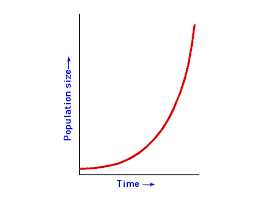
What type of growth is shown in the diagram?
exponential growth
logistic growth
predator-prey cycle
boom-bust curve

The type of growth represented by this graph is exponential/logistic population growth.
logistic
linear
exponential
random
Factors that affect population size:
DECREASE: Number of ___________ & ____________
Choose all that applies.
Birth
Death
Immigration
Emigration
As resources become less available the growth of a population
slows or stops
decreases or increases
up or down
in or out
The population growth curve shows a population of rabbits living in a field. At what point in the graph do rabbits experience the best environmental conditions?
B
C
D
K
What is the molecule that plants use to absorb the energy from light?
Chlorophyll
Chloroplast
Stomata
Stroma
What are the structures inside plant cells that contain chlorophyll called?
Stomata
Stroma
Chloroplasts
Mitochondria

The reactants of photosynthesis are...
sugar and water.
sugar and oxygen.
carbon dioxide and water.
carbon dioxide and oxygen.

Most plants appear green because chlorophyll...
absorbs green light.
absorbs violet light.
does not absorb green light.
does not absorb violet light.

In what structure does the light dependent reaction take place in?
Thylakoid
Stroma
Stomata
Chlorophyll
What is produced in the light dependent reaction of photosynthesis?
Oxygen and Sugar
Oxygen and ATP
Carbon Dioxide and Water
Water and oxygen
What is produced in the light independent cycle?
Sugar(glucose)
Carbon Dioxide
Water
Oxygen gas
The two products of photosynthesis are:
Carbon dioxide and water
Glucose and oxygen gas
Water and oxygen gas`
Carbon dioxide gas and glucose
What is produced in the light independent cycle?
Sugar(glucose)
Carbon Dioxide
Water
Oxygen gas
What does the stomata do in a plant?
It is the location of the Calvin Cycle or Light Independent Reaction
It is the location of the light dependent reaction
It is location where carbon dioxide enters a leaf
It is the molecule that reflects green light and makes a plant green
Can do photosynthesis?
Autotroph
Heterotroph
Both
Can do cell respiration?
Autotroph
Heterotroph
Both
Can remove carbon dioxide from the atmosphere?
Autotroph
Heterotroph
Both

What would first happen to the amount of carbon dioxide in the water if you increased the amount of snails?
More photosynthesis would result in higher carbon dioxide levels
More respiration would result in more carbon dioxide levels
Autotroph plants would die and less carbon dioxide would be absorbed by photosynthesis.
Snails would do photosynthesis and decrease the amount of carbon dioxide.

What is a first possible result of adding more autorophs into the carbon cycle shown?
They would eat plants and decrease the amount of photosynthesis being done.
They would do more photosynthesis and absorb more carbon dioxide, causing carbon dioxide levels to decrease.
They would do less respiration and slow the amount of carbon dioxide entering the water.
They would allow heterotrophs to grow in number. Heterotrophs do respiration, which releases carbon dioxide in the water.
Which of the following represents a carbon sink?
Cell respiration
Photosynthesis
Burning fossil fuels
Autotrophs
Which of the following represents a carbon source/process
Autotrophs
Heterotroph
Fossil Fuels
Photosynthesis
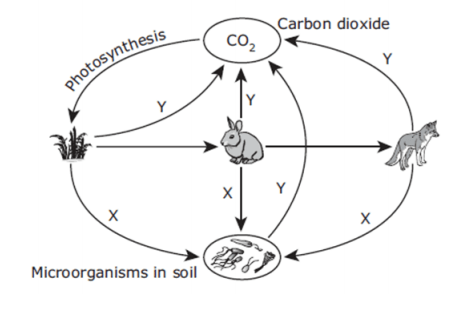
The diagram shows the flow of organic molecules through an ecosystem. What two processes are identified by the labels X and Y?
X : Respiration
Y : Predation
X : Adaptation
Y : Decomposition
X : Fermentation
Y : Nitrogen Fixation
X : Decomposition
Y : Respiration
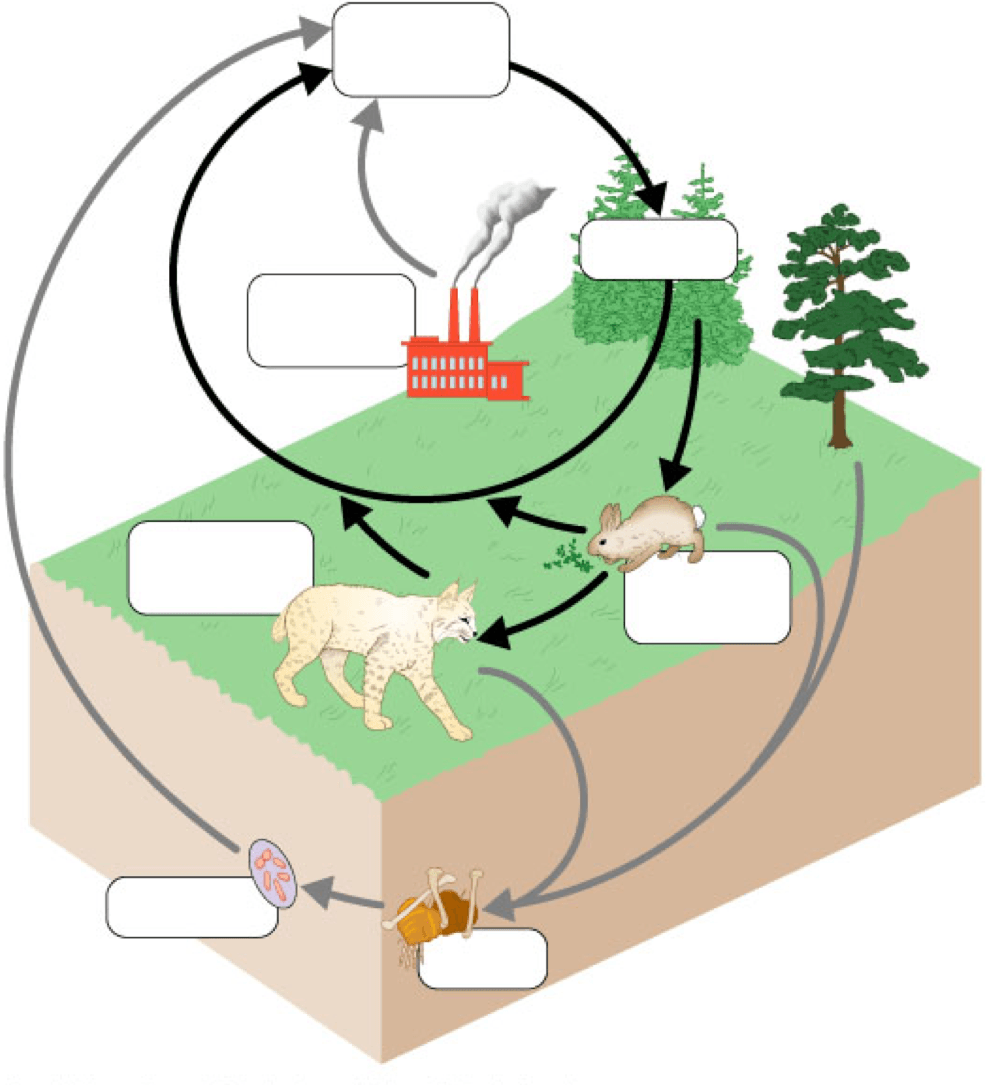
The factory in the diagram to the right does combustion. What happens carbon during combustion?
Carbon dioxide is turned in to a fossil fuel
Carbon dioxide is released by burning fossil fuels
Autotroph carbon is converted into fossil fuels
The factory converts carbon dioxde into glucose
On a climatogram, the bar graph represents _____________.
precipitation
temperature
A climatogram shows a biome's ___________ and ___________.
temperature and precipitation
temperature and plant life
precipitation and rainfall
precipitation and cloud cover
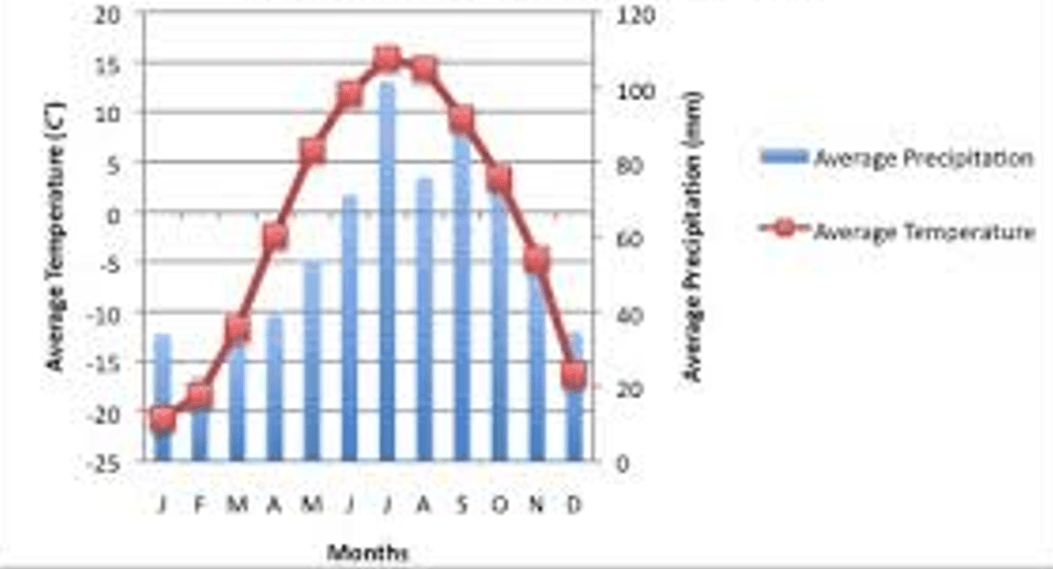
The average temperature in July is...
(a)
It rains about (a) mm in April

What is the best description of this biome?
Hot, dry summers and mild, dry winters
Hot dry summers and cold and rainy winters
Cold and wet summers, cold and dry winters
rainy year round and cold year round

What is approximate rainfall(precipitation) in June?
225
25
5
50
What is approximate rainfall(precipitation) in June?
225
25
5
50
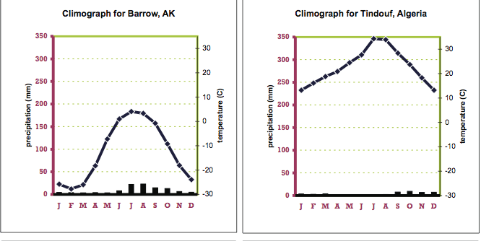
Which of the following is a similarity between the tundra and the desert?
low temperatures
high temperatures
low precipitation levels
permanently frozen ground

Which of the following is the best description for the biome represented by this climatograph?
Constant amount of rain with cooler winters
hot summers and cold winters
warm year with lowest rainfall in summer
cold and dry year round

What is the average temperature in December?
120
20
15
-20

In which month is the temperature the lowest?
January
April
July
September
What is the average rainfall in September?
10
150
20
-20
The climate can be a _____ factor for the growth of a population.
Biotic
Abiotic
Cacti grow in hot and dry climates. In the desert biomes where they live, there is very little rain and the soil can be rocky with few nutrients and space for roots. To adapt to this biome, the cactus has evolved a specialized stem that can absorb and hold onto water. Which of the following limiting factors is a part of the geosphere?
Rocky soil
Hot temperature
Little rainfall (precipitation)
Competition with other desert plants for water.
Cacti grow in hot and dry climates. In the desert biomes where they live, there is very little rain and the soil can be rocky with few nutrients and space for roots. To adapt to this biome, the cactus has evolved a specialized stem that can absorb and hold onto water. The climate the cactus has adapted to is part of the...
Atmosphere
Geosphere
Hydrosphere
Biosphere
Cacti grow in hot and dry climates. In the desert biomes where they live, there is very little rain and the soil can be rocky with few nutrients and space for roots. To adapt to this biome, the cactus has evolved a specialized stem that can absorb and hold onto water. Which climate graph best represents the desert biome the cactus lives in?


Trees lose their leaves in winter to adapt to climates that have very cold winters with less sunlight. This allows trees to conserve resources until conditions improve and they receive the sunlight and temperature to grow. What type of factorw is limiting the growth of trees in these climates?
Biotic
Abiotic
Which of the following are greenhouse gases?
Carbon Dioxide
Methane
Both of these
What do greenhouse gases do?
Reflect the sun's energy
Block the sun's infrared radiation
Act as a thermal blanket for the Earth, absorbing heat and warming the surface
They help light up the moon at night
If we didn't have the 'greenhouse effect' at all, Earth would
have volcanoes erupting everywhere
Cool to a point where we could not live here
Catch on fire
blow up from being hit by meteors

The greenhouse effect is caused by
more heat arriving at the Earth from the sun
the Earth releasing more heat at night
gases in the air trapping heat released by the Earth

The graph shows us that
the earth temperature is always increasing
the earth's temperature has steadily increased since 1900
the earth's temperature has steadily rising since the 1960s
the earth's temperature decreased during the 19th and 20th centuries
why cows contribute to tthe climmate change
because they are dumb
because they produce methane
beccause they are black and white
because they are ugly

Eat fewer or smaller portions of meat and reduce dairy products
Yes, it is one of the biggest ways to reduce your environmental impact on the planet
No, it is better for the planet eating meat (so that there are less cows)

Plant trees. Add pot plants to your window sill or balcony.
No, they steal oxygen from you.
Yes, they absorb carbon dioxide.
An effect of climate change is stronger storms.
True
False
Deforestation causes an increase in atmospheric carbon dioxide
true
false

What is an invasive species?
A native (naturally found) species which are added to an area.
A non-native (not naturally found) species added to an area.
A keystone species in an environment.
None of the answers listed
This type of threat to biodiversity refers to changes in climate patterns over time.
Overexploitation
Invasive species
Climate Change
Habitat destruction

What is carbon footprint?
Amount of water used to produce goods & services
A mark you left behind with your shoes
Amount of carbon dioxide gas released from human activities
Amount of carbon dioxide released naturally only

Polar ice caps ______ the light helping keep the Earth _____.
absorb, warm
Absorb, cool
Reflect, warm
Reflect, cool
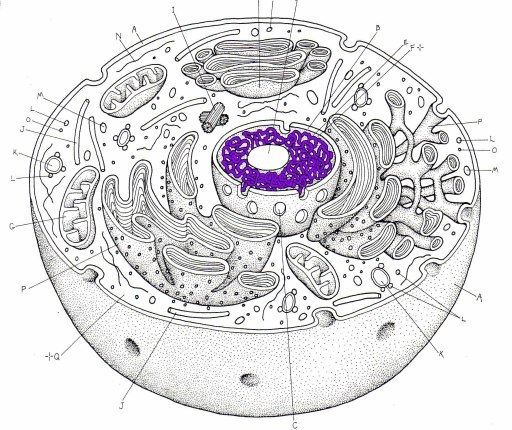

Which of the following are things that both types of cells have in common?
(Hint there are more than one)
No nucleus
contains ribosomes
has DNA
Unicellular only
found in humans

Classify this organism.
Prokaryotic
Eukaryotic
Which of these is a defining characteristic in a eukaryotic cell?
presence of a membrane bound nucleus
DNA is present
absence of membrane bound mitochondria
reproduces asexually
Plant cells are much less flexible than animal cells. Which cellular structure in plant cells is most responsible for this characteristic?
vacuole
cell wall
chloroplast
cell membrane

The cell structure labeled X is found only in –
animal cells
eukaryotic cells
plant cells
prokaryotic cells

What additional characteristic (X) belongs in the central section of the Venn diagram?
mitochondrion
chloroplast
ribosome
endoplasmic reticulum
What type of cell has a nucleus?
eukaryotic
prokaryotic
neither
both
Plants and animal cells are examples of ___ cells
prokaryotic cells
eukaryotic cells
both eukaryotic and prokaryotic
neither
Prokaryotes do NOT have....
membrane bound organelles
DNA or RNA
Cell membrane
Life
Bacteria are considered what?
Eukaryotes
Prokaryotes

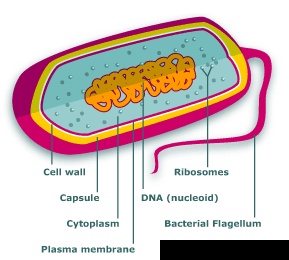
Which cell type tends to be smaller?
Prokaryote
Eukaryote
there is not a size difference
Which do BOTH prokaryotes and eukaryotes contain?
nucleus
mitochondria
ribosomes
cell wall
You can distinguish a prokaryote apart from a nucleus by--
The presence of a ribosome
The presence of a cell membrane
The presence of DNA
The presence of a nuclear membrane
Which macromolecule is used as our main source of energy?
Lipids/Fats
Nucleic Acids
Proteins
Carbohydrates
Which of the following are examples of carbohydrates? (Select all that apply).
Bread
Pasta
Olive Oil
Cheese
Which macromolecule stores energy?
Carbohydrates
Proteins
Lipids/Fats
Nucleic Acids
Nucleic acids make up which of the two molecules listed below?
FDA
RNA
DNA
FDR

carbohydrate

lipid

protein
Which macromolecule gives LONG-TERM energy?
lipid
carbohydrate
nucleic acid

A ______________ is a large molecule.
Micromolecule
Polymer
Amino Acid
Macromolecule
Why do we need proteins?
various cell structures
main source of energy for the body
important component of our DNA
main component of our cell membranes

Name this structure
double helix
nucelotide
twisted ladder
hydrogen bond
The three parts of a nucleotide are:
Sugar, protein, letter from DNA alphabet
Sugar, phosphate, letter from DNA alphabet
Phosphate, protein, letter from DNA alphabet
Phosphate, sulphur, letter from DNA alphabet

The following examples Fats, Oils, Phospholipids, and Steroids belong to which macromolecule?
Carbohydrates
Lipids
Proteins
Nucleic Acid
The monomer Monosaccarides belongs to which macromolecule?
Carbohydrates
Lipids
Proteins
Nucleic Acids
The monomer amino acid makes up which polymer?
Carbohydrates
Lipids
Proteins
Nucleic Acid
The monomer of a nucleotide makes up which polymer?
Carbohydrates
Lipids
Proteins
Nucleic Acid

A ____________________ is a large molecule.
Micromolecule
Macromolecule
Amino Acid
Monosaccharide
A __________________ is a large molecule made of many small ones.
Monomer
Dissacharide
Polymer
Sugar
Which of the following is not one of the four major classes of biomolecules?
Lipids/Fats
Carbohydrates
Nucleic Acids
Bacteria
Proteins
Which macromolecule is used as our main source of energy?
Nucleic Acids
Lipids/fats
Proteins
Carbohydrates
Which of the following is an example of carbohydrates?
Steak
Olive oil
Bread
DNA
_______________ are the monomers of carbohydrates.
Monosaccharides
Polymers
Complex sugars
Fructose
Which macromolecule stores energy?
Carbohydrates
Proteins
Lipids/Fats
Nucleic Acids
What is the monomer of lipids/fats?
Fatty Acids
DNA
Monosaccharides
Polymers
Protein is found in...
DNA
Olive Oil
Bread
Steak
The monomer of proteins is...
Polymers
Monosaccharides
Fatty Acids
Amino Acids
What is the monomer of nucleic acids?
RNA
DNA
Nucleotides
Nucleic pieces
Nucleic acids make up which of the two molecules listed below?
RNA
FDA
DNA
RDA

