
 Worksheets
Fall FINAL EXAM REVIEW
Total questions: 156
Worksheet time: 2hrs 28mins
Producers are ...
plants
able to do photosynthesis
also called autotrophs
all of these are true


What would happen to the rabbit population if the fox population moved out of the area represented by the food web?
The rabbit population would increase
The rabbit population would decrease
The rabbit population would neither increase nor decrease
What molecules are in nucleotides?
Phosphate group
Protein
Sugar
lipid
Nitrogenous base
Which molecules make up the "backbone" of DNA and RNA?
Sugar
Phosphate group
Nucleotide base
Thymine will bond with...
Guanine
Cytosine
Adenine
Uracil
Guanine will bond with...
Thymine
Cytosine
Adenine
Uracil

What is "B"?
Nucleotide
Deoxyribose Sugar
Nitrogenous base
Phosphate
What is "C"?
Nucleotide
Deoxyribose Sugar
Nitrogenous base
Phosphate
What is the complimentary sequence of the following sequence:
GATCAG
TGACAT
GACATG
CTAGTC
CGACTA
If an organism has 24 chromosomes in a body cell, how many will each daughter cell have at the end of meiosis?
6
12
23
24
Which part of meiosis produces diversity in gametes?
DNA replication
Prophase
Crossing-over
Cytokinesis
The failure of one or more pairs of homologous chromosomes or sister chromatids to separate "normally" during meiosis is called _____________________.
nondisjunction
anaphase I
nondiploidy
karyotype

What type of dominance is shown in the picture?
Complete dominance
Incomplete dominance
Codominance
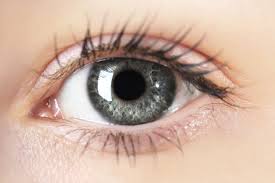
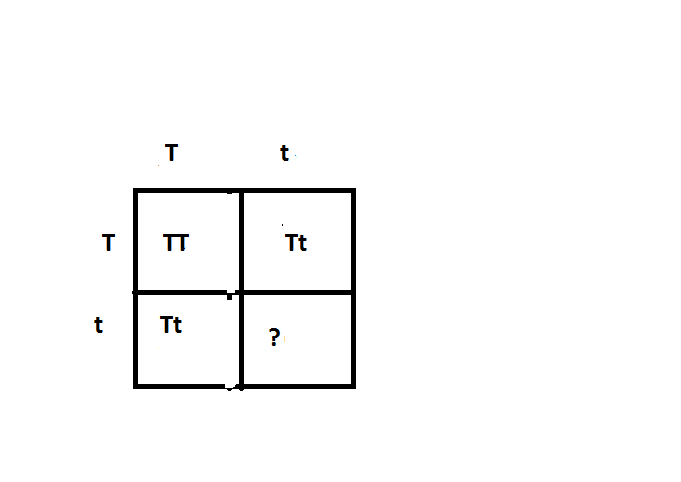
In the punnett square below, what belongs in the missing square


What is the function of the cell membrane?
To control what comes in and out of the cell
To break down food inside the cell
to serve as a barrier
to eat the cells food

Which organelle produces the energy a cell needs to carry out its function
Mitochondria
Golgi Bodies
Cytoplasm
Nucleus

Ribosomes build?
Cakes
Pies
Fences
Proteins


Which organelle captures energy from the sunlight and uses it to produce food in plant cells?
mitochodria
cell membrane
chloroplast
centrioles

In this energy pyramid, which organisms have the most energy available?
Producers
Carnivores
Herbivores
Top Predator

What is the average amount of energy transferred from one trophic level to the next?
90%
10%
20%
50%

The 10% rule states that 10% of energy moves from each trophic level to the next.
In the pyramid, if the producers level contains 1234 kilocalories, how many kilocalories are transferred to the primary consumer level?
123.4
1.234
1234
1234
Place the trophic levels in order from "receives the most energy" to "receives the least energy".
producers
primary consumers
secondary consumers
tertiary consumers
decomposers
If the producers have 1,000 joules of energy, click on the level that will have 100 joules.
Heterotrophs are also known as...
producers
consumers
Click all examples of heterotrophs
plants
animals
bacteria
some types of fungi and protists
What is the name of the process that autotrophs or producers use to make food?
cellular respiration
photosynthesis
photo respiration
cellularsynthesis


A cactus
Biotic factor
Abiotic factor

Air
Biotic factor
Abiotic factor

Climate
Biotic factor
Abiotic factor

Precipitation (rain, snow, sleet, hail)
Biotic factor
Abiotic factor

A deciduous tree
Biotic factor
Abiotic factor

All living things or organisms in an ecosystem are
None
biotic factors
abiotic factors


What is the molecular structure of water?
1 Hydrogen
2 Oxygen
1 Hydrogen
1 Oxygen
2 Hydrogen
2 Oxygen
2 Hydrogen
1 Oxygen

Which side of the water molecule has a slightly positive charge?
Oxygen
Hydrogen
It's all positive
It's all negative

Which side of the water molecule has a slightly negative charge?
It's all negative
It's all positive
Hydrogen
Oxygen

What is the property of the surface of a liquid that allows it to resist an external force, due to the cohesive nature of its molecules?
Cohesion
Surface Tension
Adhesion
Polarity

What is Cohesion?
Water molecules ability to stick to each other
Water molecules ability to stick to other surfaces
Water molecules ability to conduct electricity
Water molecules ability to melt
What is Adhesion?
Water molecules ability to stick to each other
Water molecules ability to stick to other surfaces
Water molecules ability to conduct electricity
Water molecules ability to melt

What water phenomenon can be observed in this photo?
Water dissolving
Capillary Action
Chemical Reaction
Photosynthesis

How is this lizard able to run across water?
Capillary Action
The lizard is really light
The water is a little frozen
Surface Tension

Enzymes are
Lipids
Protein
Carbohydrates
Nucleic Acids
Enzymes are responsible for-
Speeding up reactions
Giving the body energy
Slowing down reactions
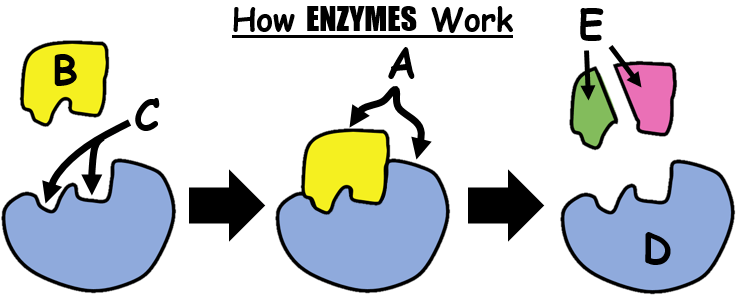
Letter D...
active site
enzyme
substrate
products
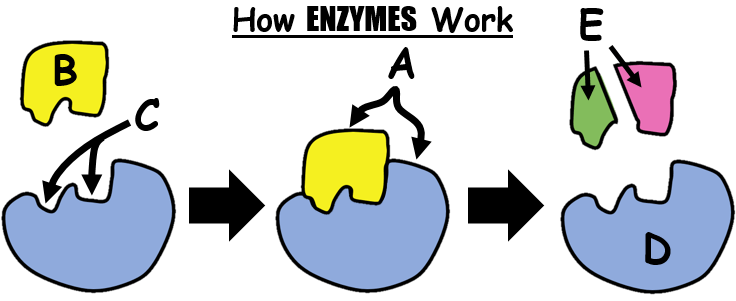
Letter B...
active site
enzyme
substrate
products
Letter c...
active site
enzyme
substrate
products
What is a substance called if it speeds up a chemical reaction?
reusable
catalyst
specific
fragile
What happens when enzymes are heated to a high temperature?
The enzymes die.
The shapes of the enzyme are altered denature
The enzymes' amino acid sequence changes.
The enzymes remain the same
Label the parts of the enzyme model
Click on the temperature that this enzyme is having optimum activity.
Match the following Macromolecules to its structure

Carbohydrate

Lipid

Nucleic Acids

Protein
Emigration is
the movement out of an area
the movement into an area
movement in and out of an area
migration

What is an example of a density-independent (Abiotic) limiting factor?
food
parasites
disease
pollution

What is the arrow pointing at?
carrying capacity
biotic potential
density-independent
density dependent
(Im)migration is ...
the movement into an area
The movement out of an area
The migration process
exponential graph

What is the carrying capacity mean?
The number of individuals an area can carry
the number of births
The number of deaths an area has
not sure
The exponential graph is a graph that shows us population size increasing quickly, which one below shows us that


One of the factors that can change the size of population is....
Name of schools
Number of dezs
Jobs
Numbers of births
Why don't populations grow indefinitely?
limiting factors
only biotic factors
only abiotic factors
none of the above


What do plants need for photosynthesis?
Sunlight and C02
Oxygen and fertilizer

Which of the following equations represents the overall chemical reaction for photosynthesis?
6O2+ 6H2O → C6H12O6+ 6O2
C6H12O6 + 6H2O→ 6O2+ 6O2
6CO2+ 6H2O→ C6H12O6+ 6O2
6O2 + 6H2O→ C6H12O6 + 6CO2

what are the inputs of the calvin cycle?
NADPH
ATP
CO2
H2O
chlorophyll
Which biomolecules (THREE) are found in the cell membrane?
lipids
proteins
nucleic acids
carbohydrates
Which biomolecule makes up MOST of the cell membrane?
proteins
carbohydrates
phospholipids
nucleic acids
Which biomolecule helps LARGE molecules cross the membrane?
phospholipids
carbohydrates
nucleic acids
proteins
Which TWO parts of the membrane allow molecules to pass through?
Passive transport (a) require energy because it moves (b) the concentration gradient, from (c) .
Active transport (a) require energy because it moves (b) the concentration gradient, from (c) .

What is the correct description of the transport in the image?
small molecules crossing the lipid bilayer (diffusion)
large molecules crossing through a protein (facilitated diffusion)
many molecules coming into the cell using a membrane vesicle (endocytosis)
many molecules coming out of the cell using a vesicle to fuse with the membrane (exocytosis)
Organize these options into the right type of transport:
does NOT require energy
requires energy
molecules move WITH the gradient
molecules move AGAINST the gradient
molecules move from high concentration to low
molecules move from low concentration to high
What happens during osmosis?
Movement of small molecules from high concentration to low concentration
Movement of water molecules from an area of high water concentration to an area of low water concentration

Where is the water at a higher concentration?
outside the cell
inside the cell

More water outside of the cell.
Water will move in what direction?
Hint: high ---> _____
move into cell
move out of cell

Less water inside cell
water moves into cell
What type of solution is this representing?
Hint: use your notes to help you?
Isotonic
Hypotonic
Hypertonic
Selectively Permeable Membrane
Allows some materials to pass through but keeps other materials out
Concentration
Amount of substance in a given space
Diffusion
Movement of particles from an area of concentration to an area of lower concentratioin
Osmosis
Diffusion of water molecules through a selectively permeable membrane
Selectively Permeable Membrane
Can be compared to a window screen
Diffusion
Process by which oxygen and carbon dioxide is moved into a cell
Osmosis
When water particles move from an area of higher concentration to an area of lower concentration
What are the reactants in cell respiration?
water, carbon dioxide, light
oxygen, sugar
sugar, water, carbon dioxide
What is the energy that is produced in cell respiration?
ADP
Sugar
ATP
Where does Kreb's Cycle occur?
mitochondria inner membrane
mitochondria matrix
cytoplasm
E.T.C. occurs where?
mitochondria matrix
mitochondria inner membrane
cytoplasm
Aerobic means
without oxygen
with oxygen
without effort
Anaerobic means
with oxygen
without oxygen
to run for a long time
How many ATP are produced in Kreb's Cycle?
32
2
34
What are the products of cell respiration?
water, light, and sugar
water, carbon dioxide, ATP
oxygen, water, sugar
Carbon dioxide levels will _______ during exercise.
increase
decrease
see no change
WHICH OF THE FOLLOWING IS NOT A STAGE OF AEROBIC RESPIRATION?
GLYCOLOYSIS
CALVIN CYCLE
KREBS CYCLE
E.T.C.
WHICH OF THE FOLLOWING IS/ARE PRODUCTS OF ALCOHOLIC FERMENTATION?
ATP
ALCOHOL
CO2
LACTIC ACID
WHICH OF THE FOLLOWING IS/ARE PRODUCTS OF LACTIC ACID FERMENTATION?
ATP
ALCOHOL
CO2
LACTIC ACID

95% of the cells life cycle
Stage where DNA is copied
Interphase
Metaphase
Telophase
Prophase

Nuclear membrane disappears
Chromosomes can now be seen
Centrioles move to opposite sides
Metaphase
Interphase
Telophase
Prophase

Chromosomes line up at the equator of the cell
Spindle fibers extend from the centrioles to the middle of the chromosomes
Prophase
Metaphase
Anaphase
Interphase

Chromatids separate
Anaphase
Metaphase
Prophase
Telophase

Nuclear membrane reforms around the new daughter cells.
Cytoplasm begins to "pinch" in.
Anaphase
Metaphase
Telophase
Interphase


What phase is shown here? Hint: you are starting to see the nuclear membrane again!
Metaphase II
Telophase I
Telophase II
Metaphase I

What phase is this?
Hint: membrane is disappearing
Interphase II
Prophase I
Metaphase I
Anaphase II


CROSSING OVER INCREASES
LIFE SPAN
GENETIC VARIATION
THE NUMBER OF OFF-SPRING
ALL ARE TRUE
DNA stands for
Dioxyribo Nucleic Acid
Dunder Nucleic Acid
Dopamine Nucleic Acid
Deciduous Nucleic Acid

DNA is related to
Carbohydrates
Photosynthesis
Cellular Respiration
Genetics
What is "C"?
Nucleotide
Deoxyribose Sugar
Nitrogenous base
Phosphate

What do the dotted lines between the nitrogenous bases (A,T,C,G) represent in the image provided?
Covalent bonds
Ionic bonds
Peptide bonds
Hydrogen bonds

