
 Worksheets
Earth Science Final Review
Total questions: 80
Worksheet time: 40mins
How do high elevations affect the temperature of the climate?
It can't
Temperature rises with increased altitude
Temperature drops with increased altitude
Temperature rises with decreased altitude
In what part of the Milky Way is the Sun?
Disc
Halo
Globular clusters
Bulge
Over time, galaxies become more:
spiraled and blue
irregular and red
irregular and blue
spiraled and red
Galaxies that are ______ move_____the fastest.
farther away, towards us
closest, away
farther away, away
Which theory describes the creation and expansion of the universe?
Giant Impact Theory
Solar Nebula Theory
Big Bang Theory
Theory of Plate Tectonics
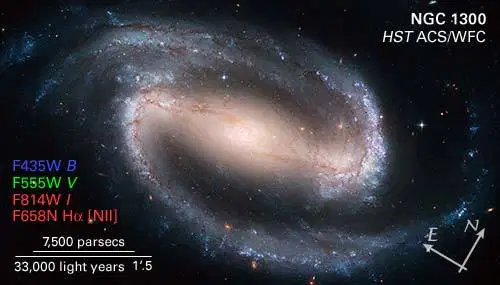
What type of galaxy is this?
spiral
barred spiral
lenticular
irregular
What type of galaxy has an unusual shape or composition?
Elliptical
Peculiar
Lenticular
Irregular
What causes deep sea trenches to form?
divergent boundaries
hot spots
mass wasting
subduction boundaries
What is the best explanation for Earth's continents being significantly older than its ocean floors?
the sea floors are constantly being recycled by deep ocean trenches
continents can not be subducted
most new rock being made in the world is at the ocean trenches
all of these contribute to the explanation
Predict what would happen if North America were to collide with Asia.
North America would subduct under Asia
Both land masses would be pushed upwards and form mountains in between them
Volcanoes would erupt all along the boundaries between them
Both land masses would fracture
What is the relationship between plate boundaries and volcanoes?
Most of the worlds volcanoes are found far from plate boundaries
Plate boundaries have no relationship with volcanoes
Most volcanoes are caused by the conditions present at plate boundaries
Plate boundaries are just as likely to have volcanoes as all other locations on Earth
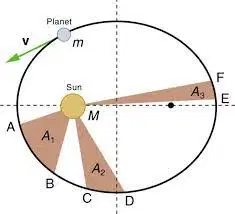
In the diagram, which of the following arcs would represent where the planet would be moving the slowest in its orbit?
AB
CD
EF
Compared to solar eclipses, lunar eclipses:
Last longer
Are shorter in length
Are visible to a smaller portion of the world
Are harmful to look at
Which of the following is not a way that a planet is classified?
Size
Shape
Dominating its area of space
Orbiting the Sun directly
A part of the electromagnetic spectrum that can be divided into colors is called:
visible light
ultra violet
infrared
x-ray
Why does subducting ocean plate melt into magma?
It has less pressure
It has more pressure
It is hotter than surrounding mantle
It has water in it acting as a flux
What is the cause of most earthquakes?
collapsing caves
meteor impacts
plate boundaries
stampedes
Why does the moon have more impact craters than Earth?
The moon is a larger target to hit
The moon has no erosion or atmosphere
The moon has stronger gravity
The moon has a strong magnetic
How does the air pressure affect a climate's moisture?
High pressure makes wet climates
High pressure makes dry climates
Low pressure makes dry climates
It doesn't
What shape do planetary orbits have?
square
circle
elliptical
octagon
The phases of the moon are caused by:
Earth's rotation
the moon's rotation
Earth's revolution
moon's revolution
The strength of gravity between two objects depends on:
Their mass and distance from one another
Their density
Their mass and volume
Their speed and year length
Climates at mid-latitudes are known for having these:
Seasons
Ice caps
Monsoons
Earthquakes
Which month is the Earth closest to the sun?
January
April
September
July
Which of these is evidence that the Earth revolves around the Sun?
Change in the stars positions (parallax) throughout the year
The location of the North Star
The Coriolis Effect on the winds and ocean currents
The direction of the sunrise and sunset
A volcano with gradually sloping sides and a very broad base is a:
cinder cone
jumbo cone
shield cone
composite cone
Which of the theories first explained what was happening at the ocean ridges and trenches?
Bing Band
Seafloor Spreading
Continental Drift
Giant Impact
Evidence of the Big Bang Theory comes from:
Fossils
The Doppler Effect
Alien Artifacts
The Richter Scale
Volcanoes in the middle of a plate such as Hawaii or Yellowstone are caused by:
A stress fault
A hot spot
A plate boundary
A transform fault
What do all tropical climates have in common?
Ice caps
Dryness
Warm Temperatures
Seasons
At a subduction boundary, which plate will go downward?
The fastest one
The lightest one
The densest one
The thickest one
How can plate tectonics change climates on Earth?
By changing the areas latitude
By causing volcanoes to erupt
By changing elevations
All of these contribute to climate change
In coastal areas during the day, warm air rises off of the land and cool air from above the ocean moves in to take its place. What would this cause?
Advection
Gravity
Magnetic Field
Convection
Why do polar ice caps not melt away every summer?
They do
They receive no light in the summer
Ice reflects almost all of the solar energy
The penguins fan the ice to keep it cool
Which layer of the Earth is the thinnest?
Inner core
Outer core
Mantle
Crust
Which of the following best describes the Earth's lithosphere plates?
They are solid and move on top of the asthenosphere
They are semisolid and move under the asthenosphere
They float on top of the oceans
They are made in China of fine porcelain
Where does the energy that influences Earth's climates come from?
The core
Nuclear reactors
The Sun
Super novas
The sun and all of its planets formed from a:
Black hole
Nebula
White Dwarf
Nova
Which of the following best describes the asthenosphere?
Rigid and solid
Liquid rock
Semi-solid and can flow
Sheets of ice
Minerals in lava rocks can show the direction of the Earth's ______ when they formed.
polarity field
gravitational field
magnetic field
force field
Which of the following is evidence for Seafloor Spreading?
fossils of dinosaurs
shapes of the continents
magnetism of the ocean floor
climate change
Why are the polar regions of Earth cooler than the rest of the planet?
increased solar energy
higher elevations
smaller ice caps
less direct sunlight
As you go deeper into the Earth, what increases with temperature?
magnitude
energy
pressure
altitude
In a convection current, what type of material moves upward?
bright
dense
low density
smelly
How is magma different from lava?
magma is solid
magma is only below Earth's surface
magma comes from volcanoes
only magma has silica
Earth's atmosphere is mostly:
argon
carbon dioxide
oxygen
nitrogen
Approximately how much of Earth's surface is covered by water?
10%
50%
75%
25%
What causes the Earth's seasons?
distance from the sun
the energy output of the sun changing
the tilt of Earth's axis
the moon blocking out sunlight
Why would you weigh more on the poles than on the equator? Keep in mind the shape of the Earth and Newton's Law of Universal Gravitation.
you are closer to the Earth's center at the equator
you are closer to the Earth's center at the equator
the magnetic field is stronger at the poles
the magnetic field is stronger at the equator
Magma rises toward the surface of the Earth because:
contains a lot of silica
it moves from higher to lower pressure
it moves from lower to higher pressure
it is colder than its surroundings
Which of the following could cause the Earth's climate to warm?
increase in solar energy
larger ice caps
higher elevations
less insolation
Which of the following is not true about the Mid-Atlantic Ridge?
Iceland is located above it
Hawaii is located above it
New rocks are forming there
It is a divergent boundary
Which spectrum is used to study hot gasses of a star?
continuous
absorption
emission
rainbow
Which of the following is false?
Earth spins on its axis
Earth has a circular orbit
Earth moves around the sun
Earth's axis is tilted
What type of boundary forms the Aleutian Islands of Alaska
Divergent
Transform
Hot Spot
Subduction
This happens in response to stress when rocks are not flexible:
faulting
eroding
convection
What causes earthquakes in Southern California?
reality tv
San Andreas fault
New Madrid fault
subduction boundary
If the dark region of the moon is growing each night then the moon is:
waxing
waning
eclipsed
in a shadow
Half of the moon is always lit by the sun, that part of the moon is always facing the:
Earth
North
Sun
West
How do andesitic and basaltic magma differ?
andesitic magma is less viscous
andesitic magma does not cause explosions
basaltic magma never hardens
basaltic magma does not cause explosions
Which of the planets has rings?
Saturn
Jupiter
Uranus
All of these have rings
Which planet is the third from the sun?
Mars
Venus
Earth
Jupiter
Which of the following is located at an uplifting (collision) boundary?
Iceland
Hawaii
Yellowstone
The Himalayas
According to the stellar temperature/spectral class graph on your study guide, which star is the brightest?
the Sun
Capella
Betelgeuse
Sirius A
According to the stellar temperature/spectral class graph on your study guide, which group of stars on the diagram is hot but dim?
main sequence
white dwarfs
super giants
giants
According to the stellar temperature/spectral class graph on your study guide, which corner of the diagram has stars that are hot and bright?
top right
top left
bottom right
bottom left
According to the stellar temperature/spectral class graph on your study guide, which star is the hottest?
The Sun
Capella
Betelgeuse
Sirius A
According to the stellar temperature/spectral class graph on your study guide, what is the approximate magnitude of the star names Spica?
-1
-4
1.2
-3.5
According to the stellar temperature/spectral class graph on your study guide, what is the approximate temperature of the sun?
5100 Celsius
2000 Celsius
5800 Celsius
4500 Celsius
Looking at the "Bowen's Reaction Series" chart, what category of igneous rock is made up mostly of Quartz?
Ultramatic
Basaltic
Andesitic
Granitic
Looking at the "Bowen's Reaction Series" chart, which type of rock would be made mostly of sodium and biotite mica?
Ultramatic
Basaltic
Andesitic
Granitic
Looking at the "Bowen's Reaction Series" chart, what mineral solidifies at the lowest temperature?
sodium
quartz
biotite
pyroxene
Looking at the "Bowen's Reaction Series" chart, which is the first mineral to crystallize at high temperatures?
Sodium
Quartz
Biotite
Pyroxene
Looking at the Temperature, Pressure, and Depth graph, what trend does each of the lines on this graph show?
increase in temperature with depth
decrease in pressure with depth
decrease in temperature with depth
increase in pressure with decreased depth
Looking at the Temperature, Pressure, and Depth graph-which line shows the greatest increase in temperature with depth?
A
B
C
Looking at the Temperature, Pressure, and Depth graph-Which line shows the greatest change in pressure?
A
B
C
Looking at the Temperature, Pressure, and Depth graph-Which line shows the least change in temperature with depth?
A
B
C
Looking at the Temperature, Pressure, and Depth graph-Which line shows the least change in pressure?
A
B
C
What type of star will the sun become in its next stage of life?
neutron star
white dwarf
red giant
protostar
Subduction boundaries and uplifting boundaries are both types of:
convergent boundary
divergent boundary
transform boundary
hot spot boundary

