
Font size
 Worksheets
Form E Combination Final Exam
Total questions: 79
Worksheet time: 4hrs 35mins
Passive Transport is the movement of particles across the membrane from an area of [ ___ ] to an area of [ ___ ]
high to low
low to high
low to low
high to high
_____________ is the free movement of particles across the membrane with the concentration gradient
diffusion
facilitated diffusion
active transport
fusion
The condition in which all acting influences are balanced.
equilibrium
dynamic equilibrium
net movement
occurs when the concentration of particles is higher in one area than another.
concentration gradient
concentration
[high] --> [low]
Diffusion is the movement of molecules from an area of _____ concentration to an ______ concentration
High, low
Low, high
Low, low
High, high

Where is there a low concentration of dye?
at the bottom of cup
in the color
at the top of cup
no concenteraion gradient
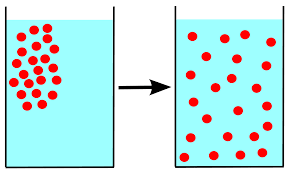
The picture below is an example of _________________.
osmosis
isotonic
diffusion
active transport


Which of the following are a type of passive transport (does not require energy input)?
endocytosis
facilitated diffusion
active transport
osmosis
diffusion

This arrangement within the cell membrane allows it to

In the cell pictured, where would water move?
Into the cell, causing it to swell
Out of the cell, causing it to shrink
In and out of the cell equally, causing the shape to stay the same

In the cell pictured, which way would water move?
Into the cell, causing the cell to swell
Out of the cell, causing the cell to shrink
In and out of the cell equally, keeping the shape the same

In the cell pictured, which way would water move?
Into the cell, causing the cell to swell
Out of the cell, causing the cell to shrink
In and out of the cell equally, keeping the shape the same


What type of solution is this healthy looking red blood cell in?
Isotonic
Hypertonic
Hypotonic


What type of solution is a cell in when it shrinks while in salt water?
hypertonic
isotonic
hypotonic
kittens
when some molecules can cross the membrane while others cannot.

Termites are tiny insects that can cause severe damage to homes and other structures that consist of wood. Termites are an example of what type of factor.
Biotic
Abiotic

The Sun is the source of all energy within an ecosystem. Plants depend on light from the sun in order to perform the process of photosynthesis. Sunlight is an example of what type of factor?
Biotic
Abiotic

An arctic blast pushed its way through several of the Northern state in the United State. The temperatures dropped below freezing for several days. Temperature is an example of which type of factor?
Biotic
Abiotic
Which is an example of an abiotic factor in a pond environment?
The water
A frog
A grasshopper
A snake
Which of the following shows an abiotic factor interacting with a biotic factor in the environment?
Lamprey eels survive by attaching themselves to trout.
Water temperature affects its oxygen level.
Low light intensity affects the growth of forest pine trees.
Gypsy moth caterpillars eat the leaves of apple tree.

Which of the following would be the most likely effect, if there were a sudden increase in the cricket population?
There would be a decrease in the small bird population.
There would be a decrease in the grass/flowers population.
There would be a decrease in the mice population.
There would be an increase in the grass/flowers population.


What is the bottom layer of the an energy pyramid?
producer
tertiary consumer
Secondary consumer
primary consumer


Name the correct trophic level for level 3.
Consumer
Secondary
Producer
Decomposer
Check all of the boxes that show examples of biotic factors.
Rain
Humans hunting
Predators
Wildfire
What is a limiting factor?
Factors that always increase a population
Factors that always decrease a population
Resources that are unlimited
Factors/resources that limit how many organisms can live in an area at the same time
What does the carrying capacity of a population show?
How many organisms live in the ecosystem
The maximum number of organisms that an ecosystem can support for a long period of time
The minimum number of organisms that can live in an area
The types of organisms living somewhere
What happens if a population goes over its carrying capacity?
It will continue to grow
It will eventually decrease due to a lack of resources
It will die immediately
It will get unlimited resources
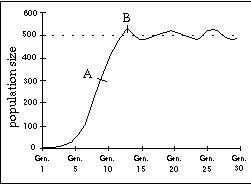


Line graphs are used to plot _____________.
Changes over time.
Comparing two groups or variables.
Comparing increases or decreases in population size.

Which organism is the predator?
Rabbit
Wolf

Which graph represents exponential growth?
The graph on the left
The graph on the right
Which graph represents a population with a carrying capacity?
The graph on the left
The graph on the right

What is the approximate carrying capacity of this population?
0
1000
2000
2500

Does the human population have a carrying capacity?
Yes
No

In the graph to the right, what is the population of deer at the carrying capacity of the environment?
3
7
70
40


Which statement is an example of how carbon moves through a food chain as part of the cycle?
Producers release carbon dioxide, and consumers take it it.
Producers take in carbon dioxide, and consumers release it.
Producers take in carbon from the soil, and they release it when they decompose.
Producers release carbon into the soil, and consumers take it in from the soil.
When organisms die, what process returns their carbon back into the atmosphere?
Respiration
Decomposition
Combustion
Erosion
Choose the correct order of cellular hierarchy from simplest to most complex.
Cell ⋙ Organ ⋙ Organism ⋙ Tissue ⋙ Organ System
Tissue ≫ Cell ≫ Organ System ≫ Organ ≫ Organism
Organism ⋙ Organ System ⋙ Organ ⋙ Tissue Cell
Cell ⋙ Tissue ⋙ Organ ⋙ Organ System ⋙ Organism
Which of the following is the correct order of organization in living things from most basic (simple) to most complex?
organism, cell, tissue, organ, organ system
organ system, organ, tissue, cell, organism
cell, tissue, organ, organ system, organism
cell, organ, tissue, organism, organ system
The basic unit of structure and function of living organisms
organ
organ system
cell
tissue
organism
A group of similar cells that work together to form the same function is called .......
organ
cell
organ system
organism
tissue
What is the difference between a cell and a tissue?
cell is basic unit of life; tissue is group of cells that work as one
cell is group of tissues; tissue is basic unit of life
cell is basic unit of life; tissue is groups of different cells
cell is group of organs; tissue is group of different cells
A structure that is composed of different kinds of tissues
organ
cell
organ system
organism
tissue
A group of organs that work together to perform a major function....
organ
cell
organ system
organism
tissue

