
 Worksheets
The Ultimate CBA Review 💯
Total questions: 110
Worksheet time: 1hrs 27mins

An inflated balloon released from rest moves horizontally.
The law that best explains this event is
Newton's 1st Law
Newton's 2nd Law
Newton's 3rd Law
Law of Gravity
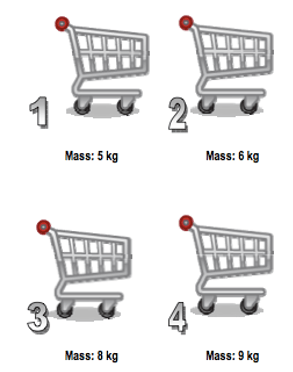
30 mph west is an example of ________
Force
Speed
Velocity
Acceleration
A car traveling 65 mph is an example of its _____.
Force
Speed
Accerelation
Velocity
Which of Newton's Laws explains a rocket's movements during launch?
Newton's 1st Law
Newton's 2nd Law
Newton's 3rd Law
Newton's 4th Law
What is Newton's 2nd Law of Motion?
Force = Mass x Acceleration
An object at rest stays at rest unless acted on by an unbalanced, external force
What goes up must come down
For every action, there is an equal and opposite reaction.
What is Newton's 1st Law of Motion?
Force = Mass x Acceleration
An object at rest stays at rest unless acted on by an unbalanced, external force
What goes up must come down
For every action, there is an equal and opposite reaction.
What is Newton's 3rd Law of Motion?
Force = Mass x Acceleration
An object at rest stays at rest unless acted on by an unbalanced, external force
What goes up must come down
For every action, there is an equal and opposite reaction.
Which of the following is the correct position - time graph for an object moving with a constant velocity?


A performer pulls a tablecloth out from under a complete set of dinnerware as shown in the illustration. .Which of the following best explains the performer’s success at leaving the dinnerware on the table?
the inertia of the dinnerware
the large mass of the tablecloth
the placement of the dinnerware
the rough material of the tablecloth

A teacher leaves a coffee mug on top of a car. The teacher drives the car in a straight line and then stops suddenly. What happens to the coffee mug when the car stops?
the mug moves forward
the mug moves backward
the mug moves side to side
the mug stays in the same position
Which two factors does speed depend on?
distance and direction
direction and time
distance and time
distance, time and direction
Which is an example of velocity?
A car driving 55 miles per hour south.
A bicyclist traveling 10 meters per hour.
A roller coaster is traveling 10 meters per second.
A rocket blasting off at 2,500 meters per second.
Acceleration is a speeding up, slowing down or a change in direction. Is the following acceleration and if so, which one?
A swimmer has 10 meters left in the race and he is neck-in-neck with his competitor. He has a surge of adrenaline and pulls ahead to win.
Yes, this is acceleration since the swimmer starts to speed up to pull ahead.
Yes, this is acceleration since the swimmer uses the wall to change directions.
No, this is not acceleration since there is no speeding up, slowing down, or change in direction.

At which time did the driver start to return back home?
10 seconds
20 seconds
30 seconds
0 seconds


Object is...
(1) speeding up,
(2) constant speed,
(3) speeding up
(1) constant speed.
(2) stopped,
(3) constant speed

Object ...
accelerates... then goes constant speed... then accelerates again
goes constant speed... stops... goes constant speed

Which table correctly describes the object's motion during each interval of time?


At which point is potential energy greatest?
W
X
Y
Z
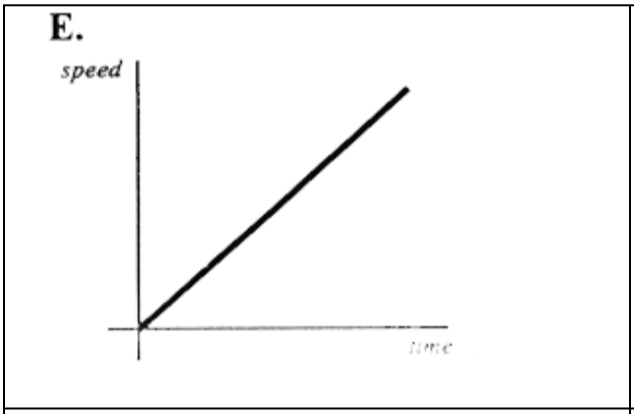
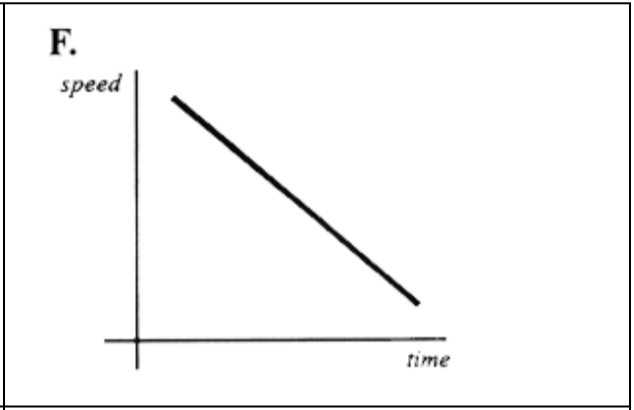
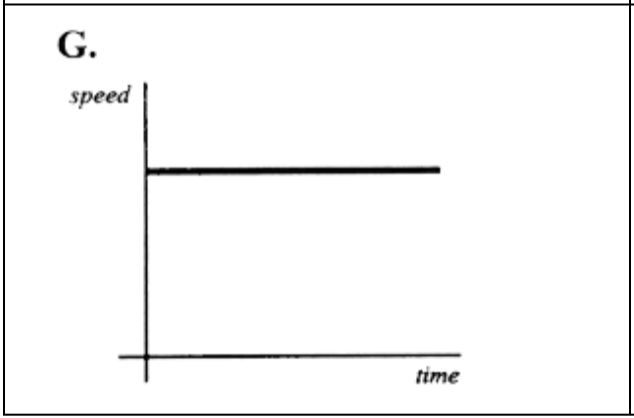
Match the graph to the description:
"The car is stopped."


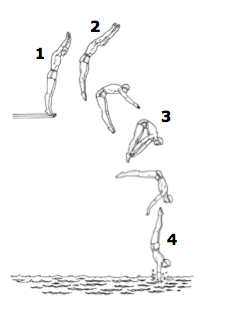
Which letter shows where kinetic energy is at is highest point?
X
Y
W
Z

Where is potential energy at its minimum?
W
X
Y
Z

Where is kinetic energy at its minimum?
Z
W
X
Y

What kind of energy is in a rock at the edge of a cliff?
potential
Kinetic

What is the line running down the center of Earth called?
Equator
Axis
North Pole
South Pole

Rotation and sunlight causes ___________.

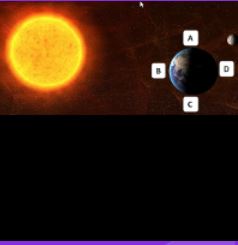


Y = day
Y = night

A student wants to use a spinning basketball to model the day-and-night cycle on Earth.
What should the student do in order to best model the cause of the day-and-night cycle?
Spin the ball in different directions
Tilt the ball while it is spinning
Paint one half of the ball black and the other half white
Shine a bright light on one side of the ball

Which of these locations on Earth experiences the least change in the number of daylight hours throughout the year?
Equator
North Pole
Tropic of Cancer
Tropic of Capricorn
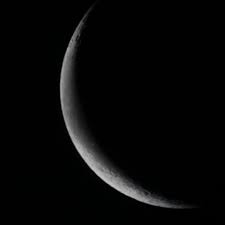


6. Identify the phase of the moon that is shown
new moon
first quarter
third quarter
waxing crescent


Use the calendar to predict the moon phase on March 9th.
New Moon
Full Moon
Third Quarter
First Quarter

Which lunar phase would you observe 4 days after this phase?
(a)

If today is a full moon, which phase would we have observed two days ago?
(a)

8. Identify the phase of the moon that is shown
(a)

What phase is this?
(a)
Waning gibbous
Waxing gibbous
Waning crescent
Full moon

(a)

(a)

What phase is this?
Waning gibbous
Waxing crescent
Waning crescent
Waxing gibbous

7. Identify the phase of the moon that is shown
new moon
waxing crescent
full moon
waning crescent
What phase is this?
First Quarter
Full Moon
New Moon
Third Quarter

8. Identify the phase of the moon that is shown
(a)
How long does it take for the moon to go from a full moon to a first quarter moon? (a)


What phase occurs on the designated part of the graph?
Waxing Crescent
Waxing Gibbous
Waning Crescent
Waning Gibbous

What phase occurs on the 28th of the month?
Waxing Gibbous
1st Quarter
3rd Quarter
Waning Gibbous

Name the phase that the selected images represent.
Waxing Gibbous
Waxing Crescent
1st Quarter
3rd Quarter

Where would the Sun need to be in this diagram to cause these phases of the moon?
On the Left
At the bottom
At the top
At the right

What phase occurs on the designated part of this graph?
New Moon
Full Moon
Waning Crescent
Waxing Crescent

What moon phase is shown in the picture?
first quarter
new moon
last quarter
full moon

What moon phase should be between the two shown?
new moon
full moon
first quarter
last quarter


It will be a full moon on December 23, 2018. About what date will the next full moon occur?
January 1, 2019
January 10, 2019
January 21, 2019
February 1, 2019
LT #1: __________ is a type of convergence where one plate slides under another and dives into the mantle.
LT #1: Mountains are the result of two plates _____________ over millions of years.
LT #1: A boundary where plates collide.
LT #1: _________ are common in areas where an oceanic plate is subducted under a continental plate.
LT #1: Which of the following features is likely to form where two tectonic plates push toward each other?
Ocean shoreline
Mountain range
Mid-ocean ridge
Rift valley
LT #1: ___________ are formed as a result of continent-continent collision, or convergence.
LT #1: When an oceanic plate is subducted under another oceanic plate, _________ can form.
LT #1: How many types of convergent boundaries are there?

LT #1: When tectonic plates collide into one another, which type of boundary is this?
convergent
divergent
transform
all of the above

LT #2: When tectonic plates move away from each other, this boundary is:
convergent
transform
divergent
none of the above

LT #2: When tectonic plates move away from each other, what type of land form will be created?
islands
mid ocean ridges
ocean trenches
all of the above
LT #2: A mid-ocean ridge is formed at which type of boundary?
LT #2: Which of the following crustal features would be the result of two continental tectonic plates moving away from each other?
Mountain range
Volcanoes on land
Rift valley
Mid-ocean ridge

LT #2: One piece of evidence that supports the Theory of Plate Tectonics is found in the observation of rocks on either side of the Mid-Atlantic Ridge, shown in the picture provided. Plate Tectonic theory is supported because as you move out form the Mid-Atlantic Ridge, the rocks -
have higher iron content.
become thicker and thicker.
are increasingly older.
are made of smaller particles.

LT#3: What type of phenomena/event is created at a transform boundary?
Hurricanes
Tornados
Earthquakes
Volcanic Eruption
LT #3: A type of boundary where two plates slide past each other.
LT #3: The San Andreas fault is an example of a __________ boundary.
LT #3: Earthquakes can occur along _________ at transform boundaries.
LT #3:The earthquakes experienced in California are related to tectonic plates because these catastrophic events are the result of -
two tectonic plates sliding past each other.
tectonic plates melting as they slide into the mantle.
tectonic plates being weathered over time.
two tectonic plates pulling away from each other.
LT #4: Scientists theorized that the continents were once joined together even before they had modern evidence from rocks and fossils. Using only maps, they observed that -
continents with the most temperate climates were found near the Equator.
the oceans have become smaller throughout the history of Earth.
the shapes of continents appeared to allow them to fit together.
most of the larger land masses are in the Northern Hemisphere.
LT #4: One piece of evidence that supports the Theory of Plate Tectonics is the discovery of what in both South America and Africa?
The ancient atmosphere in both places was identical.
The rates of weathering of rock are similar.
Fossil remains of the same land-dwelling animal.
Plants on both continents have similar flowers.
LT #4: Even before modern observations provided evidence that supports the Theory of Plate Tectonics, people developed theories that the continents were once joined together. Using only maps, they observed that -
most of the larger land masses are in the Northern Hemisphere.
continents with the most moderate climates were located near the Equator.
the shapes of continents appeared to allow them to fit together.
the oceans have decreased in size throughout the history of Earth.

LT #4: The German meteorologist who came up with the continental drift theory is?
Albert Einstein
Marie Currie
Alfred Wegener
Isaac Newton

LT #4: What evidence did Alfred Wegener use to prove the Theory of Continental Drift?
he used the moon's rotation and revolution as evidence
he looked at the clouds and noticed continental drift
he looked at the fossils, land forms and how continents fit together like puzzle pieces
he studied the weather patterns for Africa and South America

LT #4: What is the theory of plate tectonics?
The theory that describes how Earth's outer layers is broken up into moving tectonic plates
Tectonic plates stay in one place
All of the continents were once apart of a Super Continent called Panthalassa
All of the plates were once a solid plate until they broke up and moved to their current position

LT#5: Letter B in the diagram shows a subduction zone. Why is the oceanic crust subducted?
it is less dense
it is more dense
it is heavier because the ocean is pushing it down
none of the above
LT #5: What are the two basic types of plates on earth?

LT #6: Which below is a possible cause of tectonic plate motion?
ocean tides
the sun
convection currents
current weather patterns
LT #6: Which picture below represents a convection current?

GPS



