wayground logo

Free Printable Worksheets

Font size

S
M
L
XL
Worksheets

Physical Science 1st Benchmark Review

Total questions: 154

Worksheet time: 2hrs 26mins

Name
Class
Date
1.
A possible explanation to a problem that has not yet been tested. 
a)
data
b)
theory
c)
hypothesis
d)
fact
2.
This part of the experiment serves as a basis of comparison; the one variable being tested has been omitted. 
a)
experimental group
b)
control group
c)
data
d)
variables
3.
This variable in an experiment is the one being deliberately changed by the scientist. 
a)
dependent variable
b)
independent variable
c)
data
d)
control group
4.
What step does every scientific experiment begin with?
a)
hypothesis
b)
question/problem
c)
procedures
d)
conclusion
5.
An experiment is performed on plants to see how different liquids affect plant growth. Each plant in the experiment is given a different liquid; water, apple juice, or milk. Each plant has the same amount of soil, sunlight, and listens to the same music. In this investigation, the independent variable is ...
a)
The type of plant
b)
The amount of sunlight
c)
The type of music
d)
The type of liquid
6.
The summary at the end of an experiment that explains the results. 
a)
conclusion
b)
procedures
c)
materials
d)
responding variable
7.
Testing a hypothesis often involves a(n):
a)
answer
b)
experiment
c)
problem
d)
safety check
8.
A student wants to test the effects of type of exercise on heart rate.  What is the dependent variable?
a)
heart rate
b)
type of exercise
c)
amount of exercise
d)
time of day exercise occurs
9.
Observations made during an experiment are called:
a)
data
b)
problems
c)
conclusions
d)
questions
10.
On what axis should the independent variable always be?
a)
X
b)
Y
11.
An experiment is performed on plants to see how different liquids affect plant growth. Each plant in the experiment is given a different liquid; water, apple juice, or milk. Each plant has the same amount of soil, sunlight, and listens to the same music. In this investigation, what are the controlled variables?
a)
Type of plant, amount of music, and sunlight
b)
Water, apple juice, milk
c)
Plant growth
12.
An experiment is performed on plants to see how different liquids affect plant growth. Each plant in the experiment is given a different liquid; water, apple juice, or milk. Each plant has the same amount of soil, sunlight, and listens to the same music. In this investigation, what are the controlled variables?
a)
Type of plant, amount of music, and sunlight
b)
Water, apple juice, milk
c)
Plant growth
13.
An experiment is performed on plants to see how different liquids affect plant growth. Each plant in the experiment is given a different liquid; water, apple juice, or milk. Each plant has the same amount of soil, sunlight, and listens to the same music. In this investigation, the independent variable is ...
a)
The type of plant
b)
The amount of sunlight
c)
The type of music
d)
The type of liquid
14.
Which is NOT a step in the scientific method?
a)
Make observation
b)
Form a theory
c)
Collect data
d)
Form a hypothesis
15.
Squidward found new reeds to tryout for his clarinet.  He used an APPLAUSOMETER to measure applause after playing  Under the Sea with each reed.  The results were put in the table.
What was controlled?
a)
The Song
b)
The Reed
c)
The Applause
16.
Squidward found new reeds to tryout for his clarinet.  He used an APPLAUSOMETER to measure applause after playing  Under the Sea with each reed.  The results were put in the table.
What was the independent variable?
a)
The Song
b)
The Reed
c)
The Applause
17.
Squidward found new reeds to tryout for his clarinet.  He used an APPLAUSOMETER to measure applause after playing  Under the Sea with each reed.  The results were put in the table.
What was the dependent variable?
a)
The Song
b)
The Reed
c)
The Applause
18.
The data collected supports which of the following questions that Squidward could have tested?
a)
Which song does the audience prefer?
b)
Which instrument does the audience like best?
c)
Which reed length creates the best sound?
d)
How do applause affect performance?
19.
A series of steps used by scientists to solve a problem or answer a question. 
a)
scientific method
b)
recipe
c)
data collection
d)
metric system
20.
This variable in an experiment is the one being changed by the scientist. 
a)
dependent variable
b)
independent variable
c)
data
d)
control group
21.
Testing a hypothesis often involves a(n):
a)
answer
b)
experiment
c)
problem
d)
safety check
22.
What is a hypothesis?
a)
A hypothesis is the right answer to an experiment.
b)
A hypothesis is the wrong answer to an experiment.
c)
A hypothesis is an educated guess.
d)
I don't know.
23.
The summary at the end of an experiment that explains the results. 
a)
conclusion
b)
procedures
c)
materials
d)
responding variable
24.
The name of the information that you get from your experiment (you organize it into charts and graphs).
a)
observations
conclusion
b)
data
c)
variables
d)
hypothesis
25.
An experiment is performed on plants to see how different liquids affect plant growth. Each plant in the experiment is given a different liquid; water, apple juice, or milk. Each plant has the same amount of soil, sunlight, and listens to the same music. In this investigation, the independent variable is ...
a)
The type of plant
b)
The amount of sunlight
c)
The type of music
d)
The type of liquid
26.
Dependent variable means
a)
the scientist controls what to test
b)
educated guess
c)
ask a question
d)
what is being measured
27.
If you increase the amount of spinach you eat, then you will increase the iron in your blood. 
What's the dependent variable?
a)
increase the amount of iron in your blood
b)
spinach you eat
28.

What is the first step in the scientific method?

a)

Ask a question

b)

Conclusion

c)

No Horse Play

d)

Observe

29.
If I ride my bike to school instead of walking, then I will get to school faster. What is the dependent variable?
a)
True
b)
How fast you get to school
c)
Riding a bike or walking
d)
False
30.
Will a construction paper air plane fly faster than an airplane made from notebook paper? Choose the best hypothesis.
a)
If I make a paper airplane from notebook paper, then it will fly faster than construction paper.
b)
Yes.
c)
No.
d)
I think the construction paper air plane will fly faster.
31.
Which side of a penny will hold more drops of water? Choose the best hypothesis.
a)
If I use the heads side of a penny, then it will hold more drops of water than tails.
b)
Heads
c)
Tails
d)
Tails will hold more drops of water.
32.
If I study for my scientific method test, then I will have a better test score. What is the dependent variable?
a)
Scientific Method
b)
Studying
c)
Independent variable
d)
Test score
33.
If I listen to Mr. Castro's instructions, then I will have less accidents in the lab. What is the independent variable?
a)
Yes
b)
Maybe
c)
Listening or not listening to instructions
d)
Likelihood of having an accident in lab 
34.
If I read this question carefully, then I will answer it correctly. What is the independent variable?
a)
I hope so
b)
Yes
c)
Reading or not reading carefully
d)
Likelihood of a correct answer
35.
What is the first step of the Scientific Method?
a)
Form a hypothesis.
b)
Conduct an experiment.
c)
Ask questions.
36.
The SI unit for temperature is __?__.
a)
degree fahrenheit  (° F)
b)
degree celsius  (° C)
c)
kelvin  (K)
d)
degree centigrade  (°C)
37.

The SI unit for time is the __?__.

a)

hours (h)

b)

liter (L)

c)

gram (g)

d)

second (s)

38.

What SI unit is used to measure length?

a)

meters

b)

liters

c)

centimeters

d)

kilograms

39.
What is the base unit for measuring temperature?
a)
Fahrenheit 
b)
Celsius
c)
Kelvin
d)
degrees
40.
The SI unit for measuring volume is the __?__.
a)
meter (m)
b)
liter (L)
c)
cubic meter (m3)
d)
gram (g)
41.
The distance between New York City and Miami, Florida would be measured in __?__.
a)
kilometers (km)
b)
meters (m)
c)
centimeters (cm)
d)
millimeters (mm)
42.
The SI unit for measuring mass is the
 __?__.
a)
meter (m)
b)
liter (L)
c)
cubic meter (m3)
d)
kilogram (kg)
43.
To measure the length of a Kleenex box you would use __?__.
a)
kilometers (km)
b)
meters (m)
c)
dekameters (dam)
d)
centimeters (cm)
44.
The SI unit for temperature is __?__.
a)
degree fahrenheit  (° F)
b)
degree celsius  (° C)
c)
kelvin  (K)
d)
degree centigrade  (°C)
45.
The volume of a grain silo would be measured in __?__.
a)
liters (L)
b)
cubic meters (m3)
c)
milliliters  (mL)
d)
cubic centimeters  (cm3)
46.
The volume of a glass of orange juice would be measured in __?__.
a)
liters  (L)
b)
cubic meters  (m3)
c)
milliliters  (mL)
d)
kilograms  (kg)
47.
The mass of a push pen would be measured in __?__.
a)
kilograms  (kg)
b)
liters (L)
c)
grams  (g)
d)
milligrams  (mg)
48.

A system of units of measure widely accepted by the scientific community (SI for short)

a)

International System of Units

b)

World Wide Weight

c)

Science Instruments

d)

Use These Measures

49.

Average speed is measured in

a)

meters per second (m/s)

b)

miles per day (m/d)

c)

kilograms per second (k/s)

d)

newtons per meters (n/m)

50.

Acceleration is measured in

a)

m/d3

b)

g/n

c)

m/s2

d)

k/j2

51.
What is a force?
a)
a push or pull
b)
speed or acceleration 
c)
potential or kinetic energy
d)
balanced or unbalanced force
52.
When objects remain in the same place, it is called...
a)
gravity
b)
friction
c)
balanced force
d)
unbalanced force
53.
What is the force that causes everything to be pulled down to the Earth?
a)
friction
b)
gravity
c)
balanced
d)
unbalanced
54.
Force is measured in....
a)
Galileos 
b)
Newtons
c)
Di Vincis
d)
Einsteins 
55.
An unbalanced force is when objects move in one direction because the force is greater from that direction.
a)
true
b)
false
56.
What is a force that works AGAINST MOTION?
a)
Force
b)
Motion
c)
Gravity
d)
Friction
57.
Which force produces a change in motion?
a)
unbalanced force
b)
balanced force
c)
gravitational force
d)
frictional force
58.
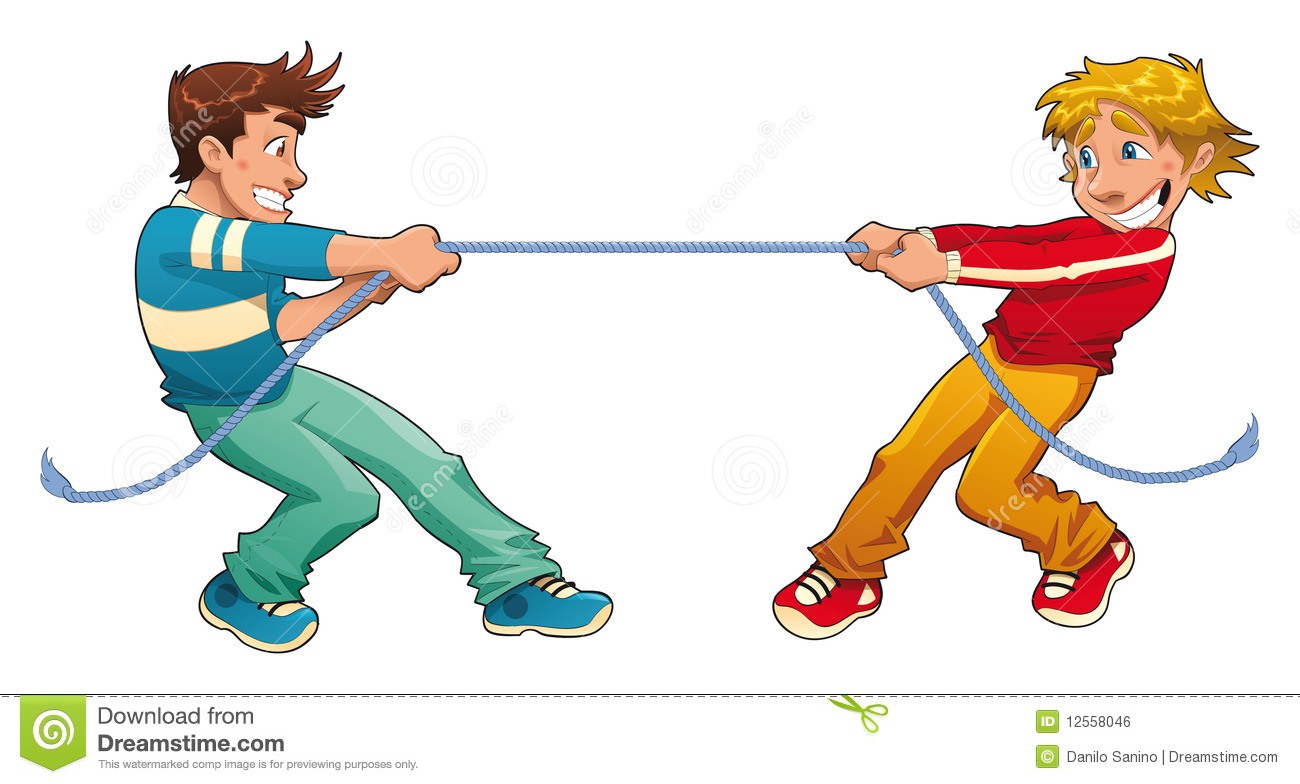
If these boys are pulling with the same amount of force.  What will happen?
a)
The boy in blue will win.
b)
They will not move at all.
c)
The boy in red will win.
d)
Both will fall down.
59.
What pulls a ball back to earth?
a)
Gas
b)
Gravity
c)
Friction
d)
Molecules
60.

An automobile you are riding in suddenly stops, why does your body continue to go forward?

a)

An object in motion stays in motion.

b)

Gravity pulls your body towards the earth.

c)

Friction makes your body slow down.

61.

If you push a tennis ball, a bowling ball, and a basketball with the same amount of force, which one will go farthest?

a)

bowling ball

b)

tennis ball

c)

basketball

62.
Tim and Carla play catch with a ball. Which term describes the motion of a ball?
a)
shape
b)
size
c)
speed
d)
weight
63.
Two cars are in motion for the same amount of time. What will determine which car covers more distance?
a)
the starting position of the each car
b)
the speed of each car
c)
the direction in which each car moves
d)
the length of the car
64.
A car is driven for 3 hours. What else do you need to know to describe this car’s speed?
a)
the road the car in driven on
b)
the time of day
c)
the distance the car is driven
d)
the number of passengers in the car
65.
What is speed?
a)
how much an object’s position changes
b)
how far an object moves
c)
how long an object moves
d)
how far an object moves in a certain amount of time
66.
Wind pushes a toy sailboat across a pond. The boat moves in a straight path. What is changing?
a)
the boat’s direction
b)
the boat’s path
c)
the wind’s direction
d)
the boat’s position
67.
The position of a runner in a race changes as time passes. What could a reference point to describe the change in position? 
a)
the starting line
b)
the runner’s speed
c)
the runner’s right foot
d)
another runner
68.
Which best describes the speed of a ball as it is thrown straight up into the air and comes back down?
a)
The ball goes up at a constant speed, stops, then comes down at a constant speed.
b)
The ball goes up at a constant speed, stops, and increases speed as it comes down
c)
The ball goes slower and slower as it goes up, stops, and then goes faster and faster as it comes down.
e
d)
The ball goes slower and slower as it goes up, stops, and then comes down at a constant speed.The ball goes slower and slower as it goes up, stops, and then comes down at a constant speed.
69.
What is the speed of a runner who runs 400 meters in 40 seconds? (speed = distance ÷ time)
a)
10 meters/second
b)
40 meters/second
c)
100 meters/second
d)
1,600 meters/second
70.
The speedometer on your car tells you
a)
average velocity
b)
instantaneous velocity
c)
average speed
d)
instantaneous speed
71.
If you run around the football field (which is 2 miles) 3 times, what is your distance?
a)
0 miles
b)
3 miles
c)
6 miles
d)
9 miles
72.
What is the speed of an object that travels 60 meters in 4 seconds?
a)
240 m/s
b)
15 m/s
c)
0.067 m/s
d)
15 mph
73.
A measurement of how fast an object is moving
a)
Velocity
b)
Speed
c)
Vector
d)
Acceleration
74.
A description of the speed and direction of an object's motion
a)
Velocity
b)
Speed
c)
Acceleration
d)
Vector
75.
What is the speed of an object that travels 20 meters in 4 seconds?
a)
80 m/s
b)
0.2 m/s
c)
5 m/s
d)
24 m/s
76.
What is velocity?
a)
the quickness of an object
b)
the location of an object
c)
acceleration
d)
speed in a specific direction
77.
If lil Houdeshell weighs 378 Newtons on Earth and 63 Newtons on the moon, this means that her...
a)
mass is greater on earth.
b)
mass is greater on the moon.
c)
inertia is greater on earth and less on the moon.
d)
mass is the same on the moon and the earth.
78.
When a heavy football player and a light one run into each other, who exerts more force?
a)
The heavy one
b)
The light one
c)
They are equal
d)
there is no such thing as force
79.
What is Newton's First Law
a)
F=ma
b)
Every action has an equal and opposite reaction
c)
An object at rest stays at rest, an object in motion stays in motion. 
d)
Friction 
80.
If a ball of cheese is fired into frictionless space, the amount of force needed to keep it going equals
a)
twice the force with which it was fired
b)
the same amount of force with which it was fired
c)
1/2 the force with which it was fired
d)
zero, since no force is requires to keep it moving. 
81.
Which one needs a greater net force to move, a kilogram of feathers or a kilogram of iron? 
a)
feathers 
b)
iron
c)
same
d)
depends on their friction
82.
One object has twice as much mass as another object. The first object also has also twice as much...
a)
velocity
b)
gravitational acceleration
c)
inertia
d)
all of these
83.
If a 10 kilogram object accelerates suddenly at 15 m/s2, how much force was applied to the object?
a)
150 Newtons
b)
15 Newtons
c)
150 kilograms
d)
100 kilograms
84.
If a 10 kilogram object accelerates suddenly at 15 m/s2, how much force was applied to the object?
a)
150 Newtons
b)
15 Newtons
c)
150 kilograms
d)
100 kilograms
85.
A(n) __________ is a push or pull.
a)
newton
b)
acceleration
c)
force
d)
momentum
86.
Which best explains why we are able to accelerate forward when starting to run?
a)
As one leg moves backward, it provides an equal and opposite force for the other foot to move forward.
b)
No acceleration takes place. Runners are always at a fixed velocity.
c)
The striking foot pushes backward against the ground. The friction with the ground provides an equal and opposite force forward.
d)
The runner's upper body quickly leans forward, causing the entire body to begin accelerating forward
87.
When a large truck pushes a small car with a given force, the small car is applying an equal and opposite force on the truck.
a)
True
b)
False
88.
When a large truck pushes a small car with a given force, the small car is applying an equal and opposite force on the truck.
a)
True
b)
False
89.
What is Newton's First Law
a)
F=ma
b)
Every action has an equal and opposite reaction
c)
An object at rest stays at rest, an object in motion stays in motion. 
d)
Friction 
90.
What is the name for a push or pull?
a)
A movement
b)
A force
c)
Speed
d)
Density
91.
A baseball player bats a ball with a force of 1,000 N. The ball exerts a reaction force (without any additional forces action on it) against the bat of...
a)
Less than 1, 000 N
b)
1,000 N
c)
More than 1,000 N
92.
A rocket pushes exhaust 10, 000 N. Without any other forces acting on the rocket, how much force does the rocket go forward?
a)
15,000 N
b)
1,000 N
c)
10, 000 N
93.

Newton's Third Law is also known as...

a)

The Law of Inertia

b)

The Law of Acceleration

c)

The Law of Action Reaction

94.
Newton's Third Law States...
a)
Objects in motion stay in motion and objects at rest stay at rest
b)
Force is equal to mass times acceleration
c)
For each action there is an equal and opposite reaction
95.
The gravitational pull is greater between two objects that
a)
have greater masses.
b)
have rougher surfaces.
c)
are farther apart.
d)
are moving at greater speed
96.
How does Newton’s third law explain how a rocket takes off?
a)
The rocket’s acceleration is positive, while the gasses acceleration is negative but the direction is the same. 
b)
The rocket is at rest until ignition.
c)
The hot gasses move in one direction, while the rocket moves in the opposite direction but with equal force.
97.
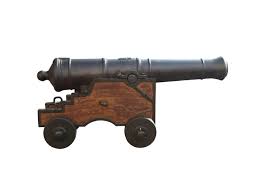
When a cannon fires a cannonball we observe Newton's third law. Which force is the reaction force?
a)
The cannon moving forward
b)
The cannonball moving forward
c)
The cannon moving backward
d)
The cannonball moving backward
98.
What is the difference between mass and weight?
a)
mass is how much matter is in an object, and weight is the gravitational pull on that object
b)
mass and weight are the same
c)
weight affects how much mass is in an object
d)
weight is determined by how many atoms make up an object
99.
The SI units of force are measured in 
a)
Grams
b)
Newtons
c)
Pounds
d)
Kilograms
100.
A pencil is being pulled to a table with 2 N of force from gravity. The table provides 2N of force back on the pencil. Which statement is true? 
a)
The net force on the pencil is 4N 
b)
The net forces on the pencil are balanced 
c)
The force of gravity is stronger than the force of the table 
d)
The pencil should be moving
101.
Which is an example of Newton's third law about action and reaction forces? 
a)
A rocket takes off from the ground
b)
A book slides forward when the car stops
c)
A heavier ball falls at the same speed as a lighter ball 
d)
A vehicle will slow down as it curves
102.
8 N to the left , and 4 N to the right. Find the net force. Is this balanced 
a)
12 N Right  No
b)
4 N Left  No
c)
12 N Right  Yes
d)
4 N Left  Yes
103.
With unbalanced forces, the object will move in the direction of the _______ force.
a)
larger 
b)
smaller 
c)
equal 
104.
A magician pulls a tablecloth out from under dishes and glasses on a table without disturbing them.
a)
Newton's 1st Law
b)
Newton's 2nd Law
c)
Newton's 3rd Law
105.
When you step on a Lego. You push on the Lego and the Lego pushes back on you.
a)
Newton's 1st Law
b)
Newton's 2nd Law
c)
Newton's 3rd Law
106.
"An object in motion (or at rest) will to stay in motion (or at rest) until an outside force acts upon it."
a)
Newton's 1st Law
b)
Newton's 2nd Law
c)
Newton's 3rd Law
d)
Newton's 4th Law
107.
Force = Mass x Acceleration
a)
Newton's 1st Law
b)
Newton's 2nd Law
c)
Newton's 3rd Law
d)
Newton's 4th Law
108.
"For every action, there is an equal and opposite reaction."
a)
Newton's 1st Law
b)
Newton's 2nd Law
c)
Newton's 3rd Law
d)
Newton's 4th Law
109.
"For every action, there is an equal and opposite reaction."
a)
Newton's 1st Law
b)
Newton's 2nd Law
c)
Newton's 3rd Law
d)
Newton's 4th Law
110.
In the picture, the blocks are flying out of the truck based on which of Newton's laws?
a)
Newton's 1st Law
b)
Newton's 2nd Law
c)
Newton's 3rd Law
d)
Newton's 6th Law
111.

Which law explains why when you put a book on a table the table pushes on the book?

a)

3rd law

b)

4th law

c)

1st law

d)

2nd law

112.

Gina and Mike are dragging a toy box across the floor. Gina's toy box has a mass of 10 kg and Mike's toy box has a mass of 12 kg. If both Gina and Mike exert the same force on each toy box, which one will accelerate more SLOWLY according to Newton's 2nd Law?

a)

Gina's toy box

b)

Mike's toy box

113.

According to Newton’s second law of motion, force equals mass times ________.

a)

velocity

b)

inertia

c)

acceleration

d)

mass

114.

When you push on a door, the door pushes back with an equal and opposite force. These two forces are known as _________________________.

a)

mass & velocity force pairs

b)

unbalanced force pairs

c)

mass & acceleration force pairs

d)

action/reaction force pairs

115.
F=ma
a)
Newton's
1st
Law of Motion
b)
Newton's
2nd
Law of Motion
c)
Newton's
3rd
Law of Motion
116.

What is an example of Electric Energy

a)

Apple

b)

Rubber Bands

c)

Car Battery

d)

Table

117.

Which statement is true?

a)

Oranges contain Elastic Energy

b)

Food contains Chemical Energy

c)

Phone on the table doesn't contain Gravitational Energy

d)

Radiator contains Nuclear Energy

118.

How many types of energy are there?

a)

5

b)

6

c)

7

d)

8+

119.

What is the definition of Elastic Energy?

a)

Energy stored in the nucleus of the atoms hold the nucleus together

b)

Energy stored in an object by the application of force

c)

Movement of objects or substances from one place to another

d)

The energy an object or substance has because of its position up high

120.

Which is Potential Energy?

a)

Radiant Energy

b)

Mechanical Energy

c)

Chemical Energy

d)

Sound Energy

121.

Which 2 types of energy does the object in the image use?

a)

Electric and Thermal

b)

Nuclear and Elastic

c)

Chemical and Mechanical

d)

Sound and Elastic

122.

Which is Kinetic Energy?

a)

Gravitational Energy

b)

Thermal Energy

c)

Elastic Energy

d)

Nuclear Energy

123.

Energy is found in many different forms, but it can be classified into two distinct categories: kinetic energy and ________________ energy.

a)

electrial

b)

potential

c)

radiant

d)

thermal

124.

Heat is another name for

a)

thermal energy

b)

electrical energy

c)

mechanical energy

d)

gravitational energy

125.

What is an object’s total amount of energy called?

a)

total energy

b)

potential energy

c)

mechanical energy

d)

kinetic energy

126.

A __________________ is the the substance through which sound travels.

a)

medium

b)

conduct

c)

stored

d)

potential

127.

_________________ energy is stored in the bonds of compounds.

a)

Electrical

b)

Heat

c)

Radiant

d)

Chemical

128.
Which of the following energy transformations occur when a lamp that is plugged into a wall socket is functioning correctly?
a)
Chemical to light
b)
Electrical to chemical
c)
Electrical to light
d)
Chemical to electrical
129.
Which of the following shows an energy transformation from chemical energy to electrical to light energy?
a)
A bolt of lightning lights the night sky.
b)
A candle glows brightly in the dark.
c)
A fire in a fireplace lights up a room.
d)
A battery causes a flashlight to shine.
130.
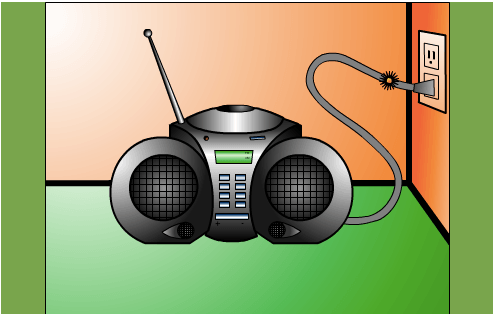
What energy transformations take place when a battery-operated radio is in use?
a)
Electrical to chemical to light
b)
Sound to chemical to mechanical
c)
Chemical to electrical to sound
d)
Light to electrical to thermal
131.
People get energy from the food that they eat and transform that energy as they move. Which energy transformations occur as a student rapidly rubs the palms of his hands together?
a)
mechanical to thermal to electrical
b)
chemical to mechanical to thermal
c)
mechanical to chemical to sound
d)
chemical to sound to electrical
132.
People get energy from the food that they eat and transform that energy as they move. Which energy transformations occur as a student rapidly rubs the palms of his hands together?
a)
mechanical to thermal to electrical
b)
chemical to mechanical to thermal
c)
mechanical to chemical to sound
d)
chemical to sound to electrical
133.
A television works by transforming electrical energy into what other kinds of energy?
a)
Light, thermal, and sound
b)
Thermal, chemical, and solar
c)
Sound, mechanical, and electrical
d)
Light, chemical, and mechanical
134.
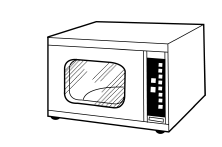
The picture shows a microwave oven. As a microwave oven is operated, electrical energy is transformed into all of the following types of energy EXCEPT —
a)
solar
b)
light
c)
thermal
d)
mechanical
135.
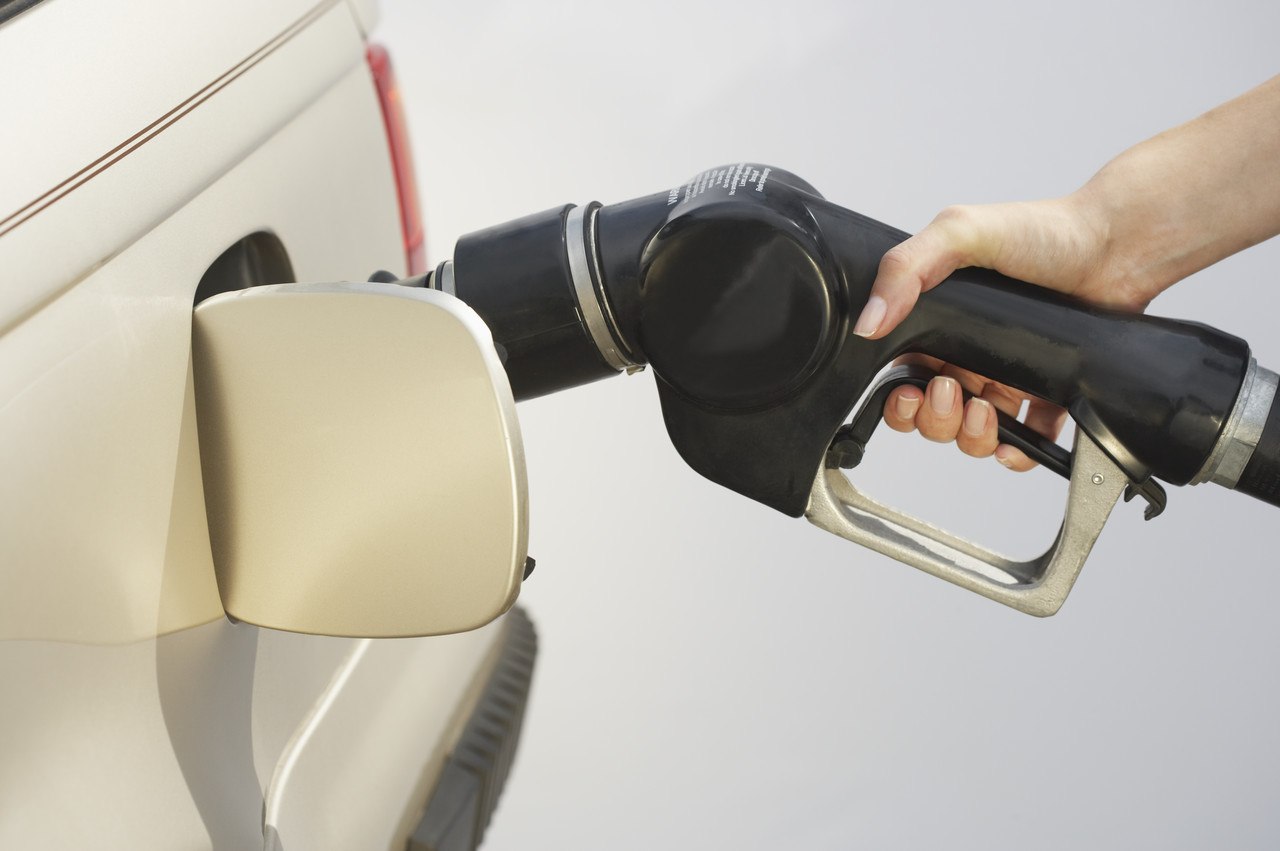
Which energy conversion is taking place when you put gasoline in a car?
a)
thermal -> electrical
b)
mechanical -> electrical
c)
chemical -> mechanical
d)
mechanical -> electromagnetic
136.

What type of energy transformation occurs, when a hawk eats a mouse and then uses the energy from the mouse to fly?

a)

mechanical energy to chemical energy

b)

thermal energy to mechanical energy

c)

chemical energy to mechanical energy

d)

mechanical energy to thermal energy

137.
Which of the following energy transformations occur when a lamp that is plugged into a wall socket is functioning correctly?
a)
Chemical to light
b)
Electrical to chemical
c)
Electrical to light
d)
Chemical to electrical
138.
A hairdryer converts -- 
a)
electrical energy into chemical
b)
electrical energy into thermal
c)
chemical energy into mechanical
d)
thermal energy into mechanical
139.

What kind of energy is represented in the picture?

a)

Thermal

b)

Chemical

c)

Sound

d)

Kinetic

140.

What energy transformation occurs when a crock pot is plugged into an outlet and then the control knob is turned "on"?

a)

thermal to electrical

b)

mechanical to thermal

c)

electrical to thermal

d)

electrical to sound

141.

What type of energy is electrons flowing through a wire?

a)

Electrical energy

b)

Chemical energy

c)

Kinetic energy

d)

Mechanical energy

142.

What type of energy is stored in batteries or food?

a)

Potential energy

b)

Thermal energy

c)

Chemical energy

d)

Mechanical energy

143.

Energy that transfers heat is?

a)

Thermal energy

b)

Potential energy

c)

Mechanical energy

d)

Kinetic energy

144.
According to the Law of Conservation of Energy, energy cannot be _________ or ____________. 
a)
destroyed, destroyed
b)
created, saved
c)
created, destroyed
d)
lost, found
145.
Mechanical energy
a)
energy built up before being in motion
b)
energy released in a chemical reaction
c)
energy of motion
d)
sum of kinetic and potential energy
146.
What is energy changing from one form to another?
a)
energy conservation
b)
energy transformation
c)
energy creation
d)
mechanical energy
147.
Which items would have this energy transformation: light energy -> chemical energy?
a)
tree growing fruit
b)
person running
c)
solar calculator
d)
windmill turning
148.

The picture showing the energy conversion

Chemical → kinetic

is:

a)
b)
c)
d)
149.

The picture showing the energy conversion

Electrical → light

is:

a)
b)
c)
d)
150.
A device that converts electrical energy to light energy.
a)
A blender
b)
A light bulb
c)
A bicycle
d)
A balloon
151.
The ability to do work.
a)
Energy
b)
Matter
c)
Weight
d)
Volume
152.

What is the energy conversion when you plug in a stereo and listen to music?

a)

electrical to mechanical

b)

chemical to heat

c)

electrical to sound

d)

potential to sound

153.

Which of the following shows balanced forces ?

a)

A car that is pushed from opposite sides with equal force

b)

Kicking a soccer ball

c)

A turning vehicle

d)

Apple falling on the ground

e)

None of the above

154.

Two mules are pulling a cart. One mule pulls the cart with a 540 N force to north while the other mule pulls with a force of 320 N to the north. What is the net force on the cart?

a)

220N south

b)

860N North

c)

220N North

d)

360 South