
 Worksheets
Year 8 Quiz
Total questions: 87
Worksheet time: 5hrs 7mins
Example of transparent object
wood
tissue paper
clear water
when the distance of the screen from the pinhole is increased, the size of the image __________
increases
decreases
no change
Image formed by a pin hole camera is
real
virtual
inverted
smaller in size
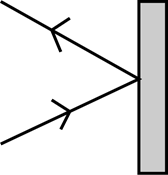
In the illustration, the light ray striking the object is-


What happens when a beam of light hits a solid object?
The light passes through it
All the light is absorbed
A shadow forms
All the light is reflected
Which image CORRECTLY shows how light behaves when it travels from air through glass?


Eyeglasses bend light to help the image form properly on the retina. The bending of light as it passes from one medium to another is called
diffraction
interference
reflection
refraction


What type of lens is wider in the middle than on the edges?
Concave
Convex
Objective
Ocular
The point at which light rays converge after passing through a convex lens is called __________.
The Horizon Point
The Point Break
The Focal Point
The Perspective
On Earth the __________ field strength is 10 N/kg.
kinetic
magnetic
gravitational
elastic

Look at the image. What does 'W' stand for and how is it measured?
Weight and in Newtons per Kg (N/Kg)
Weight and in Kilograms (Kg)
Weight and in Newtons (N)
Look at the image. What does 'g' stand for and how is it measured?
Gravitational field strength and in Newtons per Kg (N/Kg)
Gravitational field strength and in Kilograms (Kg)
Gravitational field strength and in Newtons (N)
Look at the image. Which equation would I use to calculate Weight?
W = g / m
W = m x g
W = m / g

A cat on Earth has a mass of 2 kg. What is it's weight?
2N
20kg
2kg
20N
A toolbox on Earth has a weight of 300N.
Calculate the mass.
3000kg
30kg
30g
30N

Forces can ...
Stretch
Compress
Deform
Smell
The amount a spring or bungee cord can stretch is called
push
squash
extension
contact
Which of the following are contact forces?
Magnetic force
Friction
Electrostatic force
Air resistance
How can a force deform an object?
compress
stretch
tension
extension
weight (N) =
mass (kg) / gravitational field strength (N/kg)
mass (kg) x gravitational field strength (N/kg)
gravitational field strength (N/kg) / mass (kg)
gravitational field strength (N/kg) x mass (kg)
Who said "For every action there is an equal and opposite reaction"
Isaac Newton
Robert Hooke
Carl Linnaeus
Gregor Mendel


In the Earth's mantle, heat is transferred in large convection currents. Within these currents;
cooler and hotter rock rise but do not sink
hotter rock rises and hotter rock sinks
hotter rock rises and cooler rock sinks
hotter and cooler rock sink but do not rise

Which of the following lists Earth's compositional layers starting with Earth's center and ending with the outermost layer.
mantle, crust, core
crust, mantle, core
crust, core, mantle
core, mantle, crust.
The surface of Earth is about ________ water and _____ land
90%/10%
50%/50%
75%/25%
water does not exist on Earth
Iron + copper oxide =
Iron + copper oxide
Iron oxide + copper oxide
Iron oxide + copper
Magic

Which of the following is more reactive?
Calcium
Magnesium
Zinc
Magnesium
True or false? Chemical reactions are easily reversible
True
False
In a word equation, the starting chemicals are called...
reactants
products
ingredients
Sometimes, compounds can be broken down into simpler substances. What type of reaction is this?
combustion
oxidation
decomposition
displacement
When energy is transferred from the substances to the surroundings during a chemical reaction, what type of reaction is this?
endothermic
exothermic
decomposition
combustion
Which is NOT an example of something you could observe that would suggest a chemical reaction is taking place?
melting
fizzing
smells
temperature change
In this chemical reaction, which is the product/s?
Magnesium + Oxygen --> Magnesium oxide
magnesium
magnesium and oxygen
magnesium oxide
oxygen
What is the scientific term given when something burns?
a fuel
flammable
combustion
heating
What does a fuel need in order to burn?
fuel
electricity
oxygen
hydrogen
In the thermal decomposition of calcium carbonate:
Calcium carbonate --> Calcium oxide + ?
HINT: gas
oxygen
calcium
carbon monoxide
carbon dioxide
What is the conservation of mass?
mass of reactants > mass of products
mass of reactants < mass of products
mass of reactants = mass of products
What is the equation involving speed, distance and time?
Speed = Distance / Time
Speed = Distance x Time
Speed = Time / Distance
Speed = Time x Distance
Which of these isn't a unit for speed?
m/s
km/h
mph
km
A runner runs 100m in 10s, what is their speed?
10 m/s
10
1000 m/s
0.1 m/s
Using speed and time, how do you calculate distance?
Distance = speed x time
Distance = speed / time
Distance = time / speed
Distance = speed + time
Using speed and distance, how do you calculate time taken?
Time = distance / speed
Time = speed / distance
Time = speed x distance
Time = distance x speed
True or false. The steeper the line on a distance/time graph, the quicker the object is moving.
True
False
What is the definition of speed?
Speed is a measure of how fast an object is moving
Speed is a numerical description of how far apart two things are
Speed is the change in position with time of one object compared to another object
What is accelerating?
Increasing speed
Constant speed
Decreasing speed
What is decelerating?
Increasing speed
Constant speed
Decreasing speed
What is the equation involving force, mass and acceleration?
F = m x a
F = m / a
F = a / m
F = m + a

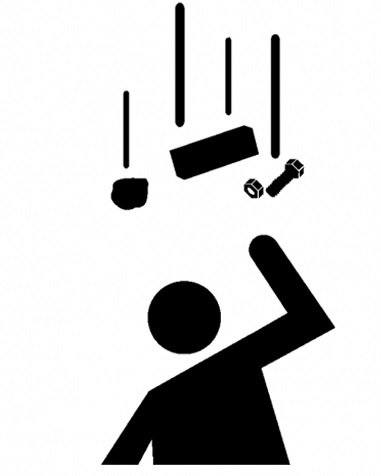
An object is falling downward through Earth's atmosphere. In which direction is the air resistance force?
Down
Up
Around the object
Through the object

Which two of these forces act on parachutes?
Air Resistance
Gravity
Thrust
Kinetic Energy
Another name for air resistance is...
Buoyancy
Streamline
Gravity
Drag

The larger the surface area of the moving object, the ___________ air resistance there is.
Less
More
Longer
Quicker
Air resistance pushes against falling
objects and __________________.
Speeds them up
Keeps them afloat
Slows them down
Spins them
The larger the parachute the ____________
Less air resistance
More surface tension
Less drag
More drag

Air resistance is a force caused by...
Water pushing against moving objects
Air pushing against moving objects
Gravity pushing against moving objects
Normal force pushing against moving objects

