wayground logo

Free Printable Worksheets

Font size

S
M
L
XL
Worksheets

Jackson Biology Midterm

Total questions: 129

Worksheet time: 2hrs 5mins

Name
Class
Date
1.
According to the food web, which of the following organisms can be classified into more than one trophic level? 
a)
grasshopper
b)
owl
c)
rabbit
d)
frog
2.
Based on the food web shown above, which of the following is most likely responsible for the rabbit population trend as shown in the graph? 
a)
increase in amount of grass
b)
decrease in amount of grass
c)
overpopulation in squirrel population
d)
increase in rabbit population
3.

Tell if the item is an abiotic factor or biotic.....

TREE

a)

Abiotic

b)

Biotic

4.

Tell if the item is an abiotic factor or biotic.....

Water

a)

Abiotic

b)

Biotic

5.
Abiotic factors in the environment are all __________. 
a)
living
b)
nonliving
6.

Algae, grasses and trees are all __________.

a)

decomposers

b)

consumers

c)

producers

d)

pyramids

7.

What is the definition of an ecosystem?

a)

A group of animals of the same species living in the same place.

b)

All the plants and animals living in the same place.

c)

All organisms living in the same place and the abiotic factors that affect them.

8.
The efficiency of energy transfer from a lower trophic level to the next highest level is roughly
a)
1%
b)
10%
c)
100%
d)
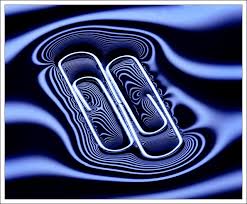
1000%
9.
The arrows in a food chain or web represents what?
a)
They point to the organism that is being eaten.
b)
It shows how sunlight flows within an ecosystem.
c)
They show what direction the energy is flowing between organisms. 
d)
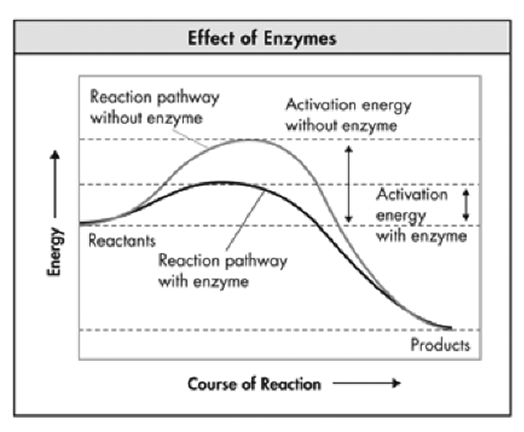
They represent how water is transferred within a habitat.
10.
What is the factor that an experimenter changes on purpose?
a)
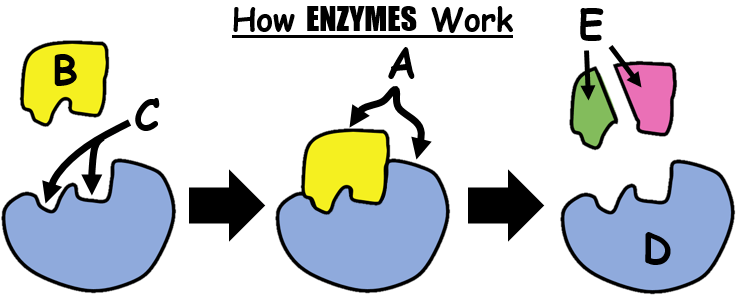
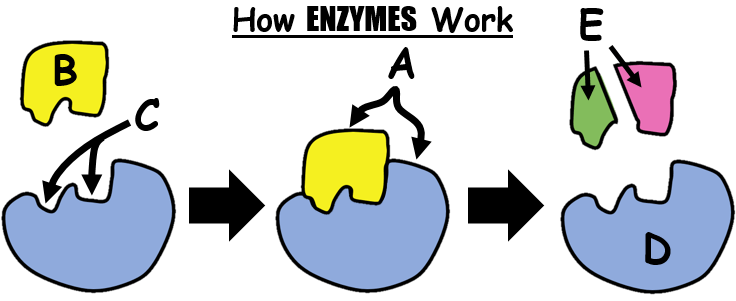
Dependent Variable
b)
Independent Variable
c)
Constant
d)
Control
11.
What is a factor that is measured for change in an experiment?
a)
control
b)
constant
c)
independent variable
d)
dependent variable
12.
If plants receive more water, the number of leaves will increase. 
This is an example of 
a)
Testable Question
b)
Hypothesis
c)
Variables
d)
None of the above
13.
The variable in an experiment deliberately changed by the scientist. The variable being tested.
a)
dependent variable
b)
independent variable
c)
data
d)
control group
14.

What step occurs after you form a hypothesis?

a)

research topic

b)

test a hypothesis

c)

analyze data

15.

What is the last step in the scientific method?

a)

conclusion & communicate results

b)

ask a question

c)

form a hypothesis

16.

Select which of the following are quantitative? (Select all that apply)

a)

14 desks

b)

blue sky

c)

4 books

d)

sad girl

17.
The amount of matter in an object is 
a)
pressure
b)
weight
c)
mass
d)
force
18.
What is the definition of "weight"?
a)
measure of the force of gravity on your body
b)
the time it takes to get on a ride 
c)
the amount of matter in an object
d)
the size of an object
19.
What is one way in which all living things on Earth are alike?
a)
All living things have hair.
b)
All living things are made of cells and come from other cells.
c)
The cells of all living things have chloroplast.
d)
All living things can move. 
20.

Which of the following is the correct order of organization in living things from most basic (simple) to most complex?

a)

organism, cell, tissue, organ, organ system

b)

organ system, organ, tissue, cell, organism

c)

cell, tissue, organ, organ system, organism

d)

cell, organ, tissue, organism, organ system

21.

The largest number of individuals that an environment can support long term is...

a)

carrying capacity

b)

emigration

c)

immigration

d)

population density

22.

______________ means moving into a population.

a)

Immigration

b)

Emmigration

c)

Plantation

d)

Repopulation

23.
When organisms move out of the population, this is known as
a)
emigration
b)
abandonment
c)
immigration
d)
succession
24.
What is the name of an animal that is hunted and eaten by other animals?
a)
producer
b)
prey
c)
predator
d)
decomposer
25.
What is the order of succession shown in this figure?
a)
A, B, C, D
b)
B, A, D, C
c)
C, D, A, B
d)
D, A, B, C
26.
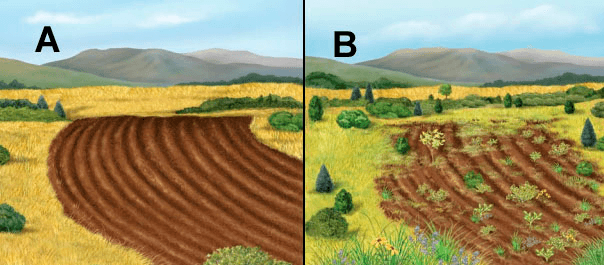
What type of succession is shown going from figure A to figure B?
a)
primary succession
b)
ecological succession
c)
secondary succession
d)
intermediate
27.
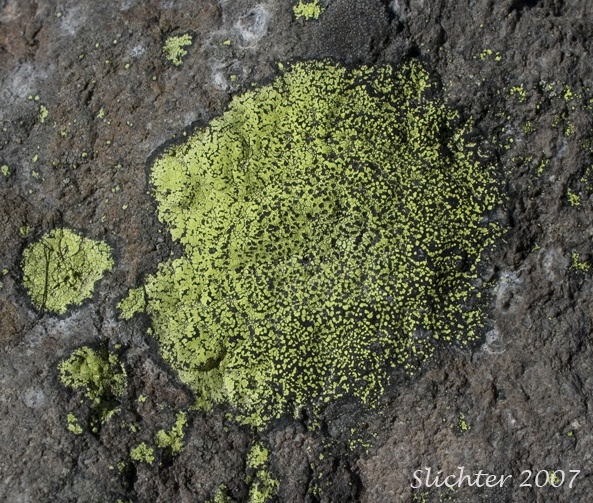
What is the name given to lichen or algae after a primary succession?
a)
pioneer species
b)
volunteer species
c)
founder species
d)
conqueror species
28.
What is the difference between a primary vs. secondary succession?
a)
secondary occurs where there was no previous community
b)
they are the same
c)
secondary occurs in an area that was only partially destroyed
d)
primary ocurs in an area that was only partially destroyed
29.

Mark all the organisms that are considered producers

a)
b)
c)
d)
e)
30.

Mushrooms often grow around dead plants such as decomposing trees. They break down these dead organisms and put energy that stores in the plant back into the ground for other plants to use. What type of consumer are mushrooms?

a)

carnivore

b)

omnivore

c)

herbivore

d)

decomposer

31.

What is the difference between heterotroph and autotroph?

4 lines
32.
What is a producer?
a)
an organism that gets energy from eating other organisms
b)
an organisms that uses sunlight to make its own food
c)
an organism that gets energy from eating dead organisms, non-living material or waste
33.
What is a carnivore?
a)
an animal that gets energy by eating other animals
b)
An animal that gets energy by eating only plants
c)
an animal that gets energy by eating both plants and animals
34.

A connection of food chains with many food energy paths in an ecosystem is a ____________

a)

ecosystem

b)

food web

c)

environment

35.
Which biome is characterized by low temperatures and low amounts of rainfall?
a)
tundra
b)
desert
c)
temperate deciduous forest
d)
tropical rain forest
36.
Which biome, because of its climate, has the largest number of species of plants and animals?
a)
tundra
b)
desert
c)
tropical rainforest
d)

chaparral

37.
Which major biome is home to cacti, mesquite, white thorn, pack rats, small reptiles, and coyotes?
a)
desert
b)
taiga
c)
tundra
d)
grassland
38.
Northern biome with many coniferous trees; very cold temperatures in the winter months.
a)

Boreal Forest

b)

Tundra

c)

Desert

d)

Temperate Rainforest

39.
Which is NOT a process of the water cycle?
a)
precipitation
b)
freezing
c)
transpiration
d)
evaporation
40.
The process of plants losing water through their leaves is called ____.
a)
condensation
b)
evaporation
c)
transpiration
d)
exhaling
41.
Respiration is the process by which ____________ is consumed and _______________ is produced.
a)
Carbon, Oxygen
b)
Oxygen, Carbon dioxide
c)
H20, oxygen
d)
Carbon, H2O
42.
What is the energy source for the water cycle?
a)
the sun
b)
the earth
c)
water
d)
the moon
43.

Pick the description below that you feel best describes your understanding of "combustion reactions" prior to this mini lesson.

a)

I already everything about combustion reactions!

b)

I sort of know what a combustion reaction is.

c)

I don't know anything at all about combustion reactions.

44.

What two items are included in the products of a combustion reaction?

a)

Heat and Light

b)

Water and Silver

c)

Neon and Lithium

d)

Heat and Cold

45.

Which two of the following examples would be considered a combustion reaction. Choose the two best answers.

a)

a car engine burning gas

b)

mixing vinegar and baking soda

c)

burning coal 

46.

Most combustion reaction depend on oxygen. True of False?

a)

True

b)

False

47.

Critical thinking question: What element needs to be taken away from a fire for it to die out? Does this match one of the parts needed for a combustion reaction to take place?

4 lines
48.

Which of the following processes in the nitrogen cycle is where decomposers break down animal and plant proteins (from dead organisms) and waste to release energy, releasing a form of ammonium into the soil.

a)

NITROGEN-FIXATION

b)

DECOMPOSITION

c)

NITRIFICATION

d)

DINITRICATION

49.

Which of the following processes in the nitrogen cycle is a process that converts atmospheric nitrogen into ammonia, which is absorbed by organisms. Performed by nitrogen-fixing bacteria.

a)

NITROGEN-FIXATION

b)

DECOMPOSITION

c)

NITRIFICATION

d)

DINITRICATION

50.

Which abiotic cycle includes lightning?

a)

water cycle

b)

carbon cycle

c)

nitrogen cycle

51.

Which TWO ways can atmospheric Nitrogen be fixed -

[select TWO]

a)

nitrogen-fixing bacteria

b)

lightning

c)

decomposers

d)

plants

52.
In the water cycle, the sun provides
a)
energy for water to evaporate from oceans, lakes and rivers.
b)
water for evaporation to happen. 
c)
energy to produce electricity. 
d)
water for condensation to happen. 
53.
During which stage do clouds form?
a)
condensation
b)
evaporation
c)
precipitation
54.
What is it called when plants give off water vapor as a waste product?
a)
condensation
b)
evaporation
c)
sublimation
d)
transpiration
55.

The image shows various stages in the water cycle. During which stage does water flow back towards the sea as runoff?

a)

W

b)

X

c)

Y

d)

Z

56.
Snow, sleet, hail, and rain are all examples of  ________________. 
a)
evaporation
b)
condensation
c)
accumulation
d)
precipitation
57.
The formula for glucose is...
a)
C12 H22 O11
b)
NaCl
c)
NaOH
d)
C6 H12 O6
58.
Energy is released from ATP when
a)
a phosphate group is added
b)
adenine bonds to ribose
c)
ATP is exposed to sunlight
d)
a phosphate group is removed
59.
What are the products of photosynthesis?
a)
water and carbon dioxide
b)
oxygen and glucose
c)
oxygen and carbon dioxide
d)
oxygen and water
60.

A family of plants including beans, alfalfa, and peas, most of which harbor symbiotic, nitrogen-fixing bacteria in nodules in their roots.

a)

producers

b)

legumes

c)

prokaryotes

d)

tubers

61.

Which process releases nitrogen gas back into the atmosphere?

a)

ammonification

b)

dentirification

c)

nitrificaiton

d)

nitrogen fixation

62.

Where does photosynthesis occur?

a)

mitochondria

b)

chloroplast

c)

animal cells

d)

ribosomes

63.
This process releases chemical energy from sugars and other carbon-based molecules to make ATP when oxygen is present.
a)
photosynthesis
b)
light-independent reaction
c)
cellular respiration
d)
light-dependent reaction
64.
What is the correct equation for cellular respiration?
a)
6O2 + C6H12O6 -> 6CO2 + 6H2O + Energy
b)
6O2 + C6H12O6 + Energy -> 6CO2 + 6H2O
c)
6CO2 + 6H2O -> 6O2 + C6H12O6 + Energy
d)
6CO2 + 6H2O + Energy -> 6O2 + C6H12O6
65.

What do we call the curve on the surface of a liquid in a graduated cylinder?

a)

Apex

b)

Meniscus

c)

Parabola

d)

Hyperbole

66.
What are the 4 most abundant elements in living things?
a)
hydrogen, oxygen, nitrogen, carbon
b)
hydrogen, helium, oxygen, carbon
c)
carbon, manganese, iron, hydrogen
67.
The element _______is found in all of the organic compounds.
a)
Iron
b)
Nitrogen
c)
Carbon
d)
Oxygen
68.
___________ are many monomers bonded together that form a larger molecule.
a)
Polymers
b)
Monomers
c)
Trinominers
d)
DNA
69.
Which biomolecule contains fats, oils, and waxes?
a)
Proteins
b)
Nucleic Acid
c)
Lipids
d)
Carbohydrate
70.
What two elements make up water?
a)
Helium and oxygen
b)
Hydrogen and oxygen
c)
helium and carbon
d)
oxygen and carbon
71.

The chemical bond formed when two atoms share electrons is call a(n)

a)

covalent bond

b)

ionic bond

c)

metallic bond

d)

electron bond

72.

An ionic bond is formed when

a)

Valence electrons are shared.

b)

Valence electrons surround the cations.

c)

Valence electrons are transferred between atoms.

d)

Valence electrons are completely transferred between two metals.
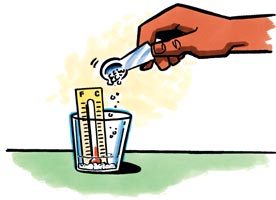
73.
In an endothermic reaction, heat is ...
a)
taken in or absorbed
b)
given out or released 
74.
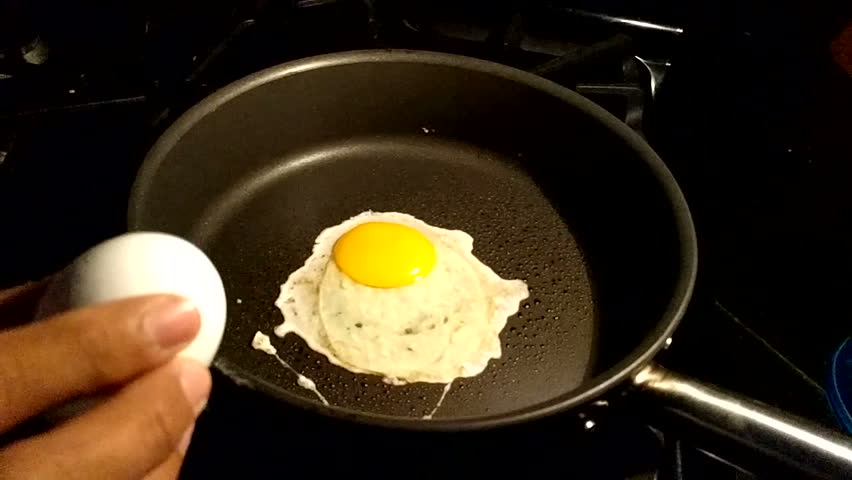
Baking bread and cooking an egg are examples of....?
a)
Endothermic processes
b)
Exothermic processess
c)
None of these 
75.
Exothermic reactions...
a)
Absorb energy
b)
Release energy
c)
Release Color
d)
Absorb Color
76.
Which end of the water molecule has a slightly positive charge?
a)
the oxygen end
b)
the hydrogen end
c)
both ends are slightly positive
d)
neither end is positive
77.
What word describes when water is attracted to other substances?
a)
cohesion
b)
adhesion
c)
capillary action
d)
surface tension
78.
When water molecules stick easily to other water molecules, this is called what?
a)
cohesion
b)
adhesion
c)
solution
d)
polar molecule
79.
Water beads up on the surface of a penny because of what property?
a)
Adhesion
b)
High Surface Tension
c)
Universal Solvent
d)
Changes in Density
80.
The fact that ice floats on liquid water is due to the fact that water's solid is ___________ than it's liquid form
a)
less polar
b)
more polar
c)
less dense
d)
more dense
81.
The tightness across the surface of water that enables paper clips to float is ____________.
a)
adhesion
b)
capillary action
c)
surface tension
d)
polarity
82.
Which statement explains why water molecules stick together?
a)
both sides are negative
b)
one side has a positive charge and the other side has a negative charge
c)
one side has a negative charge adn the other side has a neutral charge
d)
both sides are positive
83.

What is Cohesion?

a)

Water molecules ability to stick to each other

b)

Water molecules ability to stick to other surfaces

c)

Water molecules ability to conduct electricity

d)

Water molecules ability to melt

84.

What is the amount of heat required to raise the temperature of one gram of a substance by one degree Celsius?

a)

Surface Tension

b)

Density

c)

Polarity

d)

Specific Heat Capacity

85.

What is the molecular structure of water?

a)

1 Hydrogen

2 Oxygen

b)

1 Hydrogen

1 Oxygen

c)

2 Hydrogen

2 Oxygen

d)

2 Hydrogen

1 Oxygen

86.

What is the movement of water within the spaces of a porous material due to the forces of adhesion, cohesion, and surface tension

a)

Malleability

b)

Conductivity

c)

Freezing Point

d)

Capillary Action

87.

What water phenomenon can be observed in this photo?

a)

Water dissolving

b)

Capillary Action

c)

Chemical Reaction

d)

Photosynthesis

88.
If you dissolve blue paint powder into water, the paint powder is the...
a)
ion
b)
solute
c)
solution
d)
solvent
89.
When water travels up the stem of a plant, this is a result of
a)
surface tension
b)
capillary action and adhesion
c)
capillary action and cohesion
d)
capillary action, cohesion and adhesion
90.
A high specific heat means...
a)
It heats up quickly with energy added
b)
It requires more energy to change temperature
91.
The graph shows how enzymes affect reactions in cells. Which statement best summarizes the information shown in the graph?
a)
Enzymes increase the energy of the reactants.
b)
Enzymes decrease the energy level of the products.
c)
Enzyme decrease the activation energy of the reaction.
d)
Enzymes reverse the direction of the reaction.
92.
What happens when enzymes are heated to a high temperature?
a)
The enzymes die.
b)
The shapes of the enzyme are altered denature
c)
The enzymes' amino acid sequence changes.
d)
The enzymes remain the same
93.

Enzymes are

a)

Lipids

b)

Protein

c)

Carbohydrates

d)

Nucleic Acids

94.

Enzymes are responsible for-

a)

Speeding up reactions

b)

Giving the body energy

c)

Slowing down reactions

95.

Letter D...

a)

active site

b)

enzyme

c)

substrate

d)

products

96.

Letter B...

a)

active site

b)

enzyme

c)

substrate

d)

products

97.

Letter c...

a)

active site

b)

enzyme

c)

substrate

d)

products

98.

What is a substance called if it speeds up a chemical reaction?

a)

reusable

b)

catalyst

c)

specific

d)

fragile

99.

Example(s) of Lipids are...

a)

Sugar

b)

Olive Oil

c)

Butter

d)

Bread

100.

The building blocks or monomers of carbohydrates (sugars) are?

a)

amino acids

b)

fatty acids

c)

monosaccharides

d)

nucleotides

101.

What are the building blocks or monomers for proteins?

a)

monosaccharides

b)

fatty acids

c)

DNA

d)

amino acids

102.
A good example of a nucleic acid would be?
a)
sugar
b)
DNA
c)
fat
d)
glucose
103.

Amino Acids

a)

carbohydrates

b)

lipids

c)

proteins

d)

nucleic acids

104.

Nucleotide

a)

carbohydrate

b)

lipid

c)

protein

d)

nucleic acid

105.

Forms the cell membranes?

a)

lipids

b)

carbohydrates

c)

proteins

d)

nucleic acids

106.
Organic compounds are always based on what element?
a)
hydrogen
b)
water
c)
carbon
d)
arsenic
107.
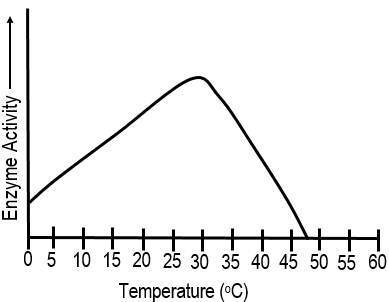
Based on the graph, what temperature does this enzyme work best? 
a)
15 C
b)
40 C
c)
30 C
108.
There are _____ different kinds of amino acids.
a)
20
b)
23
c)
46
d)
26
109.
There are _____ different kinds of amino acids.
a)
20
b)
23
c)
46
d)
26
110.
If you change the shape of a protein, will it work the same/properly?
a)
Yes
b)
No
111.
The order of the amino acids occur in the chain
a)
disulfide cross-link
b)
hydrophobic
c)
primary structure
d)
secondary structure
112.

Which of the following distinguishes prokaryotic and eukaryotic cells?

a)

The presence of a nucleus

b)

The presence of ribosomes

c)

The presence of a cell wall

d)

The presence of genetic material

113.

Which cell type has the highest degree of complexity?

a)

Archaebacteria

b)

Eubacteria

c)

Eukaryotes

d)

Prokaryotes

114.
Prokaryote are?
a)
simple, mostly single-celled organism that lacks a nucleus, or any other membrane-bound organelle.
b)
have a peptidoglycan cell wall and many have polysaccharide capsules.
c)
have a true nucleus, which means the cell's DNA is surrounded by a membrane.
d)
contain membrane-bound organelles, such as the nucleus
115.
Plants and animal cells are examples of ___ cells 
a)
prokaryotic cells 
b)
eukaryotic cells 
116.
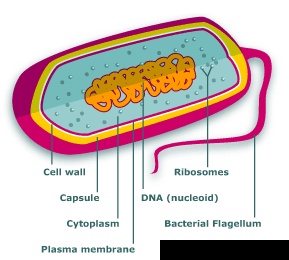
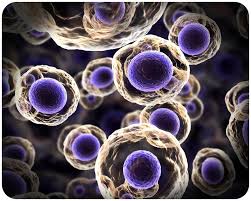
Which type of cell?
a)
Prokaryote
b)
Eukaryote
117.
Unicellular means
a)
single-celled
b)
unicycle
c)
multi-celled
d)
united cells
118.
Who discovered and named cells while looking at cork? 
a)
Captain Hook
b)
Robert Hooke
c)
Zacharias Janssen
d)
Rudolf Virchow
119.
What is the function of the vacuole?
a)
Sac that stores water, nutrients, and waste products
b)
Sac filled with digestive chemicals
c)
Jelly-like substance within the plasma membrane
d)
stack of membranes that packages chemicals
120.
The two kinds of cells are Prokaryotes and Eukaryotes. How are they different?
a)
Prokaryotes have a nucleus.
b)
Eukaryotes have a nucleus.
c)
Prokaryotes are plant cells.
d)
There is no difference.
121.
This small structures break down materials in the cell.
a)
Cholorplasts
b)
Ribosomes
c)
Lysosomes
d)
Golgi Body
122.
Produces energy in the form of ATP for the cell.
a)
chloroplast
b)
mitochondria
c)
ribosome 
d)
nucleus
123.
Selectively permeable barrier that controls what enters and leaves the cell.
a)
cell membrane
b)
cell wall
c)
cytoskeleton
d)
rough ER
124.

What are the two types of cell transport?

a)

Passive and Active

b)

Active and Facilitated

c)

Passive and Facilitated

d)

None of the above

125.

The movement of particles from an area of high concentration to an area of low concentration

a)

active transport

b)

osmosis

c)

diffusion

d)

random movement

126.

The movement of materials that does NOT require energy is called...

a)

active transport

b)

passive transport

c)

massive transport

d)

proactive transport

127.

The movement of materials that requires energy is called...

a)

active transport

b)

passive transport

c)

massive transport

d)

proactive transport

128.

A process in which cells surround and engulf substances that are TOO BIG to enter the cell is known as...

a)

Pinocytosis

b)

Phagocytosis

c)

Endocytosis

d)

Receptor-mediated

129.

When a cell forms a vesicle around unwanted particles and expels it OUT of the cell.

a)

Pinocytosis

b)

Endocytosis

c)

Receptor-mediated

d)

Exocytosis