wayground logo

Free Printable Worksheets

Font size

S
M
L
XL
Worksheets

STATIC ELECTRICITY

Total questions: 72

Worksheet time: 2hrs 37mins

Name
Class
Date
1.
Electrical charge built up on the surface of an object is called _________________.
a)
static electricity
b)
current electricity
c)
lightning
d)
electrons
2.

the positively charged particle in an atom, never leaves the nucleus, determines the element

a)

proton

b)

neutron

c)

electron

3.

the negatively charged particle in an atom, moves freely, can be released, shared, or “stolen” from an atom

a)

proton

b)

neutron

c)

electron

4.

The difference between attraction and repulsion is that to attract is to pull something closer and repel is to push something away.

a)

True

b)

False

5.
If a substance has a higher number of electrons than protons on its surface, what type of charge does it have?
a)
A positive charge.
b)
A negative charge.
c)
A neutral charge
d)
No charge at all
6.

An object that is neutral contains the same number of electrons and protons.

a)

True

b)

False

7.
What types of charges attract?
a)
Positive and Positive
b)
Positive and Neutral
c)
Negative and Neutral
d)
Positive and Negative
8.

What is the major difference between static electricity and current electricity?

a)

Current electricity involves a continuous flow of elecrons; static electricity is a sudden transfer of protons

b)

Current electricity can be deadly; static electricity is almost always safe

c)

In current electricity, there's a single transfer of electrons; in static electricity, there's a steady flow of electrons

d)

Current electricity involves a flow of electrons; static electricity involves a single transfer of electrons
9.

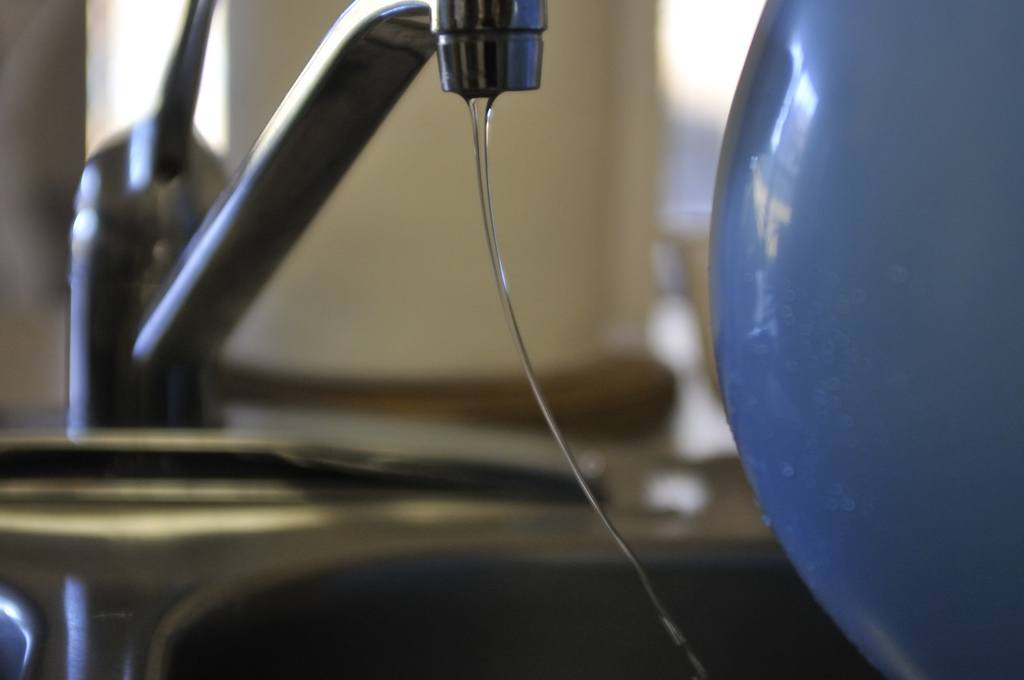
Bending water with a charged balloon is an example of what type of charging (charging an object without touching)

a)

friction

b)

induction

c)

conduction

10.

During a lab a balloon was rubbed with a wooly fabric. This is an example of which type of charging?

a)

conduction

b)

friction

c)

induction

11.

the charging of an object by the contact of a charged object to a neutral object (like touching a door knob)

a)

induction

b)

conduction

c)

friction

12.
If two charges repel each other, the two charges must be
a)
Positive and neutra
b)
Positive and negative
c)
positive and neutral
d)
negative and negative
13.
If you rub a glass rod with a piece of silk, the rod becomes positively charged. This means that
a)
friction destroyed electrons in the rod.
b)
the silk has become negatively charged.
c)
protons have moved to the rod.
d)
glass attracts more protons.
14.
If you bring a charged object near an electrically neutral surface without allowing the object to touch the surface, the charges in the surface are rearranged by
a)
friction.
b)
convection.
c)
induction.
d)
conduction.
15.
Charging by ____ occurs when electrons are transferred from one object to another by direct contact.
a)
reduction
b)
induction
c)
conduction
d)
friction
16.
The buildup of charges on an object is called:
a)
positive charge
b)
static charge
c)
negative charge
d)
static discharge
17.
Which type of charge moves from one object to another to cause static electricity?  
a)
Atom
b)
Proton
c)
Electron
d)
Neutron
18.
The loss of static electricity as electric charges move from one object to another.
a)
Electric field
b)
Electric force
c)
static electricity
d)
static discharge
19.
What method of static charging is shown in this picture
a)
Polarization
b)
Friction
c)
Induction
d)
Conduction
20.
Lightning is _____.
a)
a buildup of neutrons
b)
harmless
c)
a high-voltage electric current
d)
a large discharge of static electricity
21.
What types of charges attract?
a)
Positive and Positive
b)
Positive and Neutral
c)
Negative and Neutral
d)
Positive and Negative
22.
What charge does a proton have?
a)
negative (-)
b)
positive (+)
c)
neutral or no charge (0)
23.
What charge does an electron have?
a)
negative (-)
b)
positive (+)
c)
neutral or no charge (0)
24.
If a substance has a higher number of electrons than protons on its surface, what type of charge does it have?
a)
A positive charge.
b)
A negative charge.
c)
A neutral charge
d)
No charge at all
25.

What happens when you touch a metal doorknob after rubbing your shoes on the carpet?

a)

The doorknob sends a burst of electric current into your body

b)

Millions of electrons go from your finger into the doorknob

c)

The doorknob sends millions of electrons into your finger

d)

Your finger becomes negatively charged

26.

What is static electricity caused by?

a)

A balance of power

b)

A balance of positive and negative charges

c)

A buildup of negative charges in one place

d)

An imbalance of protons and neutrons

27.
An object becomes postiively charged when which of the following occurs?
a)
loses electrons
b)
gains electrons
c)
loses protons
d)
gains neutrons
28.
Which of the following an insulator?
a)
copper
b)
wood
c)
silver
d)
salt water
29.
Lightning is _____.
a)
a buildup of neutrons
b)
harmless
c)
a high-voltage electric current
d)
a large discharge of static electricity
30.

If an object has the same number of positive and negative charges, its electrical charge is...

a)

positive

b)

negative

c)

neutral

d)

opposite

31.
An object becomes charged when the atoms in the object gain or lose
a)
electrons
b)
protons
c)
neutrons
d)
all of the above
32.
If you rub a glass rod with a piece of silk, the rod becomes positively charged. This means that
a)
friction destroyed electrons in the rod.
b)
the silk has become negatively charged.
c)
protons have moved to the rod.
d)
glass attracts more protons.
33.
If you bring a charged object near an electrically neutral surface without allowing the object to touch the surface, the charges in the surface are rearranged by
a)
friction.
b)
convection.
c)
induction.
d)
conduction.
34.
Objects that have opposite charges
a)
are attracted to each other, and the force between the objects pulls them together.
b)
are attracted to each other, and the force between the objects pushes them apart.
c)
are repelled by each other, and the force between the objects pulls them together.
d)
are repelled by each other, and the force between the objects pushes them apart.  
35.
A region around a charged particle that can exert a force on another charged particle is called an
a)
electric pulse.
b)
electric charge.
c)
electric force.
d)
electric field.
36.
Charging by ____ occurs when electrons are transferred from one object to another by direct contact.
a)
reduction
b)
induction
c)
conduction
d)
friction
37.
Which part of Coulomb's Law is always squared?
a)
distance
b)
charge
c)
Coulomb's constant
d)
force
38.
Walking across a carpet is an example of charge being transferred by
a)
friction.
b)
induction.
c)
contact.
d)
static electricity
39.

True or false: Static means unmoving or unchanging

a)

True

b)

False

40.

These allow electrons to pass through them easily

a)

Conductors

b)

Insulators

c)

Atoms

d)

Nucleus

41.

These do NOT allow electrons to pass through them easily

a)

Conductors

b)

Insulators

c)

Atoms

d)

Nucleus

42.

Which of the following is an example of a CONDUCTOR

a)

A metal tube

b)

A cotton shirt

c)

A rubber tire

d)

A wooden bucket

43.

Which of the following is NOT an example of an INSULATOR

a)

A metal tube

b)

A cotton shirt

c)

A rubber tire

d)

A wooden bucket

44.

This is when electrons are rubbed off one object and rubbed onto another

a)

Friction

b)

Conduction

c)

Induction

45.

This is when electrons move from one object to another through touch

a)

Friction

b)

Conduction

c)

Induction

46.

This is when electrons are moved using the force of an electric field.

a)

Friction

b)

Conduction

c)

Induction

47.

This instrument can detect static charges

a)

Magnets

b)

Grounding Objects

c)

Discharge

d)

Electroscope

48.

Grounding neutralizes electric charges by connecting it to the_____

a)

Electroscope

b)

Earth

c)

Tallest building

d)

Ocean

49.

Static discharge is when _____ jump from a charged object to one that is differently charaged

a)

Protons

b)

Neutrons

c)

Electrons

50.

The list of all known atoms in the universe.

(a)  

51.

The number of protons in the nucleus of an atom (two words)

(a)  

52.

This law states that you cannot create or destroy electric charges

a)

The Constitution

b)

Hogwarts

c)

Conservation

53.

Electric charge is _____________.

a)

found only in a conductor

b)

conserved

c)

found only in insulators

d)

not conserved

54.

Two charges exert a force of 40 N on each other. if we cut the distance between them in half, what is the new force they feel?

a)

20

b)

80

c)

160

d)

10

55.

Two charged objects exert a force of 200 N on each other. If one of the charges becomes 3 times bigger, what is the new force?

a)

203

b)

600

c)

66.7

d)

1800

56.
According to Coulomb's law, you can do all of the following to increase the electric force of repulsion EXCEPT
a)
Increase charge 1
b)
Increase charge 2
c)
Decrease the distance
d)
Increase the distance
57.

What are the charges of a proton, neutron, and electron (in order)

a)

positive, negative, neutral

b)

negative, neutral, positive

c)

neutral, positive, negative

d)

positive, neutral, negative

58.

You charge a balloon by rubbing it on your hair. This is an example of what method of charging?

a)

Friction

b)

Conduction

c)

Grounding

d)

Induction

59.

The SI unit of charge is ___________.

a)

the ampere

b)

the newton

c)

the coulomb

d)

the joule

60.

What is the end result of charging two objects by friction?

a)

Object have the same charge, so they will attract one another.

b)

Object have the same charge, so they will repel one another.

c)

Object have opposite charges, so they will attract one another.

d)

Object have opposite charges, so they will repel one another.

61.

What method of charging is shown in this picture?

a)

Contact

b)

Friction

c)

Grounding

d)

Electron Shifting

62.

What is the end result of charging by contact?

a)

Objects have the same charge, so they will attract one another.

b)

Objects have the same charge, so they will repel one another.

c)

Objects have opposite charges, so they will attract one another.

d)

Object have opposite charges, so they will repel one another.

63.

After a balloon is rubbed against wool, the two objects will ________ each other because they have ___________ charges.

a)

attract; like

b)

attract, opposite

c)

repel; like

d)

repel; opposite

64.

Two metal spheres, A and B, have charges of +2.0 x 10⁻⁶ C and +1.0 x 10⁻⁶ C, respectively. The magnitude of the electrostatic force on A due to B is 4.0 N. What is the magnitude of the electrostatic force on B due to A?

a)

2.0 N

b)

4.0 N

c)

8.0 N

d)

1.0 N

65.

Electrical forces between charges are strongest when charges are

a)

close together.

b)

far apart.

c)

the electrical force is constant everywhere.

66.

Objects can be charged by

a)

friction

b)

contact

c)

induction

d)

all of the above

67.

A positive charge and a negative charge held near each other are released. As they move, the force on each particle

a)

increases.

b)

decreases.

c)

stays the same.

68.

Metal sphere A is neutral. Metal sphere B is negatively charged. The two spheres come into contact briefly. What type of charge does sphere A have after contact?

a)

neutral

b)

positive

c)

negative

69.

A charged comb will attract a neutral piece of paper.

a)

True

b)

False

70.
Two electrically neutral metal spheres, A and B, on insulating stands are placed in contact with each other. A negatively charged rod is brought near, but does not touch the spheres, as shown in the diagram below. How are the spheres now charged?
a)
A is positive and B is positive.
b)
A is negative and B is positive.
c)
A is positive and B is negative.
d)
A is negative and B is negative.
71.

Two like charges

a)

attract each other.

b)

repel each other.

c)

neutralize each other.

d)

have no effect on each other.

e)

must be neutrons.

72.
When a glass rod is rubbed with silk and the glass rod becomes positively charged, what happens to the electrons?
a)
they are removed from the rod
b)
they are added to the rod