
 Worksheets
Science Exam Reviewer
Total questions: 102
Worksheet time: 1hrs 16mins
When someone says they weigh 100 kilograms, it means they have a body mass of __________.
100 Watts
100 kilograms
100 Newtons
100 Joules
In Physics, weight and mass are ________.
different
three different quantities
the same
two different quantities
Mass is the amount of (a) in a body.
(a) does not change with its location or shape.
Mass depends on the number and composition of _____ that make it up.
atoms
molecules
cells
stuff
SI Unit = kilogram ( (a) )
Mass of an object can be measured using a __________.
beam balance
thermometer
vernier caliper
barometer

15KG
30 KG
28.7
26
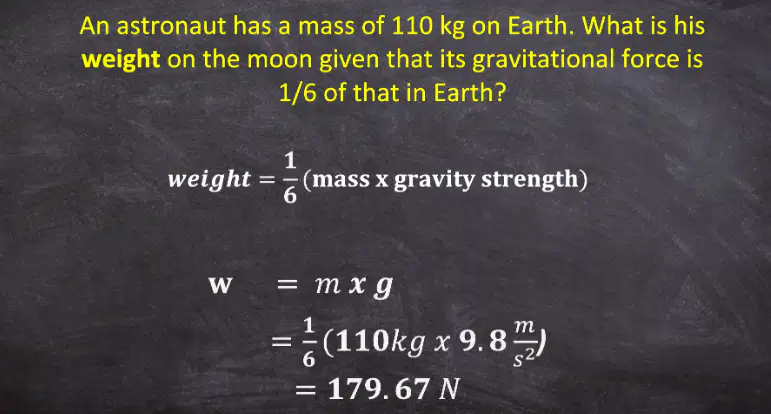
(a) is the gravitational force or gravity acting on it.
Weight is a _____ quantity; the direction of the weight is downwards.
scalar
vector
SI Unit = (a) (N)
Weighing instruments such as electronic beam balance, spring balance, and bathroom scales actually measure the weight of an object. However, they are calibrated to give readings in ______.
pounds
newtons
kilograms
watts
A ___________ _______ is a region in which a mass experiences a force due to gravitational attraction.
(a)
_______ is strongest at the surface
Power
Weight
Gravitational Field
Density
Gravitational field strength g is defined as the gravitational force acting ___ ____ ____.
(a)
On Earth, gravitational strength is (a) N/kg
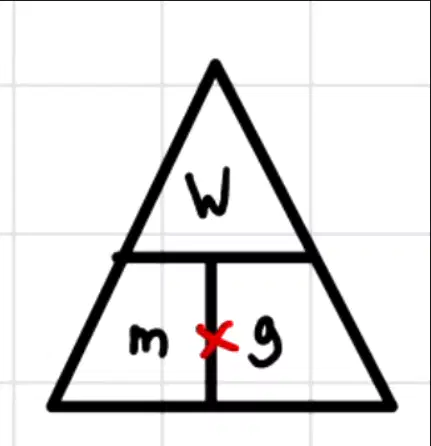
How to get weight?
W = m(g)
p = m/volume
Difference between mass and weight.
Mass: An amount of (a) .
Difference between mass and weight.
Mass: A (a) quantity (has only magnitude).
Difference between mass and weight.
Mass: Sl unit = (a)
Difference between mass and weight.
Mass: Independent of the gravitational field strength.
False
True
Difference between mass and weight.
Mass: ________ with a beam balance or a calibrated electronic balance.
Checked
Measured
Controlled
Difference between mass and weight.
Weight: A gravitational (a) .
Difference between mass and weight.
Weight: A (a) quantity (has both magnitude and direction).
Difference between mass and weight.
Weight: Sl unit = (a) (N)
Difference between mass and weight.
Weight: Not dependent on the gravitational field strength.
True
False
Difference between mass and weight.
Weight: Measured with a ______ _______.
(a)
The inertia of an object refers to the reluctance of the object to change its state of rest or motion, due to its mass.
True
False
(a) is the measure of inertia
An object with a _____ mass of an object, will have greater inertia.
greater
lesser
The larger the mass of the object, the ______ it will take to start moving, slow it down, and change direction.
easier
harder
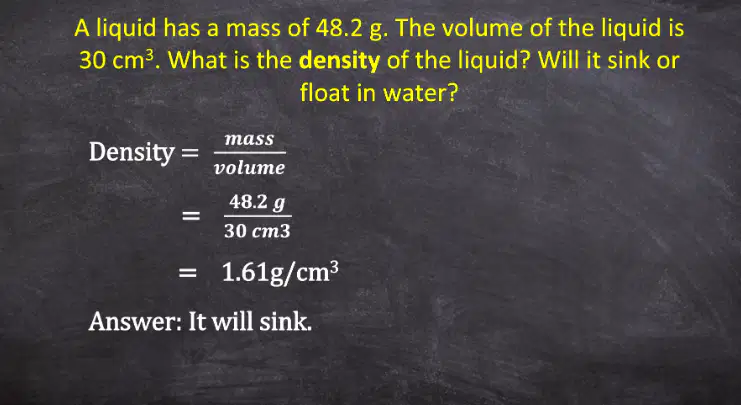
Density is how much mass is packed into a given space.
True
False
Sl unit is the kilogram per square meter kg/m2.
True
False
Substances that float on water have _______ densities than the water.
the same
lower
higher

5x10^-3 g/cm^3
5x10^-2 g/cm^3
Memorize this
Correct Answer
Bro dont click this, deadass
(a) is the capacity to do work.
The SI Unit of Energy is (a) (J).
Work never means making a body or machine move to achieve a purpose.
True
False
In order to do work, _______ is transferred between objects or converted from one form to another.
energy
weight
power
gravity
Energy of the body due to its motion
(a) energy
A type of energy stored in a system.
(a) energy
The energy stored in a substance due to the positions of the atoms or electrons in the substance.
Elastic Potential Energy
Chemical Potential Energy
Gravitational Potential Energy
The energy stored in a body due to its height from the ground.
Chemical Potential Energy
Elastic Potential Energy
Gravitational Potential Energy
The energy stored in a body due to its elastic deformation.
______ ______ energy
(a)
The energy of an electric charge due to its motion and position.
(a) energy
An electromagnetic wave that is visible to the eye.
(a)
The energy stored in body due to its temperature.
(a) energy
A heavier nucleus splits up into two or more lighter nuclei.
_____ ______
(a)
Two or more lighter nuclei fuse together to form a heavier nuclei.
(a)
The Principle of Conservation of Energy states that energy ______ be created or destroyed. It can be converted from one form to another.
can
cannot
The Principle of Conservation of Energy: In other words, the total energy in an isolated system is (a) .
Energy cannot be converted from one form to another.
True
False
Work done by a constant force on an object is the product if the force and the distance moved by the object in the direction of the force.
True
False
In Physics, work is done only when an object moves under the influence of a ________.
movement
velocity
speed
force
Energy --> Work --> Force
True
False
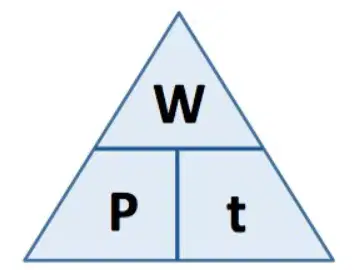
(a) is the rate of work done or the rate of energy conversion.
The product to Power and (a) taken tell us the amount of work done or the amount of energy conversion.
Remember this
Alright
Cool
The SI unit of power is the watt (W). One Watt is the rate of work done or energy conversion of one (a) per a second.
Fixed Shape and volume
Solid
Liquid
Gas
Fixed volume but no fixed shape
Solid
Liquid
Gas
Low Density
Solid
Liquid
Gas
Compressible
Solid
Liquid
Gas
No fixed shape or volume
Solid
Liquid
Gas
Oxygen
Solid
Liquid
Gas
High Density
Solid
Liquid
Gas
Incompressible
Solid
Liquid
Gas
Water
Solid
Liquid
Gas
Snow
Solid
Liquid
Gas
All matter is made up of tiny particles called atoms or (a) .
The Kinetic Model of Matter states that tiny particles that makeup matter are always in continuous random motion (i.e. Moving all the time)
True
False
Particle Arrangement: Closely packed together.
Solid
Liquid
Gas
Particle Arrangement: Relatively high densities
Solid
Liquid
Gas
Particle Arrangement: Randomly arranged, slightly further apart
Solid
Liquid
Gas
Particle Arrangement: Very little attraction between them, randomly at high very speeds. Occupy any available space.
Solid
Liquid
Gas
Particle Arrangement: Large number of particles per unit volume.
Solid
Liquid
Gas
Particle Arrangement: Have no fixed volume or shape, and highly compressible
Solid
Liquid
Gas
When the temperature of a substance increases, the average kinetic energy of the particles in the substance increases.
True
False
Moving Objects have _____ ______ ______
(a)
Shooting an arrow is an example of _____ _____ _______
(a)
Power is the measure of the ____ __ _____ an object or person possesses.
(a)
Work is done when the direction of the applied force and the direction in which the object moves are (a) to each other.
When the speed of a bus is increased twofold, the kinetic energy of the bus increases, (a) as well.
The (a) of an object varies according to the strength of the gravitational field it is in.
The weight of a body is (a) to its mass.
The larger the mass of an object, the (a) the inertia
The gravitational field strength at a place is ________ as the acceleration of free fall experienced at the same place.
the same
not the same
It is defined as the gravitational force acting per unit mass.
(a)
If refers to the amount of matter in a body.
(a)
It is a region in which a mass experience a force due to gravitational attraction.
(a)
It is the gravity acting on an object.
(a)
Refers to how much mass is packed into a given space.
(a)
It is the product of the force and the distance moved by the object.
(a)
Weight
Kilogram = kg
kilogram per cubic meter = kg/m^3
Newton = N
Joule = J
Watts = W
Density
Kilogram = kg
Newton = N
kilogram per cubic meter = kg/m^3
Joule = J
Watts = W
Mass
Kilogram = kg
Newton = N
kilogram per cubic meter = kg/m^3
Joule = J
Watts = W
Energy
Kilogram = kg
Newton = N
kilogram per cubic meter = kg/m^3
Joule = J
Watts = W
Power
Kilogram = kg
Newton = N
kilogram per cubic meter = kg/m^3
Joule = J
Watts = W
Work Done
Kilogram = kg
Newton = N
kilogram per cubic meter = kg/m^3
Joule = J
Watts = W
Remember this
Bet
Aight
Remember this
ONG
alr
cool
thank you

