Font size
 Worksheets
7th- Ecology Review
Total questions: 94
Worksheet time: 3hrs 40mins


What is a community in ecology?
A living organism
A group of the same species in a given area
A group of different species in a given area
A group of plants in a given area
What is primary succession?
The growth of plants and animals after a disturbance
The process of organisms in an ecological community over time
The colonization of a new area without any soil
The increase in biodiversity in an ecological community
What are pioneer species in primary succession?
Large trees
Animals that move into a new area
Small plants that colonize first
Organisms that break down rock into soil
What comes after pioneer species in primary succession?
Grasses and weeds
Shrubs
Trees
Animals
Why does primary succession take a long time?
Because it involves a disturbance like a forest fire
Because it requires the growth of pioneer species
Because it involves the colonization of a new area without soil
Because it takes hundreds of years for a climax community to form
What is secondary succession?
The colonization of a new area without any soil
The process of organisms in an ecological community over time
The growth of plants and animals after a disturbance
The increase in biodiversity in an ecological community
What is the key difference between primary and secondary succession?
The presence of soil
The types of pioneer species
The speed of the process
The types of disturbances
What is more likely to be a faster process, primary or secondary succession?
Primary succession
Secondary succession
Both take the same amount of time
It depends on the type of disturbance
Organize these options into the right categories: Sort the environments into the categories that they would be a part of.


Put the steps to Primary Succession in order starting with the most basic stage to the most complex.

Pioneer species: lichen, moss

Small Grasses

Large Grasses and Shrubs

Small, fast growing trees

Large, slow growing hardwood trees

What is a fitting description for this diagram?

The Mayfly is a food source for which 3 organisms?

The trout is a source of food for the human and the eagle. When there are more than one organism vying for the same source we call this____?


ow many types of organisms in this food web obtain energy directly from producers?
two
three
four
five

Which list contains only animals that receive energy transferred directly from consumers in this food web?
Red-tailed hawks, snowshoe hares, and caterpillars
Snowshoe hares and caterpillars
Snowshoe hares and shrews
Shrews and red foxes
The original source of energy for a food web is...
plants
sun
producers
decomposers
Decomposers get energy from...
the sun
eating plants
eating animals
dead things and waste

Arrows in a food web represent...
eating
sunlight
energy
matter
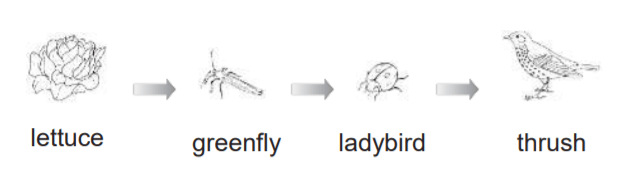
Who is the producer?
lettuce
greenfly
ladybird
thrush
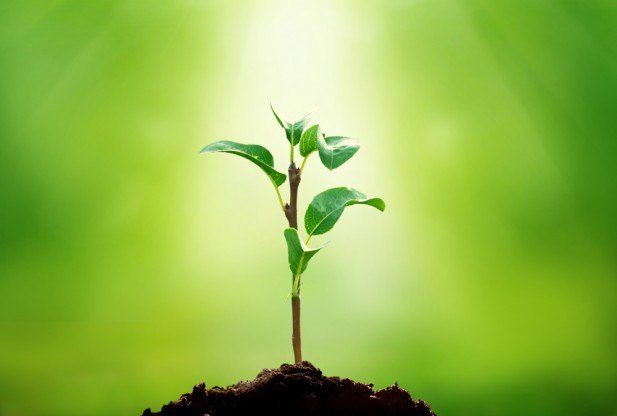

Which type of organism should replace the X in the food web?
an omnivore
an herbivore
a carnivore
a producer
A relationship between two organisms in which one organism benefits and the other is unharmed...
Mutualism
Commensalism
Parasitism
A relationship between two organisms in which both organisms benefit.
Mutualism
Commensalism
Parasitism
A relationship between two organisms in which one is benefited and the other is harmed.
Mutualism
Commensalism
Parasitism

Ostriches and gazelles eat together. They both watch for predators and danger. Since they see things differently, they each can identify threats the other animal may not see. Both species are benefited.
mutualism
commensalism
parasitism

Yucca flowers are pollinated by yucca moths. The moths lay their eggs in the flowers and the eggs hatch. The larvae eat some of the seeds, and spread them around. Both species are benefited.
mutualism
commensalism
parasitism

Mistletoe takes water and nutrients from the oak tree. This is good for the mistletoe but bad for the tree.
mutualism
commensalism
parasitism

A bison walks through the grass, insects fly up and are seen and eaten by egrets. This neither harms nor helps the bison, but it is easier for the egrets to get food.
mutualism
parasitism
commensalism

A flea feeds on a mouse’s blood. This is good for the flea but bad for the mouse.
mutualism
commensalism
parasitism

Hermit crabs live in shells that snails don't use anymore. The hermit crab gets a nice free home. This neither harms nor helps the snails.
mutualism
commensalism
parasitism

Birds build nests out of dead twigs and leaves. They build their nests in living trees. This doesn't hurt the tree.
mutualism
commensalism
parasitism


Mosquitoes are parasitic with humans because: (choose 2)
They feed off human blood
The human host is harmed
They are annoying
they spread disease

Bromeliads and trees are in a commensal relationship because: (choose 2)
the tree provides shelter and an environment for the bromeliad
the tree is harmed from the bromeliad taking food from it
the tree is not harmed or helped by the bromeliad
the tree takes nutrients from the bromeliad
Predation is similar to _______________ in that both types of relationship benefit one of the interacting species while the other is harmed.
Parasitism
Commensalism
Mutualism
Which of the following best describes a difference between a mutualistic relationship and a parasitic
relationship?
Parasitism harms both organisms, while mutualism harms only one organism.
Parasitism benefits only one organism, while mutualism benefits both organisms.
Parasitism involves only two organisms, while mutualism involves many organisms.
Parasitism continues for many generations, while mutualism is limited to one generation.

This is an example of which type of symbiosis?

Snails die and leave behind their shells.Hermit crabs find shells left by snails that have died and move in.
Rainforest, Deciduous Forest & Tangia
3 Grassland Biomes
3 Desert Biomes
3 Blind Mice
3 Forest Biomes
are large, open spaces where mostly grass grows. Trees only grow near rivers or streams. The soil is very rich. The largest land animals live in this area
marine
grasslands
forest
tundra
are very, very dry. During the day, it can get above 100 degrees Fahrenheit (F), but at night the temperature can drop into the 40s & 50s( F): have very little rainfall.
tangias
deserts
tundra
grasslands
are found near the equator. They have the largest variety of plant and animal life. They are very warm and very wet. Some of them can get as much as 400 inches of rain every year.
desert rain forest
tropical rain forest
arctic rain forest
temperate rain forests