
Font size
 Worksheets
My CS Class's Pre-Suffering
Total questions: 105
Worksheet time: 58mins
De Broglie equation
relates the momentum of a mass to its wavelength
relates the energy of a mass to its wavelength
relates the frequency of a mass to its wavelength
relates the work function of a mass to its wavelength
An electron is moving freely with kinetic energy 10 eV. It's de-Broglie wavelength is


The equation which links Energy to wavelength is...
E=hf
E=λhf
E=λhc
c=fλ
Name the scientist who created an equation to treat the electron as a wave
Planck
Heisenberg
de Broglie
Schrodinger
The SI unit of frequency is the __________.
meter
second
hertz
meter per second
find the correct applications of quantum mechanics.
Quantum mechanics is used to explain the concept of
photoelectric effect.
The atomic structure and the origin of spectral lines are explained by Bohr based on quantum concepts.
The phenomenon like Scattering of X-rays are
explained by Compton based on quantum ideas.
Based on quantum ideas, the problem
of specific heat of solids at low temperature
is explained successfully.

This equation represents Schrodinger's
time independent in 3-d for free particle.
time independent in 3-d.
time dependent in 1-d for free particle.
time dependent in 1-d.
Which one is correct Schrodinger time independent equation
[∇2 ψ + 2m (E –V) ψ] / ħ2 = 1
[∇2 ψ + m (E –V) ψ] / ħ2 = 0
[∇2 ψ + 2m (E –V) ψ] / ħ2 = 0
[∇2 ψ + 2m (E –V) ψ] / ħ = 0

How do you combine vectors if they are in opposite directions?
Add
Subtract (or add a negative)
Pythagorean Theorem
Use trigonometry

What is the resultant force?
10 N
30 N
20 N
40 N

What is the resultant force?
30 N
60 N
0 N
90 N
Examples of vector quantity are __________________ (You can tick more than one answer)
displacement
speed
velocity
acceleration
Lilly is paddling in her kayak 3 m/s East in a river that has a current of 0.5 m/s West. What is her resultant velocity?
2.5 m/s East
3.5 m/s East
2.5 m/s West
Bob walks 4 miles west and stops to rest. He then continues to walk another 3 miles west. What is his displacement?
7 miles west
1 mile west
12 miles west
7 miles east
Three vectors are added following the rules of vector addition. A fourth vector is drawn from the tail of the first vector to the head of the last vector. This fourth vector is referred to as ____.
the equilibrant
the hypotenuse
the resultant
the mistake
A vector includes ______ and ________.
direction, magnitude
magnitude, units
direction, units
scalars, scalars
What below is NOT considered matter?
Carbon atoms
Gravity
Bacteria
Air
Matter is anything that.....
Has mass and takes up space
Has mass and is visible
Takes up space and has energy
Has energy and is visible
What particle view below is a mixture?


What is the best classification for this substance?
An element
A compound
A mixture

Is this a pure substance?
Yes
No

What is the best classification of this substance?
An element
A compound
A mixture of 2 elements
A mixture of 2 compounds

How would you name this sample? T = triangle, Sq = square, C = circle.
T + Sq + C
TC + Sq
TC4 + Sq3
TCSq
What is an example of a physical property?
Silver is shiny
Alcohols are flammable
Alkali metals are reactive with water
Acids are sometimes corrosive
What is an example of a chemical change?
Tearing paper
Dissolving salt in water
Melting ice
Burning wood
Mg and Cl create...
Ca and N create...
Li and P create...
Na and Cl create...
Na2Cl
NaCl2
Na2Cl2
NaCl
K and S create...
K2S
KS2
K2S2
KS
Nanotechnology fabrication methods can usually be divided into two groups:
Bottom-Up & Top-Down
Top-Up & Bottom-Down
Top-Bottom & Up-Down
Top & Bottom
Which does not include the Top-Down Method
Conventional Lithography
Photolithography
Softlithography
Colloidal Monography

Determine the following method according to the picture:
Photolithograpy
Nanosphere lithography
Writing "atom by atom"
Colloidal lithography

Determine the following method according to the picture:
Conventional Lithography
Scanning lithography
Scanning probe lithography
nanosphere lithography

Determine the following method according to the image it represents:
Top-Down
Bottom-Up
Top-Up
Top-Bottom

Determine the following method according to the picture:
Conventional Lithography
Scanning lithography
nanosphere lithography
Scanning probe lithography

Determine the fabrication method from the following drawing:
Sol-gel synthesis
Molecular self-assembly
Plasma arcing
Chemical vapour deposition

Determine the fabrication method from the following drawing:
Sol-gel synthesis
Molecular self-assembly
Plasma arcing
Chemical vapour deposition

Determine the following method according to the picture:
Photolithograpy
Nanosphere lithography
Writing "atom by atom"
Colloidal lithography
What wavelength is used in Extreme Ultraviolet (EUV) lithography?
193 nm
355 nm
13.5 nm
100 nm
In soft lithography, which elastomer is commonly used for making molds?
PVC
PDMS
Polystyrene
Polyethylene
Which of the following techniques is associated with maskless lithography?
Direct Laser Writing
Microcontact Printing
Micromolding
Replica Molding
What is the primary purpose of using a spin coater in photolithography?
Exposure
Developing
Etching
Coating Photoresist
Which gas is typically used as the basis for generating EUV light?
Helium
Argon
Xenon
Tin
In maskless lithography, what is used to project the pattern onto the substrate?
A fixed mask
A Digital Micromirror Device (DMD)
An Elastomeric Stamp
A Mechanical Printer
What property of PDMS makes it suitable for soft lithography processes with UV exposure?
Electrical Conductivity
Optical Transparency
Thermal Conductivity
Magnetic Permeability
What is the primary advantage of using EUV lithography over traditional photolithography?
Lower Cost
Longer Wavelength
Simpler Equipment
Higher Resolution
What is a common method to generate a 13.5 nm wavelength light for EUV lithography?
LED Emission
Plasma Emission from Tin Droplets
Incandescent Bulbs
Halogen Lamps
Which of the following is a technique within the umbrella of soft lithography?
Reactive Ion Etching
Microcontact Printing
Plasma Etching
Wet Etching
What type of light is commonly used in photolithography?
Infrared
Visible
Ultraviolet
X-ray
What happens to positive photoresist when exposed to light?
It becomes insoluble.
It becomes soluble.
It becomes opaque.
It polymerizes.
What is the main purpose of a photomask in photolithography?
To filter the light
To transfer a pattern onto the photoresist
To protect the substrate from contamination
To focus the light
In photolithography, what is the term for the limit of the smallest feature size that can be reliably printed?
Depth of focus
Resolution
Contrast
Exposure
Which of the following is NOT a step in the photolithography process?
Etching
Prebake
Deposition
Development
Negative photoresist, when exposed to light, undergoes which of the following processes?
Solubilization
Decolorization
Cross-linking
Melting
What role does the developer solution play in the photolithography process?
Hardens the photoresist
Exposes the photoresist to light
Removes either the exposed or unexposed areas of the photoresist
Acts as a solvent for the etching process
Which principle of physics is crucial in understanding the limitations of photolithography resolution?
Gravity
Thermodynamics
Diffraction
Electrostatics
During the photolithography process, what is the purpose of the post-exposure bake?
To clean the substrate
To enhance the photochemical reactions in the photoresist
To remove any remaining developer
To prepare the substrate for etching
What is the primary function of the photoresist in photolithography?
To act as an etchant
To protect certain areas of the substrate during etching
To generate light for exposure
To clean the substrate
Which level of a programming language is Machine Code?
Low
High
Which level of a programming language is Assembly Code?
Low
High
Which level would create the fastest code to execute?
Low
Assembly
High
Which level would create the easiest code for humans to understand?
Low
Assembly
High
Python is an example of a High Level programming language
True
False
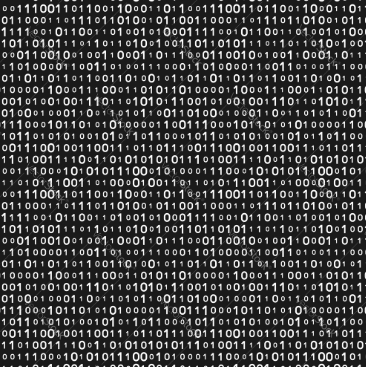
Which generation?
Machine Code - Low
Assembly Code - Low
High Level
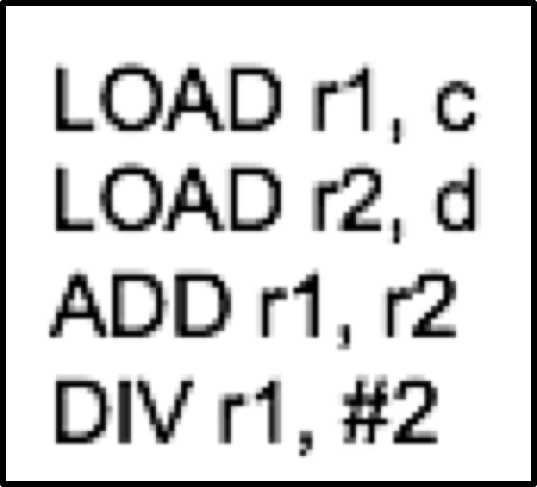
Which generation?
Machine Code - Low
Assembly Code - Low
High Level

Which generation?
Machine Code - Low
Assembly Code - Low
High Level
Binary is the only language a computer can understand
True
False
Computers must translate everything into binary
True
False
High Level Code is easier for humans to understand as it is written in English
True
False
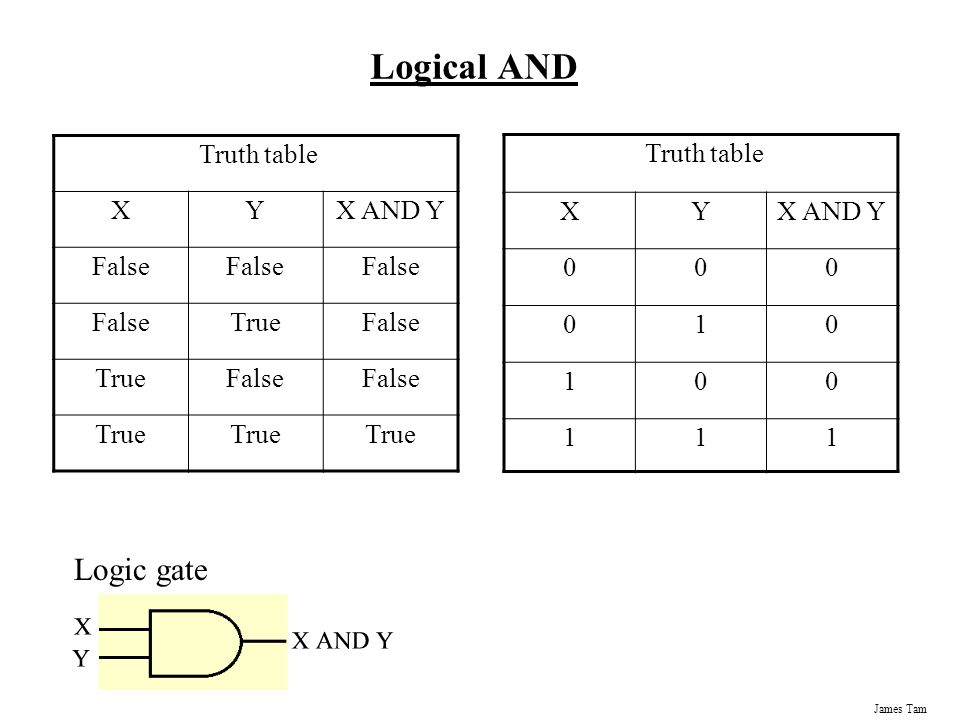
For AND, when is it TRUE?
false AND false
true AND false
false AND true
true AND true
For AND, when is it FALSE?
false AND false
true AND false
false AND true
true AND true
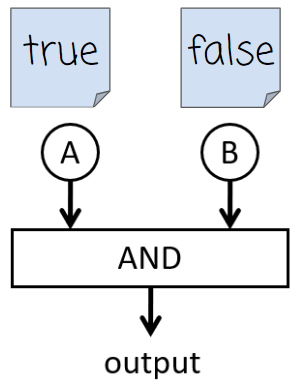
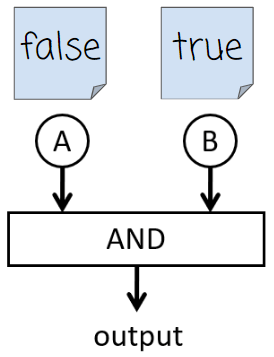
What is the output?
True
False
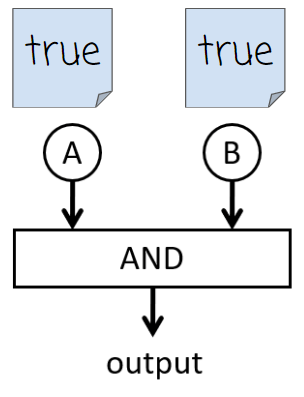
What is the output?
True
False
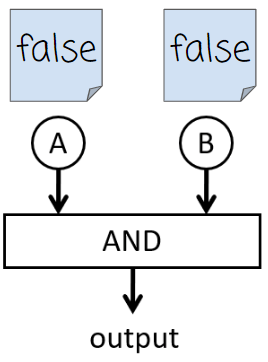
What is the output?
True
False
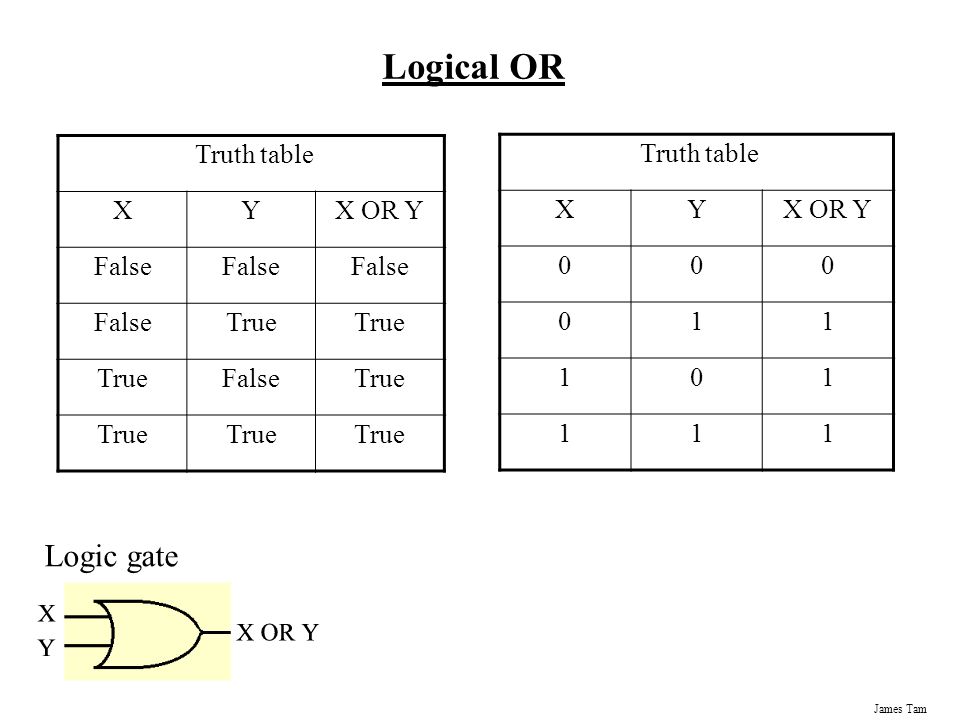
What is the output?
True
False
For OR, when is it TRUE?
false AND false
true AND false
false AND true
true AND true
For OR, when is it FALSE?
false AND false
true AND false
false AND true
true AND true
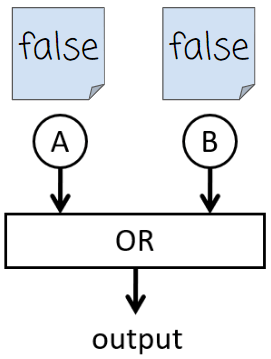
What is the output?
True
False
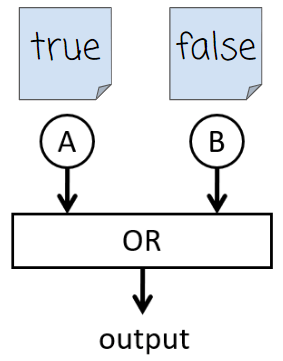
What is the output?
True
False
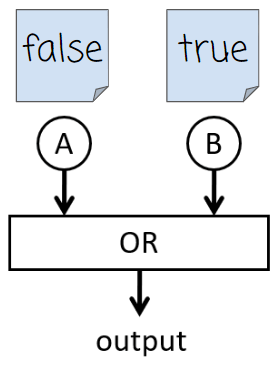
What is the output?
True
False
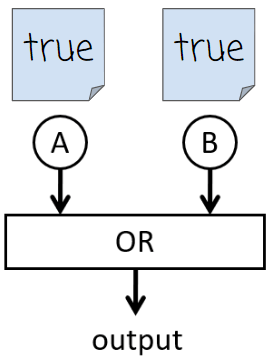
What is the output?
True
False
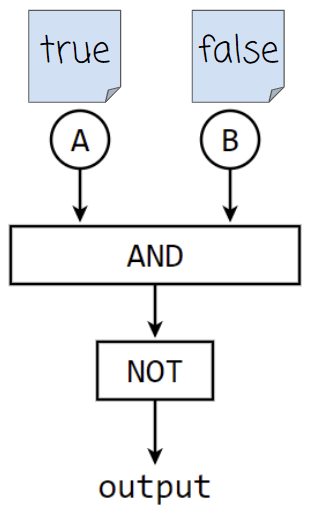
What is the output?
True
False
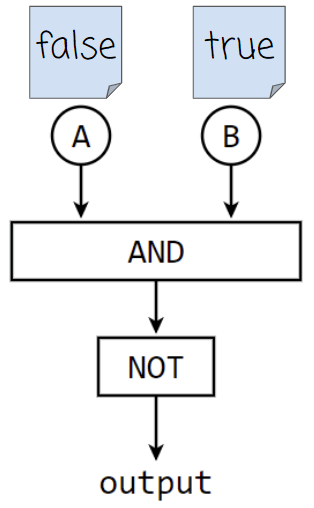
What is the output?
True
False
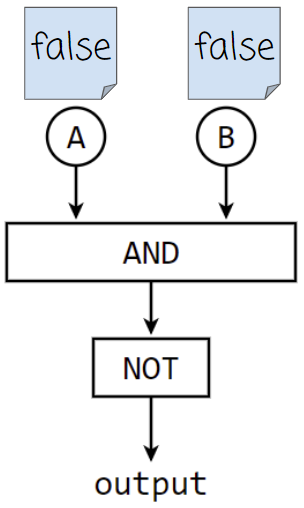
What is the output?
True
False
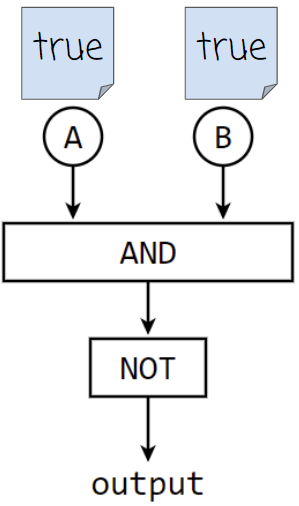
What is the output?
True
False
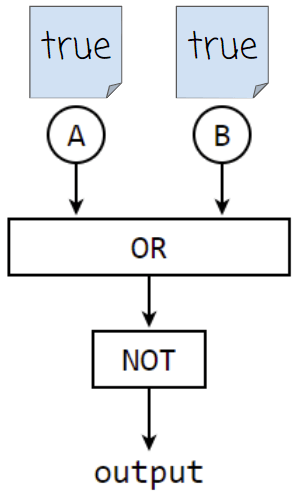
What is the output?
True
False
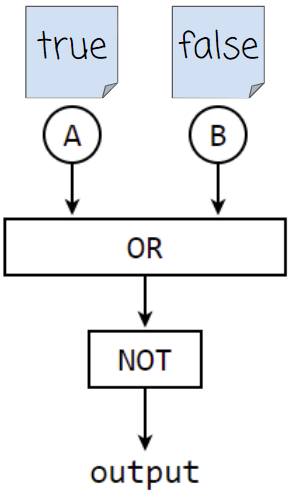
What is the output?
True
False
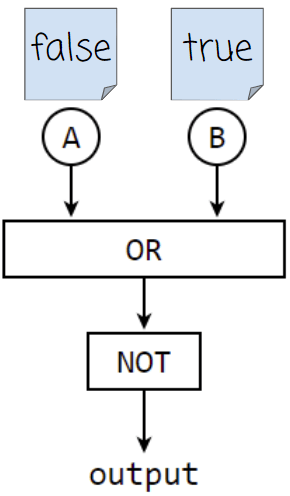
What is the output?
True
False
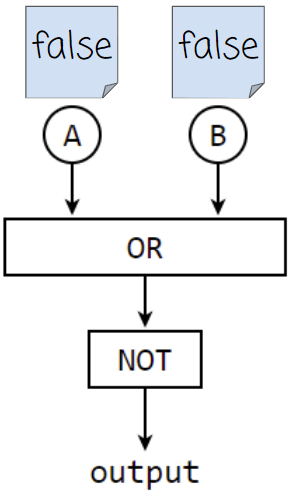
What is the output?
True
False

