wayground logo

Free Printable Worksheets

Font size

S
M
L
XL
Worksheets

Atmosphere Review

Total questions: 135

Worksheet time: 2hrs 52mins

Name
Class
Date
1.

Which type of clouds produces hail?

a)

cirrus

b)

cumulus

c)

stratus

d)

cumulonimbus

2.

Which type of cloud is most often associated with days of light, continual rain?

a)

cirrus

b)

stratus

c)

cumulus

d)

cumulonimbus

3.

What type of clouds are white and feathery?

a)

Cirrus

b)

Stratus

c)

Cumulonimbus

d)

Cumulus

4.

What type of clouds are smooth, gray, and blanket-like?

a)

Cirrus

b)

Stratus

c)

Cumulonimbus

d)

Cumulus

5.

What type of clouds are white and fluffy?

a)

Cirrus

b)

Stratus

c)

Cumulonimbus

d)

Cumulus

6.

What type of clouds indicate good/ fair weather?

a)

Cirrus

b)

Stratus

c)

Cumulonimbus

d)

Cumulus

7.

What type of clouds indicate big storms and lots of rain?

a)

Cirrus

b)

Stratus

c)

Cumulonimbus

d)

Cumulus

8.

This is a large group of tiny droplets of water or ice crystals together.

a)

A tornado

b)

A cloud

c)

A hurricane

d)

Wind

9.

This is when water or ice falls from the sky in the form of rain, hail, snow, or sleet.

a)

Evaporation

b)

Condensation

c)

Precipitation

d)

Animation

10.

Fog is made of low ____________ clouds.

a)

Cumulus

b)

Stratus

c)

Cirrus

d)

Cumulonimbus

11.

____________ clouds form in layers.

a)

Cumulus

b)

Stratus

c)

Cirrus

d)

Cumulonimbus

12.
This type of cloud is thin, wispy, and made of ice crystals
a)
cumulus cloud
b)
stratus cloud
c)
cirrus cloud
d)
cumulonimbus cloud
13.
The temperature at which water vapor condenses is the 
a)
relative humidity
b)
humidity
c)
freezing point
d)
dew point
14.
This type of cloud is flat layers and the edges are not clearly defined
a)
cirrus cloud
b)
cumulus cloud
c)
stratus cloud
d)
cumulonimbus cloud
15.
This type of cloud is flat layers and the edges are not clearly defined
a)
cirrus cloud
b)
cumulus cloud
c)
stratus cloud
d)
cumulonimbus cloud
16.
Nimbostratus and cumulonimbus clouds can signal what type of upcoming weather?
a)
fair skies
b)
hot, sunny weather
c)
windy weather
d)
rainy weather
17.
Which of the following is an example of a cloud of vertical development?
a)
nimbostratus cloud
b)
cumulonimbus cloud
c)
cirrus cloud
d)
stratus cloud
18.
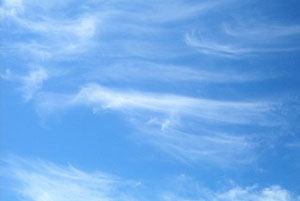
what type of cloud is shown?
a)
cumulus
b)
cirrus
c)
stratus
19.
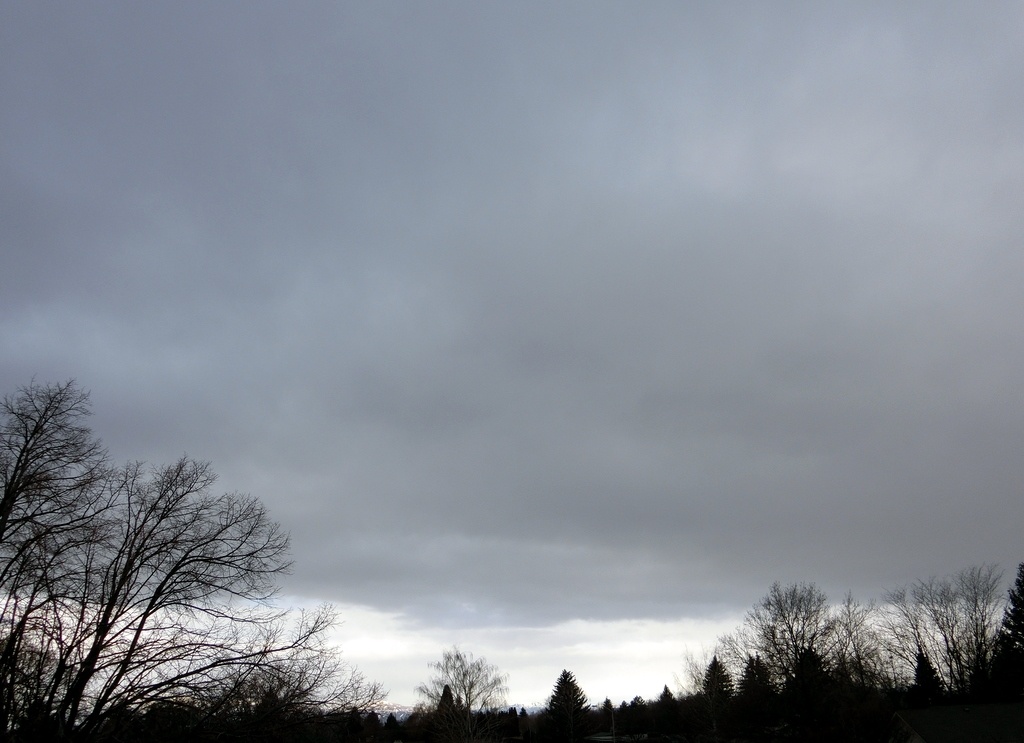
what type of cloud is shown?
a)
cumulus
b)
cirrus
c)
stratus
20.
They are highest clouds in the sky. They look curly, white and feathery. Usually mean good weather.
a)
Cumulus
b)
Cumulonimbus
c)
Cirrus
d)
Stratus
21.
What type of cloud is fog an example of?
a)
Nimbus
b)
Stratus
c)
Cirrus
d)
Cumulus
22.
What does "nimbus" mean in Latin?
a)
Rain
b)
Curl
c)
Heap
d)
Spread out
23.
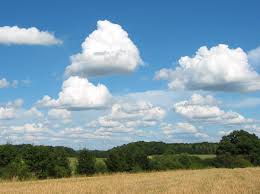
What type of cloud is this?
a)
Cumulonimbus
b)
Cirrus
c)
Nimbus
d)
Stratus
24.
What type of cloud is this? Very high, flat layer, makes a halo
a)
Cirrostratus
b)
Cirrocumulus
c)
Altocumulus
d)
Stratocumulus
25.
What type of cloud is this? Middle altitude, flat layer
a)
Altostratus
b)
Cumulonimbus
c)
Altocumulus
d)
Stratocumulus
26.
What type of cloud is this? A middle level puffy cloud
a)
Altocumulus
b)
Fog
c)
Nimbostratus
d)
Stratocumulus
27.

What type of cloud is this? Causes rain or snow showers

a)

Nimbostratus

b)

Fog

c)

Cirrcocumulus

d)

Cirrostratus

28.

What causes wind?

a)

differences in air pressure

b)

differences in gravity

c)

difference in oxygen

d)

differences in the thermosphere

29.

What causes differences in air pressure?

a)

even heating of the Earth

b)

Even cooling of the earth

c)

uneven heating of the earth

d)

global warming

30.
Which is NOT a characteristic of local winds?
a)
They occur within a small area.
b)
Land and sea breezes are examples.
c)
They blow over short distances.
d)
They blow steadily over long distances.
31.
Why does warm air rise?
a)
Warm air is more dense than cooler air.
b)
Warm air has more pressure than cooler air.
c)
Warm air is less dense than cooler air.
d)
Warm air has a higher dew point than cooler air.
32.
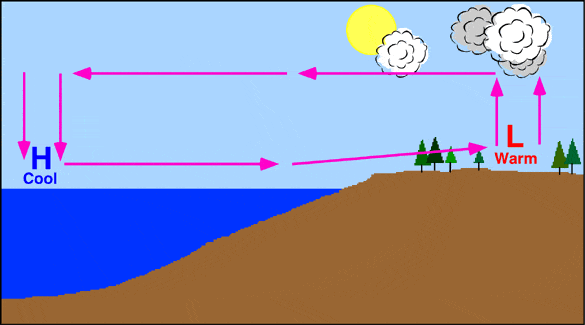
Is this a land or a sea breeze?
a)
land breeze
b)
sea breeze
33.

During the land breeze, what starts moving the cooler air out and warmer air in?

a)

conduction

b)

convection

c)

radiation

34.

Air at the poles is colder and denser so it_______________.

a)

rises

b)

circulates

c)

stagnates

d)

sinks

35.
The Coriolis effect is the curving of wind across Earth. What causes winds to curve?
a)
Earth's revolution
b)
Earth's magnetic field
c)
Earth's rotation
d)
Earth's gravitational pull
36.
What creates the air pressure difference between the equator and the poles?
a)
The length of the seasons
b)
The shape of the earth 
c)
the duration of the solar year
d)
The amount of direct sunlight each area receives 
37.
How are the winds in the northern hemisphere different from winds in the southern hemisphere? 
a)
Winds int he northern hemisphere are deflected right; winds int eh southern hemisphere are deflected left
b)
winds in the northern hemisphere are deflected south; winds in the southern hemisphere are deflected north 
c)
winds in the northern hemisphere are deflected eart; winds in the southern hemisphere are deflected west
d)
winds in the northern hemisphere are deflected left; einds in the southern hemisphere are deflected right 
38.
How do jet streams influence the weather? 
a)
by creating clouds 
b)
by increasing the moisture in the atmosphere 
c)
by moving weather from one area to another very quickly 
d)
by drying out the atmosphere 
39.
The reason why global winds flow from east to west and west to east, but not north to south, or south to north.
a)
Bernoulli's principle 
b)
Coriolis effect 
c)
high pressure 
d)
low pressure 
40.
When Earth's rotation causes the wind to curve 
a)
cloudy 
b)
Coriolis effect
c)
high pressure
d)
low pressure 
41.
Which statement correctly defines wind?
a)
Wind is the movement of air from areas of low pressure to areas of high pressure
b)
Wind is the movement of air to a colder area in the atmosphere.
c)
Wind is the movement of air from areas of high pressure to areas of low pressure.
d)
Wind is the movement of air pushed around and bouncing off Earth's surface.
42.
Land and water absorb and release the sun’s heat in different ways. One result of this is a sea breeze. Which statement is true of sea breezes?
a)
They originate in the day and blow toward the land.
b)
They originate in the day and blow toward the water.
c)
They originate in the evening and blow toward the land.
d)
They originate in the evening and blow toward the water.
43.
The Coriolis effect causes ___________.
a)
the Earth to rotate on its axis
b)
continental deflection
c)
global winds and surface currents to move in a curved path instead of a straight line
d)
global winds and deep ocean currents to move in a curved path instead of a straight line.
44.
The curving of air to the right in the Northern hemisphere is caused by ___________ and is called the _________ effect.
a)
Earth's rotation...Coriolis
b)
Earth's revolution...Coriolis
c)
Earth's rotation...Doppler
d)
Earth's revolution...Doppler
45.

The horizontal movement of air from and area of high pressure to an area of low pressure is called ____________.

a)

wind

b)

climate

c)

high pressure

d)

air pressure

46.

All wind are caused by differences in ____________.

a)

weather

b)

precipitation

c)

air pressure

d)

climate

47.
Which best describes the process of convection?
a)
Convection is the primary way  heat travels  through rays.
b)
Convection is the primary way heat travels  through metals.
c)
Convection is the primary way heat travels  through appliances.
d)
Convection is the primary way heat travels  through liquids and gasses.
48.
Heat transfers from an area of ____temperature to an area of ___ temperature.
a)
high to low
b)
low to high
c)
high to high
d)
It can travel high to low and low to high. 
49.
What is the definition of CONVECTION
a)
When heat transfers through waves.
b)
When heat transfers from objects that are touching.
c)
a  hot liquid or air that  expands, becomes less dense, and rises or becomes more dense, and sinks.
d)
Heat traveling from the sun
50.

In which of the following state are the particles closest together?

a)

Fluid

b)

Gas

c)

Liquid

d)

Solid

51.

How does heat energy reach the Earth from the Sun

a)

Convection

b)

Radiation

c)

Conduction

d)

Insulation

52.
What is the definition of CONDUCTION?
a)
When heat is transferred from objects like rays of light or electromagnetically.
b)
a  hot liquid or air that  expands, becomes less dense, and rises or becomes more dense, and sinks.
c)
When heat transfers from objects that are touching.
d)
When heat transfers through the heater or AC in your house.
53.
How many kinds of heat transfer are there?
a)
1
b)
2
c)
3
d)
4 or more
54.
The transfer of heat by currents through liquids of gases is called
a)
Perspiration
b)
Radiation
c)
Conduction
d)
Convection
55.
Radiation= 
a)
physical contact
b)
warm air rising
c)
heat moving through empty space
d)
say what?
56.

Hot particles...

a)

are more dense and rise

b)

are less dense

and rise

c)

are less dense

and sink

d)

are more dense and rise

57.

The best place to put a furnace is...

a)

in the basement because heat rises

b)

in the basement because heat sinks

c)

on the top floor because heat rises

d)

on the top floor because heat sinks

58.

Cold air is _____ because the particles have_____

a)

more dense;

more energy

b)

more dense;

less energy

c)

less dense;

less energy

d)

less dense;

more energy

59.

More dense particles are:

a)

heavier

b)

bigger

c)

farther apart

d)

closer together

60.

Transferring heat through the movement of

hot and cold particles to new physical locations is called____

a)

radiation

b)

convection

c)

conveyor

d)

conduction

61.

Thermal energy is transferred from ________ temperature to _____________ temperature.

a)

lower, higher

b)

higher, lower

c)

same, same

d)

higher, higher

62.

If a material conducts heat well, it is known as a _______

a)

conductor

b)

insulator

c)

generator

d)

incubator

63.

Conduction is a process through which thermal energy is transferred ________.

a)

through the collisions of adjacent particles

b)

through electromagnetic radiation

c)

through movement of the medium

64.

 Layer we live in and breathe


​ ​ ​ ​ ​ (a)  

Choose from the below words
Troposphere
Stratosphere
Mesosphere
Thermosphere
Exosphere
65.

 Layer we live in and breathe


​ ​ ​ ​ ​ (a)  

Choose from the below words
Troposphere
Stratosphere
Mesosphere
Thermosphere
Exosphere
66.

Outermost layer


​​ (a)  

Choose from the below words
Stratosphere
Mesosphere
Thermosphere
Exosphere
Troposphere
67.

High concentration of UV‐absorbing ozone


​ ​ ​ ​ ​ (a)  

Choose from the below words
Stratosphere
Troposphere
Mesosphere
Thermosphere
Exosphere
68.

 Layer that contains the ionosphere layers


​ ​ ​ ​ ​ ​ (a)  

Choose from the below words
Stratosphere
Mesosphere
Thermosphere
Exosphere
Troposphere
69.

  Where almost all weather occurs


​ ​ ​ ​ ​ (a)  

Choose from the below words
Troposphere
Stratosphere
Mesosphere
Thermosphere
Exosphere
70.

 Meteors burn up


​ ​ ​ ​ ​ (a)  

Choose from the below words
Mesosphere
Stratosphere
Troposphere
Thermosphere
Exosphere
71.

 Hottest Layer 100s of *


​ ​ ​ ​ ​ (a)  

Choose from the below words
Thermosphere
Stratosphere
Mesosphere
Troposphere
Exosphere
72.

What property is used to divide the layers of the atmosphere? (click to enlarge picture)

a)

Air pressure

b)

Temperature

c)

Type of gas

73.

How does temperature in the Troposphere change as the altitude increases? (click to enlarge picture)

a)

temperature increases

b)

temperature decreases

c)

temperature stays the same

74.

What remains the same in each layer?

a)

temperature

b)

air pressure

c)

percentage of gases

75.
Our _________ is the layer of gases that surrounds our planet.
a)
ocean
b)
weather
c)
atmosphere
d)
ozone
76.
What percentage of the earth's atmosphere is oxygen?
a)
78%
b)
28%
c)
71%
d)
21%
77.
What percentage of the earth's atmosphere is nitrogen?
a)
78%
b)
28%
c)
71%
d)
21%
78.
Energy in the form of electromagnetic waves is
a)
Conduction 
b)
Convection
c)
Radiation
d)
Density
79.

Gas in the atmosphere that protects the Earth from the Sun's rays

a)

atmosphere

b)

troposphere

c)

ozone

d)

nitrogen

80.

In which layer would you find satellites orbiting Earth?

a)

Exosphere

b)

Mesosphere

c)

Stratosphere

d)

Troposphere

81.

What is resposible for holding the atmosphere in place?

a)

air pressure

b)

weight of the molecules

c)

gravity

d)

Earth´s magnetic forces

82.

In which layer are gas molecules the closest together?

a)

Troposphere

b)

Stratosphere

c)

Mesosphere

d)

Thermosphere

83.

What is an aurora? (as it pertains to science)

a)

bands of light caused by charged solar particles

b)

rainbows in the sky

c)

Sleeping Beauty's real name

d)

mixture of hydrogen and oxygen

84.

Earth's atmosphere is mostly made up of which 2 gases? CHOOSE 2!!!!!!

a)

nitrogen

b)

oxygen

c)

ozone

d)

water vapor

85.

As you get farther away from the Earth, the layers of the atmosphere get

a)

colder

b)

warmer

86.

Meteor showers occur in the

a)

troposhphere

b)

mesosphere

c)

stratosphere

d)

exosphere

87.

Airplanes fly in the

a)

troposhphere

b)

mesosphere

c)

stratosphere

d)

exosphere

88.

The highest layer of the atmosphere is

a)

troposhphere

b)

mesosphere

c)

stratosphere

d)

exosphere

89.

The air we breathe is mostly made of

a)

nitrogen

b)

oxygen

90.

"atmo-" means

a)

gas or vapor

b)

water

c)

Earth or rocks

d)

life

91.

Gas in the atmosphere that protects the Earth from the Sun's rays

a)

atmosphere

b)

troposphere

c)

ozone

d)

nitrogen

92.

A mixture of gases that surrounds the Earth like a blanket.

a)

atmosphere

b)

troposphere

c)

ozone

d)

nitrogen

93.
The higher you go, the air becomes _____ _____.
a)
More dense
b)
Less dense 
94.
This is the layer where meteors, or shooting stars, burn up.
a)
Troposphere
b)
Stratosphere
c)
Mesosphere
d)
Thermosphere
95.
In which layer of the atmosphere would you find the top of Mount Everest?
a)
Troposphere
b)
Stratosphere
c)
Mesosphere
d)
Thermosphere
96.
Which pie chart correctly shows the percentages of elements in the air?
a)
a
b)
b
c)
c
d)
d
97.
Which statement most accurately describes the temperature trend in the Troposphere? Temperatures...
a)

rise with increasing altitude above the Earth

b)

rise then fall with increasing altitude above the Earth

c)

decrease with increasing altitude above the Earth

d)

remain constant with increasing altitude above the Earth

98.
The hottest layer.
a)
troposphere
b)
thermosphere
c)
exosphere
d)
mesosphere
99.
The atmosphere is divided into ____ layers.
a)
1
b)
2
c)
3
d)
4
100.
The layer of the atmosphere that is nearest the Earth's surface.
a)
Thermosphere
b)
Mesosphere
c)
Troposphere
d)
Stratosphere
101.
Name the "minor layer" that separates  the troposphere from the stratosphere
a)
Tropopause
b)
Stratopause
c)
Mesopause
d)
Thermopause
102.
This is the densest layer of the atmosphere.
a)
Thermosphere
b)
Troposphere
c)
Mesosphere
d)
Stratosphere
103.
The layer above the stratosphere.
a)
Troposphere
b)
Stratosphere
c)
Mesosphere
d)
Thermosphere
104.

The boundary between the troposphere and the stratosphere is the ​ (a)   .

Choose from the below words
tropopause
mesopause
stratopause
105.

The aurora happens in this layer

a)

Troposphere

b)

Mesosphere

c)

Thermosphere

d)

Exosphere

106.

Reorder the following troposphere gasses from the largest percent to the least

a)

Nitrogen gas

b)

Oxygen gas

c)

Argon

d)

Greenhouse gasses

1)
2)
3)
4)
107.

Reorder the following layers from the Earth's surface up:

a)

troposphere

b)

stratosphere

c)

mesosphere

d)

thermosphere

e)

exosphere

1)
2)
3)
4)
5)
108.

The atmosphere is divided into layers based on

(a)  

Choose from the below words
temperature
water amount
gasses
109.
Which order is correct from the earth to space (bottom to top)?
a)
thermosphere
 troposphere
 exosphere
mesosphere
stratosphere
 ionosphere
b)
thermosphere
 troposphere
 stratosphere
 exosphere
mesosphere
 ionosphere
c)
exosphere
ionosphere
thermosphere
mesosphere
 stratosphere
troposphere
d)
troposphere
thermosphere
 troposphere
 stratosphere
 exosphere
mesosphere
110.

What is the "break" called between the troposphere and the stratosphere

a)

Tropopause

b)

Stratopause

c)

Mesopause

d)

Thermopause

111.

What is the "break" called between the stratosphere and the mesosphere?

a)

Tropopause

b)

Stratopause

c)

Mesopause

d)

Thermospause

112.

What is the "break" between the mesosphere and the thermosphere called?

a)

Mesopause

b)

Thermospause

c)

Stratopause

d)

Tropopause

113.

What is the "break" between the thermosphere and the exosphere called?

a)

Mesopause

b)

Exopause

c)

Stratopause

d)

Thermospause

114.

Which of the following occur in the troposphere? [choose ALL correct answers]

a)

Weather

b)

Making of Burger buns

c)

Formation of Clouds

d)

Flying of planes

e)

Decrease in temperature with increase in altitude

115.
Outermost layer of Earth’s atmosphere that is located above the thermosphere with no clear boundary at the top
a)
Exosphere
b)
convection
c)
conduction
d)
radiation
e)
mesophere
116.
Stored energy in water vapor that is not released ti the warm atmosphere until condensation occurs
a)
latent heat
b)
convection
c)
conduction
d)
radiation
e)
exospere
117.
Puffy, lumpy looking clouds that usually occur below 2000m
a)
cumulus
b)
convection
c)
conduction
d)
radiation
e)
exospere
118.
Cloud formation that occurs when warm, moist air is forced to rise up the side of a mountain
a)
orographic lifting
b)
convection
c)
conduction
d)
radiation
e)
exospere
119.
Process that occurs when cloud droplets collide and form larger droplets, which eventually become too heavy to remain aloft and can fall to the Earth as precipitation
a)
coalescence
b)
convection
c)
conduction
d)
radiation
e)
exospere
120.
Layer of Earth’s atmosphere that is located above the tropopause and is made up primarily of concentrated ozone
a)
stratosphere
b)
convection
c)
conduction
d)
radiation
e)
exospere
121.
Point at which water molecules leaving the water’s surface equals the rate of water molecules returning to the surface
a)
saturation
b)
convection
c)
conduction
d)
radiation
e)
exospere
122.
All solid and liquid forms of water that fall from clouds
a)
precipitation
b)
convection
c)
conduction
d)
radiation
e)
exospere
123.
Layer of Earth’s atmosphere that is located above the mesopause
a)
thermosphere
b)
convection
c)
conduction
d)
radiation
e)
exospere
124.
Layered sheetlike cloud that covers much or all of the sky is a given area
a)
stratus
b)
convection
c)
conduction
d)
radiation
e)
exospere
125.
Small particle in the atmosphere around which cloud droplets can form
a)
condensation nucleus
b)
convection
c)
conduction
d)
radiation
e)
exospere
126.
Layer of Earth’s atmosphere closest to Earth’s surface, where most of the mass of the atmosphere is found and in which most of the weather takes place and air pollution collects
a)
troposphere
b)
convection
c)
conduction
d)
radiation
e)
exospere
127.
Temperature to which air is cooled at a constant pressure to reach saturation, at which point condensation can occur
a)
dew point
b)
convection
c)
conduction
d)
radiation
e)
exospere
128.
Transfer of thermal of thermal energy by electromagnetic waves
a)
radiation
b)
convection
c)
conduction
d)
exospere
e)
mesophere
129.
Transfer of thermal energy between objects in contact by the collision between the particles in the objects
a)
conduction
b)
convection
c)
radiation
d)
exospere
e)
mesophere
130.
High clouds made up of ice crystals that form at heights of 6000m; often have wispy indistinct appearances
a)
cirrus
b)
convection
c)
conduction
d)
radiation
e)
exospere
131.
Amount of water vapor in the atmosphere at a given location on Earth’s surface
a)
humidity
b)
convection
c)
conduction
d)
radiation
e)
exospere
132.
Transfer of thermal energy by the movement of heated material from one place to another
a)
convection
b)
conduction
c)
radiation
d)
exospere
e)
mesophere
133.
increase in temperature with height in an atmospheric layer, which inverts the temperature-altitude relationship and can worsen air pollution problems
a)
temperature inversion
b)
convection
c)
conduction
d)
radiation
e)
exospere
134.
Layer of Earth’s atmosphere above the stratopause
a)
mesophere
b)
convection
c)
conduction
d)
radiation
e)
exospere
135.
Ratio of water vapor contained in a specific volume of air compared with how much water vapor that amount of air actually can hold; expressed as a percentage
a)
relative humidity
b)
convection
c)
conduction
d)
radiation
e)
exospere