
Font size
 Worksheets
circulatory system
Total questions: 121
Worksheet time: 2hrs 35mins
Type of circulation that refers to blood flow from the heart to the lungs and back to the heart again?
Systemic circulation
Renal circulation
Portal circulation
Pulmonary circulation
Type of circulation that refers to the blood flowing through the entire body?
Systemic circulation
Renal circulation
Portal circulation
Pulmonary circulation
The contraction/emptying phase of the cardiac cycle?
Systole
Diastole
The relaxing/filling stage of the cardiac cycle?
Systole
Diastole
Coronary arteries...
supply the heart muscle cells with a supply of blood.
supply the brain cells with a supply of blood.
contain deoxygenated blood.
when clogged, cause a stroke.
The type of blood vessel that normally carries de-oxygenated blood back to the heart from body cells?
arteries
capillaries
veins
The type of blood vessel that normally carries oxygenated blood from the heart to the body cells?
arteries
capillaries
veins
The type of blood vessel where exchange of gases, nutrients, and wastes occurs?
arteries
capillaries
veins

An abnormal widening/ballooning of a portion of an artery.
aneurysm
embolism
thrombosis
atherosclerosis
A blood clot that travels through the circulatory system and eventually becomes lodged within a blood vessel?
aneurysm
embolism
thrombosis
atherosclerosis
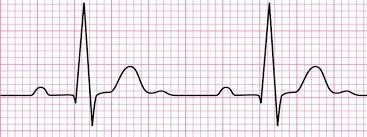
Type of device that measures the electrical currents created by the SA and AV nodes?
AED
MRI
ECG
CAT Scan

The main vein(s) that brings blood to the right atrium?
Aorta
Pulmonary veins
Superior and Inferior vena cava
Jugular vein

Which choice below correctly identifies the layers of the heart from the most outer layer to the most inner layer?
epicardium, myocardium, endocardium
endocardium, myocardium, epicardium
myocardium, endocardium, epicardium
myocardium, epicardium, endocardium
The sac that surrounds and protects the heart?
endocardium
epicardium
myocardium
pericardium

Instrument used to measure blood pressure?
AED
ECG
Sphygmomanometer
ultrasound

Name part N.
Right atrium
left atrium
right ventricle
left ventricle

Name part I.
pericardium
mediastinum
septum
unknownum

Name part A.
Pulmonary artery
Pulmonary vein
Superior vena cava
Aorta

Name part B.
Pulmonary arteries
Pulmonary veins
Superior Vena cava
Aorta

Name part M.
Tricuspid valve
Semilunar valve
Bicuspid valve
Mitral valve

Which type of blood vessel carries blood TO the heart?
Arteries
Capillaries
Veins
Venules
What type blood vessel exchanges nutrients and oxygen in the tissues?
Arteries
Veins
Capillaries
Venules

When blood is blocked to the brain, it causes...
a heart attack.
high blood pressure.
a stroke.
sickle cell anemia.

High blood viscosity will cause blood flow to...
decrease.
increase.
stay the same.
speed up & then slow down.

Arteriosclerosis is when...
blood pressure increases.
plaque builds up in the veins.
artery walls become thicker.
blood pressure decreases.
Which of the following is NOT a factor in affecting blood pressure?
blood volume.
age.
blood output.
resistance.

What is blood pressure?
Pressure of the blood against the walls of the veins.
Pressure of the heart pushing the blood out.
Pressure of the heart receiving blood.
Pressure of the blood against the walls of the arteries.
Which of the following is NOT a major factor affecting blood flow?
Heart size
Viscosity
Exercise
Plaque

As the diameter of a blood vessel DECREASES...
resistance INCREASES.
resistance DECREASES.
resistance is NOT affected.

Cholesterol is associated with which heart disease?
Arteriosclerosis
Atherosclerosis
SIckle Cell Anemia
Hypertension
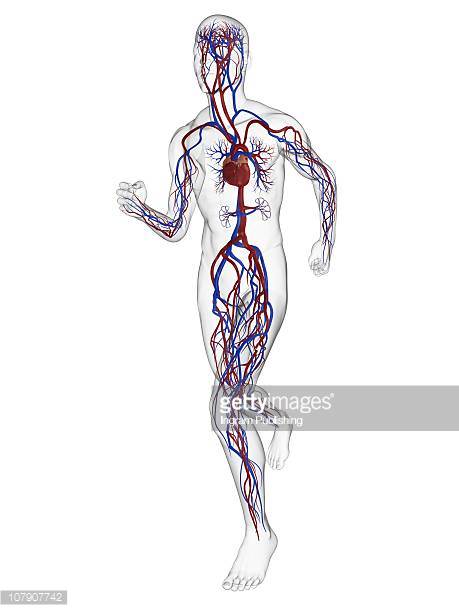
What is the main organ of the circulatory system?
small intestine
bone
lungs
heart
Arteries carry oxygen rich blood away from the heart.
True
False
Veins carry oxygen poor blood back to the heart.
False
True
The job of the heart is to . . .
pump blood around the body.
send food to the small intestines.
break down food.
give energy to the body.
The heart is about the size and shape of your . . .
head
fist
hand
foot
The FREQUENCY of heart contractions is...
heart rate
blood pressure
respiratory rate
voluntary muscle contraction

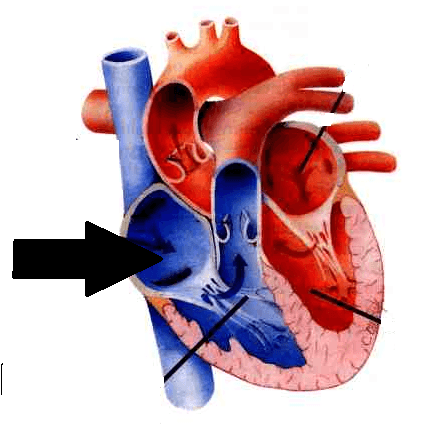
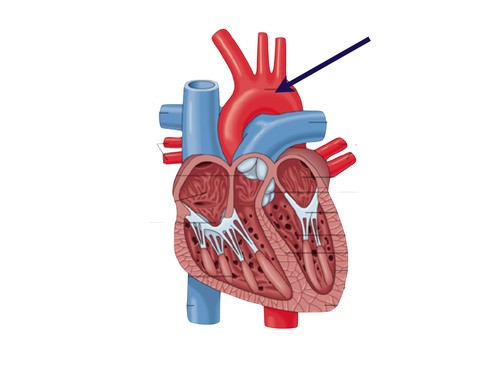
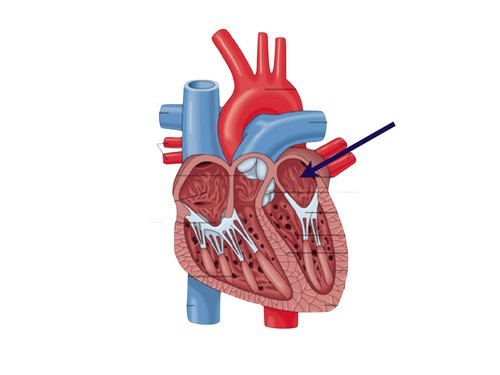
This chamber of the heart RECEIVES oxygen rich blood back from the lungs
Right Atrium
Left Atrium
Right Ventricle
Left Ventricle
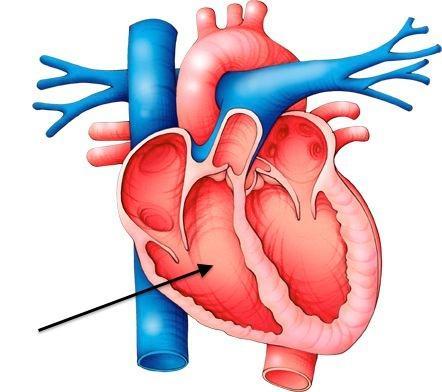
This chamber of the heart pumps the blood from the heart to the lungs through the pulmonary artery
Right Atrium
Left Atrium
Right Ventricle
Left Ventricle
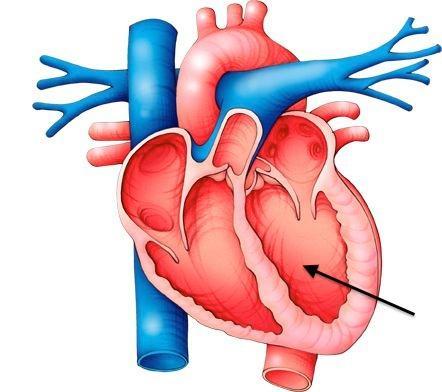
This chamber of the heart pumps the blood back out to the body cells through the Aorta
Right Atrium
Left Atrium
Right Ventricle
Left Ventricle
The structure responsible for pumping blood throughout the body is
the kidney
the stomach
the brain
the heart
How many chambers does the human heart have?
one
two
three
four
What are the flaps of tissue found in veins, that prevent blood from flowing backward.
valves
platelets
ventricle
antibodies
What are the 4 blood groups?
A, B, AB, ABC
A, B, AB, O
A, B, C, D
A, B, C, O
These structures located between the 2 atrium and the 2 ventricles that keep blood flowing in ONE DIRECTION are called
stops
veins
valves
gates
A group of cells located in the right atrium responsible for sending signals to other chambers causing them to contract is
start cells
nucleus
switch
pacemaker

The alternating expansion and relaxation of the artery wall caused by contraction of the left ventricle is
blood pressure
pulse
blood reading
palpitation

Which component of blood makes up the majority (highest percent)?
plasma
white blood cells
red blood cells
platelets
An iron-containing protein found in red blood cells is
hemoglobin
red pigment
platelets
erythrocyte
Platelets are important for which process?
fighting bacteria
carrying oxygen
recycling water
clotting
Which is the order of steps describing how white blood cells fight invaders in the body?
recognize the invader, produce chemicals to fight invaders, surround and kills invader
produce chemicals to fight invaders, surround and kills invader, recognize the invader
surround and kills invader, produce chemicals to fight invaders, recognize the invader
This blood vessel has a thick muscular layer to carry highly oxygenated blood
veins
artery
capillaries
ventricle
Vessels that move deoxygenated (low oxygen) are called
veins
arteries
capillaries
ventricles
Which of the following is NOT a function of the Circulatory system?
to distribute heat throughout the body
carries disease fighting white blood cells
transports oxygen and nutrients
produces new RED blood cells
Choose the correct order showing vessels with GREATEST pressure to LOWEST pressure.
artery, vein, capillary
artery, capillary, vein
vein, capillary, artery
capillary, vein, artery

What chamber of the heart is identified by the red arrow #1?
left atrium
right atrium
left ventricle
right ventricle

The the chamber of the heart identified with the red arrow #4....?
right atrium
left atrium
right ventricle
left ventricle
Click the left atrium, pulmonary artery, aorta and Inferior vena cava.
The circulatory system consists of what three parts?
Heart
Brain
Blood
Blood vessels
Liver
These are tubes that carry blood back to the heart
Arteries
pipes
Tubes
veins
What is the function of the heart?
Protects organs and produces red blood cells.
Generates heat.
Breaks down food into nutrients.
To acts as a pump to move the blood.
Label the following on the diagram
Running is an activity that causes the cells in the muscular system to use oxygen at a faster rate. Which system responds by delivering more oxygen to these cells?
digestive
nervous
circulatory
endocrine
Study of blood is
Ornithology
Zoology
Hematology
None
Arteries
Veins
Capillaries
Brochioles
These blood cells help fight infection and other diseases.
Red Blood Cells
White Blood Cells
Platelets
Plasma

Which blood part helps clot blood when an organism gets cut?
RBC
WBC
Plasma
Platelets
What molecule transports oxygen?
hemoglobin
biliverdin
bilirubin
erythropoietin
Put the path of blood circulation in heart in order...
Vena Cava
Right Atrium and Ventricle
Lungs
Left Atrium and Ventricle
Aorta
What is the main organ of the circulatory system?
Lungs
Heart
Capillaries
Veins
What is the function of the heart in the circulatory system?
To pump oxygenated blood to the body's tissues
To carry deoxygenated blood from the body's tissues to the lungs
To exchange nutrients, oxygen, and waste products with tissues
To return blood from the body to the lungs
Which blood vessel carries deoxygenated blood from the upper body to the heart?
Aorta
Superior Vena Cava
Inferior Vena Cava
Pulmonary Artery
What is the role of capillaries in the circulatory system?
They carry oxygenated blood from the lungs to the left atrium
They exchange nutrients and oxygen with tissues at the cellular level
They carry deoxygenated blood from the body to the right atrium
They carry oxygenated blood from the left ventricle to the body
Which type of blood vessels carry blood away from the heart?
Veins
Capillaries
Arteries
Venules
What is the function of the inferior vena cava?
Carry deoxygenated blood from the lower body to the right atrium.
Carry oxygenated blood from the lower body to the right atrium.
Carry deoxygenated blood from the upper body to the right atrium.
Carry oxygenated blood from the upper body to the right atrium.
True or False: There are six valves in the heart.
True
False
Which valves control blood flow from the atria to the ventricles?
Mitral and tricuspid valve
Aortic and pulmonary valve
Superior and Inferior Vena Cava
Capillaries and Alveoli
Veins carry blood ____________________ to heart while arteries carry blood _____________________________ the heart.
toward, away from
away from, toward
Put the flow of blood through your heart in order. Start with deoxygenated blood coming to the heart.
Right atrium
Right ventricle
lungs
left atrium
left ventricle
_________________ are thinner-walled vessels containing valves, while ______________________ are thicker-walled vessels.
Arteries, veins
Veins, arteries
Capillaries, veins
Arteries, capillaries
Which of the following does NOT belong in the cirulatory group?
capillaries
veins
lungs
arteries
Blood vessels that carry blood away from the heart called ___
Blood
heart
arteries
capillaries

When the heart contracts _____
blood leaves the heart
blood stays in the heart
blood goes into the heart
Select the three parts of our circulatory system.
Esophagus, trachea and heart.
Arteries, veins and heart.
Nerves, spinal chord and heart.
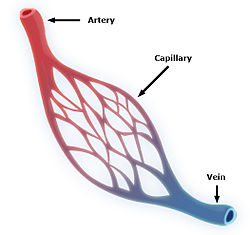


The diagrams show models of the circulatory systems of a fish and frog.
A student compared these diagrams. The student found that each of these organisms had a heart to pump blood. Which statement is supported by the student’s findings?
Some organisms are composed of one cell, while others are multicellular.
Many multicellular animals have similar organs and specialized systems.
The circulatory system in most organisms removes solid wastes from their bodies.
All animals have identical circulatory systems.

State the general relationship between exercise and heart rate in humans.
If a person exercises, then their heart rate will not change
If a person exercises, then their heart rate will increase
If a person exercises, then their heart rate will decrease
Person exercising and heart rate are not related
You are a blood cell flowing through a vena cava about to enter the heart, which main vessel will you flow through next?
Arteries, veins, and capillaries are three types of __________
heart valves
blood vessels
cells
veins

A
B
C
D

arterioles
What condition is happening when the heart cannot pump enough blood to meet the body’s needs?
hemophilia
When oxygen-rich blood from the lungs is pumped to the rest of the body so the cells can use the oxygen – and the oxygen-poor blood is then returned to the heart is...

What is it called when a blood vessel supplying blood to the brain is clogged ?
What are the surface molecules on an erythrocyte called?
agglutinins
agglutinogens
The circulatory system is made up of two circuits called the ...
oxygenated and deoxygenated
The sac that surrounds and protects the heart?
endocardium
epicardium
myocardium
pericardium
Which choice below correctly identifies the layers of the heart from the most outer layer to the most inner layer?
epicardium, myocardium, endocardium
endocardium, myocardium, epicardium
myocardium, endocardium, epicardium
myocardium, epicardium, endocardium
Which sample is B-


What is produced by your body in response to foreign antigens, such as the wrong type of blood?
agglutinates
clotting factors
phagocytes
antibodies
Which area of the heart is likely damaged if the patient has a heart attack?
Endocardium
Myocardium
pacemaker
pericardium

