
 Worksheets
CHM 130: Practice final (modules 4-7)
Total questions: 75
Worksheet time: 2hrs 0mins
Label the parts of the reaction diagram.
reactants
products
activation energy
Which of the following would increase the rate of reaction? Select ALL correct answers.
Addition of a catalytst
Increasing the temperature
Decreasing activation energy
Decreasing the energy of the products
Increasing the concentration of reactants
Reaction rates are increased by (a) the (b) between reactants.
What is activation energy?

What is the activation energy (in kJ) of the reaction shown in the diagram?
Substance that increases the rate of reaction by decreasing activation energy.
(a)
How do catalysts speed up the rate of reaction?
By decreasing the energy difference between producst and reactants
By adding energy to a reaction
By decreasing the activation energy required for a reaction
By increasing the kinetic energy of reactants
In exothermic reactions, energy is (a) .
In endothermic reactions, energy is (b) .
Organize these options into the right categories
ΔE is negative
ΔE is positive
Energy is released
Energy is absorbed
Energy is a product
Energy is a reactant
A + B --> C + energy
X + Y + energy --> Z
Products are lower energy than reactants
Products are higher energy than reactants

Is this reaction exothermic or endothermic?
Exothermic, because the products are lower energy than the reactants
Endothermic, because the products are lower energy than the reactants
Exothermic, because the products are higher energy than the reactants
Endothermic, because the products are higher energy than the reactants

Is this reaction exothermic or endothermic?
Exothermic, because the products are lower energy than the reactants
Endothermic, because the products are lower energy than the reactants
Exothermic, because the products are higher energy than the reactants
Endothermic, because the products are higher energy than the reactants
What does it mean for a chemical reaction to be in equilibrium?
If the equilibrium for reaction shifts to the left, what will happen?
W + X + heat ⟺ Y + Z
More W, X, and heat will be produced
More Y and Z will be produced
What is Le Chatelier's Principle used for in chemistry?
According to Le Chatelier's principle, what factors cause predictable changes to a system in equilibrium?
Changes in the shape of the reaction vessel
According to Le Chatelier's principle, what will happen if additional reactant is added?
The system will move in the forward direction to consume the added reactant.
The system will move in the reverse direction to replace the added reactant.
A + B ⟺ C + D + heat
If A is removed from the reaction, the reaction will run in the (a) direction,
to generate more (b) .
A + B ⟺ C + D + heat
If B is added to the reaction, the reaction will run in the (a) direction,
to (b) the added reactant.
Predict the equilibrium shift for each situation
A + B ⟺ C + heat
Decreasing [A]
Decreasing [B]
Increasing [C]
Increasing the temperatur
Increasing [A]
Increasing [B]
Decreasing [C]
Decreasing the temperature
Predict the equilibrium shift for each situation
CH4+CCl4 ⟺ CO + Cl2
Increasing [CO]
Increasing [Cl2]
Decreasing [CH4]
Decreasing [CCl4]
Decreasing [CO]
Decreasing [Cl2]
Increasing [CH4]
Increasing [CCl4]
Organic Chemistry is the study of the structure, properties, composition, reactions, and preparation of (a) , derived from (b) things
Carbon will always form ___ bonds.
Hydrocarbons where each carbon is bonded to four other atoms, and all bonds are single bonds.
Alkanes
Alkenes
Alkynes
Hydrocarbons that contain at least one carbon-to-carbon double bond.
Alkanes
Alkenes
Alkynes
Hydrocarbons that contain at least one carbon-to-carbon triple bond.
Alkanes
Alkenes
Alkynes
What is the prefix used when referring to ring structures?
Pyro-
Aro-
Cyclo-
None of the above
Characterized these types of organic molecules as saturated or unsaturated compounds
Alkanes
Only C-C single bonds
Cycloalkanes
At least one double or triple bond
Alkenes
Alkynes
Arenes
Match the functional group with the suffix that is used for naming.
Alkanes
-ane
Alkenes
-ene
Alkynes
-yne
Sort the steps for naming alkanes.
Find the longest carbon chain
Number the carbon chain so substituents have lowest possible numbers
Identify the types of substituents

What is the common name given to this alkyl branch?
Propyl
Methyl
Isopropyl
Ethane

What is the common name for alkyl branch A in the image?
sec-butyl
propyl
neopentyl
isopropyl
When writing names for organic compounds, commas separate....
numbers
names from numbers
When writing names for organic compounds, dashes separate....

What is the parent name of this structure (based on the longest carbon chain)?
nonane
pentane
heptane
cyclohexane

What is correct skeletal structure of this compound


2,5-dimethyloctane


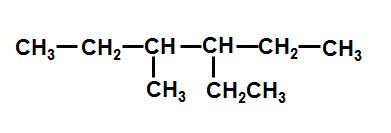
Give the IUPAC name for this compound
3-methyl-4-ethylhexane
3-ethyl-4-methylhexane
3-methyl-4-ethylheptane
3-ethyl-4-methylheptane
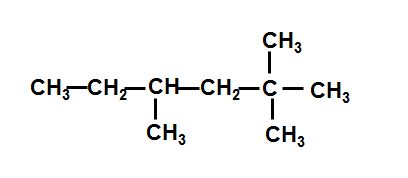
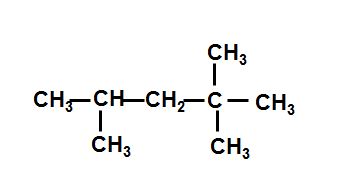
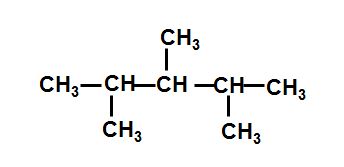
Which is the structures with IUPAC nomenclature
2,2,4-trimethylpentane
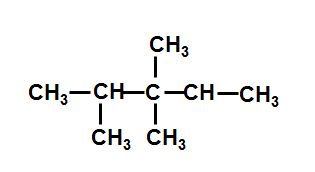

What best describes this organic molecule?
Aldehyde
Ketone
Alcohol
Alkane
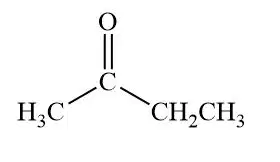
What best describes this organic molecule?
Aldehyde
Ketone
Alcohol
Alkane
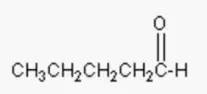
What best describes this organic molecule?
Aldehyde
Ketone
Alcohol
Alkane
Select ALL of the ALCOHOLS:


CH3CH2CH2OH
CH3CH2COOH

Which clases of organic molecules contain a CARBONYL group? Select ALL correct answers.
Alcohols
Carboxylic acids
Ethers
Aldehydes
Ketones
Match the functional group with the type of organic molecule
hydroxy group
alcohol
terminal carbonyl group
aldehyde
internal carbonyl group
ketone
carbonyl attached to hydroxyl
carboxylic acid
Rank these from lowest boiling point to highest boiling point
Alkanes
Ethers
Aldehydes
Alcohols
Rank these alcohols from lowest to highest boiling point.
Ethanol
Butanol
Hexanol
Octanol
The structure of 3-methyl-4-hydroxyhexanal is :


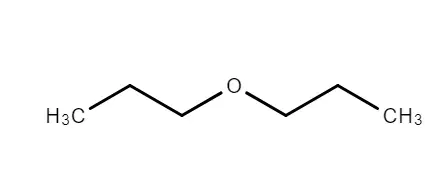
What is the name for this molecule?
3-hexyl ether
methyl pentyl ether
dipropyl ether
3-oxyhexane
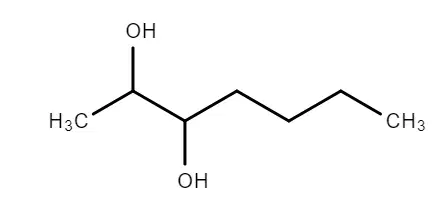
What is the name of this organic structure?
2,3-heptanal
2,3-heptanol
2,3-hydroxyheptane
2,3-heptanediol

Is this an aldehyde or a ketone?
aldehyde
ketone
Which of these compounds is an aldehyde?


Which one is propanal?


Name this
4-isopropyl pentanal
2-isopropyl pentanal
2-propyl-3-methylbutanal

Name the functional group shown.
sulfhydryl
hydroxyl
amine
phosphate

Which functional group is shown?
amine
ketone
amide
organic acid

What functional group is shown?
amide
ketone
organic acid
amine

Name the compound based on the functional group present.
ethanamine
methanamine
amino acid
propanamine

This compound is an example of
a primary amine
a secondary amine
a tertiary amine
cannot be classified as a primary, secondary or tertiary amine
What is the basis for classifying amines as primary, secondary, or tertiary?
the number of carbon atoms bonded directly to the nitrogen atom
the number of carbon atoms bonded to a carbon bearing nitrogen
the number of nitrogen atoms present
the number of hydrogen atoms present

What is the IUPAC name for this compound?
N-isopropylmethanamide
N-ethylmethanamide
1-methylethanamide
1-propanamide
Rank the compounds according to solubility in water, from least soluble (1) to most soluble (3).


1-pentanamine

pentanamide

Is this monosaccharide a ketose or an aldose?
(a)

Is this monosaccharide a ketose or an aldose?
(a)

What best describes this monosaccharide?
Aldotetrose
Aldotriose
Ketotetrose
Ketotriose
Match the type of disaccharide to its source.
Lactose
Found in milk
Sucrose
Commonly known as table sugar
Maltose
Found in beer
Glucose
Fructose
Galactose
Lactose
Maltose
Sucrose
Label the parts of the amino oacid
Sugar
Phosphate group
Amino group
Carboxyl group
R group
Match the level of protein structure with the types of interactions that stabilze that level of structure
Covalent peptide bonds
Primary protein structure
Hydrogen bonds
Secondary protein structure
Hydrophobic interactions, hydrogen bonds, disulfide bridges, and ionic bonds
Teriatry protein structure

What level of protein structure is the 3D shape of a single polypeptide chain?
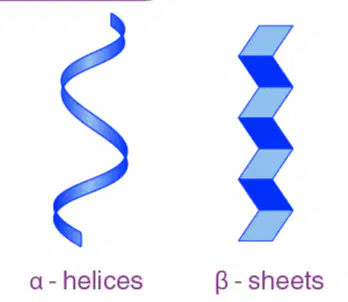
What level of protein structure is maintained by hydrogen bonds that form alpha-helices and beta-sheets?
The region on the surface of the enzyme that the substrate binds to is the
active site.
activation energy.
lock-and-key model.
catalysis.
Enzymes act as catalysts to __________ the rate of a biochemical reaction by ___________ the activation energy needed for the reaction to occur.
increase, lowering
decrease, lowering
increase, raising
decrease, raising
As a substrate approaches an active site, the substrate and enzyme both slightly change shape, known as
concentration increase
lock and key
induced fit
enzyme substrate specificity
According to the induced fit model, as a substrate approaches an enzyme, it induces a ______________ in both the substrate and the active site.
conformational change
chemical change
color change
Which of the following do NOT affect enzymes ability to function?
pH
substrate concentration
temperature
color

