
 Worksheets
Study Guide (Unit V: Molecular Genetics)
Total questions: 113
Worksheet time: 3hrs 43mins
An RNA nucleotide contains which 3 things?
ribose sugar
deoxyribose sugar
phosphate group
nitrogen bases (G, C, A, U)
nitrogen bases (G, C, A, T)
RNA is a molecule used by the cell to take instructions coded in DNA to make
amino acids
proteins
nucleotides
Which type of RNA transfers amino acids?
mRNA
rRNA
tRNA
Which type of RNA are ribosomes made of and reads the mRNA?
mRNA
rRNA
tRNA
Which type of RNA reads the code of mRNA?
mRNA
rRNA
tRNA
Which type of RNA is a copy of the DNA “code” instructions for building proteins?
mRNA
rRNA
tRNA
Base Pairing in DNA G pairs with C and A pairs with T, BUT in RNA G pairs with C and A pairs with
G
C
A
T
U

What is DNA and RNA made of?
Sugar, Phosphate, nitrogen base
Phosphate, Adenine, nitrogen base
Thymine, Adenine, Cytomine
Phosphate, Nitrogen, Adenine
ATG TGA CAG
What is RNA used to make?
DNA
mRNA
tRNA
proteins
Which is single stranded?
DNA
RNA
both
none
Has different types: messenger, ribosomal, transfer
DNA
RNA
both
none
What would the complementary strand of the RNA be?
AUGCAACCGU
(a)
What would the complementary strand of DNA be?
GTGGCATTC
(a)
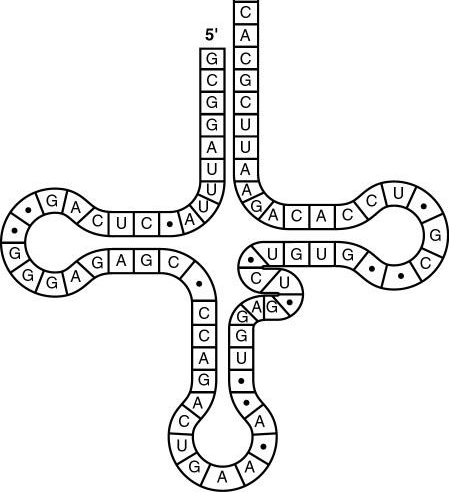
What is the central dogma of molecular biology?
DNA to tRNA to mRNA
RNA to DNA to Protein
DNA to RNA to Protein
mRNA to tRNA to rRNA
When during the cell cycle is a cell’s DNA replicated?
S Phase
M Phase
G1 Phase
G2 Phase

A, B, and C are the three types of
DNA
RNA
Protein
Enzymes
Who was credited for discovering the structure of DNA?
Franklin and Wilkins
Hershey and Chase
Franklin and Griffith
Watson and Crick
Which scientist made x-ray diffraction photos of DNA?
Franklin
Wilkins
Watson
Crick
What is the shape of DNA?
double helix
triple helix
complementary helix
nitrogenous helix
During DNA replication, a DNA strand that has the bases CTAGGT produces a complementary strand with the bases
GAUCCA
AGCTTG
GATCCA
TCGAAC

The Figure shows the % of bases in a DNA sample. How much Thymine should you expect to find in the sample?
44%
28%
24%
22%
What happens during translation?
Messenger RNA is made from a DNA code.
The cell uses a messenger RNA code to make proteins.
Transfer RNA is made from a messenger RNA code.
Copies of DNA molecules are made.
What is produced during transcription?
mRNA
DNA
RNA Polymerase
proteins
The amino acids are carried by the rRNA.
This statement is True.
This statement is False - change the underlined word to mRNA.
This statement is False - change the underlined word to tRNA.
This statement is False - change the underlined word to DNA.
One mRNA molecule carries the message of only one gene.
This statement is True.
This statement is False - change the underlined word to tRNA to make it true.
This statement is False - change the underlined word to rRNA to make it true.
This statement is False - change the underlined word to DNA to make it true.
Which of the following is NOT a function of proteins?
build tissues such as bone and muscle
store and transmit heredity
control the rate of reactions and regulate cell processes
help to fight disease
In eukaryotes, DNA
is circular.
is located in the ribosomes.
floats freely in the cytoplasm.
is located in the nucleus.
ATG TGA CAG
The two strands of DNA are
Parallel
Antiparallel
Perpendicular
At Right Angles
Which enzyme fixes the Okazaki fragments?
Helicase
Polymerase
Ligase
Primerase
DNA polymerase is able to build the new DNA ______ along the leading strand.
continuously
only in short fragments
very slowly
prokaryotically
Helicase
DNA Polymerase
Ligase
Primase


DNA polymerase
Ligase
Primase
Helicase
Which enzyme is responsible for checking DNA for errors, and fixing it?
DNA Polymerase
Primase
Helicase
RNA Polymerase
Okazaki fragments are found on the _______________ strand
Leading
Lagging
DNA is built in this direction
5' to 3' (new nucleotides added to the 3' end)
3' to 5' (new nucleotides added to the 5' end)
3' to 5' (new nucleotides added to the 3' end)
5' to 3' (new nucleotides added to the 5' end)

The picture below shows the steps of DNA replication beginning with step one and ending with step three.
Because you are reusing the old, or parent, DNA strand DNA replication is said to be
Semi- Conservative
Semi-discontinuous
Continuous
Fully-Conserveative

The picture below shows an enzyme unwinding and unzipping DNA.
What is the name of this enzyme?
DNA Helicase
DNA Ligase
DNA polyermase
RNA Polymerase
Which is the first step?
DNA Helicase unwinds original DNA strand
RNA Primase lays down RNA primer for new nucleotide bases.
DNA polymerase builds new strands by bring in new nucleotide bases.
Ligase knits together fragments on lagging strand
Which is the second step?
DNA Helicase unwinds original DNA strand
RNA Primase lays down RNA primer for new nucleotide bases.
DNA polymerase builds new strands by bring in new nucleotide bases.
Ligase knits together fragments on lagging strand
Which is the third step?
DNA Helicase unwinds original DNA strand
RNA Primase lays down RNA primer for new nucleotide bases.
DNA polymerase builds new strands by bring in new nucleotide bases.
Ligase knits together fragments on lagging strand
Which is the fourth step?
DNA Helicase unwinds original DNA strand
RNA Primase lays down RNA primer for new nucleotide bases.
DNA polymerase builds new strands by bring in new nucleotide bases.
Ligase knits together fragments on lagging strand

Which letter in the picture below depicts the leading strand in DNA replication?
A
C
B
None of the above
Which letter in the picture below depicts the lagging strand in DNA replication?
A
C
B
None of the above
Which letter in the picture below depicts the replication fork in DNA replication?
A
C
B
None of the above
If a person suffered from a disorder where their DNA fragments were unable to fill in the missing slots in between the fragments of the lagging strand, they would most likely have a disorder that affected which enzyme?
DNA Helicase
DNA Ligase
DNA polyermase
RNA Polymerase
DNA replication runs from ______' to _____' and is said to be ______________________
5, 3, antiparallel
3, 5, antiparallel
5, 3, parallel
3, 5, parallel
Okazaki fragments appear on which strand of DNA during DNA replication?
lagging
leading

What gray enzyme in the picture is shown removing the RNA primer?
DNA ligase
DNA Polymerase
Exonuclease
RNA Primase
Where does Transcription occur
Nucleus
Ribosome
ER
Mitochondria
What is the mRNA for the following DNA strand?
TAC GTA
GCT AGC
ATG CAT
AUG CAU
What is the end product of translation?
mRNA that can leave the nucleus
Amino acid chain
monosaccharide chain
Anticodon
What is an anticodon?
rRNA
an amino acid
Three nucleotide sequence found on mRNA
Three nucleotide sequence found on tRNA
During Transcription, DNA is converted into ____
mRNA
tRNA
rRNA
a Protein
During Translation, mRNA is converted into a _______
DNA
Protein
tRNA
rRNA

the tRNA carries an
Amino Acid
Polysaccaride
Lipid
DNA
Many amino acids and put together and folded up to form a ______
Protein
DNA strand
mRNA strand
Carbohydrate

During Translation, mRNA finds a ________ to make a protein.
Nucleus
Ribosome
Amino Acid
Mitochondria

Use your codon chart to match the mRNA CUU to the correct amino acid
VAL
TYR
LEU
PHE

Use your codon chart to match the mRNA ACU to the correct amino acid.
Thr
Ala
Val
Gly
Amino acids form a polypeptide chain that is then folded up to form a protein, what type of bond holds together a polypeptide chain?
Hydrogen Bonds
Peptide Bonds
Nitrogen Bonds
Carbon Bonds

Use your codon chart to find the amino acid that codes for AGU
Tyr
Gly
Arg
Ser

Use your codon chart to find the amino acid that codes for the mRNA codon GCA
Thr
Ala
Pro
Ser

Use your codon chart and find the amino acid that codes for the mRNA codon UAA
Phe
Tyr
START
STOP
Use your codon chart to figure out what amino acid codes for the mRNA codon AUG
START
(Met)
Ile
Val
Leu
ATG CCA AAT
An operon is
a genetic on/off switch in prokaryotes
a genetic on/off switch in eukaryotes
a group of related genes and the associated gene switches in prokaryotes
a group of related genes and the associated gene switches in eukaryotes
What is the inducer in the lac operon?
cAMP
glucose
lactose
CRP
Negative control of gene expression is mediated by __ and results in a(n) __ in the frequency of transcription.
activators, increase
activators, decrease
repressors, increase
repressors, decrease
In the trp operon, __ acts as a __ and helps the repressor bind to the operator.
tryptophan, corepressor
tryptophan, inducer
lactose, corepressor
lactose, inducer
Which of the following is/are similarities between prokaryotic and eukaryotic gene expression?
both use proteins to interact with the DNA to control gene expression
both have histones complexed with their DNA
both separate the processes of transcription and translation spatially
all of the above
The purpose of the lac operon is to produce enzymes that
synthesize lactose
use lactose
synthesize tryptophan
use tryptophan
The lac Z gene codes for:
permease
beta-galactosidase
repressor of lac operon
transacetylase
Which of the following is not a structural gene?
lac z
lac y
lac a
lac I

Traits can be inherited or influenced by ______ factors, like the pH of the soil in Hydrangeas.
environmental
mutation
variation
genetic

What causes mutations?
Mutagens in the environment
UV rays from the sun
Gamma rays and X-rays
All of the above.
A mutation can be...
harmful
helpful
neutral
harmful, helpful, or benign(neutral)
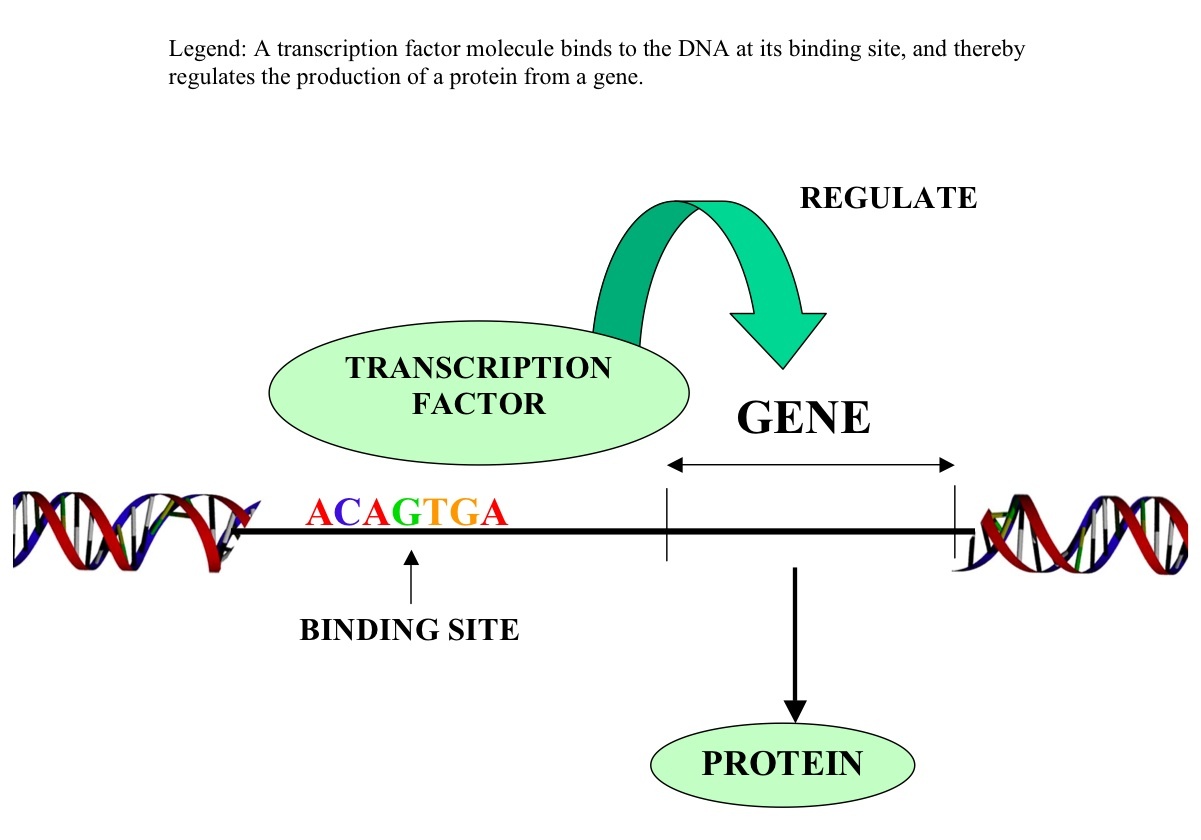
Transcription factors are responsible for
turning genes on
turning genes off
turning genes both on and off
stopping transcription
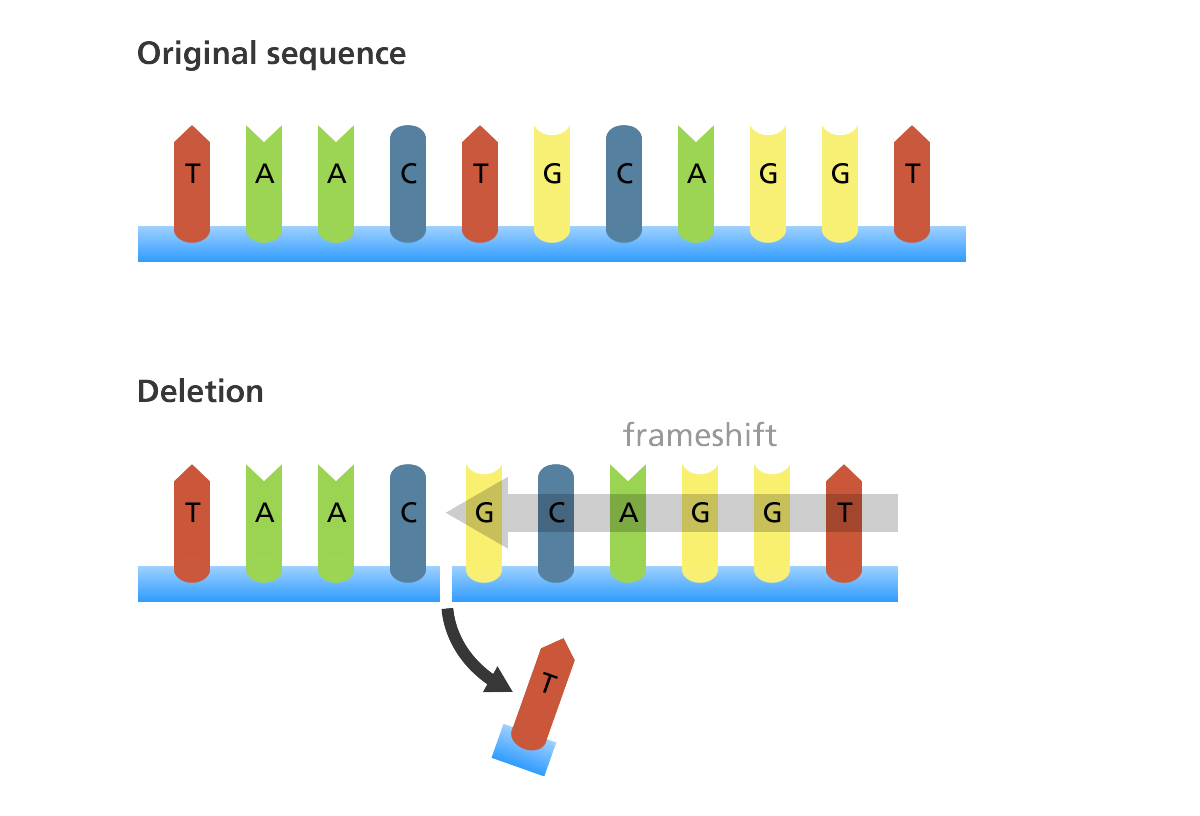
What type of gene mutation has occurred here?
Original DNA: T-G-A-C-C-A
Mutated DNA: T-G-A-C-C-A-A
Substitution
Deletion
Insertion
Silent

The karyotype diagram below represents a human female with the genetic disorder known as Turner syndrome. Chromosomal analysis of this karyotype reveals the mutation is a result of
a missing X chromosome
a missing Y chromosome
an extra 21 chromosome
missing chromosome #9

The karyotype diagram below represents a human male. Chromosomal analysis of this karyotype reveals the abnormality in this karyotype is:
a missing X chromosome
a missing Y chromosome
an extra 21 chromosome
missing chromosome #9

Homologous pairs:
(select all that apply)
Have the same genes on them
May have different alleles
Each comes from one parent
Combine to give you your genotypes
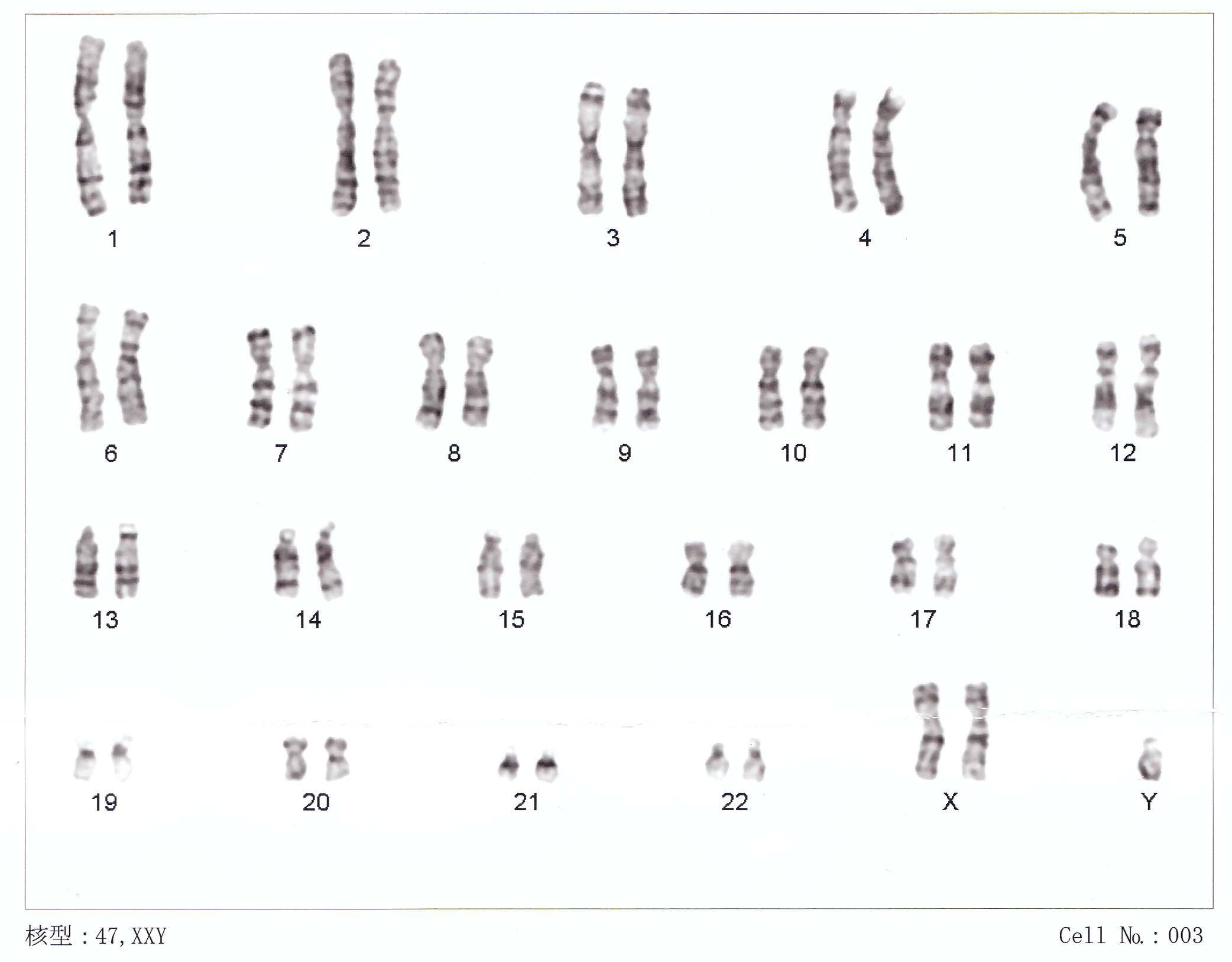
These are the chromosomes of someone with Kleinfelters syndrome. What is different about their chromosomes?
There is only one Y chromosome
One of the 5th chromosomes is too curved
There is an extra X chromosome
There are too few chromosomes
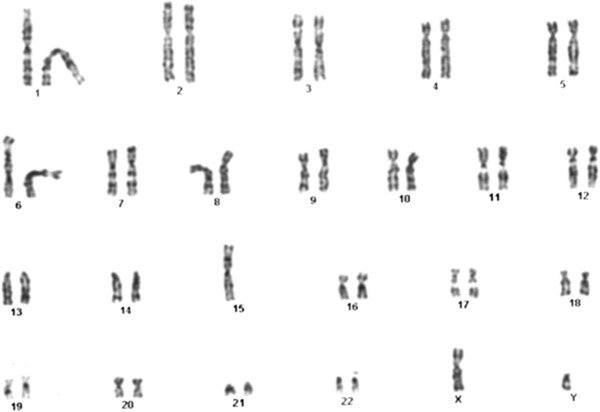
This person has Angel Mans syndrome. What is different about their chromosomes?
Chromosome 1 is misshapen
Chromosomes 21 is too small
They are missing one of chromosome 15
Chromosomes 7 and 8 look weird
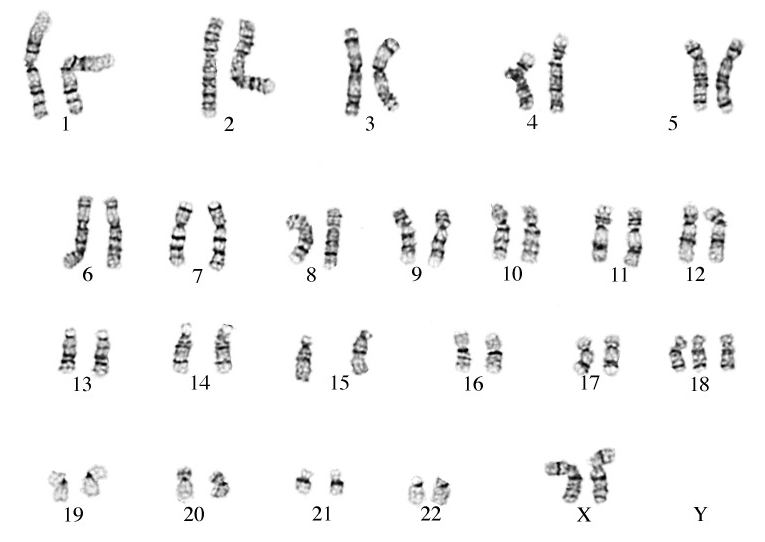
This is known as Edwards Syndrome, can you identify the chromosomal mutation?
Chromosomes 1 and 2 are bent
There is no Y chromosome
This persons chromosomes are normal
There are 3 of chromosomes 18

