
 Worksheets
Y12 Chemistry Revision Quiz
Total questions: 100
Worksheet time: 2hrs 42mins
What gas is always produced when a metal reacts with water?
Oxygen
Carbon Dioxide
Hydrogen
Carbon Monoxide
What is name of the gas which is produced when metals react with acids?
Hydrogen
Carbon Dioxide
Nitrogen
Oxygen
When a metal compound reacts with a more reactive metal, what sort of reaction occurs?
Displacement
Neutralisation
Combustion
No Reaction
When copper and magnesium sulphate are mixed together, there is no reaction. Why?
Magnesium is more reactive than copper
Copper is more reactive than magnesium
Copper never reacts with metal salts
Magnesium Sulfate never reacts with metals

Magnesium chloride + Sodium → ?
Sodium chloride + Magnesium
Magnesium chloride + Sodium (No change)
Sodium magnesium + Chlorine
Magnesium sodium chloride

Zinc sulphate + Magnesium → ?
Magnesium + Sulfur + Hydrogen
Zinc sulfate + Magnesium
Magnesium sulfate + Zinc
Zinc + Sulfur + Hydrogen
What is the correct equation when potassium reacts with water?
2K (s) + H2O (l) --> KOH (aq) + H2 (g)
K (s) + 2H2O (l) --> KOH (aq) + 2H2 (g)
2K (s) + 2H2O (l) --> 2KOH (aq) + H2 (g)
K (s) + H2O (l) --> KOH (aq) + H2 (g)
Which of the following does not react with water?
Lithium
Magnesium
Lead
Calcium
Which one of the following metals reacts most vigorously with cold water?
Sodium
Magnesium
Copper
Zinc
Which four numbers a, b, c and d are written to balance the equation?
a Fe (s) + b H2SO4 (aq) → c FeSO4(aq) + d H2 (g)
1,1,1,1
2, 3, 2, 2
3, 4, 1, 2
2, 3, 1, 4
Given the equation ...
2Na(?) + 2H2O(?) → 2NaOH(X) + H2(?)
Which state symbol should be where (X) is?
(s)
(g)
(l)
(aq)
Which one of the followings would result in a displacement reaction?
Iron with magnesium chloride
Magnesium with iron chloride
Iron with Zinc Sulphate
Gold with silver nitrate
Oxidation is the _________ of electrons.
loss
gain
sharing
transfer
Reduction is the ___________ of electrons.
loss
gain
sharing
transfer
In the reaction; 2Ca(s) + O2(g) --> 2CaO(s), calcium is __________
Reduced
Synthesized
Oxidized
None of the above
What is the substance that oxidizes another substance by accepting its electrons.
Reducing agent
Oxidation number
Combustive agent
Oxidizing agent
What is the substance that reduces another substance by losing electrons.
Reducing agent
Half-reaction
Electronegative atom
Oxidizing agent
What element rusts?
Carbon
Iron
Manganese
Potassium
What prevents rusting?
Painting
Washing
Dusting
Sanding
What is the chemical formula of rust?
Fe2O3
Fe2O3.H2O
Fe2O3.xH20
Fe(OH)2.xH2O
Which of the followings is not a protection method of rusting?
Galvanizing
Electroplating
Sacrificial metal
Heating with carbon
What metal in reactivity series is extracted by electrolysis?
Iron
Lithium
Lead
Gold
Which method is the best to extract zinc from its ore?
Heating with coal
Electrolysis
Mining from earth crust
Heating with limestone
What is the position of metal X in reactivity series in according to following reactions?
X(s) + 2 2HCl(aq) → XCl2(aq) + H2(g)
X(s) + CuSO4(aq) → XSO4(aq) + Cu(s)
X(s) + FeSO4(aq) → no reaction
It is above iron
Its between Cu and Fe
Its between Au and H
Its below hydrogen
Oxidation is the _________ of electrons.
loss
gain
sharing
transfer
Reduction is the ___________ of electrons.
loss
gain
sharing
transfer
What is the oxidation number of nitrogen in N2?
-3
0
+4
-1


Gaining oxygen is an example of...
oxidation
reduction
Which of the following represents oxidation?
C → CH4
Fe3+ → Fe2+
Cl2 → 2Cl-
Zn → ZnO
Mg → Mg2+ + 2e–
Which element is oxidised in the reaction Zn + 2HCl → ZnCl2 + H2
Zinc
Hydrogen
Chlorine
None
What element rusts?
carbon
manganese
iron
potassium
What environmental element assists rusting?
nitrogen
oxygen
carbon
hydrogen

A rusting bicycle
physical change
chemical change

What conditions are required for rusting?
dry cold conditions
dry hot conditions
hot damp conditions

Rusting is an example of
oxidation
reduction
What two things cause Iron to Rust ?
Air and Oxygen
Water and Carbon dioxide
Oxygen and Water
Carbon dioxide and Air
What is the chemical name given to Rust ?
Iron dioxide
Iron oxide
Steel oxide
Carbon dioxide
What prevents Rusting
Painting , Oiling , Galvinising
Washing with water
Raising the temperature of a chemical reaction would make the reaction __________________.
happen slower
stop completely
happen faster
proceed as normal

In which tube will the nail go rusty?
The nail in tube A will go rusty.
The nail in tube B will go rusty.
The nail in tube C will go rusty.
Which factors affect the rate of a reaction?
temperature
concentration
surface area
pressure
catalyst
Why does a higher concentration increase the rate of reaction?
it increases the amount of reactants
it lowers the activation energy
it increases the energy of particle collisions
it increases the frequency of particle collisions
Why does a higher temperature increase the rate of a reaction?
it increases both the frequency and energy of particle collisions
it only increases the frequency of particle collisions
it only increases the energy of particle collisions
it reduces the activation energy of the reaction
Grinding a effervescent tablet into powder increases the rate of reaction due to increased
concentration
surface area
temperature
reactants
Increasing the temperature gives particles more __________.
Time
Energy
Space
Frequency
As the frequency of ______________ increases, the rate of reaction increases.
Time
Reactions
Collisions
Reactants
Adding a catalyst ___________ the activation energy.
Raises
Lowers
Doesn't affect
Inreases
The minimum amount of energy needed for colliding particles to react is called
Chemical Energy
Kinetic Energy
Activation Energy
Potential Energy
Substance that changes the rate of a chemical reaction without being consumed in the reaction
bonding
catalyst
chemical reaction
activation energy
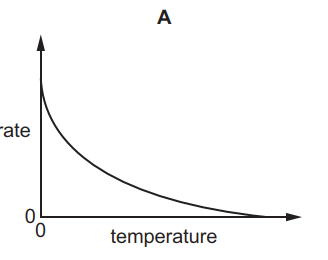
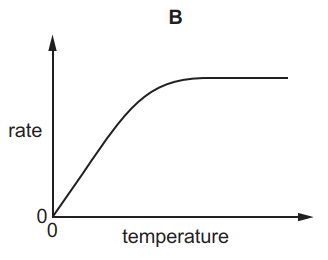
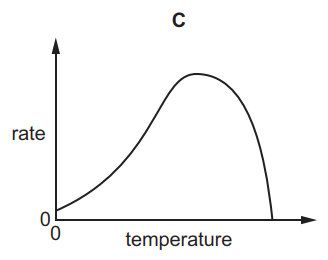
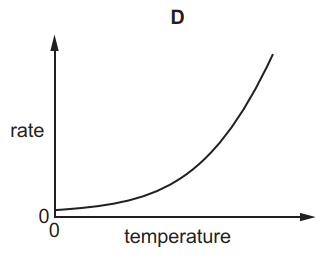
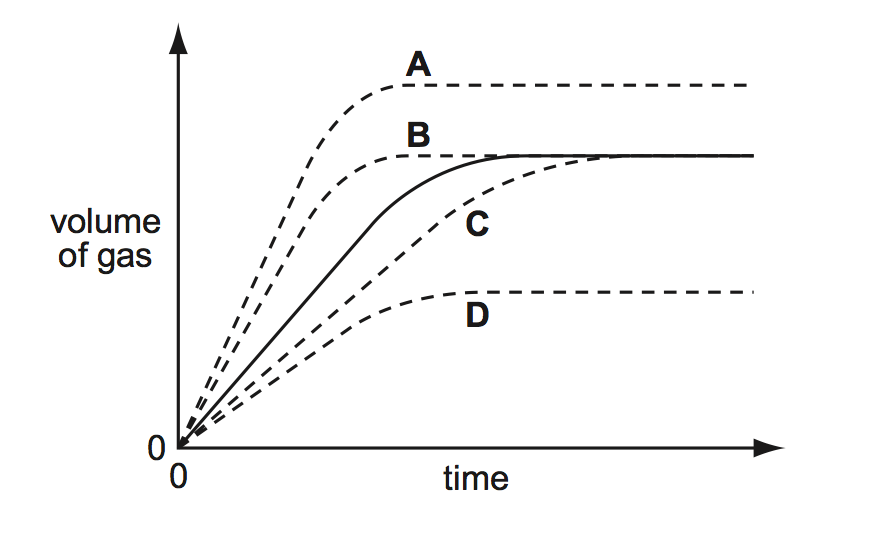
Which graph shows the effect of increasing temperature on the rate of reaction of calcium carbonate with dilute hydrochloric acid?

P, Q, R and S are pieces of apparatus.
Which row describes the correct apparatus for the measurement made?
A
B
C
D
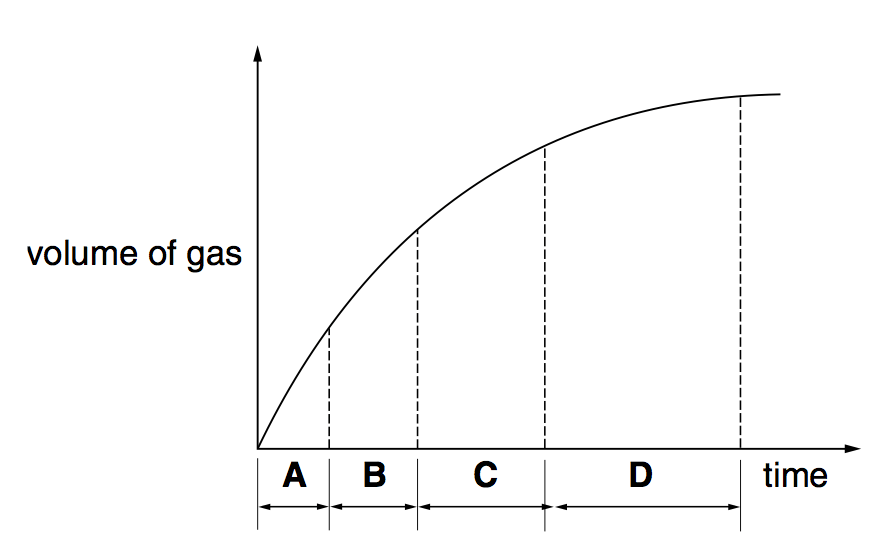

Icing sugar has a greater ______ _____ than a solid cube of
sugar.
Surface Area
Catalyst
Temperature

hydrogen peroxide → water + oxygen
The diagrams show the effect of adding blood to the solution. What could be the reason for the observed change?
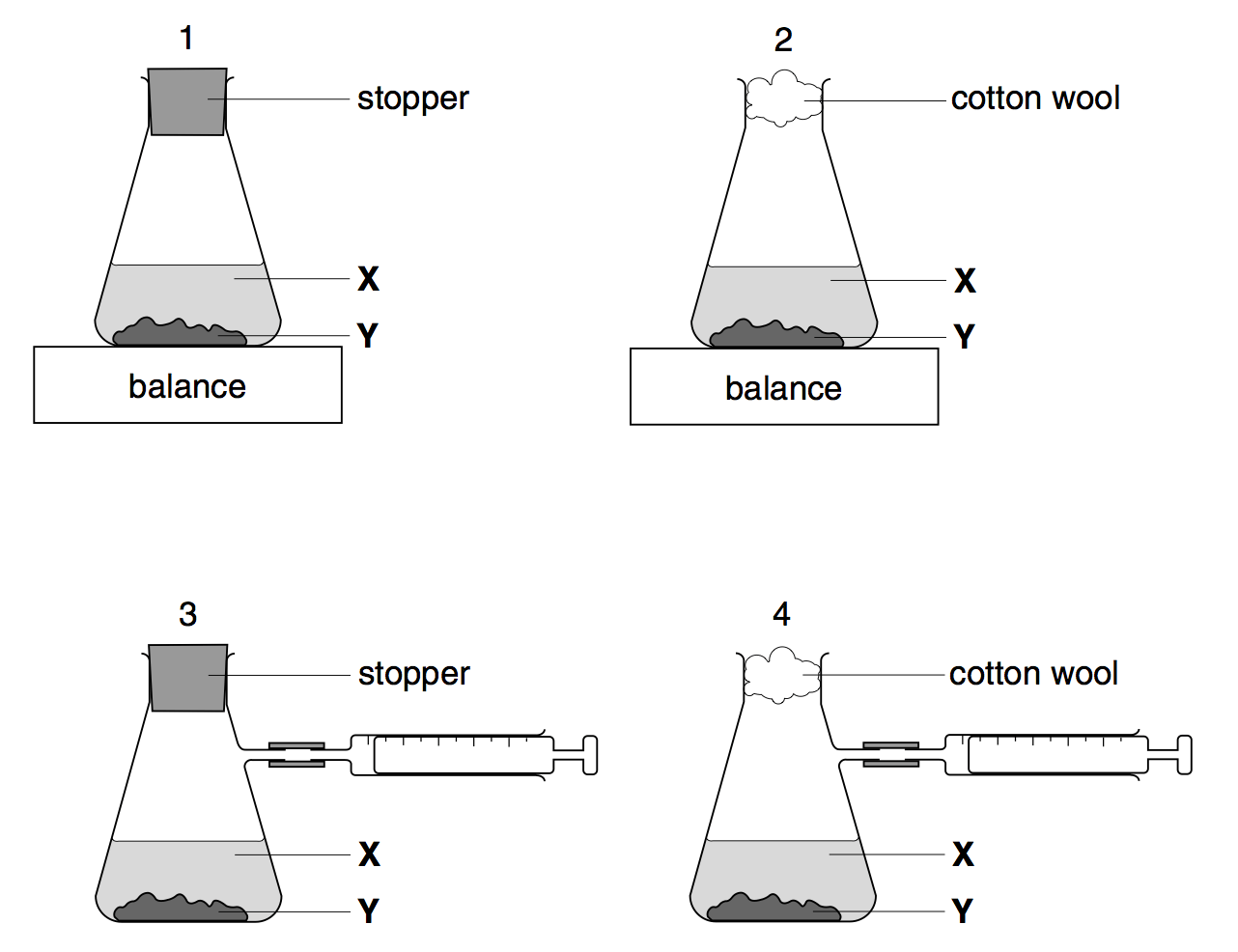
Which two diagrams show suitable methods for investigating the speed of the reaction?

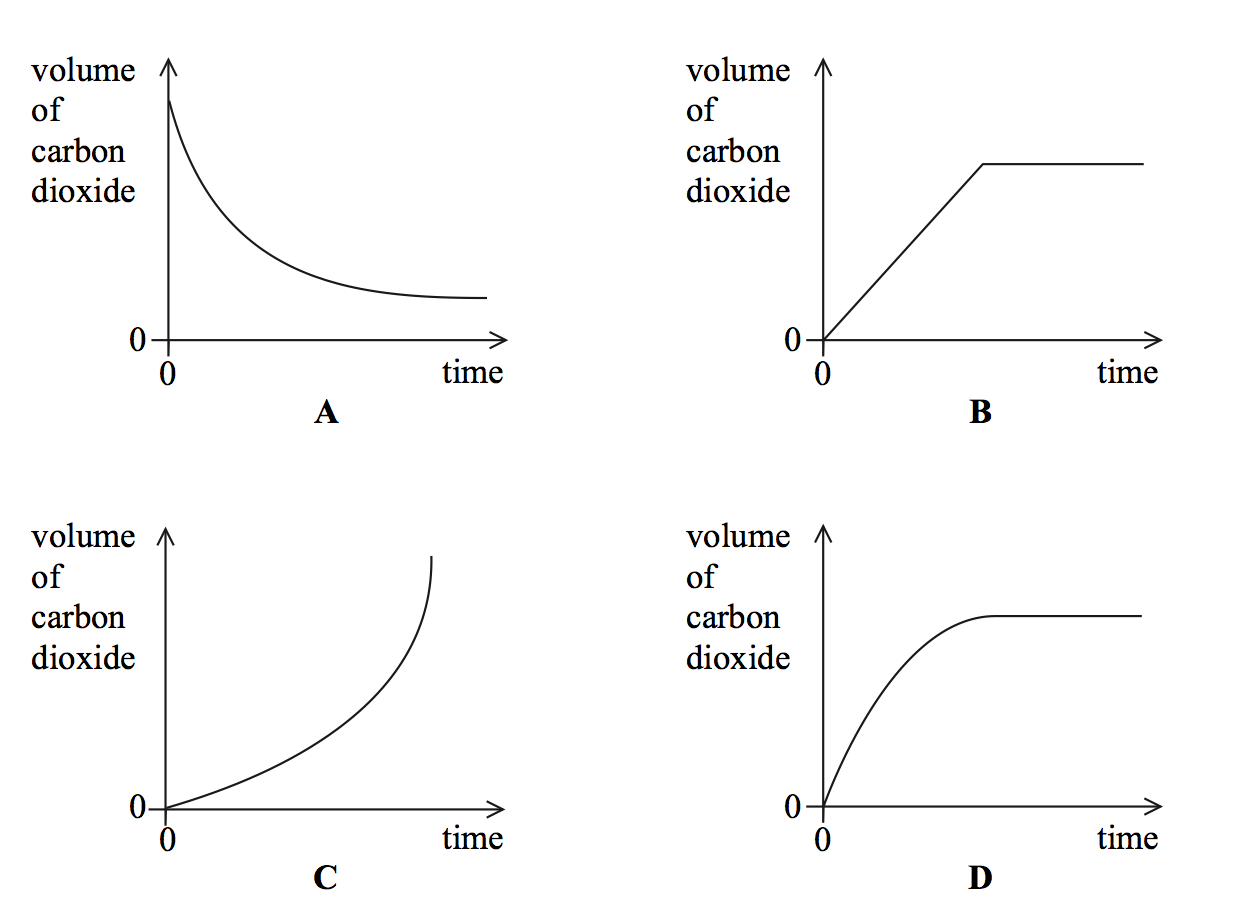
Which graph shows the correct results?

Adding a catalyst ___________ the activation energy.
Raises
Lowers
Doesn't affect
Inreases
Chemical reactions occur when reacting particles....
collide
pass
interact
are mixed
The minimum energy particles must have to react is the
acting energy
active energy
activation energy
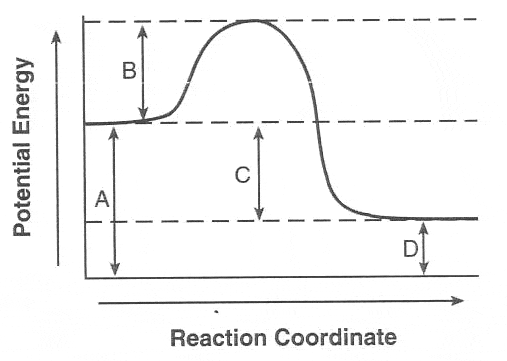
A reaction profile shows....
the relative difference in temperature of reactants and products
the relative difference in amounts of reactants and products
the relative difference in energy of reactants and products
the relative difference in volume of reactants and products
Bond making is
Endothermic
Exothermic
Bond breaking is..
Endothermic
Exothermic

Which letter shows the activation energy
A
B
C
What is the definition of activation energy? Two answers are required.
The energy needed to start a reaction
The temperature needed to start a reaction
The minimum energy that particles must have to react
The maximum energy that particles must have to react.
In a reaction the energy required to break bonds is less than the energy released when bonds are made. What type of reaction is this?
Exothermic
Endothermic
How many molecules of water are there per unit of aluminum hydroxide in Al(OH)3.3H2O?
1
2
3
There is not enough information to know
What name is given to a crystal that does not contain any water of crystallization?
Dry
Hydrated
Insoluble
Anhydrous
What name is given to a crystal that contains water of crystallization?
Wet
Hydrated
Soluble
Aqueous
What is the correct chemical formula for a compound of zinc sulfate containing 7 moles of water of crystallisation?
ZnSO4.7H2O
ZnSO4 + 7H2O
ZnSO4 : 7H2O
ZnSO4(7H2O)
Which of the following statements best defines water of crystallization?
The arrangement of water molecules around an ion.
The amount of increase in size of a crystal when added to water.
Molecules of water that are present in the lattice of a crystal.
The minimum amount of water needed to completely dissolve a crystal.
In an experiment, 10 g of red CoCl2·6H2O is heated in a crucible. After a while, the sample turns violet, and a mass of 6.97 g is recorded. Further heating produces a blue powder of anhydrous CoCl2 and a constant mass of 5.46 g is recorded. Which of the following statements may explain why the sample initially turns violet?
During heating, only some of the hydrated water molecules are removed, producing a different hydrated compound but with fewer water molecules.
During heating, CoCl2·6H2O reacts with oxygen in the air to produce CoO, which is a violet solid.
During heating, there is an increase in the number of hydrated water molecules, producing a different hydrated compound but with more water molecules.
Until the sample is heated to constant mass and only the blue CoCl2 remains there is a mixture of both the blue and red forms, which appears a violet colour.

What is the % atom economy for the formation of ethane in the reaction above?
100
30
28
60
Given the reaction:
CaCO3 → CaO + CO2
RAM: Ca = 40, C = 12, O = 16
Use the RAMs above to calculate the % atom economy for the formation of calcium oxide.
56
40
44
100
Theoretical yield = 73g
Actual yield =62g
Calculate the percentage yield.
1.16%
116%
85%
76%
What is the empirical formula of a substance with the molecular formula C2H4?
C2H2
C2H2
C1H1
CH2
What is the empirical formula of a substance with the molecular formula NaCl?
Na2Cl
NaCl2
NaCl
Na2Cl2
What is the empirical formula of a substance with the molecular formula X20Y15?
X10Y15
X5Y3
X4Y3
X20Y15
What is the empirical formula of a substance with the molecular formula Se8F12?
Se8F12
Se2F3
Se4F3
SeF

What is the molecular formula of this substance?
C2H2
C2H2
C2H6
CH2

What is the empirical formula of this substance?
SO
SO2
S2O2
SiO2
What is the Mr of the compound Na2SO4?
142
140
71
172
What is the Mr of CO2?
16
12
32
44
What is the Mr of SiO2?
16
28
60
44
What is the empirical formula for hydrogen peroxide (H2O2)?
H2O
H2O2
HO
HO2

