Wayground logo

Free Printable Worksheets

Font size

S
M
L
XL
Worksheets

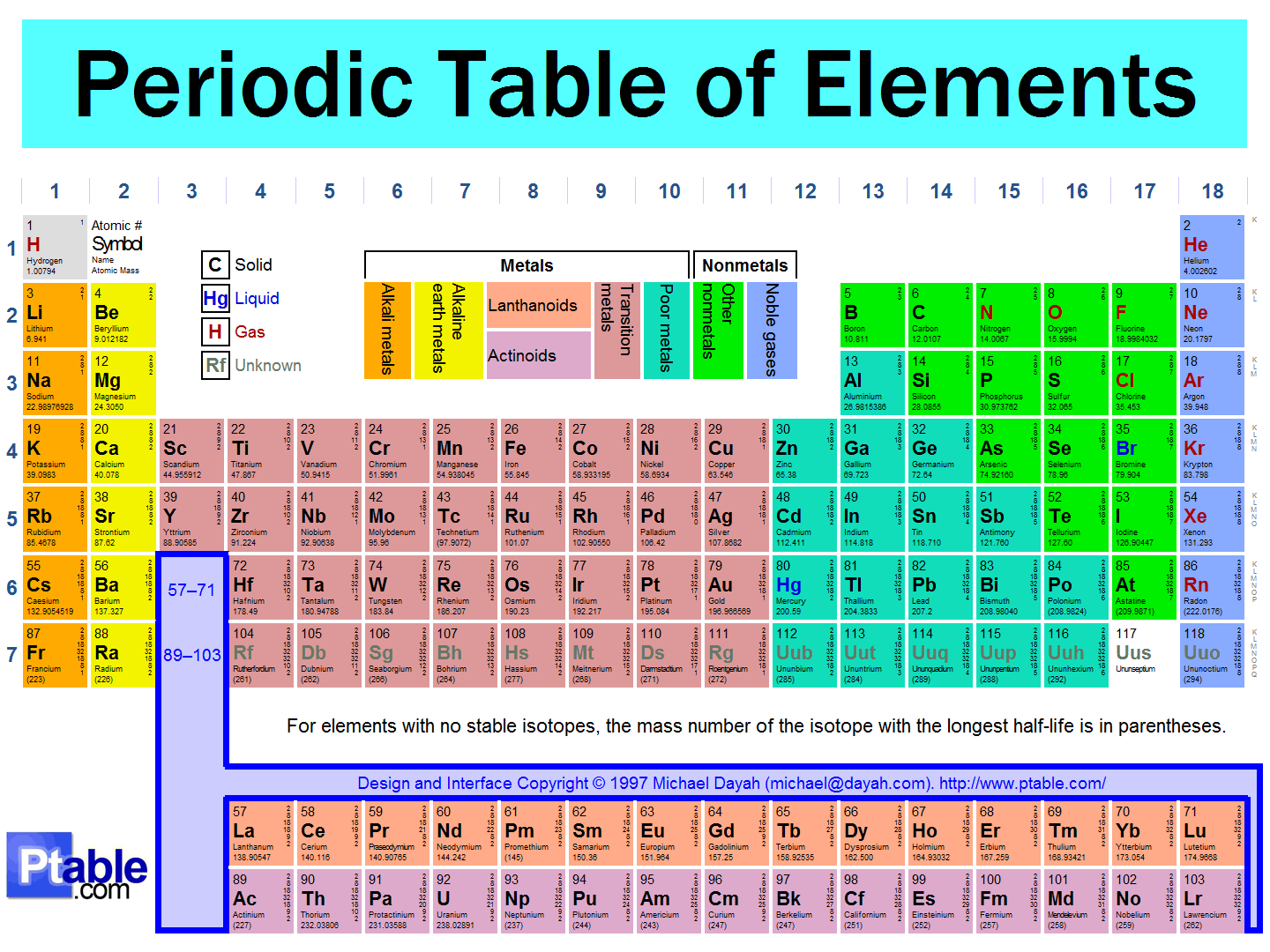
PT, Electron Configuration, Orbital Diagram

Total questions: 70

Worksheet time: 2hrs 30mins

Name
Class
Date
1.
What atom matches this electron configuration?
1s22s22p63s23p64s23d10
a)
Zinc
b)
Copper
c)
Nickel
d)
Germanium
2.
What electron configuration matches an oxygen atom?
a)
1s22s22p63s2, 3p64s23d104p5
b)
1s22s22p4
c)
1s22s22p6
d)
1s22s22p63s23p64s23d1
3.
The electron configuration of an atom is 1s22s22p6.  The number of electrons in the atom is 
a)
3
b)
6
c)
8
d)
10
4.
Which electron configuration belongs to Chlorine (Cl)?
a)
1s2 2s2 2p6 3s2 3p5
b)
1s2 2s2 2p6 3s2 3p6
c)
1s2 2s2 2p6 3s2 3p7
5.
How many electrons can the d sublevel hold?
a)
14
b)
10
c)
2
d)
6
6.
How many electrons can the s sublevel hold?
a)
14
b)
10
c)
2
d)
6
7.
What atom matches this electron configuration?
1s22s22p63s2
a)
Neon
b)
Magnesium
c)
Aluminum
d)
Potassium
8.

Choose the correct shortcut configuration for iodine.

a)

[Ar]4s24d104p5

b)

[Kr]5s24d105p5

c)

[Xe]5s25d105p5

d)

none of the above

9.

Each row on the periodic table represents:

a)

an energy level

b)

a sublevel

c)

an electron

d)

an orbital

10.

Which area on the periodic table represents the electrons in the "d" sublevel?

a)

representative elements

b)

columns 3-8

c)

rare earth elements

d)

transition elements

11.

Energy levels are denoted by:

a)

letters

b)

numbers

c)

a combination of letters and numbers

d)

subscripts

12.
Which periodic table family could have electrons filling orbitals in the s-block?
a)
Alkaine Earth 
b)
Halogens
c)
Noble Gases
d)
Transition Metals
13.

Choose the correct electron configuration for Nickel (Ni).

a)

1s2 2s2 2p6 3s2 3p6 4s2 3d8

b)

1s2 2s2 2p6 3s2 3p6 4s2 3d2

c)

1s2 2s2 2p6 3s2 3p6 4s10

14.

Choose the correct electron configuration for Krypton (Kr).

a)

1s2 2s2 2p6 3s2 3p6 4s8 3d8

b)

1s2 2s2 2p6 3s2 3p6 4s2 3d8 4p3

c)

1s2 2s2 2p6 3s2 3p6 4s2 3d8 4p6

15.
How many valence electrons are represented here?
a)
7
b)
5
c)
2
d)
8
16.
How many p orbitals are there in a sublevel?
a)
2
b)
1
c)
4
d)
3
17.
What atom matches this electron configuration?
[Xe] 6s2 4f14 5d9
a)
Mercury
b)
Gold
c)
Platinum
d)
Thallium
18.
What is the shorthand electron configuration for Sulfur atom?
a)
[Ar] 3p4
b)
[He] 3s23p4
c)
[Ne] 3s23p4
d)
[Na] 3s23p3
19.
How many valence electrons does Chlorine have?
a)
5
b)
2
c)
7
d)
5
20.
How many valence electrons does phosphorus have?
a)
5
b)
2
c)
8
d)
15
21.
What element has the valence shell configuration
3s2 3p2
a)
Al
b)
B
c)
Si
d)
Ga
22.
Which element is pictured?
a)
neon
b)
fluorine
c)
magnesium
d)
argon
23.
What noble gas should be used to write the shorthand configuration for Te?
a)
Ar
b)
Kr
c)
Xe
d)
Sb
24.
Identify the element in Period 5 that has 1 valence electron?
a)
Rb
b)
Nb
c)
Ag
d)
Sb
25.
What element in Period 4 has 5 valence electrons?
a)
Zr
b)
As
c)
V
d)
Sb
26.
Which of the following is a p block element?
a)
Ca
b)
Ar
c)
Re
d)
Au
27.
Electron arrangement that uses arrows
a)
Electron configuration
b)
Shorthand configuration
c)
Lewis dot structure
d)
Orbital diagram
28.
Which element is depicted from this orbital diagram
a)
Fluorine
b)
Neon
c)
Chlorine
d)
Argon
29.
This orbital diagram represents:  
a)
C
b)
B
c)
N
d)
O
30.
What is incorrect about this orbital diagram?
a)
Both arrows in the 2p box should be pointing up
b)
There is nothing incorrect with this diagram
c)
In the 2p box there should only be 1 electron in the first 2p box and one in the 2nd 2p box
d)
All the arrows should be pointing up.
31.
Electrons occupy orbitals of lowest energy first is part of what electron configuration rule?
a)
Hund’s Rule
b)
Aufbau Principle
c)
Pauli Exclusion Principle
32.
What is the Pauli Exclusion Principle?
a)
An atomic orbital can only hold a maximum of 2 electrons, each with opposite spins
b)
An atomic orbital can hold a minimum of 6 electrons, each with opposite spins
c)
An atomic orbital can hold a maximum of 6 electrons, each with the same spin
d)
An atomic orbital can hold a minimum of 2 electrons, each with opposite spins
33.
Which orbital shows a violation of Hund's Rule?
a)
A
b)
B
c)
C
d)
D
34.
Which orbital shows a violation of the Aufbau Principle?
a)
A
b)
B
c)
C
d)
D
35.
Which orbital shows a violation of the Pauli Exclusion Principle?
a)
A
b)
B
c)
C
d)
D
36.

This orbital diagram represents

a)

Sodium

b)

Magnesium

c)

Aluminum

d)

Iron

37.

each orbital (box) can hold a max of __ electrons

a)

1

b)

2

c)

6

d)

depends

38.

The vertical (up and down) columns in the Periodic Table are called

a)

groups

b)

towers

c)

periods

d)

atomic numbers

39.

Elements in a .................. have similar chemical properties.

a)

period

b)

group

c)

row

40.

Which group of the periodic table is composed of inert (not reactive) gases?

a)

alkali metals

b)

alkaline earth metals

c)

halogens

d)

noble gases

41.
The horizontal row on the periodic table is called a
a)
group
b)
family
c)
period
d)
atomic number
42.

Which two elements share common chemical characteristics based on the periodic table?

a)

Sodium and Magnesium

b)

Chlorine and Sulfur

c)

Argon and Neon

d)

Calcium and Bromine

43.

What is the name of group number 1?

a)

halogens

b)

noble gases

c)

alkali metals

d)

alkaline earth metals

44.

What is the name of group number 2?

a)

transition metals

b)

halogens

c)

metaloids

d)

alkaline earth metals

45.

where are the metaloids found

a)

far left, vertical

b)

stair step/diagonal

c)

far right horizontal

d)

at the bottom

46.
__________ would have some characteristics of metals and some characteristics of nonmetals.
a)
Gold
b)
Sodium
c)
Arsenic
d)
Bismuth
47.

Metals (select all that apply)

a)

are found on the right side of the periodic table.

b)

are found on the left side of the periodic table.

c)

are good conductors of heat and electricity.

d)

are brittle.

e)

are malleable and ductile.

48.

Nonmetals (select all that apply)

a)

are found on the right side of the periodic table.

b)

are found on the left side of the periodic table.

c)

are good conductors of heat and electricity.

d)

are brittle.

e)

can be solid, liquids, or gases at room temperature.

49.

Which element is found in group 2, period 6?

a)

Oxygen (O)

b)

Barium (Ba)

c)

Selenium (Se)

d)

Carbon (C)

50.

Elements that have the same number of energy levels are said to be in the same ______.

a)

group

b)

period

c)

family

d)

classification

51.

Is this a metal, nonmetal or metalloid?

a)

Metal

b)

Nonmetal

c)

Metalloid

52.

Is this a metal, nonmetal or metalloid?

a)

Metal

b)

Nonmetal

c)

Metalloid

53.

Is this a metal, nonmetal or metalloid?

a)

Metal

b)

Nonmetal

c)

Metalloid

54.

How many valence electrons?

a)

1

b)

2

c)

8

d)

20

55.

How many valence electrons?

a)

1

b)

7

c)

8

d)

9

56.

How many valence electrons?

a)

2

b)

4

c)

6

d)

10

57.

Predict the charge on this nonmetal anion

a)

+3

b)

-5

c)

-3

d)

-4

58.

Predict the charge on this nonmetal anion

a)

+1

b)

-1

c)

+7

d)

-2

59.

When this element forms an ion, what will the charge be?

a)

+1

b)

+2

c)

-2

d)

-1

60.

When this element forms an ion, what will the charge be?

a)

-3

b)

+5

c)

-5

d)

-4

61.

Charge of transition metals

a)

+1

b)

varies

c)

+2

d)

-2

62.

Charge of Na ion

a)

+1

b)

-1

c)

+2

d)

-2

63.

Charge of oxygen ion

a)

+6

b)

-2

c)

-1

d)

+2

64.

Charge of Br ion

a)

+1

b)

-1

c)

+7

d)

0

65.

Charge of Ga ion

a)

+2

b)

+1

c)

+3

d)

+4

66.

This could be the dot diagram of

a)

Mg

b)

Cl

c)

C

d)

O

67.

This is a correct dot diagram for nitrogen (N)

a)

true

b)

false

68.

This is a correct dot diagram for neon (Ne)

a)

true

b)

false

69.

What are valence electrons?

a)

The total number of electrons in an atom

b)

The number of electrons in the outermost shell

c)

The number of electrons in the second shell

d)

The number of protons in the outermost shell

70.
Elements in Group 1 lose one electron to form ions with a(n) _________________ charge.
a)
1+
b)
2+
c)
0
d)
1-