Wayground logo

Free Printable Worksheets

Font size

S
M
L
XL
Worksheets

F2 Final exam cambri - Electricity

Total questions: 75

Worksheet time: 3615secs

Name
Class
Date
1.

What is electricity?

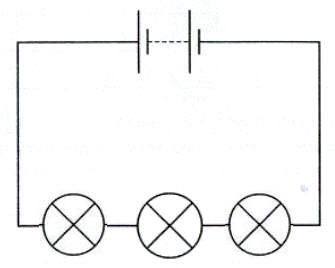
a)

An invisible force that we don't understand.

b)

An invisible force that relies on the movement of electrons.

c)

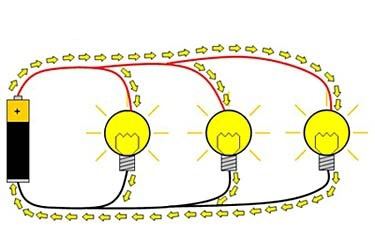
A force that can be used for human activities.

2.

What are the moving particles that move to create an electrical current?

a)

Protons

b)

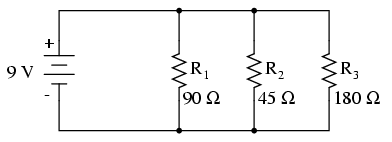
Neutrons

c)

Atoms

d)

Electrons

3.

Protons have a _____ charge.

Neutrons have a _______ charge.

Electrons have a ________ charge.

(a)  

4.

Which type of circuit does this represent?

a)

Parallel

b)

Series

5.

Pick all the materials that would be a conductor.

a)

Metal frying pan

b)

Rubber

c)

Plastic

d)

Copper wire

e)

Stainless Steel

6.

Which of these is an insulator?

a)

Rubber

b)

Copper penny

c)

Iron nail

d)

Plastic

e)

Cloth

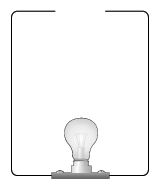
7.
This circuit won't work. What essential part is missing from this circuit?
a)
resistance
b)
source of electric current
c)
conductor
d)
ammeter
8.
The force that pushes the electricity through a circuit is called...
a)
resistance
b)
voltage
c)
current
d)
switch
9.
The flow of electricity through a conductor is called...
a)
resistance
b)
voltage
c)
current
d)
source of electric current
10.
The best conductors for electricity are made of...
a)
wood
b)
plastic
c)
rubber
d)
metal
11.
What slows down the flow of electricity in a circuit?
a)
resistance
b)
voltage
c)
current
d)
source of electric current
12.
Which circuit (s) are parallel?
a)
A
b)
A and B
c)
B and C
d)
C
13.
Which one will still function if one light bulb goes out?
a)
A-Series
b)
B-Parallel
c)
A-Parallel
d)
B-Seriese
14.
If I add more light bulbs to a series circuit what happens?
a)
The current speeds up and the lights get brighter
b)
The current slows down and the lights dim lower
c)
The current speeds up and the lights dim lower
d)
The current slows down and the lights get brighter
15.

In a closed circuit, how does battery voltage affect current?

a)

As voltage increases, current increases.

b)

As voltage increases, current decreases.

c)

Voltage has no affect on current.

d)

If voltage exceeds current, a short circuit circuit will develop.

16.

This circuit has only one path for current to flow

a)

series

b)

parallel

c)

combination

d)

split

17.

What is a circuit with several paths for electricity to flow?

a)

conductor

b)

series circuit

c)

parallel circuit

d)

open circuit

18.
An incomplete circuit is shown.
To complete the circuit, a wire should be placed from —
a)
Point D to Point C
b)
Point B to Point C
c)
Point A to Point D
d)
Point B to Point D
19.
This circuit has a battery, buzzer, and switch.
When the switch is closed the buzzer will sound because -
a)
the switch gives energy to the battery
b)
the buzzer is made of special plastic
c)
the wires are cooled by the surrounding air
d)
electricity can flow in a complete path
20.
Which of the following can work as an energy source?
a)
Battery
b)
Light bulb
c)
Wire
d)
All of them
21.
Does this diagram represent a series or parallel circuit?
a)
series circuit
b)
parallel circuit
22.
What will happen if one light bulb is removed from this circuit?
a)
The other bulbs will go out.
b)
The other bulbs will stay on
c)
The other bulbs will get dimmer.
d)
The battery will become stronger.
23.

In order for electricity to flow through a circuit, the circuit must be a closed, complete:

a)

Path, so that the electricity can make a complete circle.

b)

Donut, because circuits get hungry.

c)

Wire, made out of rubber.

d)

Solar panel, because circuits only work with the sun.

24.

How many light bulbs would be ON with this complete circuit?

a)

1

b)

3

c)

2

d)

4

25.

How many light bulbs would be ON if the wire of this circuit was cut where the scissors are?

a)

1

b)

3

c)

2

d)

0

26.

How many light bulbs would be ON if the wire of this circuit was cut where the scissors are?

a)

1

b)

3

c)

2

d)

0

27.

What type of circuit is shown in the picture?

a)

Series Circuit

b)

Broken Circuit

c)

Parallel Circuit

d)

Open Circuit

28.
What kind of circuit is this?
a)

series

b)

parallel

29.
what kind of circuit is this?
a)

parallel

b)

series

c)

partial

d)

open

30.
This is an example of a ______ circuit
a)

Series

b)

Parallel

c)

Open

d)

Partial

31.
What is the type of circuit that stops working when one bulb goes out?
a)
A broken circuit
b)
Parallel Circuit
c)
Series Circuit
d)
A metal circuit
32.
In a parallel circuit if one of the light bulbs burns out the rest _________.
a)

stop the flow of electricity

b)

 can still light up

c)

 will go out

d)

of the light bulbs burn out also

33.

What is the resistance of a lightbulb that experiences 9 Volts and 3 amps of current?

a)

1/3 ohms

b)

3 ohms

c)

27 ohms

d)

9 ohms

34.

What is the current in a circuit with 6 ohms of resistance and a battery containing 24 Volts?

a)

1/4 A

b)

144 A

c)

4 A

d)

0.4 A

35.

What is the voltage of a circuit with 4 ohms of resistance and 3 amps of current?

a)

12 V

b)

21 V

c)

4/3 V

d)

3/4 V

36.

Voltage is measured in __.

a)

volts.

b)

watts.

c)

ohms.

37.

What 'flows' in a wire?

a)

Protons

b)

Neutrons

c)

Atoms

d)

Electrons

38.
What kind of circuit is this?
a)
series
b)
parallel
39.

Which best describes a parallel circuit?

a)

Electricity flows along one pathway.

b)

The flow of electricity comes from one battery.

c)

Electricity flows along more than one pathway.

d)

The flow of electricity comes from more than one battery.

40.

The movement of electrons from atom to atom in a line results in a flow of _____.

a)

amperage.

b)

electric current.

c)

electromagnetic connectors.

41.

In a parallel circuit, if one connection is broken, all of the connections stop working.

a)

True.

b)

False.

42.

Which statement is true?

a)

The light bulb will light up because the circuit is complete.

b)

The light bulb will light up because the circuit is broken.

c)

The light bulb will not light up because the circuit is complete.

d)

The light bulb will not light up because the circuit is open.

43.

What type of circuit is the image showing?

a)

Parallel

b)

Series

c)

No circuit

44.

A Charging system producing 14.5 Volts with a current flow of 43.5 Amps, what is the circuit resistance

a)

58 Amps

b)

0.33 Amps

c)

13 Amps

d)

1 Amp

45.

If the current through a circuit is 2 A and the resistance of a light bulb in the circuit is 10 Ohms, what is the voltage difference across the light bulb?

a)

5 V

b)

12 V

c)

0.2 V

d)

20 V

46.

What would the circuit resistance be if a 7.5 Amp draw was present with the engine running and the charging system producing 15 Volts

a)

15 Ohms

b)

4 Ohms

c)

0.3333 Ohms

d)

2 Ohms

47.

What is the current in an electric circuit?

a)

The energy of the circuit

b)

The flow of electrons in the circuit

c)

The power of the circuit

48.

What is the voltage in an electric circuit?

a)

The power of the electrons

b)

The charge of the electrons

c)

The energy of the electrons

49.

Where does the current get its voltage from?

a)

The lightbulb

b)

The battery

c)

The wires

50.

What is resistance in an electric circuit?

a)

Using up of power of current

b)

Stops or slows the flow of current

51.

What is the role of a multimeter in an electric circuit?

a)

To measure the amount of voltage, current, and resistance. It can also be used to test continuity between two points in an electrical circuit.

b)

To measure the amount of light in an electric circuit

c)

To measure the amount of sound in an electric circuit

52.

Which of the circuits in the diagram are series circuits?

a)

A

b)

B

c)

C

d)

D

53.

Which of the circuits in the diagram are parallel circuits?

a)

A

b)

B

c)

C

d)

D

54.

Which of the circuits in the diagram will have lightbulbs that are lit?

a)

A

b)

B

c)

C

d)

D

55.

________________ Law is a formula used to calculate the relationship between voltage, current and resistance in an electrical circuit.

a)

Ohm's

b)

Newton's

c)

Criminal

56.
Which of these best completes the circuit?
a)
rubber band
b)
metal nail
c)
leather shoelace
d)
wooden toothpick
57.
Electrical lights will not come on unless their electrical circuit is a --
a)
parallel circuit
b)
series circuit
c)
closed circuit
d)
short circuit
58.
A fifth grade class constructed this circuit.  Which of these objects most likely made the light glow when connected to points X and Y?
a)
plastic straw
b)
cotton string
c)
aluminum foil
d)
rubber eraser
59.
A class prepared some electrical circuits using battery, connecting wires, and three light bulbs.  Which of these circuits can make the three bulbs light?
a)
A
b)
B
c)
C
d)
D
60.
The electrician in this picture is wearing rubber gloves for protection.  The purpose of the rubber gloves is to --
a)
keep the electrician dry
b)
create an electrical circuit
c)
produce electricity
d)
protect the electrician
61.
Which of these substances conducts electricity the best?
a)
wood
b)
brick
c)
copper
d)
plastic
62.
What material would be safest to use as an insulator to cover electrical wires?
a)
rubber
b)
tin
c)
aluminum
d)
water
63.
This instrument can be used to see if materials conduct electricity.  Which of these groups contains items that could all conduct electricity to complete the circuit?
a)
rubber ball, plastic comb, nail
b)
paper clip, penny, screw
c)
cork, dollar bill, tweezers
d)
pencil, eraser, spoon
64.
water is a______?
a)
conductor
b)
insulator
65.
materials that allow electricity to flow through them are called
a)
conductors
b)
current
c)
fuse
d)
resistor
66.
wood is a _____?
a)
conductor
b)
insulator
67.
when the circuit is _____, current does not flow.
a)
open 
b)
closed
68.
this is the symbol for a _____?
a)
switch
b)
light 
c)
battery
d)
wires
69.
what is this symbol for?
a)
light bulb
b)
switch
c)
battery
d)
resistor
70.
Yarn is a ______?
a)
conductor
b)
insulator
71.
A student is building a circuit that will convert electrical energy into light energy. What materials does the student need to complete his circuit?
a)
Wire, battery, and bulb
b)
Battery, switch, and wire
c)
Switch, bulb, and battery
d)
Bulb, wire, and switch
72.
What is a switch's function in a circuit?
a)
to make the current hotter or colder
b)
turn on and off the flow of current
c)
the pathway that current flows
d)
to add more power to the circuit
73.
A material that does NOT allow electricity to flow is called _____.
a)
a conductor
b)
a fuse
c)
an insulator
d)
a transformer
74.
What is a battery?
a)
switch
b)
power source
c)
insulator
75.
Which statement below is true?
a)
All metals conduct electricity and all metals are attracted to a magnet.
b)
Some metals conduct electricity and magnets attract all metals.
c)
All metals are conductors and magnets are attracted to some metals.