
Font size
 Worksheets
Unit 2 Lesson 3 Newton's Laws Quiz
Total questions: 80
Worksheet time: 2hrs 22mins
A ____________ is a push or a pull on an object.
friction
force
magnet
gravity
What is the unit to MEASURE force?
Kilogram
Meter
Pounds
Newton
TRUE OR FALSE: Unbalanced forces result in a change of motion.
True
False


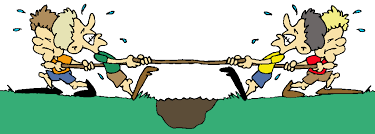

An object in motion will stay in motion and an object at rest will stay at rest unless acted upon by an outside force. Which law does this describe
2nd law
1st law
3rd law
Friction forces always ________ motion
assist
oppose
speed up
eat
Rougher surfaces have ________ friction
more
less
even
When 2 surfaces push against each other with greater force, there will be ______ friction force
more
less
no change in the
Decreasing the surface area between to object will cause the friction to _______.
increase
decrease
stay the same
blow up
Friction is both good and bad depending upon the situation.
True
False

Which type of friction is shown in the picture?
rolling
fluid
static
sliding

Which type of friction is shown in the picture?
fluid
static
rolling
sliding

Which type of friction is shown in the picture?
rolling
static
fluid
sliding

Which boy A or B will slide down faster
A
B
A and B
What does the strength of the force depend on? Check the answers that apply.
The types of surfaces
The weather
How hard the surfaces push together
motion
_____________ friction acts on objects that are not moving.
sliding
rolling
static
fluid
Air resistance is a type of fluid friction.
True
False
If the following objects were dropped from the same height, which one would hit the floor first?


Air resistance is determined by
speed
size
shape
All the above
Greater speeds cause ________ resistance.
less
unchanging
greater
Thinner and pointed objects have ________ resistance.
increased
unchanging
decreased
What two things determine the gravity of an object?
mass & weight
mass & distance
density & mass
volume & distance

Match the following

Largest mass in our solar system

Greater gravity

Less gravity

Air resistance

Earth's gravity holds it close
Newton's Universal Law of Gravitation claims that the attraction between objects with mass depend on what 2 things?
volume and height
velocity and height
acceleration and mass
mass and distance
When a parachute canopy is opened more drag is created because:
It has a large mass
It has a large surface area
It is travelling at terminal speed
The person is now vertical

If this graph were to show a parachutist jumping from a plane, how would you describe the forces acting at point B.
His weight is bigger than air resistance
Air resistance is bigger than his weight.
His weight and air resistance are balanced.
Just after she jumps out of the plane (before the parachute opens). The relative forces will be
Balanced
Unbalanced
Just after she jumps out of the plane (before the parachute opens). The relative forces will be
Weight force is equal to the friction force
Friction force is constant
Weight force is greater that the friction force
Friction force is greater than the weight force
Just after she jumps out of the plane (before the parachute opens). The net force will be
zero
upward
downward
Just after she jumps out of the plane (before the parachute opens). The sky diver will have
a constant speed
a constant acceleration
a constant velocity

Identify the true statement:
Drag is increasing
Velocity is increasing
Terminal velocity
Acceleration

what is the correct formula for force?
F=ma
F=am
F=ma
F=a×v

use the triangle to solve the question.
Find the force required to move a box having mass 10Kg with an acceleration of 9m/s2 .
10N
90N
100N
20N
An object traveling at 4.0 m/s has a momentum of 16 N. What is the mass of the object ?
20 kg B
64 kg
4.0 kg
12 kg

If I apply the same force to a ping pong ball and a bowling ball, which one will accelerate farther and faster?
ping pong ball
bowling ball
I have no idea
Why is it harder to push a van filled with bowling balls than it is to push a van with basketballs?
The mass of the car is greater than the mass of the basketballs
The mass of the bowling balls is greater than the mass of the basketballs
The van with the basketballs is bigger than the van with the bowling balls
It should be equally as hard to push the two vans

If the man pushes with an equal amount of force, which object will accelerate more?
Car because it has more mass
Lawnmower because it has less mass
Car because it has less mass
Lawnmower because it has more mass
What is acceleration due to gravity on Earth?
98 m/s2
9.8 m/s2
0.98 m/s2

Which one of Newton's laws are displayed
2nd law
1st law
3rd law

This is Newton's 3rd law
True
False
1st
Law of Motion
2nd
Law of Motion
3rd
Law of Motion

You push against a wall and the wall is pushing back on you.
Newton's 1st Law
Newton's 2nd Law
Newton's 3rd Law
If you push on a wall with a force of 30 N, the force acting on you from the wall is which of the following?
0 N
10 N
20 N
30 N
When you jump up, you push the earth downwards. Why can't you tell that the earth has moved?
The force of you jumping up doesn't actually push the earth down.
The earth is firmly rooted
The earth has much more mass so you can't tell that it moved
The equation for momentum is?
momentum = force - mass
momentum = acceleration / mass
momentum = mass x acceleration
momentum = mass x velocity
Even if an object has a smaller mass, it can have a larger momentum if it has a high _______.
velocity
displacement
weight

Which has more momentum: a 3.0 kg sledgehammer swung at 1.5m/s, or a 4.0 kg sledgehammer swung at 0.9 m/s?
the 3.0 kg sledgehammer
the 4.0 kg sledgehammer
A golf ball travels at 16 m/s while a baseball moves at 7 m/s. The mass of the golf ball is 0.045 kg and the mass of the baseball is 0.14 kg. Which has a greater momentum?
golf ball
baseball
If an object has a momentum of 40 kgm/s and a mass of 60 kg, what is it's velocity?
2400 m/s
1.5 m/s
240 m/s
.67 m/s

Two skaters begin at rest. Skater 1 has a smaller mass than Skater 2. After they push off each other,...
Skater 1 experiences a greater change in momentum
Skater 2 experiences a greater change in momentum
Skater 1 has a greater speed than Skater 2
Skater 1 experiences a greater force
According to the Law of Conservation of Momentum, when two objects collide:
both objects lose momentum.
both objects gain momentum
momentum is neither lost nor gained.
momentum is always lost or gainer.
A cannon with a mass of 1455 kg fires a 9.4 kg cannon ball with a velocity of 92 m/s. With what velocity does the cannon move after the cannon ball is fired?
-0.59 m/s
0.59 m/s
-1.68 m/s
1.68 m/s
The Law of Conservation of Momentum states:
The total momentum before a collision is equal to the total momentum after a collision.
The total momentum before a collision is greater than the total momentum after a collision.
The total momentum before a collision is less than the total momentum after a collision.
The total momentum before a collision is not related to the total momentum after a collision.
A 2.5 kg ball moving at 5 m/s collides with a 2.5 kg stationary ball in a perfectly elastic collision (momentum is completely transferred). What is the velocity of the second ball after the collision?
5 m/s
2.5 m/s
10 m/s
7.5 m/s
A projectile of mass 1 kilogram traveling at 9 meters per second collides with another projectile of mass 2 kilograms traveling at 6 meters per second in the same direction. If the projectiles "stick" together after their collision, what is their velocity after colliding?
7 m/s
8 m/s
7.5 m/s
9 m/s

