
Font size
 Worksheets
Chapter 1: Water Review - AICE MS
Total questions: 25
Worksheet time: 1hrs 14mins

A brief understanding of atoms
Atoms are made of three smaller subatomic particles that, depending on their numbers, give the atom its characteristics (or properties). These subatomic particles are protons, neutrons and electrons. Protons are positively charged, neutrons are neutral (they have no electrical charge), and electrons are negatively charged. An atom has an equal number of electrons and protons, so they are neutral. Protons, neutrons, and electrons are arranged within the atom to provide stability and structure (see Figure 1.2). At the centre of the atom is the nucleus. The nucleus is made of the neutrons and protons. Electrons move around the nucleus in orbits called shells. These shells vary in size and distance from the nucleus depending on how many electrons are present. The first shell nearest the nucleus can hold two electrons. This is the only shell present in both hydrogen and helium. The next two shells hold up to eight electrons. Atoms are at their most stable when their outermost shell containing electrons is full.
The Periodic Table you might see hanging on the wall in many science classes lists all the known types of atoms. These different types of atoms are called elements. An element is made of atoms that have a specific number of protons. This atomic number never varies and helps us to identify the characteristics of elements. Seawater is a mixture of different elements and compounds. Examples of elements we find in the ocean include carbon, hydrogen and oxygen.
What is the most basic unit of matter?
What are the three parts of an atom?
Protons have what type of charge?
Neutrons have what type of charge?
Electrons have what type of charge?
The atomic number of an element tells us
The number of protons equals the number of (a) .
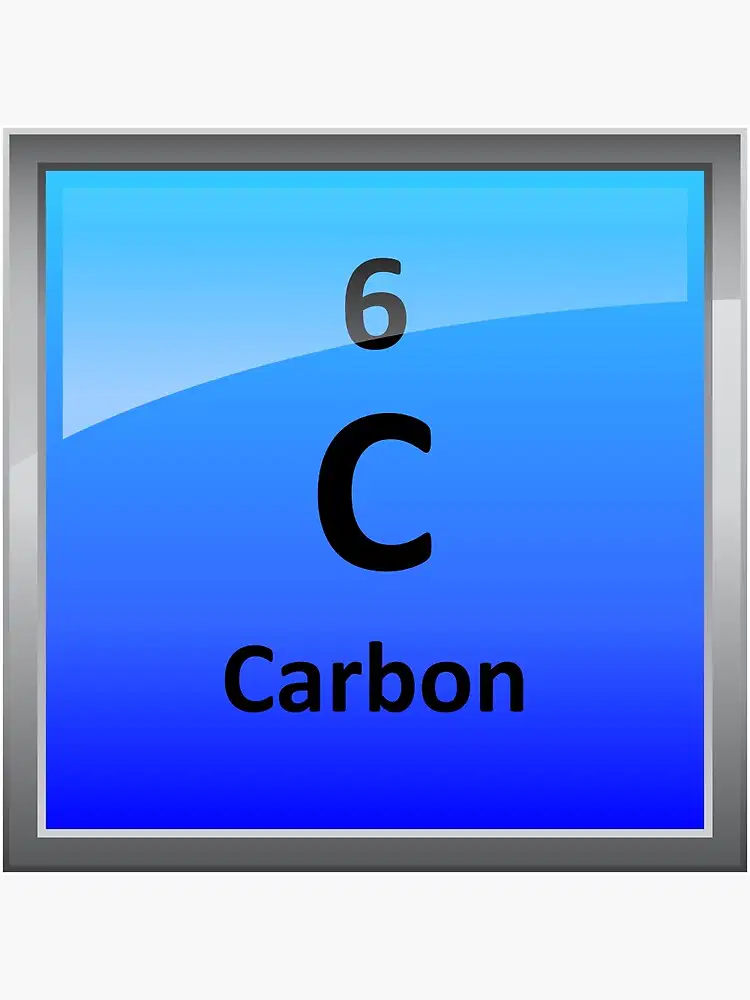
How many electrons does Carbon have?
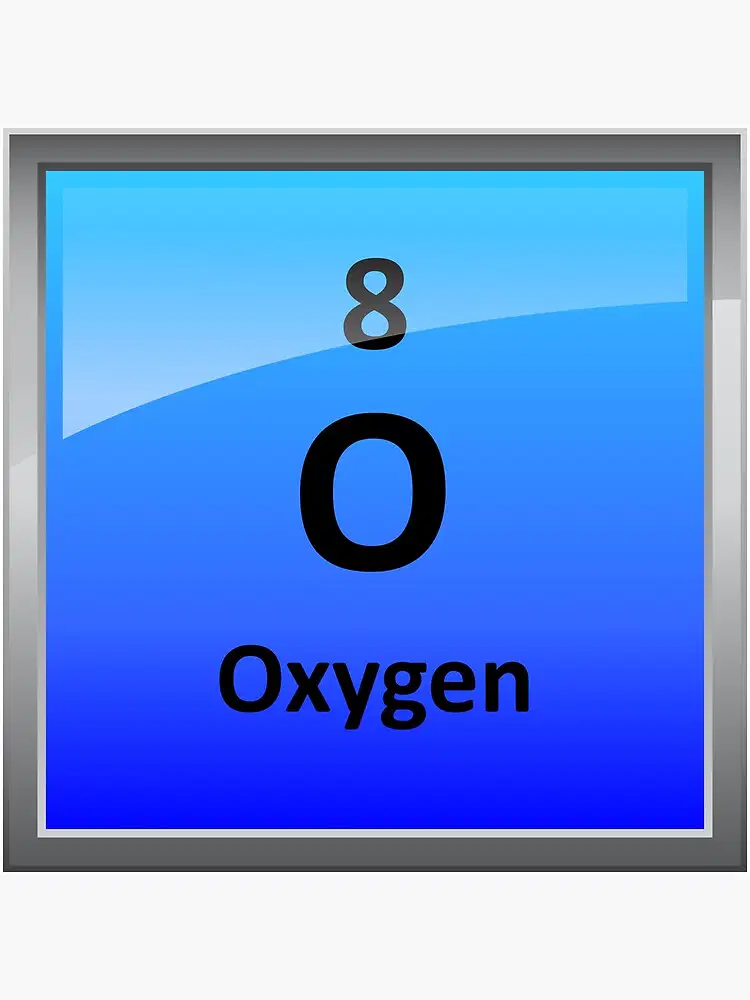
How many protons does Oxygen have?
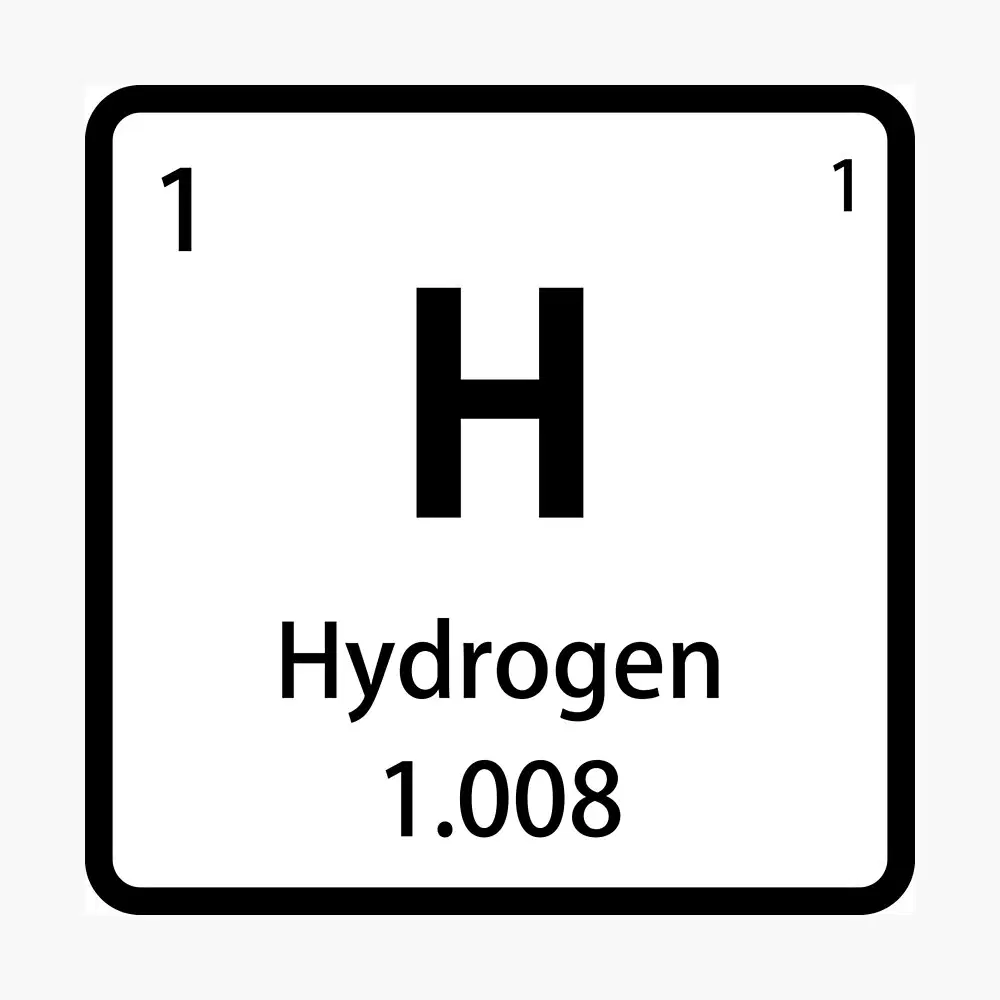
How many electrons does hydrogen have?

The kinetic particle theory (particle theory) describes all matter as a collection of particles that are in constant, random motion, even if those movements are only small vibrations. The amount of movement a particle has is determined by the amount of energy it has. Matter generally exists in three states: solid, liquid, or gas (Figure 1.1). As energy is transferred away from, or transferred to, these molecules, the state of matter may change as the movement of the molecules within the matter changes.
Kinetic particle theory suggests that
What are the three states of water?
Which state of water has the fastest moving molecules and the most energy?
Which state of water forms a fixed lattice as the molecules slow down?
Liquid
As water is heated, the particles (a) energy.
Describe how the Kinetic particle theory applies to the three states of water.

Covalent bonds
A covalent bond forms when two atoms share a pair of electrons. Covalent bonding occurs in most non-metal elements, and in compounds formed between non-metals. Because the atoms are sharing the electrons, both atoms have complete outer shells. This sharing of electrons also makes this type of bond between atoms one of the strongest, requiring a large amount of energy to break. Compounds with covalent bonds are able to exist as a solid, liquid or gas at room temperature and normal atmospheric pressure. Therefore, it should come as no surprise that water is one of the most prevalent covalent compounds on our planet. Each water molecule contains two covalent bonds connecting the oxygen atom to each of the hydrogen atoms (Figure 1.3).
These bonds form when an oxygen atom, which only has six electrons in its outermost shell, reacts with two hydrogen atoms, with only one electron each. The hydrogen atoms share their individual electrons with the oxygen atom. The shared electrons orbit around the atoms connected in the bond, filling the outer shells of the oxygen and the hydrogen. Many compounds in seawater have covalent bonds (Figure 1.4).

As seen in Figure 1.4 (b) carbon dioxide has four covalent bonds as the single carbon molecule forms a double bond with each oxygen molecule. A double bond occurs when molecules share two pairs of electrons instead of just one.
Covalent bonds are (a) bonds.
A covalent bond is formed when
two atoms share a pair of electrons
Covalent bonds are (a) bonds.
Why does it take a lot of energy to break covalent bonds?
How many covalent bonds does water have?
How many covalent bonds does carbon dioxide have?
Covalent bonds are common in
Use the following information to help you draw a Dot and Cross diagram of Water:
-The outer shell of each atom is drawn as a circle.
-Circles overlap where there is a covalent bond.
-Electrons from one atom are drawn as dots and electrons from another atom are drawn as crosses.
-The group number is the same number of electrons in the outer shell.

Ionic bonds
An ion is an atom that has gained or lost an electron from its outer shell. This change in the number of electrons gives the atom an electrical charge. An electron will move from one atom, which results in either filled or empty outer electron shells. If an atom loses an electron, the ion created will have a positive charge because the protons in the nucleus (positive charge) now outnumber the electrons in the outer shell (negative charge). If an atom gains an electron, the ion created will be negatively charged due to an excess of electrons compared to protons. So, how do ionic bonds form? When an ion loses an electron, its positive charge is attracted to the newly formed negative ion that gained its electron. This electrostatic attraction causes an ionic bond to form. The process of forming an ionic bond is seen in Figure 1.5. In step (a) sodium and chloride both have incomplete outer shells, with sodium having a single electron and chloride having seven. In step (b) sodium’s single electron breaks away and moves to complete chloride’s outer shell, making both ions more stable in the process. In step (c) sodium has a positive charge, chloride has a negative charge. The electrostatic attraction between the positive sodium ions and negative chloride ions creates an ionic bond.

Salts are made from ions, which are very important compounds in our oceans, There are many types of salts found in the ocean, including sodium chloride (NaCl), calcium carbonate (CaCO3), and magnesium sulfate (MgSO4). These salts are all formed using ionic bonds
What is an ion?
An atom that has gained or lost an electron from its outer shell
An atom that has gained or lost a proton from its inner shell
An atom that has gained or lost a neutron from its nucleus
An atom that has gained or lost a photon from its energy level
How do ionic bonds form?
By sharing electrons between atoms
By gaining an electron and becoming positively charged
By losing an electron and being attracted to a newly formed negative ion
By forming covalent bonds with other ions
What are ionic bonds essential for creating?
Covalent bonds
Metallic bonds
Salts
Hydrogen bonds
Salts made from ions are crucial compounds found in (a)
The process of forming an ionic bond involves the electrostatic attraction between positive and negative (a)
Use the following information to draw a Dot and Cross diagram of Sodium Chloride (the most common salt):
-Same as covalent bond but atoms are put in brackets [ ]
-The metal donates electron to the non metal
-Donating atom becomes +
-Accepting atom becomes -
-Donating atom is shown with empty otter shell
-Accepting atom is shown with dots for its electrons and crosses for the electrons it accepted
Hydrogen bonding
A hydrogen bond is a weaker bond that can occur between molecules containing a hydrogen atom bonded to an atom of oxygen, nitrogen or fluorine. Water is an example of such a molecule, as it has two hydrogen atoms bonded to an atom of oxygen. When creating this covalent bond, the oxygen and hydrogen atoms share electrons unequally. The oxygen atom has a much stronger attraction to the bonding pair of electrons between oxygen and hydrogen, resulting in these being pulled closer to the oxygen atom than the hydrogen atom. This unequal sharing causes a partial charge on the atoms involved in the bond: the hydrogen atoms are partially positive (δ+), and the oxygen atom is partially negative (δ−). When molecules have a partial charge on each end as water does, they are referred to as polar. Due to this polarity, the more positive hydrogen atoms of one water molecule will be attracted to the more negative oxygen atoms of a nearby water molecule (Figure 1.8) creating a dipole – a molecule with a separation of partial positive and negative charges.

While hydrogen bonds are easily broken, they have an incredible impact on the properties of water due to the sheer number of water molecules found within a single droplet of water. Therefore, many hydrogen bonds are continually forming between water molecules.
Which atoms can form hydrogen bonds with a hydrogen atom?
Carbon
Oxygen
Nitrogen
Fluorine
What property of water molecules allows for the formation of hydrogen bonds between them?
Polarity
Density
Viscosity
Surface tension
Hydrogen bonds are (a) to break.
What is the polarity of the oxygen atom in water?
What is the polarity of the hydrogen atom in water?
partially positive
partially negative

Which label represents a hydrogen bond?
A
B
Both
Neither
What is the definition of a solvent?
What is the definition of a solute?
What is the definition of a solution?
A solution is a homogeneous mixture composed of a solvent and a solute

The picture shows sodium chloride (salt) in water. Water is the
solvent
solute
solution
The picture shows sodium chloride (salt) in water. The salt is the
solvent
solute
solution
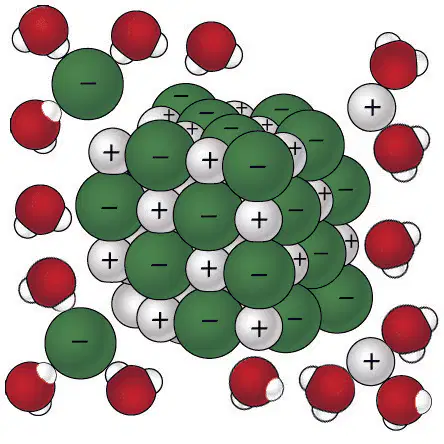
How does water break the ionic bonds in salt?
As the temperature of water rises, the solubility of salt
(a)
Why does an increase in temperature lead to an increase in solubility?
What causes a decrease in the salinity of the ocean?
Why does precipitation and run-off decrease the salinity of the ocean?
How does evaporation lead to an increase in the salinity of the ocean?
pH measures the concentration of (a) ions in water.
Acidic solutions have a (a) concentration of hydrogen ions.
How is density calculated?
Where would you find denser water in the ocean?
As temperature increases, density (a) .
As salinity increases, density (a) .
As pressure increases, density (a) .

