
Font size
 Worksheets
Earthquakes & Volcanic Eruptions
Total questions: 79
Worksheet time: 26mins
Magma becomes lava when it reaches a volcano's ______.
Vent
Crater
Chamber
Mantle
Is the process by which an ocean floor sinks beneath an ocean trench and into the mantle.
Subduction
Hot spot
Caldera
Volcanism
A ______ is a duct connecting the magma chamber and the outside of the volcano.
Vent
Crater
Lava flow
Volcanic cone
An opening on the Earth's crust through which hot molten rock flows out from deep inside the Earth.
Volcano
Fault line
Fold
Crater
A volcano that had its last eruption more than 10,000 years ago.
Extinct Volcano
Sleeping Volcano
Active Volcano
Quiet Volcano
Takes place when the gas bubbles within magma are gently dissipated to the surface, causing the magma to flow very easily.
Quiet eruptions
Explosive eruptions
Pahoehoe
A's
It happens when think and viscous lava clogs the vent, preventing gases from escaping, causing pressure to build up.
Quiet explosions
Explosive explosions
Pyroclastic flow
Lahar
It forms when rain falls and dilutes the pyroclastic lava.
Pyroclastic flow
Lahar
Lava
Bombs
In what year did Mount Pinatubo in Zambales erupted violently, causing the death of many people.
June 1991
June 1919
July 1991
July 1919

Duck, cover, and hold.
Before
During
After

Move away from glass windows, bookshelves, and cabinets.
Before
During
After

Check for injuries.
Before
During
After

Check for structural damage.
Before
During
After

Prepare an emergency kit.
Before
During
After

Make a plan.
Before
During
After

Stay away from damaged places or structures.
Before
During
After

Stay away from buildings, streetlights, and power posts.
Before
During
After

The measure of the energy released by an earthquake is called Intensity.
True
False

When magma flows out of a volcano, it is called (a) .

Mr. Lee is heading home. He is smoothly driving his car when suddenly an earthquake occurred. What should he do?
Mr. Lee should continue driving his car until he reach home.
Mr. Lee should stop and come out of his car to seek shelter under a tree.
Mr. Lee should pull the vehicle on the side of the road and stay inside.
Mr. Lee should perform the "Drop, Cover and Hold" drill.
What causes a volcanic eruption?
Strong winds
Earth's rotation
Escape of magma from deep below the Earth's surface
Moon phases

Classify the effect of earthquake and volcanic eruption shown in the picture.
DEFORMATION
TSUNAMI
LANDSLIDE
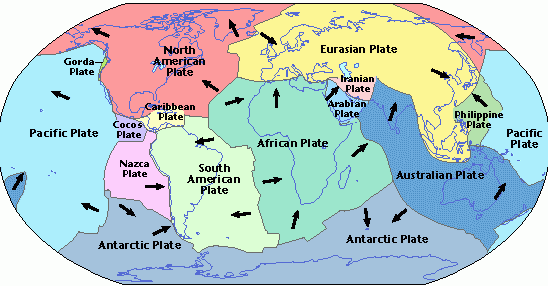
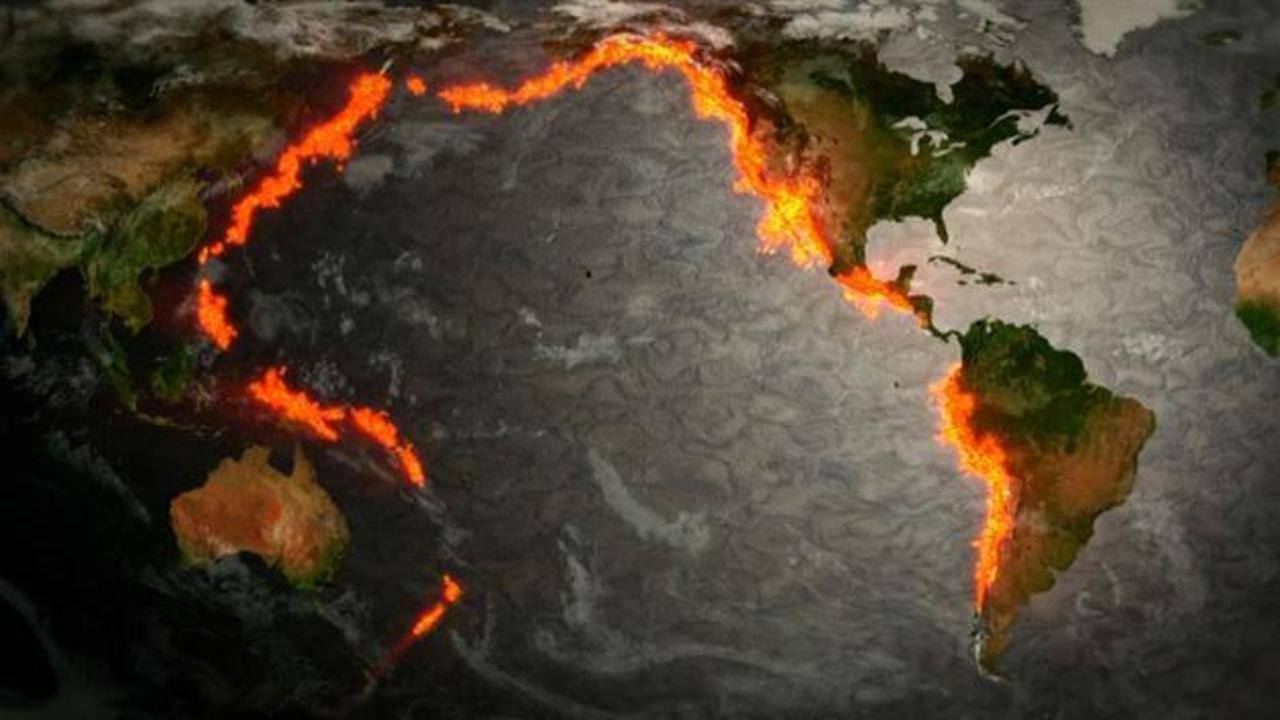
It is also referred to as the Circum-Pacific Belt. It is a path along the Pacific Ocean characterized by active volcanoes and frequent earthquakes.
PACIFIC RING OF FIRE
VOLCANIC ERUPTION
FLASHFLOOD
This is the
agency that monitors seismic and volcanic activity.
NASA
PHILVOLCS
DEPED
This is the sudden shaking of the ground caused
by the movement of the earth’s crustal plates.
LIQUEFACTION
DEFORMATION
EARTHQUAKE
This is extremely hot liquid and semi-liquid rock located under Earth's surface.
LAVA
ROCK
MAGMA
The best way to prevent injuries during an earthquake is to be prepared and know what to do before, during and after the earthquake.
TRUE
FALSE
There are usually warning signs before an earthquake occurs.
TRUE
FALSE
The best way to prevent injuries during an earthquake is to be prepared and know what to do before, during and after the earthquake.
TRUE
FALSE
Aftershocks cannot cause any damage.
True
False
In case there is an earthquake, where should you evacuate if you are near a large body of water?
the closest shelter
your car
the nearest tall tree
higher ground
What is a dormant volcano?
molten rock
the center of a volcano
will never erupt again
a volcano that is sleeping, but could erupt agian

2. What should you do AFTER an earthquake or volcanic eruption?
Throw a party to celebrate the event
Open all windows and let fresh air in
Inspect and repair damaged electrical wiring
Immediately return to your normal routine
3. What should you do BEFORE an earthquake or volcanic eruption?
Ignore any warnings or safety measures
Stay indoors and secure heavy furniture
Go outside and watch the event
Close all windows and turn off the lights
8. What should you do to prepare for an earthquake or volcanic eruption?
Develop an emergency plan with your family
Stand near windows and doors
Ignore anyway
Go near an earthquake zone or near an erupting volcano
12. What are the primary causes of earthquakes and volcanic eruptions?
Weather patterns and atmospheric conditions
Human activities and pollution
Tectonic plate movement and pressure build-up
Solar flares and celestial events
14. How can earthquakes and volcanic eruptions impact human settlements?
By increasing agricultural productivity
By creating new sources of freshwater
By improving transportation networks
By causing the destruction of buildings and infrastructure

Which of the following is NOT a cause of an earthquake?
Collapse of Cavern
Eruption of Volcano
Lightning Strikes
Moving Tectonic Plates
The focus of an earthquake is
The point (below Earth's surface) where rock breaks
The closest seismic station
The place where the greatest damage occurs
A fault
An _________ is a natural phenomenon when the Earth’s surface suddenly shakes or trembles.
fault
earthquake
plate
It is the point of origin of an earthquake found above the focus on Earth’s surface.
hypocenter
epicenter
center
It is the study of earthquakes.
Meteorology
Geology
Seismology
It is the measure of the effect of the strength of an earthquake.
magnitude
intensity
force
A __________ is an earthquake caused by the movement of the crustal and tectonic plates.
collapse earthquake
volcanic earthquake
tectonic earthquake
It is the reason why the Philippines experience a lot of tectonic and volcanic earthquakes.
The Philippines lies within the Pacific Ring of Fire
The weather in the Philippines is always hot.
PAGASA monitors earthquakes in the Philippines.
True
False
What to do Before an Earthquake?
Go outside and play.
Go to the shopping malls and buy medicines.
Make an evacuation plan and perform earthquake drills.
Don't use elevator.
What to do After an Earthquake?
Stay away from glass window, shelves, and heavy objects.
Hold fire and earthquake drills.
Apply first aid in case there are injuries.
Prepare your survival kit.
If you smell gas, what should you do?
You should open the windows and doors and leave immediately.
You should report it to the authorities.
You should leave the windows closed and stay indoor.
You don't have to do anything.
What are the two types of earthquakes?
tectonic and plate
volcanic and epicenter
magnitude and intensity
volcanic and tectonic
Refers to the amount of energy released by an earthquake from its focus.
intensity
fault
magnitude
epicenter
The scale used to measure magnitude.
seismograph
richter scale
intensity scale
mercalli scale

What is the instrument used to measure earthquakes?
Seismograph
Sling Psychrometer
Spring Scale
Anemometer
When we measure the magnitude of an earthquake, which scale should we use?
Richter scale
Earthquake scale
Mercalli scale
Body-wave magnitude scales

