
 Worksheets
OLYMPIAD
Total questions: 92
Worksheet time: 3hrs 4mins
Motion's first equation is.
v=u+at
u=v+at
a=ut+v
t=u+vt
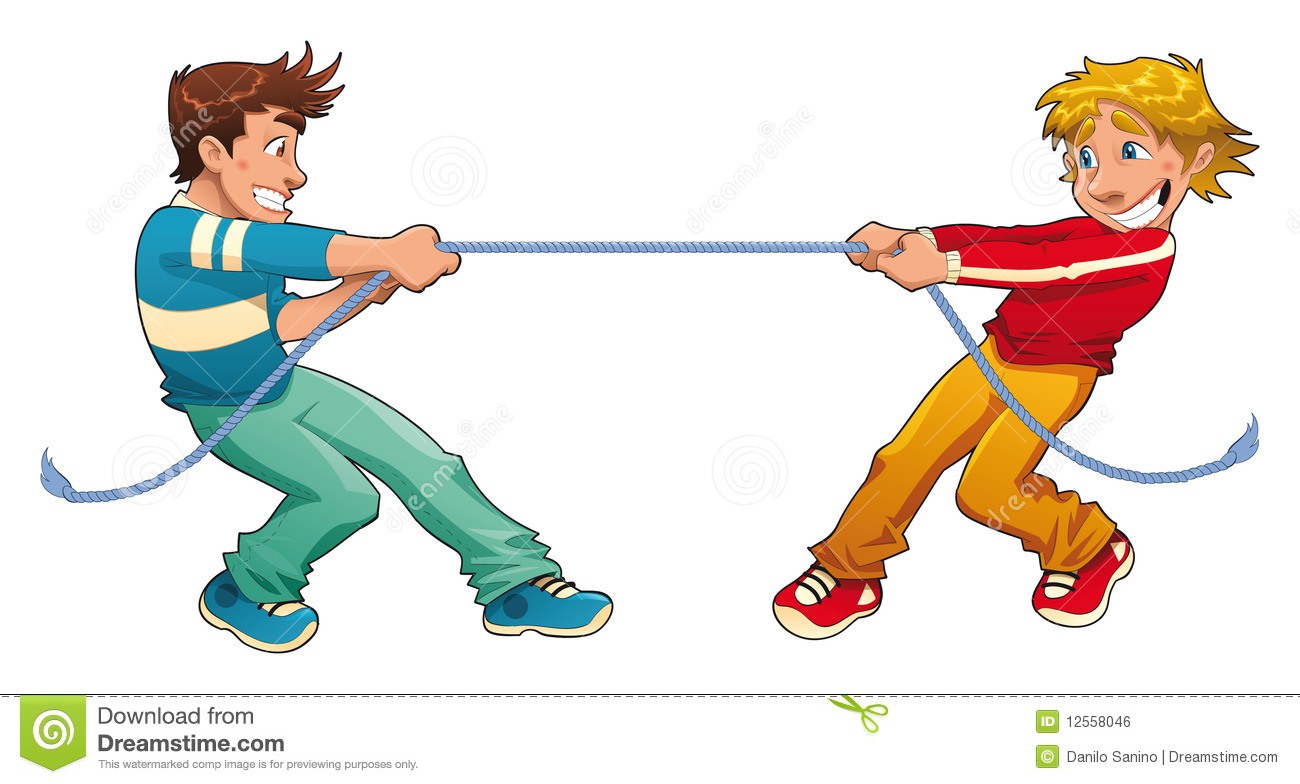
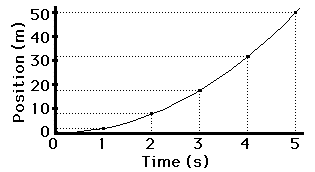
If a force of 26 N is exerted on two balls, one with a mass of 0.52 kg and the other with a mass of 0.78 kg, which ball will have the greater acceleration?
Same
0.78 kg
o.52 kg
None
In which direction and with how much force will an object move if you push to the left with 15N of force and your friend pushes to the right with 5N of force?
up with 10N of force
down with 5N of force
left with 10N of force
right with 10N of force

When an object resists change, like a body in a turning car, it is called ________________.
inertia
force
friction
drag force

Which of the following is most suitable for summer?
Cotton
Nylon
Polyester
Silk
On heating, a solid is converted to liquid. This change is called
Melting
Fusion
Diffusion
Freezing

Give the right answer/answers
A beaker - vaporisation
A beaker - evaporation
B beaker - vaporisation
B beaker - evaporation
Seema visited a Natural Gas Compressing Unit and found that the gas can be liquefied under specific conditions of temperature and pressure. While sharing her experience with friends she got confused. Help her to identify the correct set of conditions
Low temperature, low pressure
High temperature, low pressure
Low temperature, high pressure
High temperature, high pressure
The property to flow is unique to fluids. Which one of the following statements is correct?
Only gases behave like fluids
Gases and solids behave like fluids
Gases and liquids behave like fluids
Only liquids are fluids
A few substances are arranged in the increasing order of ‘forces of attraction’ between their particles. Which one of the following represents a correct arrangement?
Water, air, wind
Air, sugar, oil
Oxygen, water, sugar
Salt, juice, air
The phenomenon of change of a liquid into the gaseous state at any temperature below its boiling point is called (a) .
280 K is equal to (a) degree Celcius .
On converting 25°C, 38°C and 66°C to kelvin scale, the correct sequence of temperature will be
298 K, 311 K and 339 K
298 K, 300 K and 338 K
273 K, 278 K and 543 K
298 K, 310 K and 338 K
Kinetic energy decreases with increase in temperature .
True
False
Which one of the following is an example of a fluid?
Oxygen
Carbon
Phosphorus
Sulphur
235K = _________°C
38
-20
20
-38
Which of the following statements is NOT true?
The molecules in a liquid and a gas can flow.
The molecules in a liquid are arranged in a regular pattern.
The molecules in a gas move about randomly at high speed.
The molecules in a solid vibrate about a fixed position
Name the process by which dry ice changes into carbon dioxide gas.
Evaporation
Condensation
Sublimation
Vaporisation
At what temperature liquid water and steam co-exist?
At the melting point of ice
At the boiling point of water
At the freezing point of water
At the condensation point
Melting point of ice is
273.16K
373.15K
100°C
250.18K
Which of the following undergoes sublimation?
Sodium chloride
Potassium chloride
Ammonium sulphate
Ammonium chloride
In which of the following conditions, the distance between the molecules of hydrogen gas would decrease?
Increasing the pressure on hydrogen in a closed container
Increasing the volume of the container of hydrogen gas
Heating the container
Some hydrogen gas leaking out of container
Which one among the followings has a fixed volume but no fixed shape?
Carbon dioxide
Ice
Kerosene
Xenon
A few substances are arranged in the increasing order of ‘forces of attraction’ between their particles. Which one of the following is the correct arrangement?
oxygen – honey – sugar
oil – air– salt
juice – salt – oxygen
salt – air – sugar solution
1. In all the three states of water, (i.e. ice, liquid and vapour) chemical composition of water
(a) is very different
(b) remains same
(c) sometimes same and sometimes different
(d) none of the above
2. Which of the following statements is incorrect about the state of matter?
(a) The force of attraction between the gas particles is very less.
(b) Plasma consists of super energetic and super excited particles.
(c) The plasma glows with a special colour depending on the nature of the gas.
(d) Bose-Einstein condensate is formed by heating gas of extremely low density.
3. Which of the following is not a property of gas?
(a) Gases have a definite shape
(b) Gases have no definite volume
(c) The rate of diffusion of a gas is higher
(d) Gaseous particles are in a state of random motion
4. A form of matter that has no fixed shape but has a fixed volume. An example of this form of matter is ———————
a) carbon dioxide
(b) ice
(c) water vapor
(d) kerosene
5. When heat is constantly supplied by a burner to boiling water, then the temperature of the water during vaporisation:
(a) Rises very slowly
(b) Rises rapidly until steam is produced
(c) First rises and then becomes constant
(d) Does not rise at all
6. The boiling point of water at sea level is ———————
(a) 0℃
(b) 273 K
(c) 373 K
(d) 273℃
7. The process in which solid is directly converted to vapours state is called —————
(a) vapourisation
(b) sublimation
(c) condensation
(d) solidification
8. The solid which undergoes sublimation is ——————
(a) naphthalene
(b) ice cube
(c) sodium chloride
(d) potassium chloride
9. Which of the following conditions is most favourable for converting gas into liquid?
(a) High pressure, low temperature
(b) Low pressure, low temperature
(c) Low pressure, high temperature
(d) High pressure, high temperature
10.During summer water kept in an earthen pot becomes cool because of the phenomenon of
(a)diffusion
(b)transpiration
(c)evaporation
(d)condensation

Air is regarded as mixture because?
It's pressure may vary.
It's temperature may vary.
Volume changes under different compositions.
It's compositions may vary.

In which of the following constituents are present in the ratio?
Mixture.
Compound.
Solution.
Colloid.

Which of the following will result in the formation of a mixture?
Crushing of marble tiles into smaller particles.
Breaking ice cubes into smaller pieces.
Adding sodium metal to water.
Adding milk in water.

A sample contains two substances and has uniform properties. The sample is ________?
A compound.
A heterogeneous mixture.
An element.
A homogeneous mixture.

A mixture will appear translucent in the case of?
Copper sulphate + water.
Alum + water.
Sugar + water.
Starch + water.

Which of the following is not a mixture?
Pure water.
Sea water.
Air.
Brass.

Which of the following is a heterogeneous mixture?
Air.
Brass.
Iodised table salt.
Steel.

Which of the following is an example of heterogeneous substance?
Bottled water.
Table salt.
Pieces of copper.
Candle.

Which of the following is an example of homogeneous substance?
Granite.
Copper sulphate.
m&m candy.
Muddy water.

Brass is an example of?
Homogeneous compound.
Homogeneous mixture.
Heterogeneous mixture.
Heterogeneous compound.
which of the following is a mixture?
air
ice
hydrochloric acid
mercury
Tick the COMPOUNDS.
SOAP
METHANE
CALCIUM CARBONATE
SILICON
TIN
WHICH ONE IS A MIXTURE?
BLOOD
CARBON DIOXIDE
SILICON
SODIUM
TIN
CORRECT THE SENTANCE:
"A SUBSTANCE IS AN IMPURE FORM OF MATTER"
(a)
WRITE ONLY THE NAME OF THE PROCESS:
BUTTER FROM CURD
(a)
WHAT IS THE SIZE OF THE PARTICLES OF A SUSPENSION?/
MORE THAN 100nm
less than 1nm
less than 1nm
Which Of The Following Is A PHYSICAL CHANGE
RUSTING OF ALMIRAH
MELTING OF BUTTER IN A PAN
MAKING A FRUIT SALAD WITH RAW FRUITS
BURNING OF PAPER AND WOOD
DISSOLVING COMMON SALT IN WATER
WHICH 2 WILL SHOW THE TYNDALL EFFECT
STARCH SOLUTION
COPPER SULPHATE SOLUTION
MILK
SALT SOLUTION
HOW CAN WE SEPERATE A MIXTURE OF SALT AND CAMPHOR/?
(a)
TRUE OR FALSE: CALCIUM OXIDE IS A PURE SUBSTANCE
A mixture of two or more metals or a metal and non-metal is known as
Pure compound
Heterogeneous mixture
Alloy
Pure solid
Sodium carbonate is
an element
a compound
a mixture
None of these
Two substances A and B when bought together form a substance C with the evolution of heat. The properties of C are entirely different from those of A and B. the substance C is:
A compound
An element
A mixture
None of the above
Name the mixture whose particles are large enough to scatter light:
True solution
Homogenous solution
Colloid
all of the above
Which of the following property does not describe a compound:
it is composed of two or more elements
it is a pure substance
constituents cannot be separated by physical means
mixed in any proportion by mass
Which of the following is a chemical change?
cooking food
melting of wax
dissolving sugar in water
mixing iron fillings with sulfur powder
The continuous zig-zag movement of colloidal particles in a dispersion medium is called:
Oscillation
Tyndall effect
Dispersion
Brownian movement
Colloids can be separated by
filtration
distillation
sedimentation
centrifugation
Burning of a candle is
physical change
chemical change
both physical and chemical change
none of the above

A
B
C
D
What does epistemology means?
Knowledge
Theory of knowledge
Wisdom
Wisdom and love
Discussion in metaphysics includes...
The proof of historical events
Moral
Causal relation
The proof of God existence
He said the famous phrase: "I think, therefore I am"
Plato
Descartes
Ryle
Dawkins
'Philosophy' means...
Love of wisdom
Finding wisdom
Love of thinking
Finding love

What symbol is this?
Ohm
Yin yang
Wheel of Life
Moksha
What is the meaning of the Greek word "Sophia"?
Happiness
Freedom
Love
Wisdom
The study of knowledge, truth, and the nature of ultimate reality.
Philosophy
Theology
Anthropology
Hamartiology
Plato was a student to which philosopher?
Aristotle
Xenophon
Socrates
Thomas Aquinas
the branch of philosophy dealing with the nature of beauty, art, taste, and the creation and appreciation of beauty.
Logic
Ethics
Aesthetics
Metaphysics

