
Font size
 Worksheets
7th grade SOL REview
Total questions: 104
Worksheet time: 2hrs 53mins

Which of the organisms in a forest ecosystem is an example of a producer?
grasshoppers
plants
owls
frogs

A tapeworm lives in human intestines, absorbing the nutrients that would normally be absorbed by the person. This eventually causes the person health problems. The relationship between the tapeworm and the human is -
parasite/host
predator/prey
herbivore/omnivore/omnivore
consumer/producer

Which organelle functions as a place to store extra water?
Vacoule
Chloroplasts
Nucleus
Cell membrane

DNA is essential to living organisms because it---
carries the genetic code
is a spiral helix
can prevent diseases
can break apart

Abiotic or Biotic: Water
Abiotic
Biotic

An organism that eats grass and insects is
an herbivore
a producer
prey
an omnivore
Some bacteria live in the stomach of a cow. The bacteria helps the cow break down and digest the plant food that the cow eats. The bacteria gets a meal. This is an example of
Commensalism
parasitism
Mutualism

Which organism is a decomposer?
frog
worm
oak tree
grasshopper
Which organisms will you find the most of in an ecosystem?
Consumer
Producer
Decomposer

Plants use photosynthesis to make
water
sunlight
carbon dioxide
sugar
Which type of relationship is a clown fish and a sea anemone an example of?
Mutualism
Parasitism
Commensalism
Predation
What is the definition of a consumer?
Make their own food
Eat their own food
Don't eat food
Photosynthesize food
What is the definition of a carnivore?
Eats only plants
Eats only animals
Eats both plants and animals
Eats nothing
Which of the following is an abiotic factor?
fish
light
toad
fungi
What is the definition of predation?
Animal eats another animal
Animal eats a plant
Animal harms a plant
Animal helps another animal

The cell theory applies to all organisms, including the five shown. Which of the following statements describes how these organisms are an example of the cell theory?
The organisms have cells that lack a nucleus.
The organisms are made of one or more cells.
The cells of the organisms undergo photosynthesis.
The cells of the organisms are identical to each other.
x-rays
computers
the light microscope
the scanning electron microscope
Cell 2 had a cell membrane and Cell 1 did not.
Cell 1 had a cell wall and Cell 2 did not.
Cell 2 had a chloroplast and Cell 1 did not.
Cell 1 had a nucleus and Cell 2 did not.
Was the first person to see cells by looking at cork under a microscope and gave them their name
Hooke
Leeuwenhoek
Virchow
Schleiden
Looked at living cells under a microscope he made
Hooke
Leeuwenhoek
Virchow
Schwann
The cell theory developed from the work of many different scientists. Which of the following statements is NOT part of the cell theory?
All cells come from other living cells.
The cell is the basic unit of all living things.
All cells of living things have the same organelles.
All living things are made up of one or more cells.
The work of many different scientist:, led to the development of the cell theory. Which of the following statements is NOT part of the cell theory?
All cells come from other living cells.
The cell is the basic unit of all living things.
The cell provides everything a living thing needs.
All living things are made up of one or more cells.

The cell theory applies to all organisms, including the two shown below. Which of the following statements describes how these organisms are examples of the cell theory?
The organisms are made up of cells that make their own food.
The cells of the organisms come from other living cells.
The organisms are made up of more than one cell.
The cells of the organisms have cell walls.
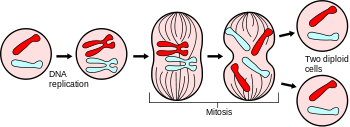
When cells are damaged, new cells are created by cell a process called cell division. How does the cell theory support this fact?
It states that all cells have a nucleus which divides.
It states that all living things are made up of one or more cells.
It states that cells come from previously existing cells.
It states that the basic units of structure and function are cells.

The 3 parts of the Cell Theory are...?
All living things are composed of cells
Cells are the basic units of structure and function in living things
All cells are produced from other cells
All living things are composed of cells
Cells are the basic units of dance and vibes in living things
All cells are destroyed from other aliens
All living things are composed of Jell-O
Cells are the basic units of structure and function in living things
All cells are produced from factories in Canada
All living things are composed of cells
Cells do karate and practice eating whole pies in their free time
All cells are produced from other cells


Which statement best explains the relationship between structure and function in an organism?
Structure and function refer to the different tissue types within an organism.
Structure and function refer to the jobs of tissues, organs, and organ systems.
Structure and function refer to the locations of tissues, organs, and organ systems.
Structure and function refer to the locations and jobs of different tissues, organs, and organ systems working together.
to arrange something into groups according to similarities
Classify
Family
Kingdon
Orginize
Taxonomy is?
one of the three domains of life
the science of classifying and naming living things
organisms with spinal cords in their backs
one of the six kingdoms of life
Organisms are classified based on ________.
the number of them that exists in a species
their Greek names
similarities and evolutionary relationships
the year their fossils are discovered
Which of the following lists the eight levels of classification in the correct order?
domain, kingdom, class, phylum, family, order, genus, species
kingdom, domain, phylum, order, class, family, genus, species
domain, kingdom, phylum, class, order, family, genus, species
kingdom, domain, phylum, class, order, family, genus, species

Cellular Respiration occurs in what cell organelle?
chloroplast
cytoplasm
mitochondria
animal
Cellular respiration is the process that our cells use to ….
convert sugar (glucose) into energy (ATP)
break food down into smaller molecules (sugars)
makes acid
breathe
What is needed for cellular respiration to occur?
oxygen only
glucose only
carbon dioxide
sunlight
oxygen and glucose
What is needed for cellular respiration to occur?
oxygen only
glucose only
carbon dioxide
sunlight
oxygen and glucose
Abiotic factors are ___________.
non-living parts of an ecosystem
living parts of an ecosystem
things that once were alive, but now are dead
not important parts of ecosystems.
ATG TGA CAG
If an organism has 24 chromosomes in a body cell, how many will each daughter cell have at the end of meiosis?
6
12
23
24
What is the benefit of meiosis?
to help the organism grow
to repair damaged cells
to heal injuries
to create diversity in offspring

A mutation is defined as:
A change in the cell's structure
Anything that changes in an embryo
Any change in the physical features of a human
A change in the DNA sequence
How many cell divisions does meiosis have?
0
1
2
3
Meiosis produces daughter cells that are genetically _________ each other.
identical to
different from
superior to
inferior to


Reorder the following from largest to smallest. Be sure to spell them correctly and put commas in between!
chromosome, gene, cell, nucleus, DNA
(a)


In the Punnett square, what is the probability for white fur?

(Click the picture to see it without the text)


What do these structures suggest about the evolution of organisms?
A common ancestor
Similar purpose
One evolved into another
Which of the following represent evidence for evolutionary change?
The fossil record
Written observations from individuals in prehistoric periods
Genetic information (DNA)
Anatomical similarities
Natural selection
The sudden disappearance of a type of fossil in the fossil record is evidence of...
adaptation
carbonization
extinction
camouflage

What adaptation would help a Leaf-tailed Gecko both catch its prey and avoid its predators?
Adaptation
Migration
Camouflage
Hibernation

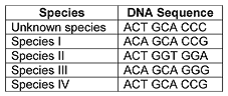
By looking at the genes of some animals we can determine which living species are most closely related to each other. This also reveals which species most recently diverged from their common ancestor.
Based on the partial gene segments shown, which pair of animals are genetically most closely related and therefore most recently diverged from their common ancestor?
Chimpanzee and Mouse
Rat and Mouse
Rat and Chimpanzee

When plants undergo photosythesis they produce--
carbon dioxide
oxygen
hydrogen
nitrogen

Is this turtle a vertebrate or invertebrate?
Vertebrate
Invertebrate

The part of a plant cell that is green in color is the _______.
nucleus
cytoplasm
vacuole
chloroplast


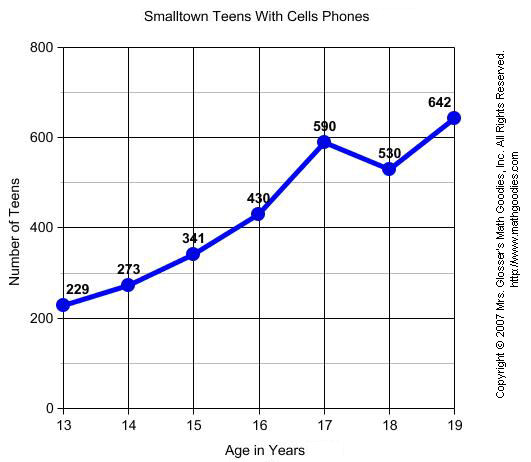

What would most likely be the temperature at 2 1/2 minutes?
58
62
78
88
What's the dependent variable?

What is an observation?
A scientific statement based on ideas
Using your senses to notice what is going on around you
To be unaware of your surroundings
The question that you want an answer to.


This example shows
Density of a rock
Volume of a rock
Mass of a rock
Length of a rock

What is the mass of the rock shown on the triple beam balance?
354.6g
355g
350g
355.5
Homozygous or Heterozygous: Ff
Homozygous
Heterozygous
Genotype or Phenotype: Black hair
Phenotype
Genotype

Who is the producer?
lettuce
greenfly
ladybird
thrush

Which of these organisms would receive energy from the snake?
Plant
Rabbit
Mouse
Hawk
In mutualism, both species (a) , whereas in competition both species are (b) . Competition often leads to the evolution of new (c) .
12.A
The ocean sunfish is a large, flat fish that spends most of its time in deep water feeding mainly on jellyfish. Sunfish often have many species of copepods, small crustaceans that bury their heads into the soft tissue of the sunfish. Sunfish will swim to the surface of the water and lie sideways allowing seabirds to eat the copepods from their skin. Match the organism to the correct description of how each organism is related to the sunfish.
Seabirds
Mutualism
Jellyfish
Predation
Copepods
Parasitism
Match the following types of relationships to their descriptions:
Both organisms are harmed by fighting over a resource
Competition
One organism benefits at the expense of the other
Parasitism
One organism benefits while the other remains neutral
Commensalism
Both organisms benefit (help each other)
Mutualism
(a) is the type of symbiosis in which one individual benefits while the other individual neither benefits nor is harmed

