
 Worksheets
Lab 22: Reproductive System
Total questions: 118
Worksheet time: 9hrs 33mins
Separate the examples of inter and intrasexual selection.

Fan throated lizard puffing out throat

Male deer sparing

Male sea lions competing

Peacock's wide and colorful feathers

Female brown rats ovulating around the male they'd like to mate with

Place the structures in the order of which a spermatid or sperm would encounter them.
Seminiferous Tubules
Epididymis
Ejaculatory Duct
Urethra
Glans
Highlight the seminiferous tubules in yellow.
Highlight the flagella in green.
Highlight the spermatid cells in blue.
Highlight the spermatocytes in orange.
Highlight the spermatogonial cells in red.
Hint: Sperm cells are made in this order: Spermatogonial Cells ---> Spermatocytes ---> Spermatid Cells

Label the components of the male reproductive system.
Glans
Scrotum
Vas Deferens
Prostate Gland
Seminal Vesicle
Epididymis
Seminiferous Tubules
Label the components of the ovary.
Follicle After Ovulation
Developing Follicle
Corpus Luteum
Secondary Follicle
Corpus Albicans
Ruptured Follicle
Corpus Albicans
Corpus Luteum
Ovum
Label the parts of the female reproductive tract.
Endometrium
Uterus
Vaginal Opening
Ovary
Fimbriae
Fallopian Tube
Cervix
Label the components of the female reproductive system. Label the bladder, so that you don't get it confused on the exam.
Bladder
Uterus
Cervix
Labia minora
Labia majora
Follicles hold (a) and releases the hormone (b) . This hormone is linked to its ability to (c) LH (luteinizing hormone).
A follicle that has recently released an egg is called a (a) . This follicle releases a hormone called (b) which (c) the shedding of the uterine lining, known as (d) .
Two crucial hormones that are released from the pituitary gland are known as LH (luteinizing hormone) and (a) . In women, this hormone is essential for the development of follicles and it triggers the release (b) in the (c) .
An increase in (a) causes an (b) in (c) , a hormone that causes ovulation to occur. After ovulation, the ruptured follicle known as a corpus luteum (that has released an ovum, matured egg), releases a hormone called (d) . This hormone prevents the shedding of the uterine lining. The menstrual cycle is repeated when levels of this same hormone drops, causing an increase in (e) , which gives nutrients needed for follicles to grow. Estrogen will be released from these growing follicles, eventually decreasing the levels of FSH hormone. (Reread from the top to see what else estrogen does to continue the menstrual cycle)

Match the events of the menstrual cycle to the days they occur.
The hypothalymus released GnRH which triggers LH and FSH to be released.
LH and FSH stimulate the development of the primary follicle in the ovary.
The follicle secretes estrogen.
Lack of progesterone causes the breakdown of the endometrium, causing mensuration.
Estrogen causes the thickening of the endomentrium.
The follicle is nearly mature, releasing high levels of estrogen causing a surge in LH.
LH causes ovulation to occur.
The ruptured follicle becomes the corpus luteum.
The corpus luteum release so much progesterone that estrogen levels drop.
High progesterone levels maintain the thickness of the endometrium.
Steadily, progesterone levels begin to drop, causing the endometrium to get ready to shed.
The corpus luteum stops producing progesterone and becomes a scar tissue, the corpus albicans.
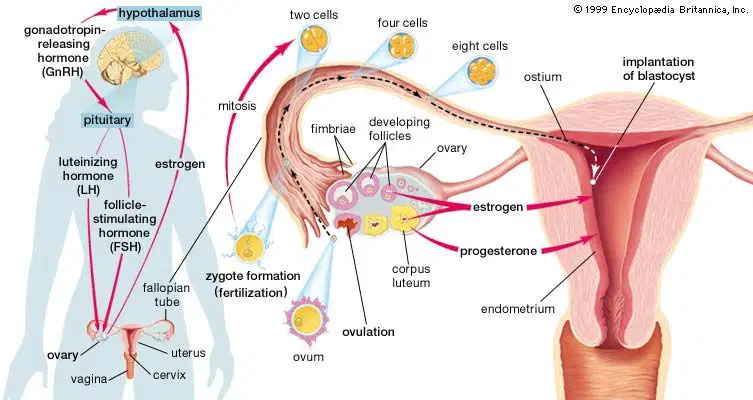
List the following structures in the order of which an oocyte or egg would encounter them after ovulation.
Follicle
Fimbriae
Fallopian Tube
Uterus
Cervix
What are the 3 locations semen is produced?
Seminal Vesicle
Prostate
Bulbourethral Gland
Seminiferous Vesicles
Epididymis
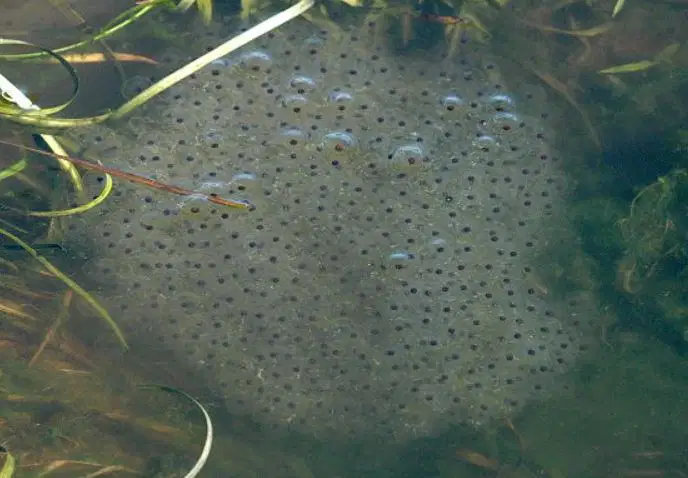
This type of reproductive strategy is common in aquatic animals. It involves unfertilized oocytes (underdeveloped eggs) being released from females and fertilization occurs externally.
(a)

This type of reproductive strategy is common in birds and reptiles. It involves internal fertilization. Eggs are contained in a yolk that gives nutrients to the embryo.
(a)
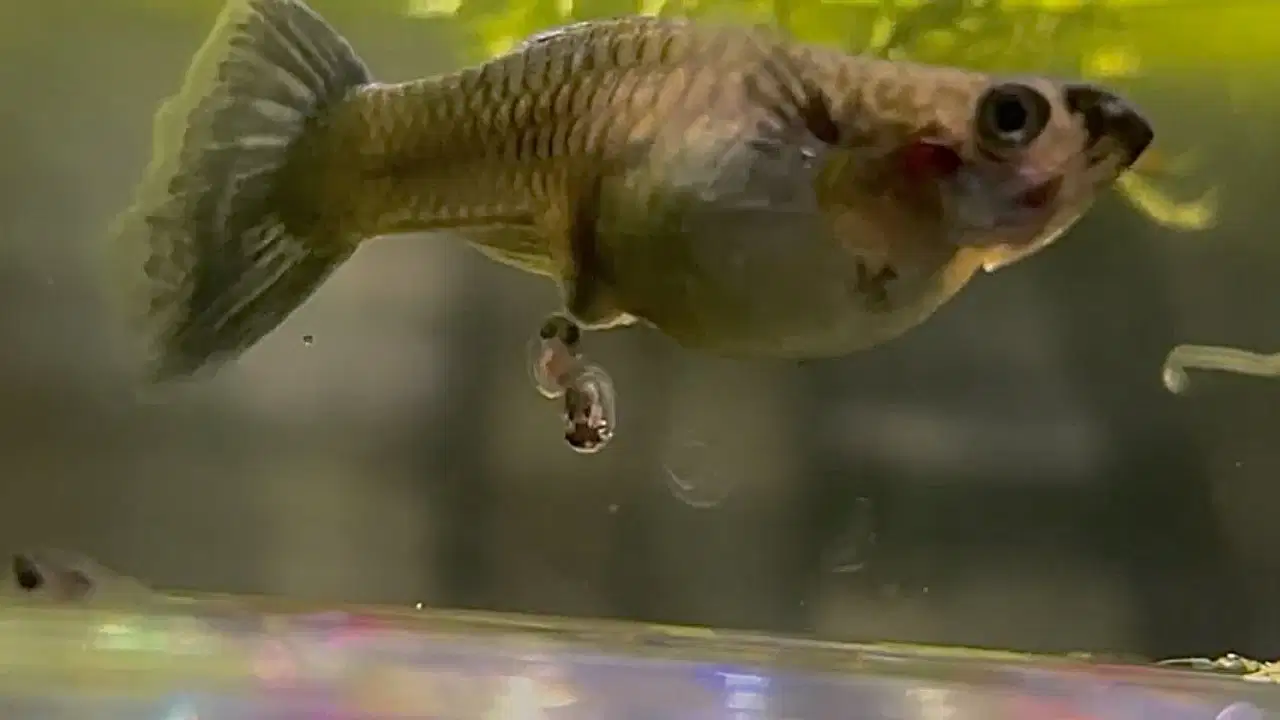
This type of reproductive strategy is common in "live-bearing" reptiles or fish, such as guppies and boa snakes. Young are born to live from eggs that are held inside the female until they hatch.
(a)

This type of reproductive strategy is common in animals that have mammary glands (producing milk), such as humans or cats. Young are connected to their mother through an umbilical cord and placenta.
(a)
Why is the evolution of male and female reproductive systems sometimes described as an "arms race"?
Match the following
(a) - organisms select mates based off of traits they deem as most fit for reproduction
(b) - organism's traits that are best for reproduction are selected by their environment
(c) - organisms different in their physical characteristics based on if they are male or female. This concept goes hand in hand with (d) .
(a) - the act of sex
(b) - the act of introducing sperm to the female body
(c) - act of fusing between a sperm and egg
(d) - act of a zygote attaching to a uterus (becoming pregnant)
Match the term with the appropriate example.
Ovuliparity
Clams releasing eggs or sperm into water
Viviparity
Cheetahs nursing their live young
Ovoviviparity
Rattlesnakes giving birth to live young
Oviparity
Turtles laying their eggs in the sand
Place whether the structures are found in male, female, or both types of reproduction systems.
Fallopian Tube/Oviduct
Clitoris
Fimbriae
Corpus Luteum
Epididymis
Prostate Gland
Urethra
Glans
Bulbourethral Gland
Gonads
Prepuce
Match the hormones involved in the menstrual cycle to their functions.
Progesterone
Maintains uterine lining
Estrogen
Triggers surge in LH
LH (Luntenizing Hormone)
Causes ovulation
FSH (Follicle Stimulating Hormone)
Stimulates follicle growth
Label the parts of the male reproductive system.
Label the parts of the male reproductive system.
Label the parts of the male reproductive system.
Label the structures on the seminiferous tubule slide.
Label the slide of the seminiferous tubules.
Reorder the following stages of sperm maturation.
Spermatogonium
Primary spermatocyte
Secondary spermatocyte
Spermatid
Sperm
Label the parts of the female reproductive system.
Rearrange the layers of the uterus from superficial to deep.
Perimetrium
Myometrium
Endometrium
Label the structures of the ovary.
Label the parts of the ovary tissue.
Label the structures of the ovary slide.
Label the slide of the ovary.

Identify this structure.
(a)

Identify this structure.
(a)

Identify this structure.
(a)

The corpus (a) degenerates around week 12 of pregnancy. The alternate fate occurs if the egg does not undergo fertilization. It stops secreting its main hormone, (b) , decays and turns into a corpus (c) .

The corpus (a) is essential a scar in the ovaries.
Roughly every _ _ days, a woman has heir menstrual cycle.

Estrogen levels are highest (a) . The (b) produces estrogen and (c) . Following ovulation, the ruptured follicle becomes the (d) and atrophies (degenerates) after (e) days if fertilization does not occur. Low levels of these hormones allow for a chain event that results in the development of another follicle.

Identify the structure highlighted in green.
(a)
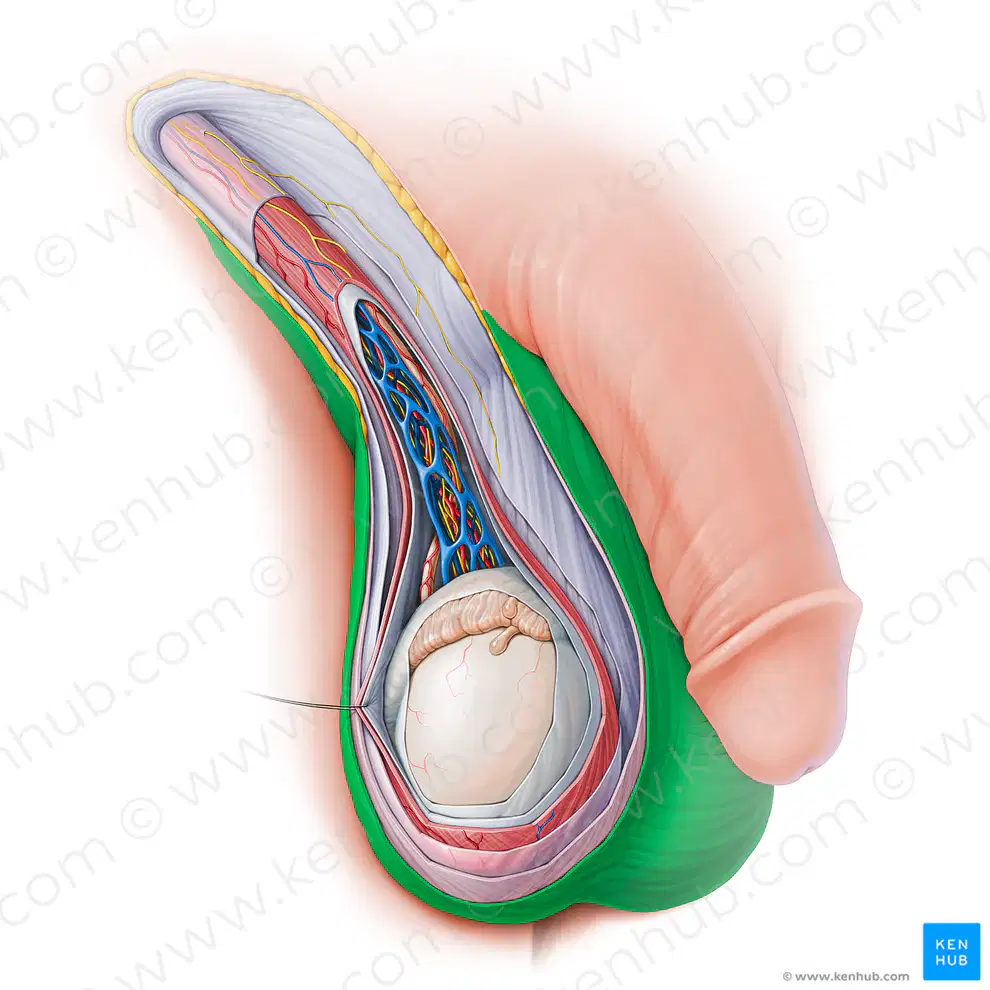
Identify the structure highlighted in green.
(a)

Identify the structure highlighted in green.
(a)

Identify the structure highlighted in green.
(a)
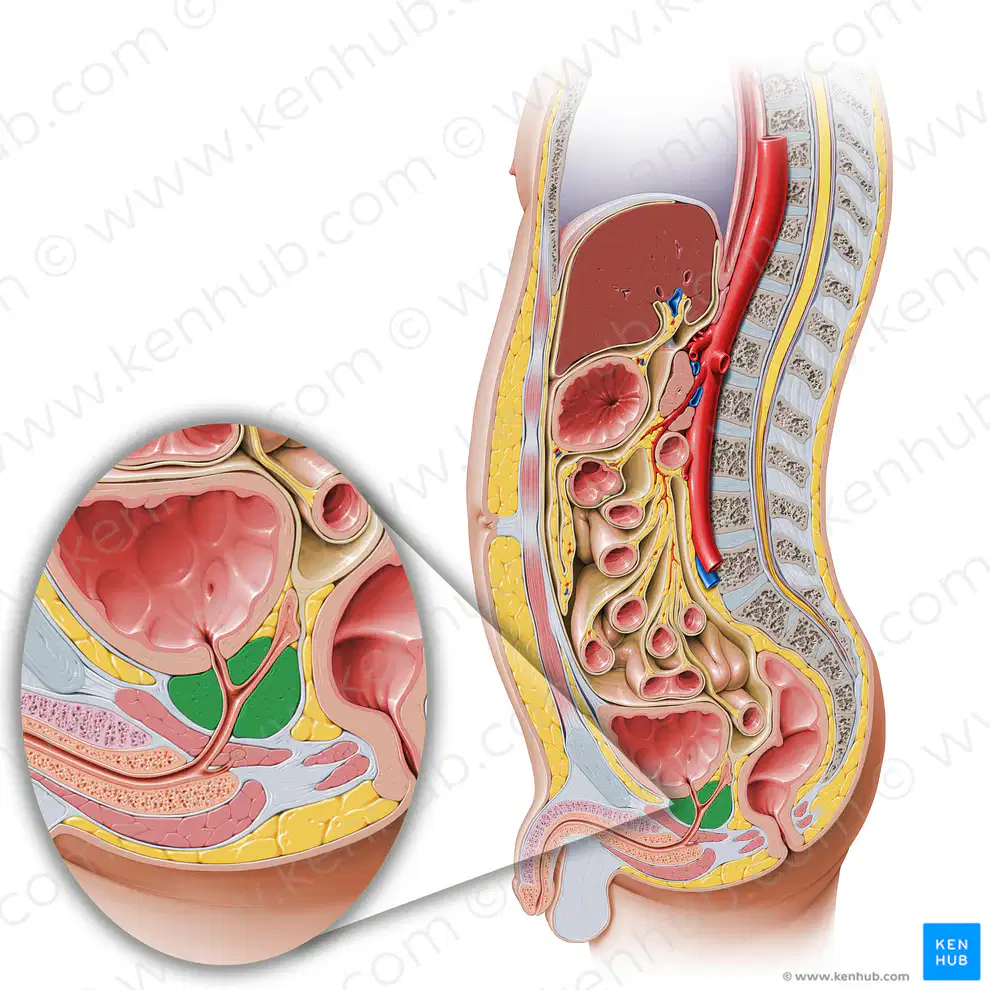
Identify the structure highlighted in green.
(a)
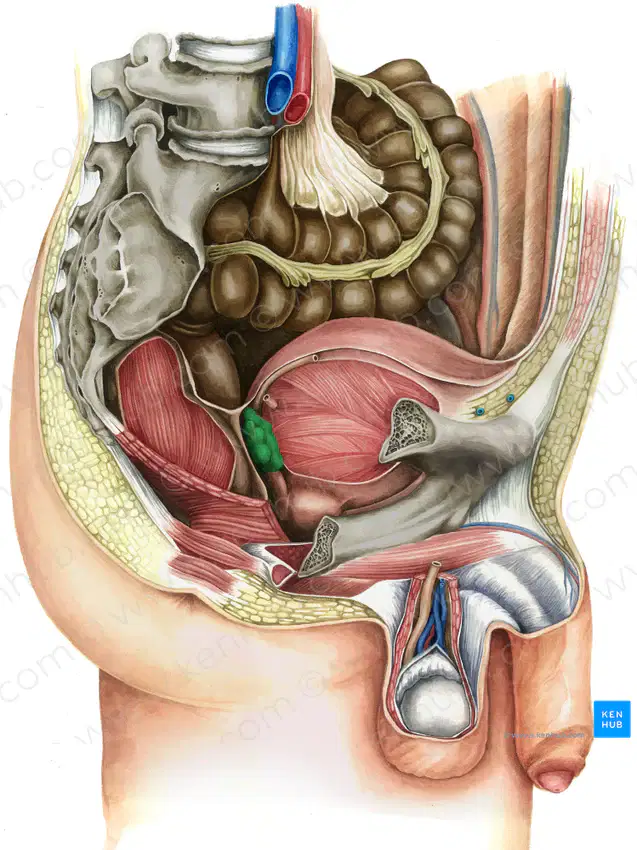
Identify the structure highlighted in green.
(a)
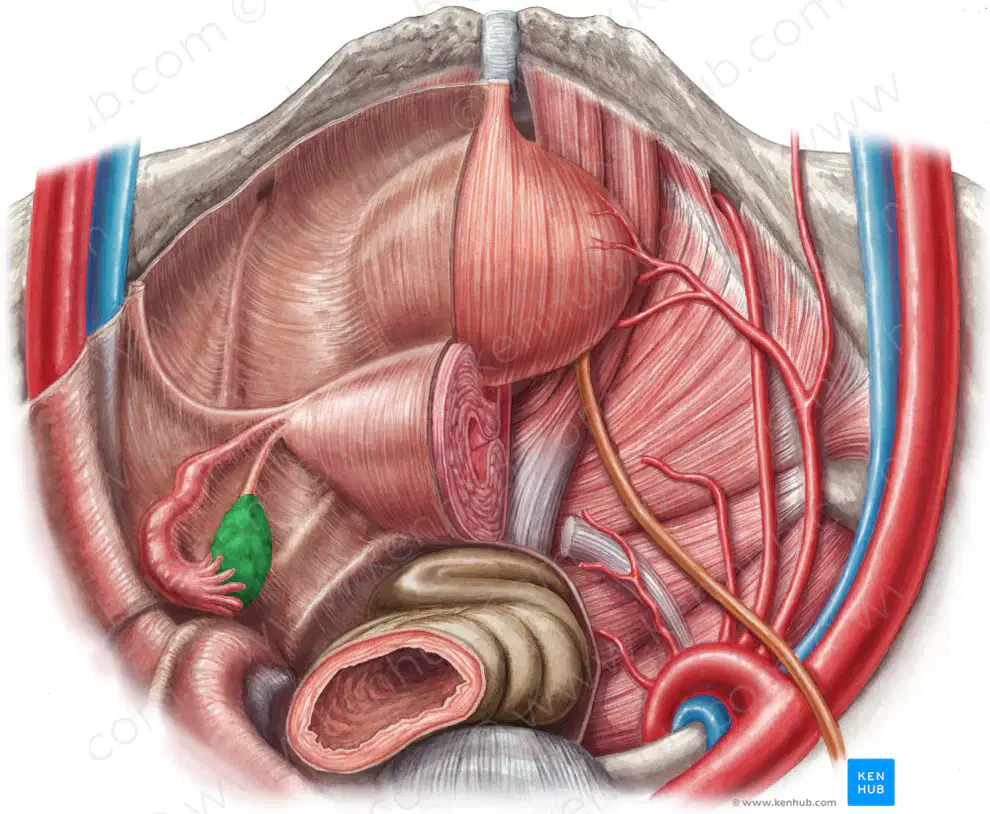
Identify the structure highlighted in green.
(a)
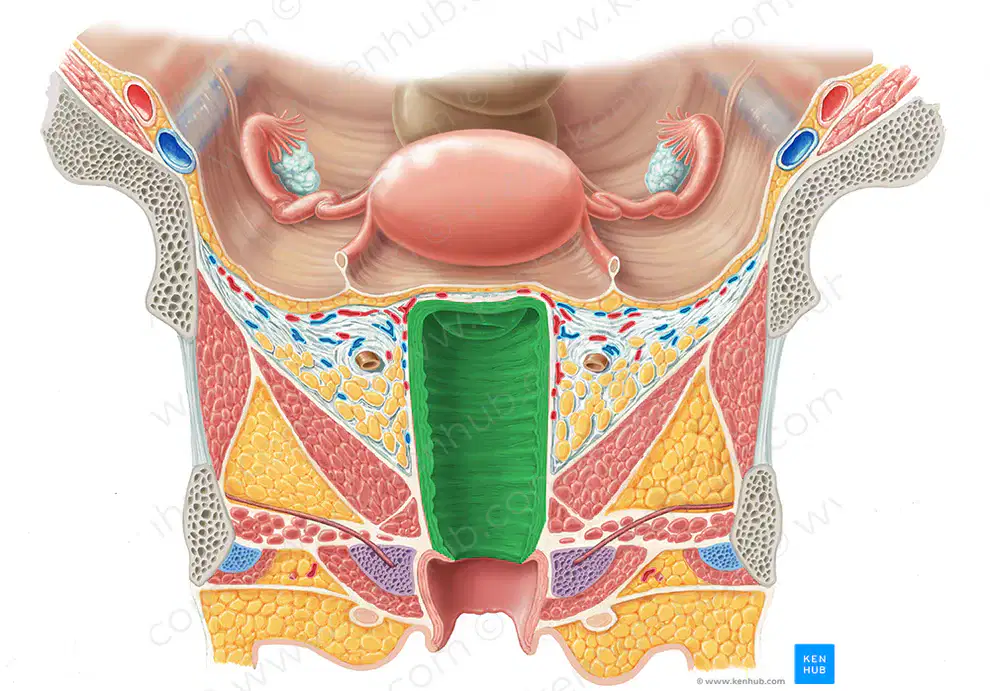
Identify the structure highlighted in green.
(a)

Identify the structure highlighted in green.
(a)

Identify the structure highlighted in green.
(a)

Identify the structure highlighted in green.
(a)
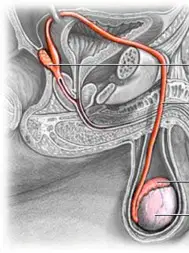
Identify the tube highlighted in orange.
(a)
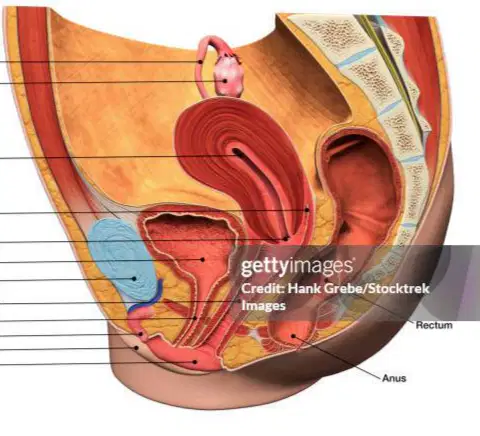
Identify the structure that is the third arrow from the bottom left side of the image. (Your left, not anatomical left)
(a)
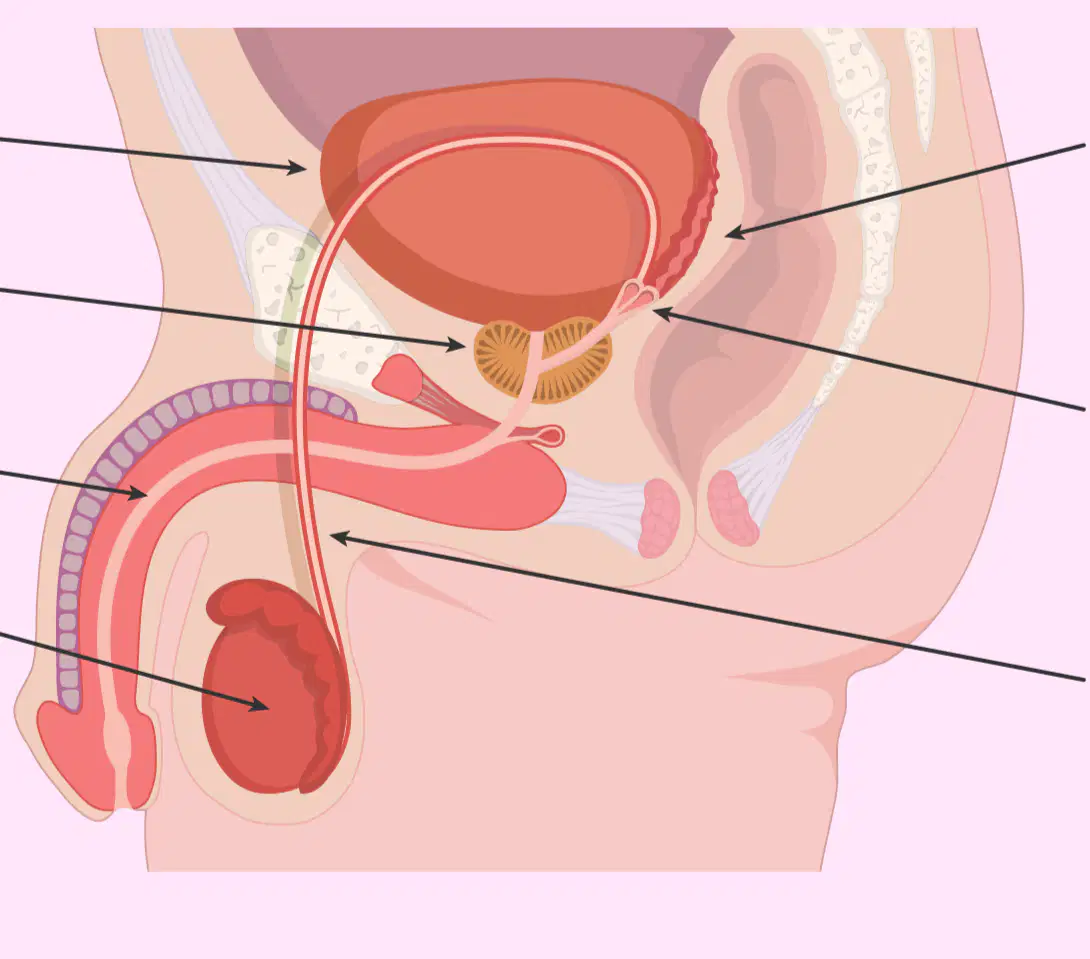
Identify the structure the 2nd arrow on the right side of the image is pointing to. (Right as in your right, not anatomical right)
(a)
Identify the labia minora.
Identify the labia majora.
Identify the clitoris.
Identify the ovary.
Match each term to its definition.
Transports mature sperm from the epididymis to the ejaculatory duct during ejaculation.
Vas deferens
Conducts urine and semen out of the body (not simultaneously).
Urethra
Carries sperm and seminal fluid into the urethra.
Ejaculatory duct
Site of fertilization; transports the ovulated egg to the uterus.
Uterine tube (Fallopian tube)
Receives the penis during intercourse, serves as the birth canal, and allows menstrual flow to exit the body.
Vagina
Match each term to its definition.
Produces a slightly acidic fluid that activates sperm and contributes to semen volume.
Prostate gland
Produces alkaline seminal fluid rich in fructose to nourish sperm and help with motility.
Seminal vesicle
Secretes a clear, alkaline mucus to lubricate the urethra and neutralize acidic urine residues before ejaculation.
Cowper’s gland (bulbourethral gland)
Match each term to its definition.
Produces oocytes (eggs) and secretes estrogen and progesterone.
Ovary
Site of implantation and development of the fetus; contracts during labor to deliver the baby.
Uterus
Erectile tissue that is sensitive to sexual stimulation; analogous to the male penis.
Clitoris
Rounded, fatty area overlying the pubic bone; serves to cushion and protect the pubic symphysis and underlying structures during sexual activity or physical impact.
Mons pubis
Match the following terms to their definitions.
The act of sex
Copulation
The favoring of traits that enhance mating behaviors; choosing mates based off of attractive features
Sexual Selection
The tendency to attribute human characteristics to non-human entities
Anthropomorphize
A form of asexual reproduction when females produce offspring from unfertilized eggs without sperm
Parthrnogenesis
Differences in appearance between males and females of the same species
Sexual Dimorphism
Match the following chromosome types to what sex they determine.
Male Humans
XY
Female Humans
XX
Males Butterflies/Birds
ZZ
Female Butterflies/Birds
ZW
Reptiles
Temperature of incubation for eggs
Match the following terms related to reproductive strategies of animals to their definitions.
Organisms of the same species releasing gametes in one place at a time
Spawning
Structures allowing females to hold sperm from multiple males until they're ready to lay their eggs
Spermathecae
Jellylike blob of protein and sperm given to females
Spermatophore
Opening for reproductive, excretory, and digestive tracts
Cloaca
producing sound by rubbing two body parts together
Stridulation
Match the following terms related to reproductive strategies of animals to their definitions.
Aquatic Animals
Spawning
Insects
Spermathecae
Arthropods & Mollusks
Spermatophore
Birds, Amphibians, & Reptiles
Cloaca
Match the following types of reproductive strategies to their definitions.
Unfertilized eggs are released and fertilized externally
Ovuliparity
Fertilization occurs internally & eggs are enclosed in a shell
Oviparity
Young are born live from eggs and held inside female until they hatch
Ovoviviparity
Young are connected to mother via umbilical cord & placenta
Viviparity
Match the following word roots related to reproductive strategies to their definitions.
egg
Ovo/Ovi/Ovu-
external ferilitzation
-li-
live
-vivie
birth
-parity
The following description relates to the reproductive strategies of which organism?
Tiny males fuse permanently to females, providing sperm on demand. Fertilization is internal, development external.
Angler fish
Salmon
Sea Horse
Cichlid fish
Water boatman
The following description relates to the reproductive strategies of which organism?
Females lay thousands of eggs in gravel nests; males release sperm over them. No parental care; most die afterward.
Angler fish
Salmon
Sea Horse
Cichlid fish
Water boatman
The following description relates to the reproductive strategies of which organism?
Females deposit eggs into a male’s brood pouch; males fertilize and carry embryos until live young hatch.
Angler fish
Salmon
Sea Horse
Cichlid fish
Water boatman
The following description relates to the reproductive strategies of which organism?
Females carries and incubates eggs in their mouths until they hatch & males fertilize them there as well.
Angler fish
Salmon
Sea Horse
Cichlid fish
Water boatman
The following description relates to the reproductive strategies of which organism?
Males use stridulation with their penis to attract females & females lay eggs on submerged objects such as plants or rocks
Angler fish
Salmon
Sea Horse
Cichlid fish
Water boatman
The following description relates to the reproductive strategies of which organism?
Females have a branching vagina and males have a corkscrew shaped penis to navigate it.
Duck
South American crane fly
Echidna
Blanket octopus
Wasp
The following description relates to the reproductive strategies of which organism?
Males have four headed penis
Duck
South American crane fly
Echidna
Blanket octopus
Wasp
The following description relates to the reproductive strategies of which organism?
Use stridulation; females lay eggs in moist environments; little or no parental care.
Duck
South American crane fly
Echidna
Blanket octopus
Wasp
The following description relates to the reproductive strategies of which organism?
Tiny males transfer a detachable arm (hectocotylus) with sperm to female; females much larger and carry eggs.
Duck
South American crane fly
Echidna
Blanket octopus
Wasp
The following description relates to the reproductive strategies of which organism?
Injects caterpillar with paralyzing venom then lays eggs in the body; body provides nutrients for the hatching larvae
Duck
South American crane fly
Echidna
Blanket octopus
Wasp
The following description relates to the reproductive strategies of which organism?
Female has 3 vaginas and can produce different types of milk from each nipple
Kangeroo
Elephant
Hyena
Cat
Humans
The following description relates to the reproductive strategies of which organism?
Prehensile penis that can move like a tentacle
Kangeroo
Elephant
Hyena
Cat
Humans
The following description relates to the reproductive strategies of which organism?
Females have large citrous used to dominant mating behavior & give birth through it
Kangeroo
Elephant
Hyena
Cat
Humans
The following description relates to the reproductive strategies of which organism?
Male penis is spiky/barbed to induce ovulation in females
Kangeroo
Elephant
Hyena
Cat
Humans
The following description relates to the reproductive strategies of which organism?
Stabs blade like penis into abdomen to impregnate female.
Bed Bug
Dung Beetle
Black Widow
Spider
Caterpillar
The following description relates to the reproductive strategies of which organism?
Has a spiky penis that harms or injures mate to prevent them from mating with another male.
Bed Bug
Dung Beetle
Black Widow
Spider
Caterpillar
The following description relates to the reproductive strategies of which organism?
Female eats male after mating
Bed Bug
Dung Beetle
Black Widow
Spider
Caterpillar
The following description relates to the reproductive strategies of which organism?
Has no penis; Collects sperm on leg to inject into female
Bed Bug
Dung Beetle
Black Widow
Spider
Caterpillar
The following description relates to the reproductive strategies of which organism?
Long penis relative to body size; Extend penis to "drop" sperm into females
Barnacle
Flatworm
Earthworm
Snail
Clam
The following description relates to the reproductive strategies of which organism?
Both individuals possess male/female organs; engage in “sword fights” to determine who inseminates the other.
Barnacle
Flatworm
Earthworm
Snail
Clam
The following description relates to the reproductive strategies of which organism?
Both individuals possess male/female organs; line their bodies side to side in opposite directions to exchange sperm
Barnacle
Flatworm
Earthworm
Snail
Clam
The following description relates to the reproductive strategies of which organism?
Both individuals possess male/female organs; Use dart like appendages to inflict pain on their mate.
Barnacle
Flatworm
Earthworm
Snail
Clam
Match the following reproductive strategies to the organism they relate to.
Angler Fish
Sexual Parasitism
Salmon
External Fertilization
Sea Horse
Male Pregnancy
Cichild Fish
Mouthbrooding
Water Boatman
Stridulation
Match the following reproductive strategies to the organism they relate to.
Duck
Corkscrew Penis
Echidna
4-Headed Penis
South American Crane Fly
Stridulation
Blanket Octopus
Hectocotylus
Wasp
Caterpillar Incubator
Match the following reproductive strategies to the organism they relate to.
Kangaroo
3 Vaginas
Elephant
Prehensile Penis
Hyena
Large Clitoris
Cat
Spiky/Barbed Penis
Cuckcoo
Baby Replacer
Match the following reproductive strategies to the organism they relate to.
Bed Bug
Abdomen Attacking Blade Penis
Dung Beetle
Jealous Penis (Injure Mate)
Black Widow
Sexual Cannibalism
Spider (General)
No Penis, Just Leg Sperm
Wasp
Caterpillar Incubator
Match the following reproductive strategies to the organism they relate to.
Flat Worm
Penis Fencing
Earthworm
69
Snail
Dart Penis
Barnacles
HUGE Penis to Body Ratio
Cuckoos
Baby Replacer
Label the Male Reproductive System.
Testes
Penis
Vas Deferens
Prostate Gland
Urethra
Label the internal parts of the female reproductive system.
Ovary
Fallopian Tube
Uterus
Cervix
Vagina
Match the following terms related to sperm to their definitions.
Production of sperm
Spermatogenesis
Germ cells found in the testes that are in the process of developing into sperm cells
Spermatocytes
Specialized stem cell that gives rise to gametes
Germ Cell
Immature sperm (haploid)
Spermatids
Specialized cells that start the process of spermatogenesis; Earliest phase
Spermatogonia
Which of the following statements are true?
Natural selection is the result of better adaptations to the environment
Sexual selection is the accumulation of favorable traits to enhance mating behavior
Sexual selection is when male and female bodies appear different
Sexual dimorphism is when male and female bodies appear different
Sexual selection is the result of better adapatations to the environment
Match the female structure to its analogous male structure.
Vas Deferns
Fallopian Tube
Testosterone
Estrogen
Penis
Clitoris
Spermatocyte
Oocyte
Testes
Ovaries
What hormone triggers ovulation in females?
(a)
Which hormones trigger the cycle of making sperm in males?
Luteinizing Hormone (LH)
Follicle Stimulating Hormone (FSH)
Estrogen
Testosterone
Progesterone
105.
Answer the questions below after watching the video
Watch this video if you're struggling to understand the ovary slide. Type: Okay
(a)
106.
Answer the questions below after watching the video
Watch this video if you're struggling with the structures of the ovary model. Type: Okay
(a)
107.
Answer the questions below after watching the video
Watch this video if you're struggling with the female reproductive structures. Type: Okay
(a)
108.
Answer the questions below after watching the video
Watch this video if you're struggling with the male reproductive structures. Type: Okay
(a)
109.
Answer the questions below after watching the video
Watch this video if you're struggling with the seminiferous tubule slide. Type: Okay
(a)
A woman has a 28-day menstrual cycle and ovulates on day 14. If she has unprotected sex on day 12, what is the likelihood of pregnancy?
Very low, because ovulation has already passed
High, because sperm can survive several days until ovulation
Impossible, because fertilization only occurs on the same day as ovulation
Low, because eggs take several days to be released after ovulation
If a woman ovulates on day 16, and she has unprotected sex on day 19, what is the chance she could become pregnant?
High, because sperm can fertilize for many days after ovulation
Moderate, because ovulation is unpredictable
Low, because the egg survives only about 12–24 hours after ovulation
High, because the luteal phase begins immediately after ovulation
A couple is trying to conceive. The woman’s cycle is regular and she ovulates on day 15. Which day would give them the highest chance of pregnancy?
Day 10
Day 13
Day 16
Day 20
The fertile window spans about (a) days before and (b) day after ovulation. Sex (c) days before ovulation gives the (d) chance since sperm are already present when the egg is released.
A woman has a 28-day menstrual cycle. Around which day is she most likely to ovulate?
Day 10
Day 14
Day 16
Day 22
Day 18
Organize these options into the right categories.
Produced by the hypothalamus
Stimulates the production of gonadotropins
Produced by the pituitary gland
In women, stimulates the development of a follicle
In men, stimulates the testes to produce testosterone
A surge in this will trigger ovulation
Produced by the follicle in the ovary
Produced by cells in the testes
Stimulates the development of female characteristics
Stimulates the developoment of male characteristics
Stimulates the production of sperm
At high levels, can trigger a surge in LH
Inhibits the shedding of endometrium (uterine lining)
Produced bu the corpus luteum in ovary


116.
Answer the questions below after watching the video
Watch this video if you need help understanding the seminiferous tubules slide. Type: Okay
(a)
117.
Answer the questions below after watching the video
Watch this video if you need help understanding the relationship between the ovarian and the menstral (uterine) cycle. Type: Okay
(a)
• A woman will ovulate around (a) days after having a period. So, add that many days to the start date of the period.
• Sperm can last for around (b) to (c) days in the vagina.
• Eggs last for up to (d) day(s).

