wayground logo

Free Printable Worksheets

Font size

S
M
L
XL
Worksheets

Spring Final Review

Total questions: 97

Worksheet time: 2hrs 31mins

Name
Class
Date
1.
What must Sulfur do in order to achieve its octet?
a)
Gain 2 electrons
b)
Lose 6 electrons
c)
Gain 6 electrons
d)
Lose 2 electrons
2.
Which noble gas does Strontium mimic when it forms its octet?
a)
Argon
b)
Radon
c)
Xenon
d)
Krypton
3.
Which of the following elements must lose 3 of its electrons to achieve its octet?
a)
Nitrogen
b)
Aluminum
c)
Chlorine
d)
Arsenic
4.
What must occur in order for an atom to become an anion?
a)
The atom must gain one or more electrons.
b)
The atom must lose one or more protons.
c)
The atom must lose one or more electrons.
d)
The atom must gain one or more prottons.
5.
Which of the following has 2 valence electrons?
a)
Helium
b)
Neon
c)
Both Helium and Neon
d)
Neither Helium nor Neon
6.
Which of the following will not form an ionic bond?
a)
Ions of Calcium and Oxygen
b)
Ions of Sulfur and Potassium
c)
Ions of Oxygen and Iodine
d)
Ions of Beryllium and Fluorine
7.
All of the following easily form an anion EXCEPT:
a)
Chlorine
b)
Phosphorus
c)
Oxygen
d)
Krypton
8.
An ionic bond is the attraction between:
a)
oppositely charged ions
b)
similarly charged ions
c)
neutral ions
d)
neutral atoms
9.
A cation is a ____ ion.
a)
negative
b)
positive
c)
neutral
d)
ficticious
10.
A anion will be a ____ ion.
a)
negative
b)
positive
c)
neutral
d)
ficticious
11.
If an oxygen atom has 8 protons (+) and 10 electrons (-), what is it's charge?
a)
O10-
b)
O8+
c)
O2-
d)
O10+
12.
What is the charge on a noble gas & why?
a)
0; they don't exchange electrons
b)
+1; they give away an electron
c)
-1; they gain an electron
d)
1; they form only single bonds
13.
What type of elements will form an ionic bond?
a)
Metals + Metals
b)
Nonmetals + Nonmetals
c)
Metals + Nonmetals
d)
None of the above
14.
To form a charge of +2 an atom must _ electrons.  To form -3 it must _ electrons.
a)
Gain 2; Lose 3
b)
Gain 3; Lose 2
c)
Lose 2; Gain 3
d)
Lose 3; Gain 2
15.
What is the name given to the outermost electron(s)?
a)
outside electrons
b)
plutonian electrons
c)
ionic electrons
d)
valance electrons
16.
An ionic bond involves two elements...
a)
Transferring electrons
b)
Sharing electrons
17.
An atom that has gained or lost electrons is called ...
a)
a winner
b)
an isotope
c)
an ion
d)
a loser
18.
Why do ionic bonds form?
a)
so the number of protons equals the number of electrons
b)
to fill the outermost energy level
c)
so an atom can become unstable
19.

Beryllium, Be, will ____ valence electrons when forming an ionic bond.

a)

lose 4

b)

gain 4

c)

lose 2

d)

gain 2

20.
If my charge becomes 2+ what does that say about me?
a)

I am taking 2 electrons

b)

I am giving 2 electrons

c)
I am in period 2
d)
I have an atomic # of 2
21.

An ionic bond is (choose the correct answers)

a)

transfer of electron(s) from metal atom to non-metal atom

b)

electrostatic repulsion between like charges

c)

transfer of electron(s) from non-metal atom to metal atom

d)

electrostatic attraction between oppositely charged ions

22.

A cation is formed when

a)

non-metals lose electrons

b)

metals lose electrons

c)

metals gain electrons

d)

non-metals gain electrons

23.

The formation of lithium fluoride is a _______ electron transfer

a)

one

b)

two

c)

three

d)

four

24.
The desire for an element to have 8 atoms around it is called 
a)
Octet Rule
b)
Resonance
c)
Ionization energy
d)
Electronegativity
25.
How many Valence Electrons are on Oxygen
a)
2
b)
7
c)
6
d)
1
26.
Which of the following elements wants to bond 3 times
a)
Oxygen
b)
Phosphorous
c)
Fluorine
d)
Germanium
27.
Which of these would be covalently bonded
a)
Fr and K
b)
Sc and O 
c)
F and Cl
d)
He and Pt
28.
Which of the following describes covalent bonds?
a)
Bonds form because of opposite charges
b)
Bonds form to fill outer electron shells
c)
Electrons are transferred between atoms
d)
Covalent bonds are magical
29.
Protons have a charge of:
a)
-1
b)
+1
c)
-2
d)
+2
30.
Electrons have a charge of:
a)
-1
b)
-2
c)
+1
d)
+2
31.
Most atoms have no net charge because they have....
a)
an equal number of charged and non-charged particles
b)
neutrons in their nuclei
c)
an equal number of electrons and protons
d)
an equal number of neutrons and protons
32.
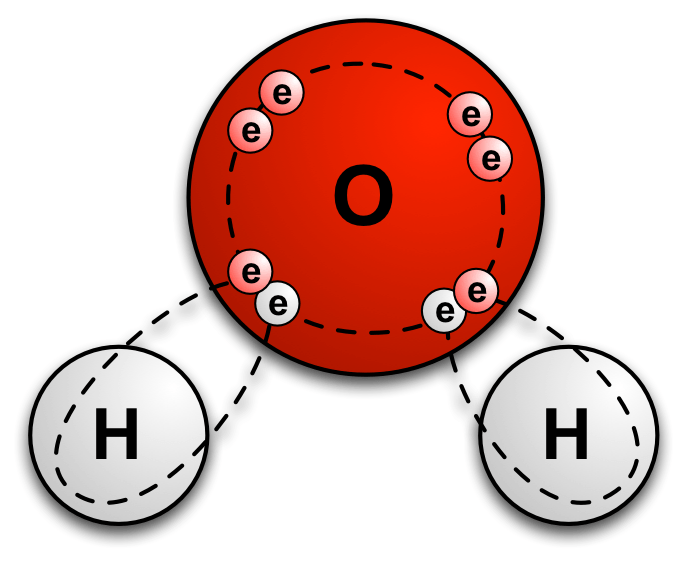
What molecule is this?
a)
CO
b)

CO2

c)

C2O

d)

C2O2

33.
In a covalent bond, one or more electrons are? 
a)
shared 
b)
lost 
c)
gained 
d)
transferred 
34.
What is the charge of a sodium ion with 11 protons and 10 electrons?
a)
1+
b)
1-
c)
2+
d)
2-
35.

Which of these are an ion?

a)

3 protons, 3 neutrons, 3 electrons.

b)

8 protons, 8 neutrons, 8 electrons

c)

2 protons, 3 neutrons, 2 electrons

d)

6 protons, 6 neutrons, 7 electrons

36.
Covalent compounds
a)
Share electrons
b)
transfer electrons
c)
None
d)
conduct electricity
37.

What does the subscript "2" in a chlorine molecule mean?

a)

There are two chlorine atoms bonded ionically.

b)

There are two chlorine atoms bonded covalently.

c)

There are two shared valence electrons.

d)

There is one shared valence electrons.
38.
Is carbon considered a metal or a non-metal?
a)
metal
b)
nonmetal
c)
other
39.
What two types of atoms make a covalent bond?
a)
2 Nonmetals
b)
1 Nonmetal and 1 Metal
c)
2 Metals
d)
2 Noble Gases
40.
In chemical compounds, covalent bonds form when
a)
the electronegativity difference between two atoms is very large.
b)
electrons are completely transferred between two metals.
c)
pairs of electrons are shared between two nonmetal atoms.
d)
two nonmetal atoms are attracted to each other by opposite charges.
41.
What region of the periodic table contains atoms that form covalent bonds?
a)
the left side
b)
the middle
c)
the right side
d)
top left
42.
What would you name this molecule?
a)
SNa3
b)
H3O
c)
NaCl
d)
H2O
43.

When a metal loses an electron(s) it becomes a ...

a)

positive ion

b)

negative ion

c)

metalloid

d)

nonmetal

44.

Identify the following compound as ionic or covalent: MgO

a)

ionic

b)

covalent

45.

Identify the following compound as ionic or covalent: CF4

a)

ionic

b)

covalent

46.

This type of bonding can be described as "I give, I get"

a)

ionic

b)

covalent

c)

metallic

47.

This type of bonding can be described as a "cooperation"

a)

ionic

b)

covalent

c)

metallic

48.

In a covalent bond both non-metals _____ electrons.

a)

transfer

b)

share

49.
Hydrogen needs _____ electrons in its valence shell to be stable.
a)
4
b)
6
c)
8
d)
2
50.

What are the vertical columns on the periodic table called?

a)

Groups

b)

Periods

c)

Elements

d)

Valence electrons

51.

Which group of elements have one valence electron(s)?

a)

Group 13

b)

Group 2

c)

Group 18

d)

Group 1

52.

Which group of elements are nonreactive due to already being chemically stable?

a)

Group 7

b)

Group 1

c)

Group 2

d)

Group 8

53.

What are the horizontal rows on the periodic table called?

a)

Valence electrons

b)

Elements

c)

Periods

d)

Groups

54.

What is a Bohr Model

a)

diagrams for funsies

b)

simple diagrams that show the atomic structure of an atom

c)

diagrams that show where it is at on the periodic table

d)

not the answer

55.

Which element has similar chemical properties as sodium but has 7 energy levels?

a)

Francium (Fr)

b)

Cesium (Cs)

c)

Rubidium (Rb)

d)

Potassium (K)

56.

Elements that have the same number of energy levels are said to be in the same ______.

a)

group

b)

period

c)

family

d)

classification

57.
In the modern periodic table elements are arranged by:
a)
atomic mass
b)
atomic number
c)
valence electrons
d)
number of isotopes
58.
The atomic number tells you what?
a)
number of electrons
b)
number of protons
c)
number of neutrons
d)
both electrons and protons in an atom.
59.
Calcium is most like which of the following?
a)
Barium
b)
Potassium
c)
Cesium
d)
Nitrogen
60.
Beryllium is in group number______.
a)
Group 2
b)
Group 3
c)
Group 4
d)
Group 7
61.
The period for Bromine is ___________.
a)
3
b)
2
c)
4
62.
What is the name of the group that never reacts--ever ever they are stable with a full outermost ring!!!
a)
noble gases
b)
transition
c)
halogens
d)
borons
63.
What is the chemical symbol for Lithium?
a)
H
b)
He
c)
Li
d)
N
64.
The number at the bottom of each square on the periodic table is the ...
a)
atomic number
b)
atomic mass
c)
chemical symbol
d)
element name
65.

Which element is found in group 6 period 3?

a)
Sulfur (S)
b)
Selenium (Se)
c)
Chlorine (Cl)
d)
Carbon (C)
66.

Which element is found  in group 7 period 3?

a)
Chlorine
b)
Flourine
c)
Oxygen
d)
Phosphorous
67.
Which element is found in period 3 group 2?
a)
Sodium (Na)
b)
Magnesium (Mg)
c)
Yttrium (Y)
d)
Boron (B)
68.

Which element is found in group 8 period 4?

a)
Neon (Ne)
b)
Chlorine (Cl)
c)
Krypton (Kr)
d)
Xenon (Xe)
69.
Which element is found in group 1 period 2
a)
Lithium
b)
Magnesium
c)
Beryllium
d)
Potassium
70.
Which element is found in group 2 period 4?
a)
Strontium (Sr)
b)
Barium (Ba)
c)
Calcium (Ca)
d)
Beryllium (Be)
71.

What do the vertical columns on the periodic table tell us?

a)

The number of orbitals

b)

The number of valence electrons (electrons on the outer most shell)

72.

What do the horizontal rows on the periodic table tell us?

a)

The number of energy levels

b)

The number of valence electrons (the electrons on the outer most shell)

73.

What does the number of proton tell us?

a)

electrons

b)

atomic number

c)

atomic mass

d)

neutrons

74.

How do you calculate the number of neutrons? *

a)

Mass = Atomic number - Neutrons

b)

Mass - Atomic number = Neutrons

c)

Atomic number = Neutrons

75.

What is the name of the element? (Periodic table will be needed)

a)

sodium

b)

magnesium

c)

vanadium

76.

What group and period does this element belong in? *

a)

period 1 and group 3

b)

period 3 and group 1

c)

period 2 and group 3

d)

period 3 and group 2

77.

How many valence electrons does the element have?

a)

1

b)

2

c)

3

d)

4

78.

How many protons and electrons does nickel have?

a)

28

b)

58.69

79.

What is the atomic mass?

a)

58.693

b)

28

80.

How many orbitals/energy levels does Nickel have?

a)

3

b)

4

c)

5

d)

10

81.

Who proposed a model with electrons moving in specific layers?

a)

Rutherford

b)

Bohr

c)

Thomson

d)

Dalton

82.

How many valence electrons and energy levels does (Pb) lead have?

a)

4 valence electrons and 6 energy levels (orbitals)

b)

6 valence electrons and 4 energy levels (orbitals)

c)

5 valence electrons and 5 energy levels (orbitals)

d)

5 valence electrons and 10 energy levels (orbitals)
83.
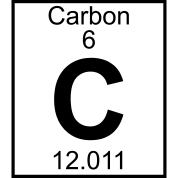
What does the 6 represent?
a)
atomic mass
b)
atomic number
c)
element name
d)
chemical symbol 
84.
What does 12.011 represent?
a)
atomic mass
b)
atomic number
c)
element name
d)
chemical symbol 
85.
These are found on the Periodic Table.
a)
Compounds
b)
Elements
c)
Mixtures
86.

the basic structural unit of matter

a)

atom

b)

matter

c)

element

d)

nucleus

87.

the positively charged subatomic particle contained in the nucleus of an atom

a)

proton

b)

neutron

c)

electron

d)

matter

88.

a subatomic particle, contained in the nucleus of an atom, having the same mass as a proton but no electrical charge

a)

proton

b)

neutron

c)

electron

d)

matter

89.

a negatively charged subatomic particle that orbits the nucleus of an atom

a)

proton

b)

neutron

c)

electron

d)

matter

90.

one or two letters that represent the name of an element

a)

element name

b)

element symbol

c)

atomic number

d)

atomic mass

91.

a row on the Periodic Table of Elements

a)

family

b)

period

c)

row

d)

isotope

92.
Most of the mass of an atom is found it its _____.
a)
electron cloud
b)
nucleus
c)
atomic number
d)
empty space
93.
Which is an electron?
a)
A
b)
B
c)
C
94.
What is the number of protons that the element in this image contain?
a)
14
b)
7
c)
15
d)
18
95.

The periodic table is mostly comprised of what type of element?

a)

Metals

b)

Nonmetals

c)

Metalloids

96.

Which elements are to the LEFT of the zigzag?

a)

metals

b)

nonmetals

c)

metalloids

97.

Which elements are colored red?

a)

nonmetals

b)

metals

c)

metalloids