
 Worksheets
Lab Final Practice
Total questions: 113
Worksheet time: 3hrs 54mins
Convert 45°F into °C.
7.2°C
32°C
32°F
212°F
Convert 89°F into °C.
7.2°C
32°C
32°F
212°F
The density of an object can be determined by....
dividing the mass by it's volume (D=m/v)
dividing the volume by it's mass (D=v/m)
multiplying the volume by it's mass (D=V x m)
multiplying the mass by it's volume (D=m x V)

What is the volume of the liquid in the picture
35 mL
35 grams
35 cm3
35 L

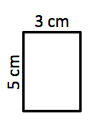


A block of aluminum occupies a volume of 15.0 mL and weighs 45.0 g. What is its density?
3 g/mL
0.3333 g/mL
675 g/mL
I have no idea

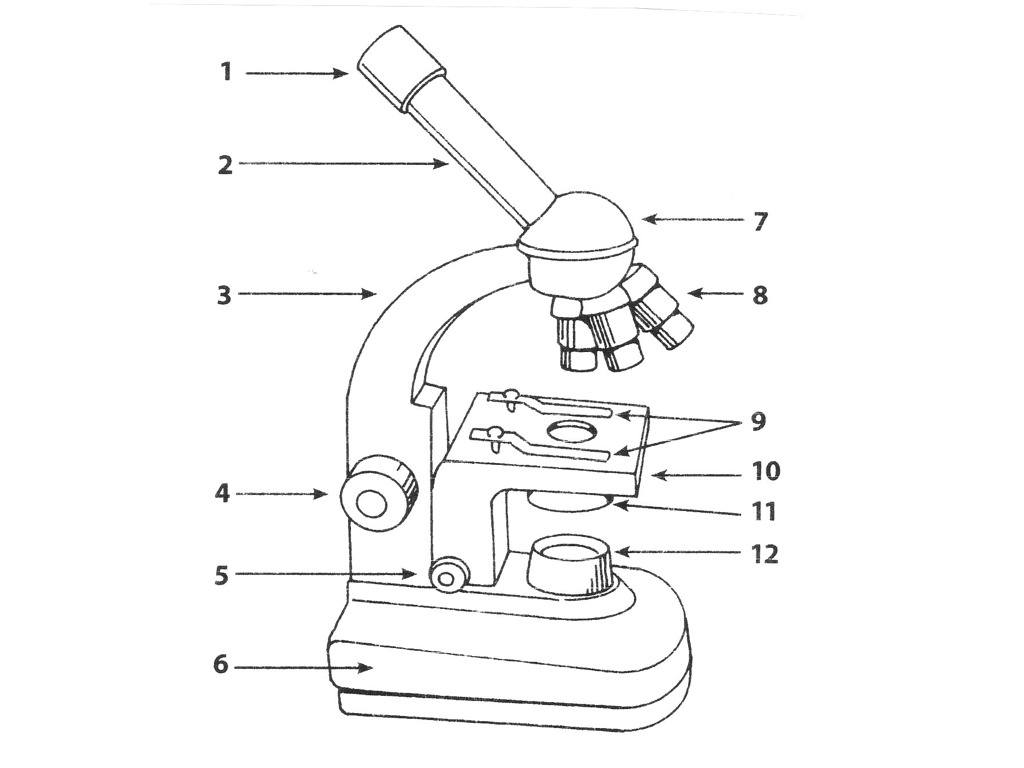
What is the name of this part?
base
leg
arm
eyepiece

What is the name of this part?
base
leg
arm
eyepiece

What is the name of this part?
stage
leg
body tube
fine adjustment knob

What is the name of this part?
stageclips
leg
body tube
coarse adjustment knob

What is the name of this part?
objective lens
eyepiece/ocular lens
diaphragm
slide

What is the name of this part?
fine adjustment knob
eyepiece/ocular lens
stage
body tube

What is the name of this part?
arm
eyepiece/ocular lens
nosepiece
objective lens

What is the name of this part?
stageclips
stage
nosepiece
slide
The greater the ___________________, the smaller the field you are actually viewing.
detail
objective
magnification
body
As you move from low power to high power, the field of view becomes
Darker and larger
Darker and smaller
Brighter and larger
Brighter and small
In the following equation, which is the catalyst?
H2O2 + Catalase > H2O + O2 + Catalase
H2O2
H2O
O2
Catalase


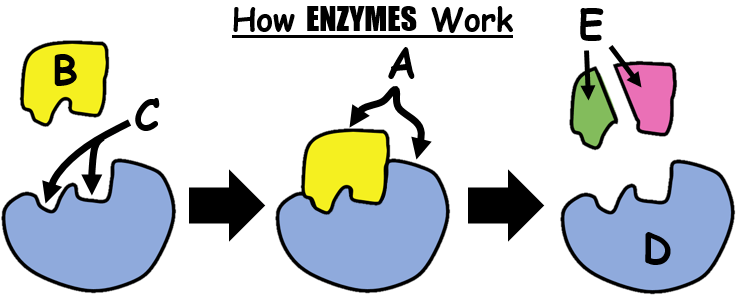
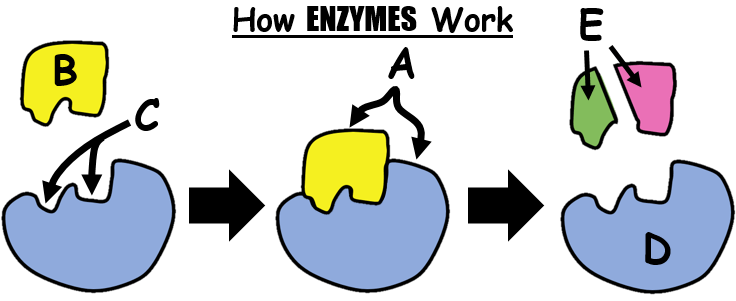
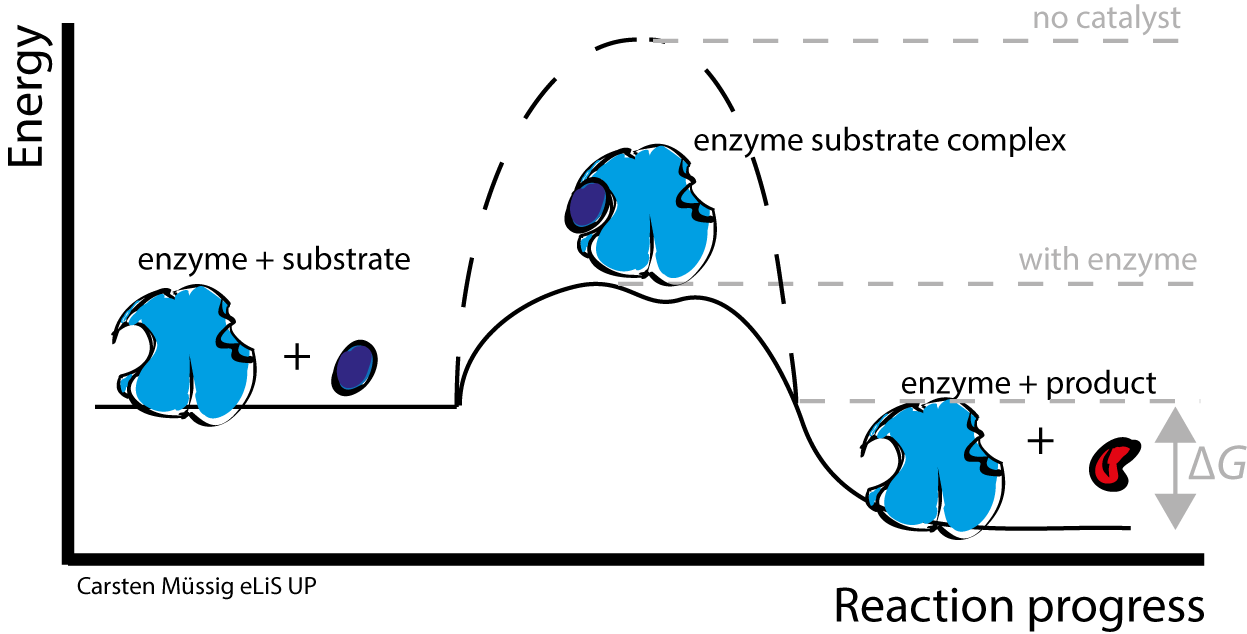
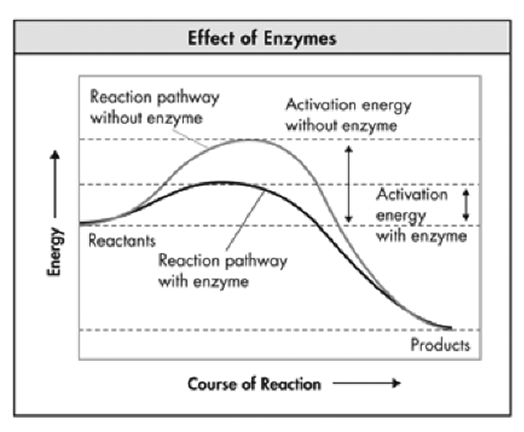
At which stage does catalase begin the breakdown of H2O2 into water and oxygen?
1
2
3
4
Which would be found in the cell of a sunflower plant but not in the cell of a chicken?
cell wall
vacuole
mitochondria
cell membrane
Gel-like substance that holds all organelles in place -
Chloroplast
Call wall
Cytoplasm
Lysosomes
Regulates the entering and exiting on materials in the cell
Cell Wall
Cell Membrane
Mitochondria
Endoplasmic Reticulum

I make proteins for the cell. What am I?
ribosome
mitochondria
chloroplast
lysosome

This cell has a nucleus, that means it is ...
Prokaryotic
Eukaryotic
Which type of cell DOES NOT have a nucleus?
Prokaryotic
Eukaryotic


Which explanation identifies how the following affect the rate of diffusion: molecular size, temperature, solution density, and the distance that must be traveled?
Larger molecules move faster than lighter molecules. Temperature affects the molecular movement. Density is directly proportional to the molecular movement. Greater distance slows the diffusion.
Larger molecules move slower than lighter molecules. Increasing or decreasing temperature increases or decreases the energy in the medium, affecting molecular movement. Density is inversely proportional to molecular movement. Greater distance slows the diffusion.
Larger molecules move slower than lighter molecules. Temperature does not affect the rate of diffusion. Density is inversely proportional to molecular movement. Greater distance speeds up the diffusion.
Larger molecules move slower than lighter molecules. Increasing or decreasing temperature increases or decreases the energy in the medium, affecting molecular movement. Density is inversely proportional to the molecular movement. Greater distance speeds up the diffusion.
_____ occurs when a cell takes in too much water.
Lysis
Crenation
Osmosis
Isotonicity
Which is an example of a hypertonic solution that a human cell could be placed into?
Saltwater
a solution equal to the concentrations of the cell
pure water (no solutes)

Hypotonic solutions
make cells shrink
make cells swell

What happened to the CELL WALL and the CELL MEMBRANE in these plant cells?
Both the CELL WALL and CELL MEMBRANE shrunk
Only the CELL WALL shrunk, the CELL MEMBRANE stayed the same
The CELL WALL stayed the same, only the CELL MEMBRANE shrunk
Both the CELL WALL and CELL MEMBRANE stayed the same

Based on the image, the cell is going to:
Shrink
Swell
Remain the same

-Chromosomes line up in the middle of the cell

-Chromosomes are split
-Sister chromatids move to the opposite sides of the cell

-Sister chromatids reach the end of the cell.
-The nucleus begins to reform.
-Cytokinesis happens.

-DNA condenses into chromosomes
-The nucleus disappears
-Spindles begin to form

Check the two correct boxes:
Plant Cell - cell plate; Animal Cell - cleavage furrow
Plant Cell - cleavage furrow; Animal Cell - cell plate

During what phase of Mitosis do the chromosomes line up in the Middle
Metaphase
Prophase
Telophase
Anaphase

Has one set of chromosomes
Haploid
Diploid
Body cells
None of the above
Who was Gregor Mendel?
Father of genetics
Father of cells
Coined the term heredity
No one
What is AA
Homozygous Dominant
Heterozygous
Homozygous Recessive
Heterozygous dominant
What is Aa
Homozygous Dominant
Heterozygous
Homozygous Recessive
Heterozygous dominant
What is aa
Homozygous Dominant
Heterozygous
Homozygous Recessive
Heterozygous dominant
The physical look or the organism, such as brown eyes
genotype
phenotype
Dominant
Recessive
The genetic makeup of an organism. Example BB
genotype
phenotype
Dominant
Recessive

The karyotype diagram below represents a human female with the genetic disorder known as Turner syndrome. Chromosomal analysis of this karyotype reveals the mutation is a result of
a missing X chromosome
a missing Y chromosome
an extra 21 chromosome
missing chromosome #9
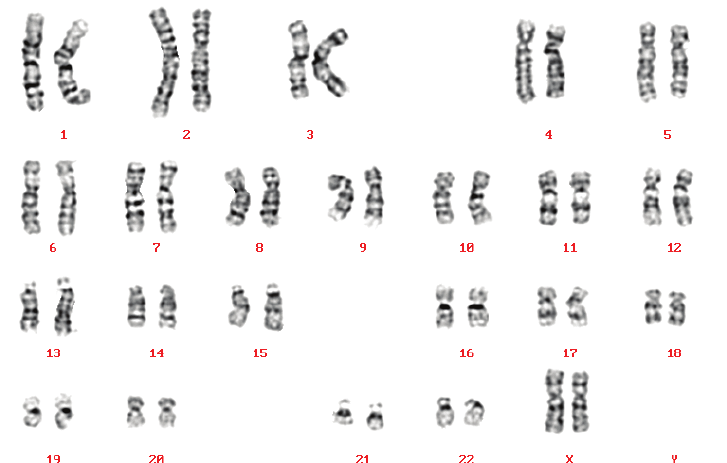
By looking at the chromosomes how can you tell that this person is biologically female?
Because there are two X chromosomes
Because there are more chromosomes than in a male
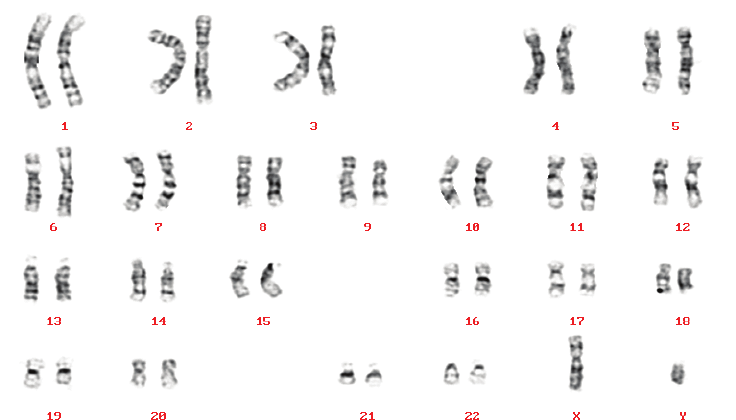
By looking at the chromosomes is this individual biologically male or female? How do you know?
Female, because they have two X chromosomes
Male, because they have one X and one Y chromosome

What is this a picture of?
nucleotide
DNA strand
chromosome
gene

What part of the nucleotide is labled "C"
Phosphate
Nitrogenous Base
Protein
Sugar (Deoxyribose or Ribose)
What part of the nucleotide is labled "B"
Phosphate
Nitrogenous Base
Protein
Sugar (Deoxyribose or Ribose)
What part of the nucleotide is labled "A"
Phosphate
Nitrogenous Base
Protein
Sugar (Deoxyribose or Ribose)


How do you add ethanol to the test tube?
Pour it quickly. Form two separate layers.
Slowly trickle down the side. Form no separate layers.
Slowly trickle down the side. Form two separate layers.
Pour it quickly. Form no separate layers.
In the strawberry DNA lab, what did the soap do in the extraction buffer solution? What was the purpose?
The dissolve phospholipids in the cell membranes and organelle membranes
break up protein chains

How is viscosity & density affected when a fluid is heated?
viscosity increases & density increases
viscosity decreases & density decreases
viscosity decreases & density increases
temperature has no affect on viscosity or density

At which of these temperatures is the viscosity of the fluid highest? (see graph)
40 °C
60 °C
80 °C
100 °C
8,400 mL = _____ L
840 L
84 L
0.84 L
8.4 L

(1000 g = 1 kg)
Which of these pictures most likely shows a plant magnified under a microscope?


The condition of things appearing larger than they are, using convex lenses (center is thicker than the edges) is known as what?
Magnification
Resolution
High Definition
HDMI

When making a wet mount slide, we use this method. Why?
Reduce air bubbles
Allow specimen to live
Kills the specimen
Prevents the slide from breaking
Which type of solution has the same solute concentration inside of and outside of the cell?
Hypertonic
Hypotonic
Isotonic

What type of solution is this red blood cell in?
Isotonic
Hypertonic
Hypotonic

The cell expanded in size to the point of lysing (bursting), which means it was placed in a ____ solution.
Isotonic
Hypertonic
Hypotonic
Match the definition: The random motion of particles resulting from their collision with other particles
Facilitated Diffusion
Brownian Movement
Concentration Gradient
Equilibrium
Which one is the definition of active transport?
movement of particles through the cell membrane from a region of lower concentration to a region of higher concentration using energy in the form of ATP.
passage of water molecules from a region of their higher concentration to a region of their lower concentration through a partially permeable membrane
net movement of molecule from a region of higher concentration to region of lower concentration. Molecule down a concentration gradient
net movement of molecule from a region of lower concentration to region of higher concentration. Molecule down a concentration gradient
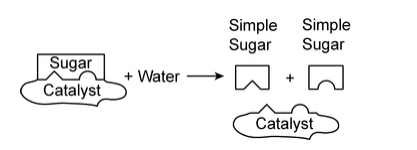
A substance that increases the rate of a reaction without being used up during the reaction is called a
catalyst
product
reactant
solute

What is it called when the unique 3-D shape of a protein has been disrupted or 'unravelled'?
Denaturation
Deproteination
Decoupling
Depeptidasing

Enzymes are
Lipids
Protein
Carbohydrates
Nucleic Acids
Meiosis results in ------------ While Mitosis resuls in ---------
(A) 2 haploid daughter cells and 2 haploid daughter cells
(B) 4 haploid daughter cells and 2 diploid daughter cells
(C) 2 diploid daughter cells and 4 haploid daughter cells
(D) 4 diploid daugther cells and 2 haloid daughter cells
what happens at the S phase?
growth
cell division
DNA replication
WHEN THE SPERM FERTILIZES THE EGG WHAT IS FORMED
ZYGOTE
EMBRYO
FETUS
FERTILIZATION
1. What is crossing over?
a. When two homologous chromosomes transfer and exchange genetic information between themselves in Prophase I
b. When two homologous chromosomes lie side by side and form tetrad.
c. When two sister chromatids transfer and exchange genetic Information in Prophase I
d. It is a process that occurs in Prophase II of Mitosis
An alternative form of a gene.
Allele
DNA
Dominant
Recessive
A _______ is a segment of DNA that codes for a specific protein or RNA molecule.
gene
gamete
chromosome
chromatid
ATG TGA CAG

Which of the following are differences in the structure between RNA and DNA
DNA uses deoxyribose sugar, RNA uses sugar ribose
DNA pairs Adenine with Uracil, RNA pairs Adenine with Thymine
DNA is a double helix, RNA is a single helix
DNA pairs Adenine with Thymine, RNA pairs Adenine with Uracil
Fatty acids
Which of the following is the process of using technology to create or modify living things?
Biotechnology
GMO
Pest resistant crops
Transpiration

