
Font size
 Worksheets
6th Grade End of the Year Review
Total questions: 153
Worksheet time: 4hrs 41mins


What is happening in section C?
going down a hill
speed is increasing
speed is decreasing
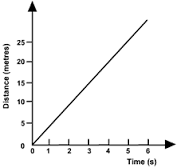

What is the formula for speed?
distance / time
time / distance
direction / time
direction / distance

Which segment shows the faster speed?
A to B
C to D
B to C
E to F

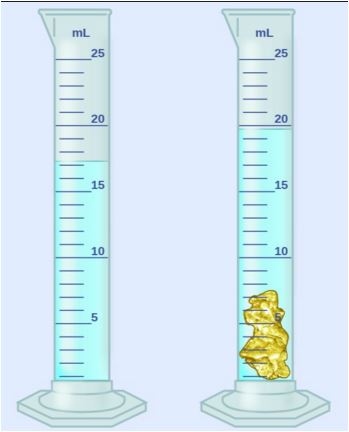


Calculate the density in the following question: A star has a mass of 15 g and a volume of 25 mL.
0.7 g/mL
0.6 g/mL
0.5 g/mL
0.4 g/mL

You calculated the density of an unknown substance to be 7.8g/cm3. According to the chart, which of the substances doe you most likely have?
Zinc
Copper
Tin
Iron

You calculated the density of an unknown substance to be 5.7g/cm3. According to the chart, which of the substances do you most likely have?
Aluminum
Iron
Tin
Zinc

Which of the following substances would float in water? (Hint: water has a density of 1g/cm3)
gold
rubber
water
cork

Find the volume of the rectangular prism. How many unit cubes would it take to make the rectangular prism?
13 cubic units
13 square units
48 cubic units
24 cubic units
What is the formula for calculating density?
D = V ÷ M
D = M ÷ V
D = M - V
D = M + V
Calculate the density of an object with a volume of 30 cm3 and a mass of 120 g.
0.25 g/ cm3
3 g/ cm3
4 g/ cm3
0.33 g/ cm3

A piece of unknown metal has a mass of 240 g and a volume of 23 mL. What is the metal most likely made of?
Aluminum
Silver
Lead
Magnesium

See the picture. There is electrical energy coming from the outlet in the wall. When the energy goes into the lamp what energy does it transform into?
Mechanical Energy
Thermal Energy
Sound Energy
Light Energy

When wood burn it changes from chemical energy to what 2 other forms of energy? Click the 2 other forms.
Radiant (Light)
Nuclear
Heat
Mechanical

A gasoline-powered generator is used to provide lighting for a house.
Choose the best 3 energy forms found in this transformation example?
Chemical
Mechanical
Light
Nuclear

Skateboarder #1 is showing potential energy as he waits at the top of the half pipe.
Skateboarder #2 has dropped into the half pipe, to what type of energy has he converted his potential energy?
Potential
Thermal
Kinetic
Chemical

What are the energy conversion for a hair dryer?

What are the energy conversions for a radio?
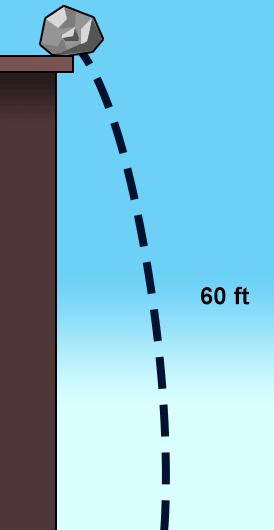
The rock in the picture is pushed over the edge and it begins to fall. Which type of energy conversion is taking place?
mechanical to heat
sound to mechanical
potential to kinetic
kinetic to potential

A ball is projected into the air. Where is potential energy the greatest?


As a roller coaster goes downhill
kinetic energy is converted into potential energy.
potential energy is converted into kinetic energy.
electrical energy is converted into potential energy.
potential energy is converted into electrical energy.

When water falls through a dam and turns a turbine connected to a generator, electricity is produced. This electricity is often used to light our homes and offices. Which of the following shows the energy transformations that occurs?
electrical → radiant→ mechanical
chemical → mechanical → electrical
mechanical → chemical → radiant
mechanical → electrical → radiant
The picture showing the energy conversion
Chemical → radiant and thermal is:


What energy transformations take place when a battery-operated radio is in use?
Electrical to chemical to radiant
Sound to chemical to mechanical
Chemical to electrical to sound
Radiant to electrical to thermal
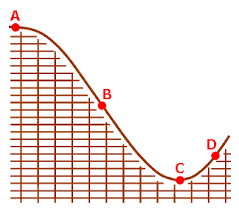
At which point on the roller coaster is the gravitational potential energy at its maximum and kinetic energy at its minimum?
A
B
C
D

The skater starts 8 meters above the ground. At which height on the ramp does the skater's total energy change ?
8 meters
4 meters
2 meters
The skater's total energy doesn't change.

What is the energy transformation that occurs in an electric pencil sharpener?
mechanical energy to electrical energy
electrical energy to mechanical energy
radiant energy to sound energy
chemical energy to mechanical energy
Which object shows an energy transformation from electrical to mechanical?


When a car burns gasoline it creates hot air to move the pistons in the engine, which causes the car to move. What energy transformation occur from the fuel to the movement of a car?
thermal energy to mechanical energy
thermal energy to chemical energy to mechanical energy
chemical energy to thermal energy to mechanical energy
chemical energy to electrical energy

The roller coaster cart has the most kinetic energy at position-
W
X
Y
Z


What type of energy transformation happens in hydro-electric power?
kinetic to potential
sound to mechanical
chemical to electrical
mechanical to electrical



Which of the following elements could be the possible identity of Mystery Element 1?
Magnesium (Metal)
Carbon (Non-Metal)
Boron (Metalloid)
none
Which of the following elements could be the possible identity of Mystery Element 2?
Aluminum (Metal)
Fluorine (Non-Metal)
Germanium (Metalloid)
none
Which of the following elements could be the possible identity of Mystery Element 3?
Copper (Metal)
Nitrogen (Non-Metal)
Germanium (Metalloid)
none
What is the name given to the elements that are located to the left of the “stair step” or “zigzag line” on the Periodic Table?
Metals
Nonmetals
Metalloids
Compounds
What is the name given to the elements that border the “stair step” or “zigzag line” on the Periodic Table?
Metals
Nonmetals
Metalloids
Compounds
Chlorine (Cl) is a yellow-green gas at room temperature. Based only on this information, where would you expect to find this element on the Periodic Table?
Left side
Right side
At the top
At the bottom
Gold is an element that is often used to make necklaces, rings, and other types of jewelry. What property of gold makes it useful in this way?
Gold is a conductor.
Gold is an insulator
Gold is malleable.
Gold has a high melting point.
A(n) _______________ is a material that allows electricity and heat to pass through it easily.
Ductility
Nonmetals
Conductor
Insulator
Elements that have properties of both metals and nonmetals are referred to as
_______________.
Metals
Nonmetals
Metalloids
Luster
The way light reflects from the surface of a substance is known as _______________.
Luster
Ductility
Malleability
Insulator
Elements that are mostly shiny, silver or gray in color, malleable, ductile, and good conductors of heat and electricity are referred to as _______________.
Metals
Nonmetals
Metalloids
Conductor
The ability to be hammered into thin sheets is known as _______________.
Luster
Ductility
Insulator
Malleability
The ability to be stretched into a wire is known as _______________.
Malleability
Conductor
Ductility
Elements that are mostly dull, brittle, not malleable or ductile, and poor conductors of heat and electricity are referred to as _______________.
Metals
Nonmetals
Metalloids
The majority of elements on the Periodic Table are classified as nonmetals.
True
False
Nonmetals are malleable.
True
False
Copper (Cu) - Copper is commonly used as a conductor and as a building material.
Metal
Nonmetal
Metalloid
Carbon (C) - Carbon is an organic element found in all living organisms.
Metal
Nonmetal
Metalloid
Silicon (Si) - Silicon is used in circuits for computers and cell phones.
Metal
Nonmetal
Metalloid


Elements in the shaded area can best be described as -
Malleable
Brittle
Dull
Insulators

Elements in the shaded area can best be described as -
Semi-conductors
Insulators
Ductile
Siny
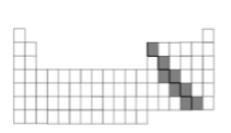
Elements in the shaded area can best be described as -
Shiny and brittle
Insulators
Good conductors


I can be drawn into wires
Malleable
Ductile
Luster
Conductor
Heat and electricity flow through me
Malleable
Ductile
Luster
Conductor
I can be hammered into flat sheets
Malleable
Ductile
Luster
Conductor
What property must a pan have to be used for cooking?
Malleable
Ductile
Luster
Conductor
Sometimes I conduct heat and electricty, sometimes I do not
Dull
Brittle
Nonconductor
Semi-conductor
What is the formula for average speed?
Average Speed = Total Time undefined Total Distance
Average Speed = Total Time + Total Distance
Average Speed = Total Distance ÷ Total Time
Average Speed = Total Distance × Total Time
Cesar drove from Houston to Dallas in 4 hours. Dallas is roughly 250 miles NW of Houston. What was his average speed?
1000 mph
62.5 mph
55 mph
60 mph
Runner A ran 12 miles in 4 hours and Runner B ran 9 miles in 3 hours. Which runner had the greatest average speed?
Runner A
Runner B
Both runners had the same average speed.
You are practicing for an upcoming 100-meter dash and documenting average speed to see your growth. Trial one you ran at 14 seconds, trial two was at 13.8 seconds, and trial three was at 13.2 seconds. What is the combined average speed of all three trials? (round answer to hundredth place – to the second decimal)
7.58 meters/second
7.14 meters/second
7.32 meters/second
7.25 meters/second

What is the average speed of the Worm's Journey?
2.25 meters/minute
2 meters/minute
1 meter/minute

Jose Altuve is at batting practice for the Houston Astros.
What was the average speed of the baseball for his third hit as it traveled in the air?
32 m/sec
20.7 m/sec
24 m/sec
27 m/sec

Using the information in the graph, what is the average speed Josh’s car traveled to get home?
8 km/hour
160 km/hour
16 km/hour
40 km/hour

What does this graph represent?
Constant Speed
Deceleration
Acceleration
Not moving

According to the graph how far does the person travel in the first 5 seconds?
2m
0m
10m
5m

What is the person doing from 5 seconds to 10 seconds?
Walking at a constant speed
Not moving
Running fast
Walking slow

Select the times that the object is NOT moving according to the graph. (Could be more than one)
0-10 minutes.
10-20 minutes.
20-30 minutes.
30-40 minutes.

How long did it take this object to travel 10 m?
0 s
15 s
10 s
20 s

How long did it take this object to travel back to its reference/starting point?
20 s
60 s
30 s
100 s

Calculate the average speed between 0 and 10 hours.
2 km/h
3 km/h
1 km/h
5 km/h

Calculate the average speed of the object between 1 and 3 seconds.
20 m/s
1 m/s
30 m/s
12 m/s

According to the graph what was the average speed?
0 m/s
0.8 m/s
1.2 m/s
12 m/s
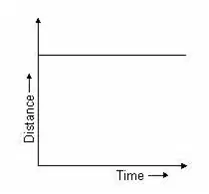
What does the horizontal line on a Distance-Time Graph means?
Stationary/No Motion
Speed is not changing
Change in Speed
Change in direction
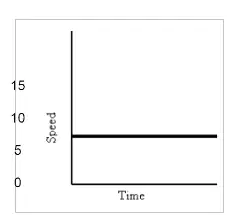
What does the horizontal line mean in a Speed - Time Graph?
Stationary/No Motion
Speed is not changing
Change in speed
Change in direction
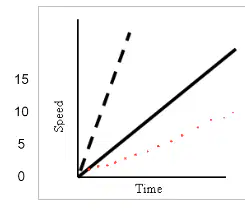
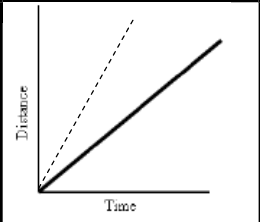
On both a Distance - Time Graph and a Speed - Time Graph what does it mean when there are two line?
going slower
going faster
nothing
comparison of the two lines

On a Distance - Time Graph what does it mean when there is a down slope line that touches the bottom of the graph?
Decelerationg
Acceleration
Return to start
Nothing

Straight line going down on a Speed - Time Graph means?
Steady Acceleration
Steady Deceleration
Nothing
Going home


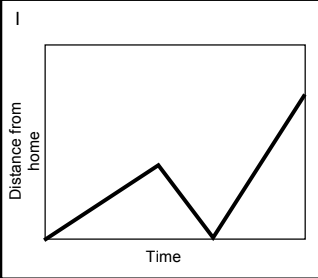
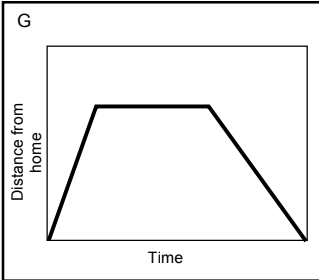
Susie went to the store, when she got there she realized that she forgot her wallet and returned home.
Which graph matches this motion?
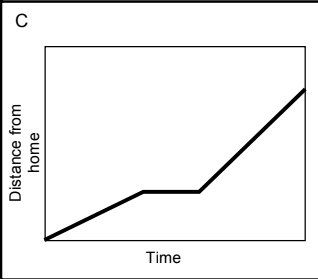
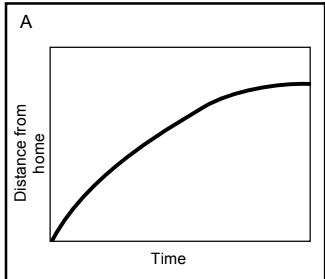
Match the graph to the description:
"The car is traveling at a constant speed."
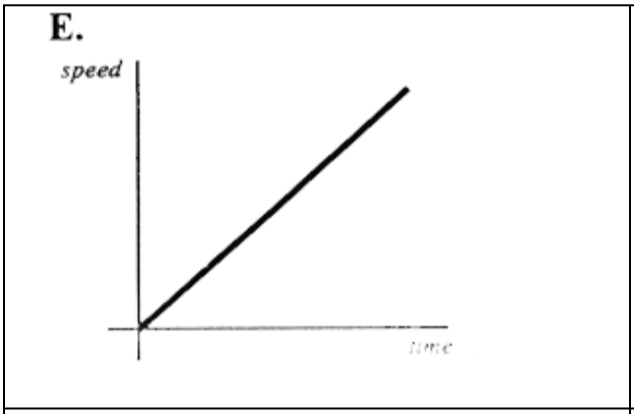
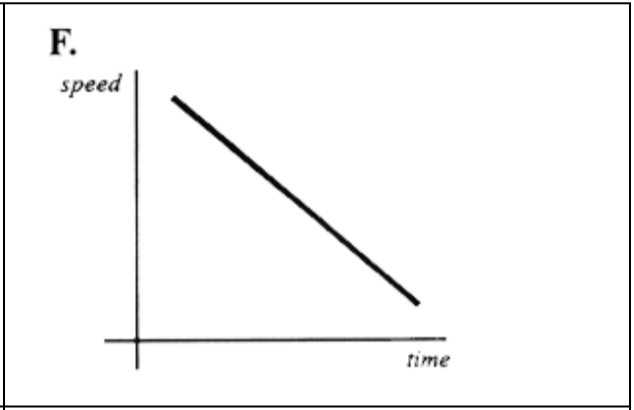
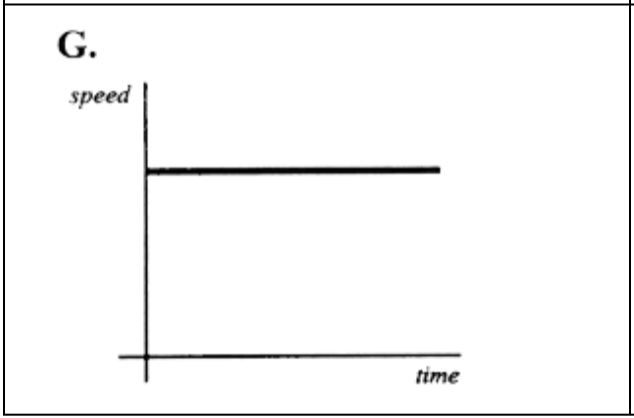
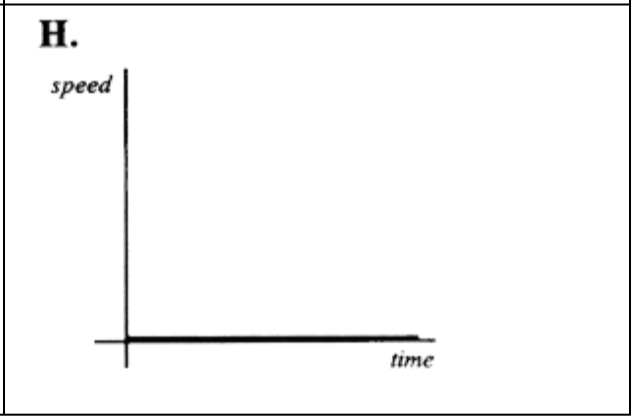
Match the graph to the description:
"The car is accelerating."

What is this graph showing?
At rest
Acceleration
Constant speed of 1 m/s
Gradually speeding up
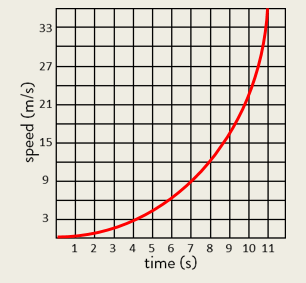
What is this graph showing?
Gradually slowing down
Gradually speeding up
Constant speed
Stopped

What is this graph showing?
Constant speed
Gradually speeding up
Gradually slowing down
At rest

What is this graph showing?
Fast constant speed
Slow constant speed
At rest
Accelerating

At which point on the roller coaster does the car have the most potential energy? (6.8A)
W
X
Y
Z

The car shown above uses three different forms of energy. Which of the following identifies the energy transformation represented by the car? (6.9C)
mechanical →chemical →electrical
chemical →electrical →mechanical
electrical →radiant →chemical
radiant →electrical →mechanical

A battery is placed inside a handheld lantern. When the light is turned on, the chemical energy of the battery is changed into all of the following forms of energy except— (6.9C)
light energy
heat energy
mechanical energy
electrical energy

At which point on the roller coaster does the car have the most kinetic energy? (6.8A)
W
X
Y
Z
Potential energy is
stored energy
energy of motion
average speed
acceleration
Which of the following is NOT a form of energy? (6.9C)
electrical
chemical
radiant
wind

The images shown best represent which type of energy? (6.9C)
chemical
nuclear
electrical
mechanical
The Law of Conservation states that - (6.9C)
energy cannot be created or destroyed but can only change from one form to another.
energy can be created or destroyed and cannot change from one form to another.
The sun represents which type of energy? (6.9C)
electrical
mechanical
solar/radiant
chemical

Which of the following best describes the energy transformations that occur when a flashlight that runs on batteries is turned on?
chemical to mechanical to electrical to radiant
radiant to electrical to sound
chemical to radiant to mechanical to electrical
electric to radiant to chemical
A Kindle reader
iPad

What is nuclear energy?
Kinetic and potential energy that is stored and produced by an electrical field.
The potential energy an object has because of the movement of its molecules
The potential energy stored in the nucleus of an atom.
The water turbine inside of a dam drives the generator which converts ................
Hydroelectric Power uses what source to create energy?
Fire
Air
Water
Rocks

Another word for Light Energy is ...
Thermal Energy
Electrical Energy
Radiant Energy
Chemical Energy
What is kinetic energy?
The energy an object has due to its position or condition
The energy an object has due to its motion
The energy an object has due to its chemical composition
The energy an object has due to its atomic structure
Which object has the most potential energy?
A ball resting on the ground.
A ball being thrown at 100 miles per hour.
A ball on top of a refrigerator.
A ball resting on the edge of a cliff.

At which point does the car on the roller coaster have the most potential energy?
a
b
c
d

