
 Worksheets
Ecology Test
Total questions: 75
Worksheet time: 19hrs 45mins

Use the pyramid of biomass below to decide which of the following tables is correct.


The amount of energy from the producers in this energy pyramid provide the primary consumers is 54,000 joules. From this amount, 540 joules are provided to the tertiary consumers.
Based on this model, how much of the energy was provided to the secondary consumers?
53,460 joules
5,400 joules
540 joules
54 joules

Which type of ecological pyramid is this?
energy
biomass
numbers
Which of the following species would you expect to find in an estuary?
Oysters
Giant squid
Reef shark
Blue whale

Which level of the pyramid represents the largest percentage of available energy in the ecosystem?
algae
minnows
trout
zooplankton

What level of ecological organization does this entire picture represent?
Organism
Population
Community
Ecosystem

What level of ecological organization does the bird represent?
Organism
Population
Community
Ecosystem
The temperate deciduous forest, the tropical rain forest, the desert, and the tundra are all examples of...
the biopshere.
biomes.
ecosystems.
communities.
many turtles living together is called a ______________
ecosystem
population
coomunity
organism
all living things together in one area is called a ____________
community
population
ecosystem
plants are called _________ because they produce food for us.
consumers
producers
prey
an animal that hunts other animals is called a ____________
prey
predator
producer
herbivore
an animal that is hunted and eaten by other animals is called ________
prey
predator
producer
If there are 100 KJ of energy available at the secondary consumer level, how many KJ of energy are available at the producer level?
10 KJ
1,000 KJ
10,000 KJ
1 KJ

What is a population?
One individual member of a species
a group of individuals of the same species that live in the same area
a community of different species and their environment
Which definition best fits the term BIOTIC?
The study of the interactions between animals and their environment
Factors in the environment that are considered not alive
Factors in the environment that are considered living or the remains of living things
One species benefits, the other is unaffected
symbiosis
parasitism
mutualism
commensalism
Honey guide birds alert and direct badgers to bee hives. The badgers then expose the hives and feed on the honey first. Then, the honey guide birds eat as well.
symbiosis
parasitism
mutualism
commensalism

Predator
Autotroph
Producer
Decomposer
The ecological role an organism performs in their specific environment is considered the organism's...
Habitat
Population
Biome
Niche
They point to the organism that is being eaten.
It shows how sunlight flows within an ecosystem.
They show what direction the energy is flowing between organisms.
They represent how water is transferred within a habitat.


The populations of which organisms will most likely increase as a result of a disease that suddenly reduced the population of Texas horned lizards?
Grasses and ants
Ants and grasshoppers
Grasshoppers and Texas Cottonmouths
Texas cottonmouths and red shouldered hawks

Producers /Autotrophs
Consumers /Heterotrophs
Decomposers
Scavengers


Why might an organism have more than one arrow coming FROM them in a food web?
More than one organism may eat them.
They may eat more than one other organism.
This organism gets its energy from multiple sources.
Decomposer
This is an organism that breaks down and gains nutrients from dead organisms.
Predator
This is an animal that lives by preying on other animals.
Producer
This is an organism that supplies matter and energy, also known as an autotroph.
Consumer
This is an organism that relies on other organisms for its food and energy supply; heterotroph
Parasite
This is an organism which feeds on, but usually does not kill, a larger organism

What happens to the amount of available energy in the pyramid as it moves up through the different levels?
it increases
it decreases
it remains the same
Wind, Precipitation, Seasons, Sunlight, and Temperature are examples of what type of factors.
Abiotic
Biotic
Genetic
Detrimental
Which of these is not a factor that defines a biome
temperature
precipitation
soil
man made structures
An area of the planet with similar ecosystems is a
population
biome
community
biosphere
There is a cold front coming in this weekend. Is this climate or weather?
climate
weather
It is usually hot in Texas in July, is this climate or weather?
climate
weather
This type of succession occurs when soil is still present
secondary
primary
tertiary

Breaking News! A new island has formed off of Hawaii! What must occur for it to become an ecosystem?
Secondary Succession
Aquatic succession
Primary Succession
Ferns must grow
Succession ends with a (a) community
Many different species living in the same area.
Population
Community
Biome
Biosphere
Energy flows through ecosystems, but each organism only gets about _____ of the energy available in the level below.
10%
20%
50%
90%

A food ________ is much more complicated, yet more realistic than a food ________.
chain, web
web, chain
cycle, flow
truck, festival

Who is a secondary consumer?
Hawk
Sun
Plant
Grasshopper
The system that contains all living things on Earth.
Biosphere
Atmoshpere
Hydrosphere
Geosphere
Which of these is NOT an abiotic factor?
water
temperature
grass
soil
Reorder the following from most specific to most general
species
population
community
ecosystem
biome
An organism that feeds on dead organic material
carnivore
herbivore
detritivore
biotic factor
All of these are producers EXCEPT
mushroom
corn
maple tree
dandelion
Plants take in this gas to be used in photosynthesis
ammonia
carbon dioxide
nitrogen
oxygen
Plants release this gas as a byproduct of photosynthesis
nitrogen oxide
oxygen
carbon dioxide
nitrogen
Which of the following is a primary consumer?
soybean plant
cow
hawk
fox snake

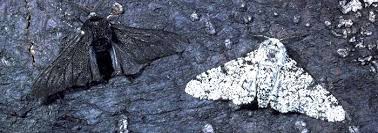
I am a polar bear who lives in the arctic. My fur is a beautiful white, just like the snow I live in. What adaptation is this adaptation called?
camouflage
mimicry
migration
hibernation
Which of the following organisms is not a regulator
Crab
Camel
Human
Polar bear
Chimpanzee
An organism that is dependant upon the changes in the external environment
Regulator
Transformer
Optomizer
An organism that can control its internal environment based on the changes in the external environment
Conformer
Transformer
Optomizer

