wayground logo

Free Printable Worksheets

Font size

S
M
L
XL
Worksheets

Ultimate Year 8 Revision Quiz

Total questions: 120

Worksheet time: 3hrs 39mins

Name
Class
Date
1.

Which structure controls the cell and contains the genetic material?

a)
Cell membrane
b)
Nucleus
c)
Brain
d)
Cytoplasm
2.
Which structure controls what enters and leaves the cell?
a)
Cell membrane
b)
Skin
c)
Cell wall
d)
Nucleus
3.
Where do chemical reactions take place in the cell?
a)
Vacuole
b)
Ectoplasm
c)
Cytoplasm
d)
Chlorophyll
4.
Which structure releases energy from glucose for the cell's activities?
a)
Ribosomes
b)
Mitochondria
c)
Chloroplast
d)
Respiration
5.
Where does protein synthesis take place in the cell?
a)
Mitochondria
b)
Nucleus
c)
Cytoplasm
d)
Ribosomes
6.
Which structure contains cell sap to keep the cell firm?
a)
Vacuum
b)
Nucleus
c)
Cytoplasm
d)
Vacuole
7.
Where does photosynthesis occur?
a)
Chloroplasts
b)
Mitochondria
c)
Ribosomes
d)
Vacuole
8.
What is the green pigment found in plant cells?
a)
Chloroplasts
b)
Chlorophyll
c)
Chlorine
d)
Chloroform
9.
What is the cell wall in plant cells made from?
a)
Chlorophyll
b)
Chitin
c)
Cellulose
d)
Murein
10.
Which structure isn't found in animal cells?
a)
Cell membrane
b)
Cell wall
c)
Ribosomes
d)
Cytoplasm
11.
Which of the following is the correct sequence for setting up a microscope on high power?
a)
Focus on low power with the coarse adjustment, move the high power objective in line with the specimen, refocus on high power with the fine adjustment
b)
Focus on low power with the fine adjustment, move the high power objective in line with the specimen, refocus on high power with the coarse adjustment
c)
Focus on high power with the coarse adjustment, refocus on high power with the fine adjustment
12.
How is a muscle adapted to its function?
a)
It contains protein filaments that slide over each other and cause contraction
b)
Muscular tissue has many nuclei
c)
Muscular tissue has few mitochondria
13.
Which of these organisms is unicellular?
a)
Human cheek cell
b)
Onion
c)
Amoeba
d)
Ant
14.
What will happen if a spray of perfume is released into one corner of a room?
a)
Particles of the perfume will move by osmosis but remain most concentrated in the corner where they were sprayed
b)
Particles of the perfume will diffuse until they are spread evenly through the room
c)
The movement of the particles of the perfume will be limited so they will remain concentrated in the corner of the room
15.

How long does it take for the Earth to orbit the Sun?

a)

24 hours

b)

29 days

c)

360 days

d)

365.25 days

16.

Why do we get day and night?

a)

Because the Sun moves round the Earth.

b)

Because the Earth moves round the Sun.

c)

Because the Earth spins around its own axis.

d)

Because the Earth’s axis is tilted.

17.

Which statement is INCORRECT?

a)

During summer in the UK the North Pole it tilted towards the Sun.

b)

During summer the Earth is closer to the Sun

c)

The Sun’s rays are more concentrated in the summer.

d)

In winter the nights are longer.

18.

Which is the thickest layer of the Earth?

a)

Crust

b)

Mantle

c)

Outer core

d)

Inner core

19.

Which layer of the Earth is liquid?

a)

Crust

b)

Mantle

c)

Outer core

d)

Inner core

20.

Name the outermost layer of the Earth’s atmosphere

a)

Exosphere

b)

Mesosphere

c)

Stratosphere

d)

Troposphere

21.

Which statement is INCORRECT?

In winter…

a)

… the nights are longer than the days.

b)

… the North Pole is tilted away from the Sun.

c)

… the path of the Sun is lower across the sky.

d)

… shadow are shorter than in summer.

22.

Which magnetic metal is found in the Earth’s core?

a)

Steel

b)

Nickel

c)

Copper

d)

Iridium

23.

Which is the thinnest layer of the Earth?

a)

Crust

b)

Mantle

c)

Outer core

d)

Inner core

24.

When viewing the Earth from above the North Pole, the Earth spins …

a)

… clockwise.

b)

… anticlockwise

25.

How long does it take for the Earth to orbit the Sun?

a)

24 hours

b)

365.24 days

c)

360 days

d)

365.25 days

e)

29 days

26.

Which statement is INCORRECT?

a)

During summer in the UK the North Pole it tilted towards the Sun.

b)

During summer the Earth is closer to the Sun

c)

The Sun’s rays are more concentrated in the summer.

d)

In winter the nights are longer.

27.
Mercury, Venus, Earth, and Mars are called.....?
a)
Jovian Planets
b)

Solar Planets

c)
Gas Giants
d)
Inner Planets
28.
What characteristic is Jupiter known for?
a)
Rings of ice and dust
b)

The Great Red Spot

c)
Olympus Mons
d)

Frozen Lakes of Iron

29.
Which planet is now characterized as a dwarf planet?
a)
Neptune
b)
Pluto
c)

Goofy

d)

Mercury

30.
Which is the second closest planet to the sun?
a)
Earth
b)
Saturn
c)
Venus
d)
Mercury
31.
Asteroids are composed mostly of _________.
a)
ice
b)
dirt
c)
rock
d)
gas
32.

Objects that are made of ice, gas and dust
and orbit our sun are called:

a)
Asteroids
b)
Comets
c)

Moons

d)
Meteors
e)

Snowballs

33.
A shooting star is actually a...
a)
Comet
b)
Meteoroid
c)
Meteorite
d)
Meteor
34.
Phobos is a celestial object that orbits Mars and is made mostly of rock. This celestial body is a 
a)
moon
b)
asteroid
c)
planet
d)
meteoroid
35.
What is the name of our galaxy?
a)
Snickers
b)
Andromeda
c)
Local Group
d)
Milky Way
36.
At position A, which hemisphere would have summer?
a)
Northern hemisphere
b)
Southern hemisphere
37.
How does the tilt of the Earth’s axis affect the angle of the Sun’s rays hitting the Earth?
a)
Angle is greater in summer / lesser in winter
b)
Angle is the same in summer / fall
c)
Angle is greater in winter / lesser in summer
d)
Greater in summer/lesser in winter/same in summer and fall
38.
Why is the Equator warmest?
a)
Because it is closest to the sun.
b)
Because it receives the most direct sunlight
c)
Because no clouds form here.
d)
Because it is far from the sun
39.
What part of the moon do we see from Earth?
a)

The light side

b)

Always the same face

c)

It depends on the Phase of the moon

d)
only one quarter
40.
About how long does it take the moon to make one complete cycle around the earth?
a)

24 days

b)

27.3 days

c)

29.5 days

d)
28 days
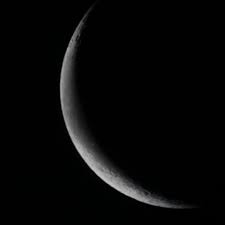
41.

Name this moon phase which occurs just after 1st Quarter
a)
waning crescent
b)
waxing crescent
c)
waning gibbous
d)
waxing gibbous
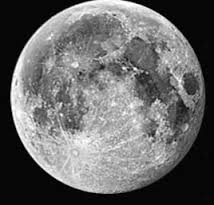
42.

Name this moon phase which occurs just before New Moon
a)
waning crescent
b)
waxing crescent
c)
waning gibbous
d)
waxing gibbous
43.
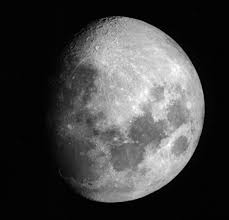
Name the moon phase
a)
First Quarter
b)
Last Quarter
c)
New Moon
d)
Full Moon
44.
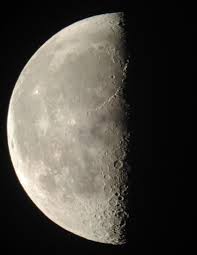
Name the moon phase
a)

First Half

b)

Full Crescent

c)
New Moon
d)

Half Moon

e)

Last Quarter

45.

This model is showing us a...

a)

lunar eclipse

b)

solar eclipse

c)

phases of the moon

d)

earth eclipse

46.

This image is showing us a.....

a)

solar eclipse

b)

lunar eclipse

c)

phases of the moon

d)

earth eclipse

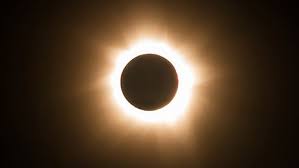
47.

If you look up at the sky and see this, you are witnessing a....

a)

solar eclipse

b)

total eclipse

c)

lunar eclipse

d)

jupiter

48.
What is the central, darker part of a shadow called?
a)
the umbra
b)
the penumbra
49.
What are terrestrial or the inner planets composed of?
a)
water
b)
gas
c)
rock 
d)
none of the above
50.

The Moon phase during a lunar eclipse  is _____

a)

New Moon

b)

Full Moon

c)

Waxing Crescent

d)

Waning Crescent

51.
During which part of the lunar cycle can a solar eclipse occur?
a)
New Moon
b)
First Quarter
c)
Full Moon
d)
Third Quarter
52.
During a solar eclipse...
a)
The sun is blocked by the moon
b)

The Earth is blocked by the moon

c)
The moon is blocked by the sun
d)

The moon moves into Earth's shadow

53.

During a lunar eclipse, what colour does the moon appear?

a)
Black
b)
Red-orange
c)
Yellow-green
d)
White
e)

Purple

54.

A Solstice occurs when...

a)

The Earth's axis is tilted towards or away from the sun

b)

The days and nights are of equal length everywhere on Earth

c)

The moon passes between the Earth and the Sun

d)

In Spring or Autumn

55.

What is a Force?

a)

The distance

b)

A Jedi mindtrick

c)

A push or pull

56.
 What is the unit called that measures force?
a)
Isaac
b)
Yee
c)
Newton
d)
kilogram
57.

The scientist who is most famous his work on forces

a)

Albert Einstein

b)

Stephen Hawking

c)

Sir Isaac Newton

d)

Galileo Galilei

58.
If these boys are pulling with the same amount of force.  What will happen?
a)
The boy in blue will win.
b)
They will not move at all.
c)
The boy in red will win.
d)
Both will fall down.
59.

A pull moves things _______ .

a)

Close to you

b)

Away from you

60.

A push moves things _______ .

a)

Close to you

b)

Away from you

61.

Which of the forces in this image is the smallest?

a)

A

b)

B

c)

C

d)

D

e)

E

62.

What type of force is needed to unlock a door?

a)

Pull

b)

Push

c)

Twist

d)

Jump

63.

What is an object doing when it is decelerating?

a)

Speeding up

b)

Slowing down

c)

Traveling at a constant speed

64.

The force that pulls objects towards Earth.

a)

Gravity

b)

Friction

c)

Force

65.

A force that results from two objects rubbing past each other.

a)

Gravity

b)

Friction

c)

Air Resistance

66.

The kicker applies a__________to the other karate master.

a)

Pull

b)

Pomegranate

c)

Pizza

d)

Push

67.

What tool is used to measure weight or force?

a)

Newton meter

b)

Ruler

c)

Stopclock

d)

Tape Measure

68.

What is this?

a)

Stop Watch

b)

Meter Stick

c)

Newton meter

d)

Test Tube

69.

Which of the following is a correct description for solids?

a)

closely arranged and in fixed positions

b)

closely arranged and vibrate in fixed positions

c)

closely arranged and can move around

70.

Which statement about the molecules in the gas carbon dioxide is correct?

a)

The molecules are close together.

b)

The molecules are diatomic.

c)

The molecules move randomly.

d)

The molecules all move with the same speed.

71.

When something goes from gas to liquid, it is called...

a)

Evaporation

b)

Condensation

c)

Deposition

d)

Freezing

72.

Something that goes from liquid to gas is...

a)

Evaporation

b)

Melting

c)

Freezing

d)

Sublimation

73.

Which of the following sentences are true about solids?

a)

Solids are rigid, have a fixed shape but not a fixed volume

b)

Solids are not rigid, have a fixed shape and no fixed volume

c)

Solids are rigid, have a fixed shape and a fixed volume

74.
Which of the following statements about the particle of a gas is true?
a)
Gases can be compressed because their particles are smaller than those of liquids or solids.
b)
Gases can be compressed because there is plenty of space between their particles.
c)
Gases can be compressed because they have low boiling points.
d)
Gases can be compressed because their particles are more elastic than those of liquids or solids.
75.
An inflated balloon is placed in a refrigerator. Which statement describes the movement of the gas particles in the balloon?
a)
The particles move more slowly and become closer together.
b)
The particles move more slowly and become further apart.
c)
The particles move faster and become closer together.
d)
The particles move faster and become further apart. 
76.
Which of the following statements about the kinetic particle theory is not true?
a)
The particles of a gas move faster than those of a liquid.
b)
The particles of a solid have more kinetic energy than those of a gas.
c)
The particles that make up matter are always moving.
d)
The forces of attraction between the particles of a solid are very strong.
77.
What happens when water evaporates?
a)
Particles of the water vapour lose energy to their surroundings.
b)
Particles of the water vapour are spaced further apart.
c)
The speed of the particles of the water increases.
d)
The temperature of the remaining water rises.
78.
Which of the following statements about the kinetic particle theory is not true?
a)
The particles of a gas move faster than those of a liquid.
b)
The particles of a solid have more kinetic energy than those of a gas.
c)
The particles that make up matter are always moving.
d)
The forces of attraction between the particles of a solid are very strong.
79.
Which of the following statements about the particle of a gas is true?
a)
The particles of a gas vibrate about fixed positions.
b)
The particles of a gas are packed close together in a disorderly arrangement.
c)
The particles of a gas are far apart and move in all directions.
d)
The particles of a gas are stationary in an orderly arrangement.
80.

Particles are always moving.

a)

True

b)

False

81.

This diagram represents particles in a ______________ state.

a)

Solid

b)

Liquid

c)

Gas

82.

Which of the following is a correct description for solids?

a)

closely arranged and in fixed positions

b)

closely arranged and vibrate in fixed positions

c)

closely arranged and can move around

83.

What is MATTER?

a)

Anything that has MASS

b)

Anything that takes up SPACE

c)

Anything that has MASS and takes up SPACE

d)

Anything that DOES NOT have mass or take up space

84.

All matter is made up of tiny _______________

a)

energy

b)

particles (atoms and molecules)

c)

bits

d)

antimatter

85.
Which nutrient helps rebuild and repair muscles?
a)
Dairy
b)
Sodium
c)
Carbohydrates
d)
Protein
86.
Which nutrient insulates the body against the cold and protects internal organs?
a)
Proteins
b)
Fats
c)
Minerals
d)
Nutrients
87.
Which nutrient helps control body functions such as digestion, metabolism, and wound healing?
a)
Vitamins
b)
Minerals
c)
Water
d)
Vegetables
88.
Which nutrient contributes to water balance, metabolism, and muscle function?
a)
Protein
b)
Minerals
c)
Water
d)
Vitamins
89.
The purpose of carbohydrates is:
a)
to provide a layer of insulation for protection.
b)
to boost the immune system and fight off infection.
c)
to provide the body with energy.
d)
to help us get a good night's rest.
90.
How does calcium help our body?
a)
Builds muscle
b)
Helps eyesight
c)
Develops red blood cells
d)
Builds strong bones
91.
Fish, nuts, oils and avocado are healthy sources of....
a)
Fiber
b)
Protein
c)
Minerals
d)
Fat
92.
When you don't drink enough water you can become:
a)
silly
b)
hyper
c)
intoxicated 
d)
dehydrated 
93.
This nutrient makes up 75% of your body:
a)
water
b)
vitamin A
c)
carbohydrates 
d)
protein 
94.
a)

Protein

b)

Dairy

c)

Carbohydrates

d)

Fruit and Vegetables

95.
a)

Fruit

b)

Vegetables

c)

Carbohydrates

d)

Dairy

96.
a)

Protein

b)

Carbohydrates

c)

Fats and Sugars

d)

Dairy

97.
a)

Fats

b)

Protein

c)

Carbohydrate

d)

Dairy

98.

Which of these are food groups in a balanced diet?

a)

Protein

b)

Carbohydrate

c)

Dairy

d)

Lipids / Fats

e)

Vitamins and Minerals

99.

Carbohydrates are needed for ...

a)

Growth and Repair

b)

Energy

c)

Hydration

d)

Insulation

100.

Proteins are needed for ...

a)

Growth and Repair

b)

Energy

c)

Hydration

d)

Insulation

101.

Lipids are needed for ...

a)

Growth and Repair

b)

Energy

c)

Hydration

d)

Insulation

e)

Protect Organs

102.

Why do we need fibre in our diet?

a)

Growth and Repair

b)

To prevent constipation

c)

Insulation

103.

Bread is high in

a)

lipids / fats

b)

protein

c)

carbohydrate

d)

water

104.

Butter is high in

a)

lipids / fats

b)

protein

c)

carbohydrate

d)

water

105.

Elements arranged in rows are called what?

a)

periods

b)

lines

c)

rows

106.

Elements arranged in columns are called what?

a)

lines

b)

groups

c)

rows

d)

periods

107.

The atomic number of an element refers to what?

a)

its age

b)

number of neutrons in an element

c)

number of protons in an element

d)

the date it was found

108.

The atomic mass of an element refers to what

a)

number of protons and neutrons in an element

b)

number of protons in an element

c)

Its age

109.

The modern periodic table is based on the work of which man?

a)

Albert Einstein

b)

Henry Hover

c)

Dimitri Mendeleev

d)

Charlie Marshall

110.

The non metals are where on the periodic table?

a)

left hand side

b)

right hand side

c)

middle

111.

The metals are where on the periodic table?

a)

the right hand side

b)

the left hand side

c)

the middle

112.

The group number of an element refers to what?

a)

how many electrons are in an outer shell

b)

how many electrons are in the middle shell

c)

the place on a table

113.

elements in the same groups have similar what?

a)

colours

b)

homes

c)

properties

114.
How did Mendeleev arrange the elements?
a)
alphabetical 
b)
density
c)
melting point
d)
atomic mass
115.
The blue atoms are called 
a)
metals
b)
nonmetals
c)
metalloids
d)
noble gases
116.
These are found on the Periodic Table.
a)
Compounds
b)
Elements
c)
Mixtures
117.
How are elements on the periodic table arranged by?
a)
in alphabetic order
b)
simular physical & chemical properties
c)
their symbols
d)
Just simular physical properties
118.

Which of these are made from atoms that are chemically bonded together?

(tick all that apply)

a)

elements

b)

mixtures

c)

compounds

d)

molecules

119.

Element, mixture, or compound?

a)

element

b)

mixture

c)

compound

120.

Element, mixture, or compound?

a)

element

b)

mixture

c)

compound