wayground logo

Free Printable Worksheets

Font size

S
M
L
XL
Worksheets

4th 9 Weeks Review

Total questions: 102

Worksheet time: 2hrs 35mins

Name
Class
Date
1.
What is a gene?
a)
A bundle (like a hot dog bun) that the DNA is packed into
b)
something inside the nucleus
c)
a piece of DNA
d)
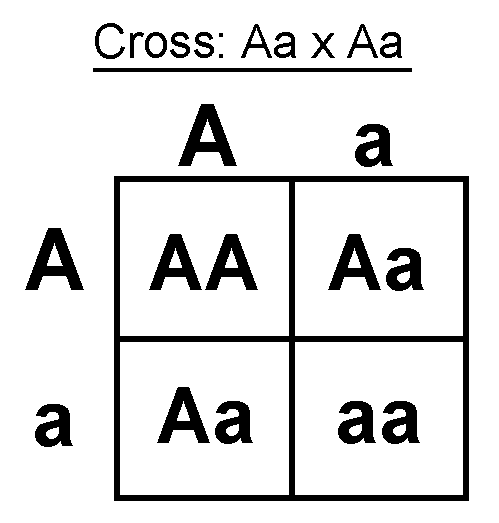
all of your DNA
2.

A segment of DNA that codes for a trait

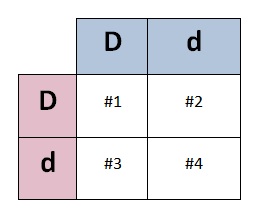
a)

gene

b)

allele

c)

chromosome

d)

chromatid

3.

an observable characteristic

a)

trait

b)

gene

c)

allele

d)

DNA

4.

A version or variation of a gene

a)

trait

b)

gene

c)

allele

d)

DNA

5.

The alleles that an organism has

a)

genotype

b)

phenotype

c)

chromosome

d)

recessive

6.

The observable expression of a trait

a)

phenotype

b)

genotype

c)

chromosome

d)

allele

7.

When an organism has two of the same alleles, it is called

a)

homozygous

b)

heterozygous

c)

recessive

d)

dominant

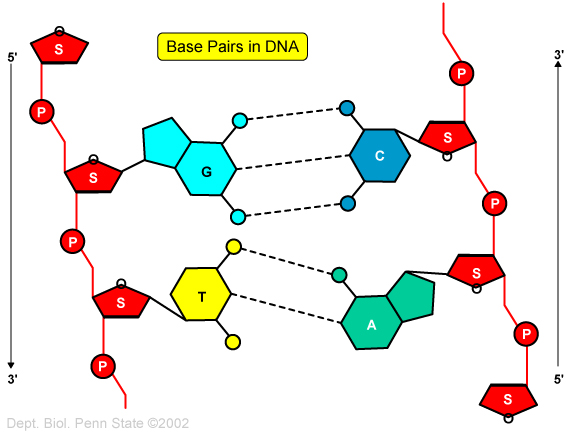
8.

When an organism has two different alleles, it is called

a)

homozygous

b)

heterozygous

c)

recessive

d)

dominant

9.

Which is Heterozygous?

a)

Tt

b)

BB

c)

ff

d)

Dominant

10.

Which is homozygeous?

a)

Tt

b)

BB

c)

Ff

d)

Blue

11.

Two identical alleles for the same trait.

a)

Heterozygous

b)

Homozygous

c)

Dominant

12.

The Alleles Bb are

a)

Homozygous

b)

Heterozygous

c)

Homozygous Dominant

13.

Which of the following is a Phenotype?

a)

Bb

b)

Brown Eyes

14.

Which of the following is an example of Genotype?

a)

Tt

b)

Tall

15.

If the ability to taste PTC paper is dominant to not being able to taste PTC paper, which genotype(s) would result in a person NOT able to taste the paper? (Select all that apply.)

a)

TT

b)

Tt

c)

tt

16.

Dark-colored hair is dominant to light-colored hair. If Eugene has brown hair, which genotype(s) could he have? (Select all that apply.)

a)

HH

b)

Hh

c)

hh

17.

Having freckles is dominant to not having freckles. June does NOT have any freckles. Which genotype(s) could she have? (Select all that apply.)

a)

FF

b)

Ff

c)

ff

18.

Being right-handed is dominant over being left-handed. If June's genotype is Hh, which hand does she write with?

a)

Right hand

b)

Left hand

19.

An organism with two alleles that are the same (TT or tt)

a)

Homozygous

b)

Heterozygous

c)

Trait

d)

Allele

20.

An organism that has alleles that are different for a trait (Tt)

a)

Homozygous

b)

Heterozygous

c)

Allele

d)

Trait

21.

The blending of two different alleles to create a third unique phenotype. Example: Snapdragon: red X white ---> pink

a)

Probability

b)

Punnett Square

c)

Codominance

d)

Incomplete Dominance

22.

The blending of two alleles where they are both expressed

a)

Probability

b)

Punnett Square

c)

Codominance

d)

Incomplete Dominance

23.

What are the possible phenotype(s) of the offspring? (A-Brown hair; a-blond hair)

a)

50 % Brown Hair and 50% Blond Hair

b)

25 % Brown Hair and 75% Blond Hair

c)

75 % Brown Hair and 25% Blond Hair

d)

0% Brown Hair and 100% Blond Hair

24.

In a certain species of plant, the color purple (P) is dominant to the color white (p).

According to the Punnett Square, what is the probability of an offspring being purple?

a)

25%

b)

0%

c)

100%

d)

50%

25.
What is the yellow seed genotype?
a)
aa
b)
Aa
c)
AA
d)
AA or Aa
26.
What genotype would go in box 2?
a)
BB
b)
Bb
c)
bb
27.

What is the probability of heterozygous offspring?

a)

0%

b)

100%

c)

50%

d)

25%

28.
What allele combination should go in the missing box?
a)
AA
b)
Aa
c)
aa
d)
none of these
29.

What is the possibility of this offspring having the dominant trait?

a)

50%

b)

75%

c)

25%

d)

0%

30.

What are the possible genotypes for this cross?

a)

TT = 25% Tt= 50% tt=25%

b)

all tall

c)

TT= 75% tt = 25%

d)

Tt = 100%

31.

What genotype would go in box 4?

a)

BB

b)

Bb

c)

bb

32.

What are the possible genotypes of the offspring? (A-Brown hair; a-blond hair)

a)

AA, Aa, aa

b)

AA only

c)

Aa only

d)

aa only

33.

Which is NOT a form of active transport?

a)

Osmosis

b)

Endocytosis

c)

Exocytosis

d)

ATP

34.

What are 3 types of active transport?

a)

Riding a bike, Running through the mountains, walking on the beach

b)

Osmosis, Diffusion, Facilitated Diffusion

c)

Sodium/potassium Pump, Endocytosis, Exocytosis

d)

Throwing a ball, Playing tennis, driving a car

35.

Which form of active transport is being shown?

a)

Facilitated Diffusion

b)

Exocytosis

c)

Endocytosis

d)

Protein Pumps

36.

Which does NOT require energy to occur?

a)

Passive Transport

b)

Active Transport

c)

Endocytosis

d)

Exocytosis

37.

When cells form a vesicle to take in materials, which form of transport is occurring?

a)

Endocytosis

b)

Exocytosis

c)

Facilitated Diffusion

d)

Osmosis

38.

Which type of transport requires an input of energy?

a)

Passive Transport

b)

Osmosis

c)

Simple Diffusion

d)

Active Transport

39.

What is the difference between active and passive transport?

a)

Active does not need energy and passive uses ATP (energy)

b)

Active uses ATP (energy) and passive does not need energy

c)

Active stores transport proteins and passive releases

d)

Active uses hormones and passive does not

40.
What is diffusion?
a)
when molecules move from a low concentration to a high concentration 
b)
when molecules move from a high concentration to a low concentration.
c)
no movement 
41.

Where is there the highest concentration of smoke in the diagram shown?

a)

near the lid of the grill

b)

In the house next to the grill

c)

Two streets over

d)

In the upper atmosphere

42.
What is the definition of  Selective Permeability?
a)
The movement of materials across the cell membrane that requires NO ENERGY from the cell.
b)
The movement of materials through (or across) the cell membrane
c)
The ability of the cell membrane to allow some things to pass through while preventing other things from passing through.
43.
Osmosis is the movement of _____ across a membrane.
a)
food
b)
energy
c)
oxygen
d)
water
44.
_______ regulates what enters and leaves a cell.  
a)
Cell Membrane
b)
Nucleus
c)
Mitochondria
d)
Cytoplasm
45.
Equilibrium?
a)
a large  amount of substance on  side of the cell and a small amount on the other side
b)
a small  amount of substance on  side of the cell and a large amount on the otherside
c)
equal amount of substance on either side of the membrane  
46.
What is the definition of Osmosis?
a)
the movement of WATER molecules across the cell membrane.
b)
the state where molecules are equally concentrated (balanced) on both sides of the cell membrane.
c)
the process that brings LARGE particles INTO the cell through the cell membrane
47.
In the given scenario what will happen to the organism: salt is poured onto eggplant.
a)
Water will move out of the eggplant cells and the cells will shrink.
b)
Water will move out of the eggplant cells and the cells will swell.
c)
Water will move into the eggplant cells and the cells will swell.
48.
In the given scenario what will happen?  An egg is placed in pure water for 48 hours.
a)
The egg will gain water and swell.
b)
Water will move in and out of the cell equally, and the cell with neither shrink nor swell.
c)
The egg will lose water and shrink.
49.
How many diamond molecules need to move to reach equilibrium?
a)
A net of 2 molecules move inside the cell.
b)
A net of 2 molecules move outside the cell.
c)
There is no net movement because the molecules are at equilibrium.
d)
The molecules do not move.
50.
Which way will the water molecules move during osmosis?
a)
Out of the cell, so the cell shrinks.
b)
Out of the cell, so the cell swells.
c)
Into the cell, so the cell shrinks.
51.
Passive transport requires no
a)
concentration gradients
b)
osmosis
c)
motion
d)
energy
52.
A student put a few drops of lemon juice into an uninflated balloon.The student tied a knot in the balloon, placed it in a shoe box, and covered it with a lid. The following day, the student opened the box and was able to smell lemon in the box. Through what process were molecules able to pass through the balloon?
a)
respiration
b)
fermentation
c)
osmosis
d)
diffusion
53.

What are the reactants of photosynthesis?

a)

6CO2 + 6H20 + (sun light)

b)

C6H12O6 + 6O2

54.

In which organelle does photosynthesis take place?

a)

Nucleus

b)

Vacuole

c)

Chloroplast

d)

Mitochondria

55.

In which organelle does cellular respiration take place?

a)

Nucleus

b)

Chloroplast

c)

Mitochondria

d)

Vacuole

56.

The main purpose of photosynthesis is...

a)

to store energy in the glucose molecule

b)

to release energy from the glucose molecule

c)

to make oxygen

d)

to make water and carbon dioxide

57.

The main purpose of cellular respiration is...

a)

to store energy in glucose molecules

b)

to release energy from glucose molecules

c)

to make oxygen

d)

to store carbon dioxide and water

58.

Why do organisms use the cell cycle?

a)

to grow

b)

to make sugar

c)

to get energy

d)

to make unique cells

59.

During which part of the cell cycle is DNA replicated?

a)

interphase

b)

mitosis

c)

cytokinesis

60.

Which part of the cell cycle is divided into prophase, metaphase, anaphase, and telophase?

a)

interphase

b)

mitosis

c)

cytokinesis

61.
The cell spends most of it's life in ________________.
a)
mitosis
b)
cytokinesis
c)
Interphase
d)
None of the above
62.
The division of the nucleus is known as:
a)
Synthesis
b)
Mitosis
c)
G1
d)
G2
63.
Put the following stages of mitosis in order: anaphase, prophase, metaphase, and telophase. 
a)
prophase, metaphase, telophase, anaphase
b)
prophase, anaphase, metaphase, telophase
c)
prophase, metaphase, anaphase, telophase
d)
prophase, telophase, metaphase, anaphase
64.
In what organelle is the genetic material found inside?
 
a)
Endoplasmic Reticulum
b)
Golgi Complex
c)
Nucleolus
d)
Nucleus
65.
Identify the Cell Cycle Stage.
a)
Anaphase
b)
Cytokinesis
c)
Telophase
d)
Metaphase
66.
Identify the Cell Cycle Stage.
a)
Prophase
b)
Interphase
c)
Anaphase
d)
Telophase
67.
Identify the Cell Cycle Stage.
a)
Cytokinesis
b)
Interphase
c)
Anaphase
d)
Metaphase
68.
Identify the Cell Cycle Stage.
a)
Interphase
b)
Anaphase
c)
Telophase
d)
Prophase
69.
Put the following actions in order: DNA replicates, cell grows, cell divides, cell prepares for mitosis. 
a)
DNA replicates, cell grows, cell prepares for mitosis, cell divides
b)
cell grows, cell prepares for mitosis, DNA replicates, cell divides
c)
cell grows, DNA replicates, cell prepares for mitosis, cell divides
d)
DNA replicates, cell prepares for mitosis, cell grows, cell divides
70.

The three stages of the cell cycle are __________, mitosis, and

cytokinesis.

a)

interphase

b)

anaphase

c)

metaphase

d)

prophase

71.

Identical cells formed during cell division are called:

a)

daughter organelles

b)

daughter cycles

c)

daughter nucleus

d)

daughter cells

72.

A pair of similar chromosomes are called:

a)

homocycular

b)

homologous

c)

homocellular

d)

homonucleus

73.

The ____________ ensures that our body’s grow and repair

themselves.

a)

The cell growth

b)

The cell repair

c)

The cell recycle

d)

The cell cycle

74.

The process by which a cell nucleus divides is called:

a)

interphase

b)

mitosis

c)

cytokinesis

d)

cell cycle

75.

The phase of mitosis when chromosomes align in the

middle is called ________

a)

anaphase

b)

prophase

c)

telophase

d)

metaphase

76.

The phase of mitosis where the nuclear membrane forms

is called ________ .

a)

anaphase

b)

prophase

c)

metaphase

d)

telophase

77.

The first phase of mitosis is called _______________ .

a)

telophase

b)

metaphase

c)

anaphase

d)

prophase

78.

The final stage of the cell cycle is called:

a)

Interphase

b)

mitosis

c)

cytokinesis

d)

daughter cells

79.

A copy a chromosome made during cell division are called:

a)

daughter chromatids

b)

sister chromatids

c)

cell chromatids

d)

sister chromosome

80.

The stage of mitosis where the sister chromatids separate:

a)

prophase

b)

anaphase

c)

telophase

d)

metaphase

81.

During mitosis chromosomes meet in the middle to get divided into two daughter cells in a phase called:

a)

prophase

b)

anaphase

c)

metaphase

d)

telophase

82.
Which sequence of DNA bases would pair with this partial strand
ATG TGA CAG
a)
ATG TGA CAG
b)
TAC ACT GTC
c)
GTA AGT GAC
d)
CAT TCA CTG
83.
Which of the following best describes a DNA molecule?
a)
double helix
b)
contains ribose
c)
made of amino acids
d)
contains Uracil
84.
Guanine bonds with ______________.
a)
Adenine
b)
Guanine
c)
Cytosine
d)
Thymine
85.
Which 2 molecules form the sides (backbone) of the DNA ladder?
a)
deoxyribose sugar and adenine
b)
deoxyribose sugar and a hydrogen bond
c)
deoxyribose sugar and the nucleus
d)
deoxyribose sugar and phosphate
86.
What are the three components of a nucleotide?
a)
sugar, hydrogen, nitrogen base
b)
sugar, oxygen, nitrogen base
c)
sugar, phosphate, nitrogen base
d)
sugar, phosphate, protein
87.
A process in which DNA has the unique ability to make an exact copy of itself.
a)
Replication
b)
Translation
c)
Transcription
88.
Nitrogenous bases are joined by which type of bond?
a)
polar bonds
b)
ionic bonds
c)
covalent bonds
d)
hydrogen bonds
89.
Adenine bonds with ______________.
a)
Guanine
b)
Thymine
c)
Cytosine
d)
Adenine
90.
The enzyme that unzips the DNA to prepare for replication
a)
helicase
b)
replicase
c)
polymerase
d)
synthase
91.
RNA contains the sugar
a)
ribose
b)
deoxyribose
c)
glucose
d)
lactose
92.
Which of the following statements is true?
a)
DNA is single-stranded
b)
RNA is single-stranded
c)
DNA contains uracil
d)
RNA contains deoxyribose
93.
What is the difference between DNA and RNA in terms of bases?
a)
RNA contains uracil in place of thymine
b)
RNA contains uracil in place of adenine
c)
RNA contains uracil in place of guanine
d)
RNA contains uracil in place of  cytosine
94.
I travel outside of the nucleus.
a)
DNA
b)
RNA
95.
What is the product of transcription?
a)
DNA
b)
mRNA
c)
tRNA
d)
proteins
96.
How many nucleotides make a codon?
a)
1
b)
2
c)
3
d)
6
97.

In what process is mRNA synthesized?

a)

Transcription

b)

Translation

c)

DNA Replication

d)

Mitosis

98.

How many nucleotides equal 1 amino acid?

a)

1

b)

2

c)

3

d)

4

99.

Which organelle is the location where protein is made?

a)

Ribosome

b)

Nucleus

c)

Cytoplasm

d)

Nucleotide

100.

When these bond together, they form a protein

a)

Amino Acids

b)

Peptide Bonds

c)

Ribose

d)

Nucleotides

101.
The process to go from DNA to mRNA is _______
a)
translation
b)
transcription
c)
replication
102.
Does the order of amino acids in a protein matter?
a)
YES!
b)
NO!