
 Worksheets
SCH4U Final Mock Exam
Total questions: 150
Worksheet time: 2hrs 53mins
Which of the following statements about "Dalton’s model of the atom" is INCORRECT.
He discovered the existence of a negatively charged particle with mass less than 1/5000 that of a hydrogen atom.
Thomson viewed the atom as a positively charged sphere embedded with sufficient numbers of electrons to balance (neutralize) the total charge.
He used a cathodray tube to measure the mass and its electric charge.of the particle observed in the vacuum tube.
None of the other 3 statements are INCORRECT.
Which of the following statements about "Rutherford’s "gold foil experiment"" is INCORRECT?
Alpha (α) particles where aimed at extremely thin metal foils.
Most of the alpha particles passed through the metal foils unimpeded.
A small number of the alpha particles, about one in every 8000, were deflected significantly by the atoms that made up the metal foils.
The researchers expected the alpha particles to pass through the metal atoms with, at most, deflections averaging 1/200
of a degree but did observe 90 degree deflections.
None of the other 4 statements are INCORRECT.

This image is from which scientists experiments.
Dalton
Thomson
Rutherford
Bohr

T/F - Because Rutherford’s atomic model, pictures electrons in motion around an atomic nucleus, chemists often call this the nuclear model of the atom. You may also see it referred to as a planetary model because the electrons resemble the planets in motion around a central body.
True
False
Rutherford’s atomic model solved problems inherent in Thomson’s atomic model, but it also raised others. Which of the following is INCORRECT.
an atomic nucleus composed entirely of negative charges should fly apart due to electrostatic forces of repulsion.
the model could not adequately explain the total mass of an atom.
an electron in motion around a central body must continuously give off radiation. Consequently, one should be able to observe a continuous spectrum (a “rainbow”) of light energy as the electron gives off its radiation.
the electron should also lose energy as a result of this radiation, the radius of its orbit should continuously decrease in size until it spirals into the nucleus
None of these are INCORRECT.
His gold foil experiment concluded that the atom is comprised of mainly empty space, with a small massive region of concentrated positive charge at the centre.
Dalton
Thomson
Rutherford
Bohr
He designed a system of symbols to show how atoms combine to form other substances.
Dalton
Thomson
Rutherford
Bohr
Which of the following "restrictions on the electron in the Bohr model of the atom" are INCORRECT?
The atom has only specific, allowable energy levels, called stationary states. Each stationary state corresponds to the atom’s electrons occupying fixed, circular orbits around the nucleus.
While in one of its stationary states, atoms do emit energy.
An atom changes stationary states by emitting or absorbing a specific quantity of energy that is exactly equal to the difference in energy between the two stationary states.
None of these statements are INCORRECT.
Which of the following statement about "the quantum mechanical model of the atom" is INCORRECT.
Electrons have both matter-like and wave-like properties.
The position and momentum of an electron cannot both be determined with certainty, so they must be described in terms of probabilities.
An orbital represents a mathematical description of the volume of space in which an electron has a high probability of being found.
None of the other 3 are INCORRECT
T/F - The ground state is the least stable energy state of an atom.
True
False
The greatest number of electrons that is possible for any energy level is found using the following formula.
2n2
2n
n2
2n3
2+n2
If l = 2 the orbital has the letter
s
p
d
f
To identify an energy sublevel (type of orbital), you combine the value of ___ with the letter of the orbital shape.
n
l
s
p
The 3rd quantum number describes the following
the shape of the orbital
the orientation of the orbital around the nucleus
the orientation of the electron in the orbital
the spin of the orbital around the nucleus
the orientation of the nucleus inside the atom
Which of the following statement about "the shapes of orbitals" is INCORRECT?
An orbital is associated with a size, a three-dimensional shape, and an orientation around the nucleus.
Together, the size, shape, and position of an orbital represent the probability of finding a specific electron around the nucleus of an atom.
The overall shape of an atom is a combination of all its
orbitals.
The overall shape of an atom is spherical.
None of the other 4 statements are INCORRECT.
How many d orbitals are in each energy level, except n = 2?
1
3
5
7
Fill in the missing values in the following sets of quantum numbers.
n = 3, l = 2, ml = −2; name: ?
3d
3s
3p
4d
The first energy level to have d-orbitals is:
1
2
3
4
Which of the following statements about "the fourth quantum number" is INCORRECT?
It describes a property of the electron that results from its particle-like nature.
It specifies the direction in which the electron is spinning
It has only two possible values: ½ or -½
It tells one that the electron is spining only clockwise
None of the other 4 statements are INCORRECT.
T/F - Another way of stating the exclusion principle is that no two electrons in an atom have the same four quantum numbers.
True
False
An atom’s __________________________is a shorthand notation that shows the number and arrangement of electrons in its orbitals.
electron configuration
quantum configuration
electron numbers
electron arrangement

A in the diagram tells the viewer
number of electrons in each energy sublevel
principal quantum numbers
letter designations based on orbital shape quantum number
B in the diagram tells the viewer
number of electrons in each energy sublevel
principal quantum numbers
letter designations based on orbital shape quantum number
C in the diagram tells the viewer
number of electrons in each energy sublevel
principal quantum numbers
letter designations based on orbital shape quantum number
T/F - Elements that appear in the s block and the p block are called either the main group elements or the representative elements.
True
False
T/F - Among the main group elements you will find metals and the non-metals.
True
False
Of the more than one hundred elements that occur in nature or that have been produced synthetically, only the _____________________ exist naturally as single, uncombined atoms.
noble gases
halogens
alkaline metals
rare earth metals
transition metals
Chemical bonding involves the interaction of
valance electrons
core electrons
valance and sometimes core electrons
protons
none of the above
Because of the large differences in electronegativity, the atoms in an ionic compound usually come from the
s block metals and the p block non-metals.
p block metals and the s block non-metals.
s block metals and the d block metals.
s block transition metals and the p block non-metals.
s block metals and the p block transition metals
To which main group on the periodic table does X belong?
MgX
16
2
15
17
1
To which main group on the periodic table does X belong?
X2O3
16
2
15
3
1
Which of the following statements about "ionic bonding" is INCORRECT.
The force of attraction between oppositely charged ions (cations and anions) constitutes an ionic bond.
Ionic bonding occurs between atoms of elements that have large differences in electronegativity.
The units of ionic compounds can be separated easily by direct heating of the crystal salt.
The ions that make up the ionic solid are arranged in a specific array of repeating units.
The ions that make up the ionic solid are arranged in a rigid lattice structure so that the cations and anions are arranged so that the system has the minimum possible energy.
Which of the following is not a property of ionic solids?
crystalline with smooth, shiny surfaces
hard but brittle
non-conductors of electricity and heat
high melting points
Many are soluble in water.

There are ____ lone pairs in the following molecule.
4
8
6
2
_______________energy is the energy required to break the force of attraction between two atoms in a bond and to separate them.
Bond
Separation
Electron
Force
none of the above
In many cases, electron-sharing enables each atom in a covalent bond to acquire
a noble gas configuration
a halogen configuration
a full core electron configuration
a full valence configuration
none of the above
T/F - Chemists classify solids into two categories based on the microscopic properties that arise from the arrangements of their component particles.
True
False
These solids have organized particle arrangements, so they have distinct shapes.
Crystalline
Amorphous
Gemstones such as amethyst and garnet are examples of these solids.
Crystalline
Amorphous
These solids have indistinct shapes, because their particle arrangements lack order.
Crystalline
Amorphous
Glass and rubber are are examples of these solids.
Crystalline
Amorphous
These solids are made up of individual atoms that are held together solely by dispersion forces.
atomic solids
molecular solids
network solids
ionic solids
Molecular solids are, as their name implies, made up of molecules. Like atomic solids, the molecules that make up molecular solids, such as frozen methane, are held together mainly by _________________ forces.
dispersion
molecular
network
ionic
Different crystalline or molecular forms of the same element that differ in physical and chemical properties.
allotropes
allotraces
allotrappes
Which of the following statements about "diamonds" is INCORRECT.
Each carbon atom forms four strong covalent bonds with four other carbon atoms which produces a three-dimensional array that makes diamonds the hardest naturally occurring substance.
The valence electrons are in highly localized bonds between carbon atoms. Therefore, diamond does not conduct electricity.
The planes produced by how the atoms bond together within the diamond reflect light, which gives diamond its brilliance and sparkle.
None of the other 3 statements are INCORRECT.
Microscopic-level research has developed very small carbon networks called ______________________ that are like a fullerene networks that have been stretched into a cylinder shape.
nanotubes
nanoblurs
nanofullernes
nanocylinders
Which of the following statements about "graphite" is INCORRECT?
It is a soft, 3-dimensional network solid that is a good conductor of electricity.
It has a high melting point, which suggests strong bonds, but its softness indicates the presence of weak bonds as well.
Each carbon forms three strong covalent bonds with three of its nearest neighbours in a trigonal planar pattern.
Graphite feels slippery and is used in many industrial processes use graphite as a lubricant.
None of the other 4 statements are INCORRECT.
________________________ forces are the forces exerted within a molecule or polyatomic ion.
Intramolecular
Intermolecular
________________________ forces of attraction and repulsion that act between molecules or ions.
Intramolecular
Intermolecular
Forces that influence the physical properties of substances.
Intramolecular
Intermolecular
During a chemical change, these forces are overcome and chemical bonds are broken.
Intramolecular
Intermolecular
Forces of attraction between ions in ionic solids, between individual atoms in covalent and polar covalent compounds, and between positive metal ions and free electrons in metals.
Intramolecular
Intermolecular
In the liquid state, polar molecules (dipoles) orient themselves so that oppositely charged ends of the molecules are near to one another.
Dipole-Dipole Forces
Ion-Dipole Forces
Ion-Induced Dipole Force
Dipole-Induced Dipole Force
Dispersion (London) Forces
This intermolecular force is the force of attraction between an ion and a polar molecule (a dipole).
Dipole-Dipole Forces
Ion-Dipole Forces
Ion-Induced Dipole Force
Dipole-Induced Dipole Force
Dispersion (London) Forces
Sodium chloride and other soluble ionic solids dissolve in polar solvents such as water because of these forces.
Dipole-Dipole Forces
Ion-Dipole Forces
Ion-Induced Dipole Force
Dipole-Induced Dipole Force
Dispersion (London) Forces
This intermolecular force results when an ion in close proximity to a non-polar molecule distorts the electron density of the non-polar molecule.
Dipole-Dipole Forces
Ion-Dipole Forces
Ion-Induced Dipole Force
Dipole-Induced Dipole Force
Dispersion (London) Forces
The charge on a polar molecule is responsible for inducing the charge on the non-polar molecule.
Dipole-Dipole Forces
Ion-Dipole Forces
Ion-Induced Dipole Force
Dipole-Induced Dipole Force
Dispersion (London) Forces
In an _____________ process, the system releases heat to its surrounding
Exothermic
Endothemic
In an _________________ process, the system gains heat from its surrounding
Endothermic
Exothermic
How many moles of ammonium are produced when 3 moles of nitrogen react with hydrogen?
Is this reaction endothermic or exothermic?
Which of the following statements about the "calorie" is INCORRECT?
The symbol for calories is cal.
One calorie is equal to 4.184 joules.
A kilocalorie (or Calorie with a capital “C”) is equal to 1,000 calories.
Kilocalories (Calories) are used to express the amount of energy in food.
None of the above 4 are INCORRECT.
Which of the following statements about "a calorimeter" is INCORRECT?
It is a device used to measure the amount of heat that transfers from one substance to second substance (usually water).
They are used to find a substance’s heat capacity.
They are typically well-insulated chambers that contain water.
None of the above 3 statements are INCORRECT.
Which of the following statements about "specific heat capacity" is INCORRECT?
the amount of energy needed to change the temperature of a substance by 1 °C.
If the specific heat of water is 4.184 J/g °C. This means it takes 4.184 J of energy to increase the temperature of 1 g of water by 1 °C.
Sometimes a substance’s specific heat capacity is simply referred to as its “specific heat.”
None of the above 3 statements is INCORRECT.
In the GIZMO you saw how 200 g of 90 °C copper transfers heat to 200 g of 30.0 °C water. How did increasing the water’s mass affect the final temperature?
Increasing the water’s mass decreased the final temperature.
Increasing the water’s mass increased the final temperature.
Increasing the water’s mass had no effect on the final temperature.
In the GIZMO you saw how 200 g of 90 °C copper transfers heat to 200 g of 30.0 °C water. What was the effect of decreasing the copper’s mass?
decreased the final temperature.
increased the final temperature.
had no effect on the final temperature.
Many gyms and health clubs have steam saunas, which are small steam-filled rooms. Traditionally, steam saunas have a container of heated rocks. A small ladle of water is poured on the rocks in order to make the steam. The hot rocks transfer their energy to the liquid water, causing the liquid water to heat up and form steam. The bonds that are broken are
intermolecular
intramolecular

What was the variable that was changed in this experiment?
substance initial temp
substance mass
water initial temp
substance
T/F - When you mix two substances, the heat gained by one substance is equal to the heat lost by the other substance.
True
False
T/F - Chemical equilibrium is a state of balance in which there is no net change in chemical composition over time.
True
False
T/F - In a reversible reaction, a chemical equilibrium occurs when the rate of the forward reaction is equal to the rate of the reverse reaction.
True
False
Which of the following statements about "concentration" is INCORRECT.
It is a measure of how much of a given substance is present in a given volume.
Often is measured in moles per liter.
Square brackets also are used to signify concentration. For example, “[H2] = 0.1 M” indicates that the concentration of hydrogen gas is 0.1 moles per liter.
None of the other 3 statements are INCORRECT.
T/F -A reversible reaction is a chemical reaction that can proceed in either direction: from reactants to products or from products to reactants.
True
False
T/F - In a closed system, a reversible reaction will never result in a chemical equilibrium given enough time.
True
False
Which of the following statements about "a reaction rate" is INCORRECT?
the rate of a reaction describes how fast a reaction proceeds over volume of time
a rate of reaction measures how quickly reactants are changed into products.
is the change in concentration of reactants over time or the change in concentration of products over time
Units for reaction rates are in terms of M (mols/L) /time.
None of the other 4 statements are INCORRECT.
T/F - When expressing reactions rates that following rule is applied. For faster reactions, seconds are used for units of time; for longer reactions, minutes are used.
True
False
When combined hydrochloric acid and zinc metal the acid eats away at the metal to produce hydrogen gas and some dissolved metal salts. The rate of this reaction could be measured in terms of the disappearance of the zinc or the rate of appearance of hydrogen gas.
If we were expressing reaction rate in terms of disappearance of zinc metal, we would write:
Reaction rate = - change[zinc]/time
Reaction rate = change[zinc]/time
When combined hydrochloric acid and zinc metal the acid eats away at the metal to produce hydrogen gas and some dissolved metal salts. The rate of this reaction could be measured in terms of the disappearance of the zinc or the rate of appearance of hydrogen gas.
If we were expressing reaction rate in terms of disappearance of zinc metal, we could conclude that following
The slope of the line would be negative, because the concentration of our reactant is constantly decreasing.
The slope of the line would be positive, because the concentration of our reactant is constantly decreasing.
The slope of the line would be negative, because the concentration of our reactant is constantly increasing.
Which of the following statements about "the factors that can affect a reaction rate" is INCORRECT.
Increasing concentration decreases the number of effective collisions.
Increasing temperature increases the kinetic energy of the particles, leading to more effective collisions.
Increasing surface area increases the particles available to react, increasing the likelihood of effective collisions.
Addition of a catalyst increases reaction rate by decreasing the amount of energy needed for a reaction to occur.
None of the other 4 statements are INCORRECT.
Which of the following statements about "temperature and it's relationship to rates of reaction" is INCORRET?
Temperature is a measurement of the energy in motion within a system.
The higher the temperature, the more energy the system has.
Molecules with more energy are likely to have more effective collisions with each other, resulting in an increased rate of reaction
None of the other 3 statements are INCORRECT.
___________________________have as many hydrogen atoms as possible attached to every carbon.
Aromatic hydrocarbons
Saturated hydrocarbons
Unsaturated hydrocarbons
Aliphatic hydrocarbons
___________________________ is any compound with a benzene ring.
Aromatic hydrocarbons
Saturated hydrocarbons
Unsaturated hydrocarbons
Aliphatic hydrocarbons
For carbons on the end of a saturated hydrocarbon molecular chain, _____ hydrogens can be attached.
1
2
3
4
_____________ are linear, or branching, compounds that are made of varying numbers of carbon atoms that are all saturated with hydrogen atoms.
Alkanes
Alkenes
Alkynes
Alkenynes
_____________ have at least one triple bond between carbon atoms.
Alkanes
Alkenes
Alkynes
Alkenynes
T/F - Methane is the simplest hydrocarbon possible. It is released as a gas from decomposing bodies and from the intestinal tracts of many animals.
True
False
Formula for alkenes
CnH(2n+2).
CnH(2n)
CnH(2n-2)
_____________is a ring of six carbon atoms with three double bonds.
benzine
benzene
benzone

C3H8
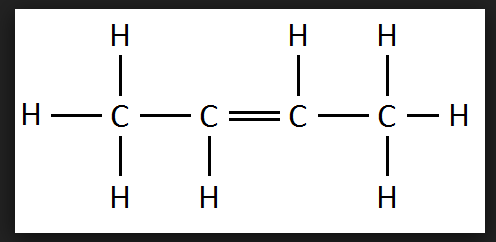
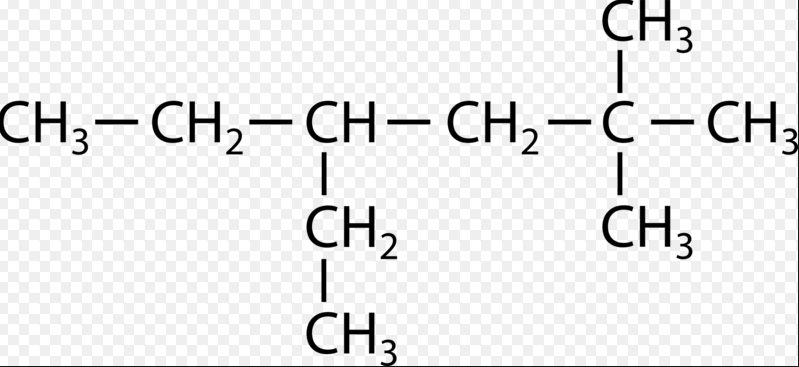
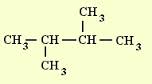

An atom has 5 protons, 6 neutrons, and 4 electrons. How would you identify the element and isotope?
Atoms with 6 neutrons are Carbon, which all have a mass of 12.0108
Atoms with 5 protons are Boron, but this boron has 6 neutrons for a mass of 11
Atoms with 6 neutrons are Carbon, but the 5 protons give it a total mass of 11
Atoms with 6 neutrons are Carbon, but the particles add up to a total mass of 15
Atoms with 5 protons are Boron, which all weigh 10.81
Which of the following particles are located in the nucleus of the atom?
Proton and Electron
Electron and Neutron
Proton, Neutron, and Electron
Proton and Neutron
A teacher has made the claim that a Mass Number sometimes be smaller than the atomic number.
Which best explains why this is not possible?
One cannot find any elements on the periodic table where that’s true.
Neither number considers the mass of electrons.
The mass number is the number of protons and neutrons combined, but the atomic number is the protons alone.
The atomic number only gives us information about the number of protons, and so has nothing to do with mass.
Which answer best explains the strange decimal numbers on the periodic table?
Some neutrons and protons weigh more than others.
Atoms can change mass back and forth.
Some different isotopes of the same element may exist in nature, so the average mass of the element is given.
We aren’t really sure how much the atoms really weigh.
The atomic particle that has a neutral charge is the ______
proton
electron
nucleus
neutron
An atom has 5 protons, 6 neutrons, and 4 electrons. How would you identify the element and isotope?
Atoms with 6 neutrons are Carbon, which all have a mass of 12.0108
Atoms with 5 protons are Boron, but this boron has 6 neutrons for a mass of 11
Atoms with 6 neutrons are Carbon, but the 5 protons give it a total mass of 11
Atoms with 6 neutrons are Carbon, but the particles add up to a total mass of 15
Atoms with 5 protons are Boron, which all weigh 10.81
Which of the following particles are located in the nucleus of the atom?
Proton and Electron
Electron and Neutron
Proton, Neutron, and Electron
Proton and Neutron
A teacher has made the claim that a Mass Number sometimes be smaller than the atomic number.
Which best explains why this is not possible?
One cannot find any elements on the periodic table where that’s true.
Neither number considers the mass of electrons.
The mass number is the number of protons and neutrons combined, but the atomic number is the protons alone.
The atomic number only gives us information about the number of protons, and so has nothing to do with mass.
Which answer best explains the strange decimal numbers on the periodic table?
Some neutrons and protons weigh more than others.
Atoms can change mass back and forth.
Some different isotopes of the same element may exist in nature, so the average mass of the element is given.
We aren’t really sure how much the atoms really weigh.
An ion has 15 protons, 14 neutrons, and 18 electrons. Which element is this?
oxygen
silicon
argon
phosphorus
An isotope of bromine has a mass of 81. Which shows the correct nuclear notation of the symbol?


Which is the correct hyphenated name of the isotope that has 20 protons and 21 neutrons?
Calcium - 20
Calcium - 41
Calcium - 21
Scandium - 20
How many valence electrons does a neutral silicon atom have? What detail on the periodic table tells you?
14, atomic number
28.0855, average atomic mass
4, group (column)
3, period (row)
Which is the correct Lewis Dot Structure for a neutral silicon atom?


Neon has 10 electrons and Argon has 18 electrons. Why are they in the same group of the periodic table?
They have the same number of electrons in their valence shell.
They are both gases.
They react with each other.
They have the same mass.
Fluorine is the most reactive element in the periodic table, and can take an electron from most any other element. Neon is totally unreactive. Why are these two placed together on the table? (chose the BEST answer)
They are only one proton different from each other.
Opposites attract.
They have very similar weights.
They are both gases.
Which of the following IS TRUE about isotopes of an element? (CHOOSE ALL CORRECT ANSWERS).
they are all the same element
they all have the same number of neutrons
they all have the same mass
they have different numbers of protons
Which of the following is correct regarding electronegativity? (CHOOSE ALL CORRECT ANSWERS).
Electronegativity refers to how much an atom wants to “get rid of” its electrons.
Electronegativity increases (generally) from the LEFT to the RIGHT across the periodic table.
Electronegativity is the ability of an atom to attract or “steal” electrons.
Electronegativity is highest for metals.

What type of decay is represented by the equation shown?
Alpha decay
Beta decay
Gamma decay
Positron decay

How does the atomic number change in this decay reaction?
It goes up by one.
It does not change.
It goes down by one.
The atomic number becomes zero (0).

How do you know that mass is conserved in this decay reaction?
The total mass number goes up by one in the products.
1 atomic mass unit is subtracted from the total mass.
The total mass number is the same in the reactant and the sum of the products.
The total mass is zero in both reactants and products.
WHY does Iodine (I) turn into Xenon (Xe) in this decay reaction?
Because of a change in the number of electrons in the electron shells.
Because of a change in the number of protons.
Because of a change in the number neutrons.
Because of the release of a photon of energy by Iodine.
Which element is represented in this electron configuration?
1s² 2s² 2p⁶ 3s² 3p³
Nitrogen (N)
Phosphorus (P)
Oxygen (O)
Arsenic (As)
Neon (Ne)
In order to satisfy the OCTET rule, Nitrogen (N), which is in Group 15, will tend to
lose 3 electrons
gain 3 electrons
lose 5 electrons
gain 5 electrons
An element with its valence shell nearly full and an element with only very few valence electrons would have which type of bond?
covalent bond
ionic bond
metallic bond
Van Der Waals bond
Which describes metallic bonds best?
Metal atoms share electrons in an aggressive tug-of-war because they are very electronegative.
Metal ions are attracted to each other by opposite charges because one has an extra electron and one has a missing electron.
Metal atoms are sharing electrons out of loving kindness toward all neighboring atoms.
Metal atoms share electrons loosely because their electronegativities are low, so electrons are able to wander between them.
Which describes Ionic bonds best?
Metals and nonmetals sharing electrons in an aggressive tug-of-war because both are very attractive
Atoms sharing electrons out of loving kindness toward all neighboring atoms.
Metal and nonmetal ions attracted to each other by opposite charges because one has missing electrons and the other has extra electrons.
Metal and nonmetal atoms sharing electrons loosely because neither are very attractive so electrons are able to wander between them.
Which describes Covalent bonds best?
Nonmetal atoms sharing electrons loosely because neither are very electronegative so electrons are able to wander between them.
Nonmetal atoms sharing electrons in an aggressive tug-of-war because both are very electronegative.
Nonmetal ions attracted to each other by opposite charges because one has an extra electron and one has a missing electron.
Nonmetal atoms sharing electrons out of loving kindness toward all neighboring atoms.
Which of the following shows the correct Lewis Dot Structure for ammonia (NH3).


What would the formula for the resulting compound be for Calcium and Oxide ions?
CaO
CaO₂
Ca₂O
Ca₂O₂
What would the formula for the resulting compound be for Magnesium and Chloride ions?
Mg₂Cl
Mg₂Cl₂
MgCl
MgCl₂
What would the formula for the resulting compound be for Calcium and Nitride ions?
Ca₂N₃
Ca₅N₂
Ca₃N₂
CaN
Why does silicon tend to gain four (4) electrons?
To have an even number of electrons.
To get to the other side.
To undergo nuclear decay.
To obtain a full octet.
Which BEST describes how ionic bonds are formed?
Metals and non-metals are always attracted to each other because they both have protons.
Particle trade charges with each other, so they have the opposite of what they used to have.
No one really knows.
A particle with a positive charge and a particle with a negative charge are attracted to each other because of their opposite charges.
Name this COVALENT compound: Si₂O₃
silicon oxygen
Disilicon trioxide
Silicon oxide
Disilicon trioxygen
Name this COVALENT compound: NF₅
Nitrogen Pentafluoride
Nitrogen Fluorine
Pentanitrogen Fluoride
Nitrogen (V) Fluoride
What are molecular compounds usually made of?
two non-metals
metal and a transition metal
a metal and a non-metal
an acid and a non-metal
an H ion and another ion
What are ionic compounds usually made of?
two non-metals
metal and a transition metal
a metal and a non-metal
an acid and a non-metal
an H ion and another ion

What is the geometry of the molecule shown ?
Bent
Trigonal planar
Trigonal pyramidal
Tetrahedral
Linear

What is the geometry of the molecule shown ?
Bent
Trigonal planar
Trigonal pyramidal
Tetrahedral
Linear

What is the geometry of the molecule shown ?
Bent
Trigonal planar
Trigonal pyramidal
Tetrahedral
Linear

What is the geometry of the molecule shown ?
Bent
Trigonal planar
Seesaw
Octahedral
Pentagonal Planar
What is the geometry of the BF3 molecule?
Bent
Trigonal planar
Trigonal pyramidal
Tetrahedral
Linear
What best describes the bonds between magnesium and chlorine in the compound KBr? (use some information from the question above, but this time, you need to look up the electronegativity yourself).
ionic
polar covalent
metallic
non-polar covalent

Which shows the lewis dot structure of CF4?


Which describes the bonds between carbon and fluorine in the molecule CF4?
ionic
metallic
non-polar covalent
polar covalent
Which best describes the polarity of the ENTIRE CF4 molecule?
polar molecule
non-polar molecule
popular
polar bear
Which of the following is ALWAYS TRUE for any neutral atom?
Atomic number = number of protons = number of electrons
Mass number = number of protons = number of electrons
Atomic number = number of protons = number of neutrons
Mass number = number of protons = number of neutrons
Which group of periodic table elements usually form +1 ions?
noble gases
alkali metals
halogens
metalloids
About how many grams are in 0.78 moles of MgSO4 ?
93.9 g
154.4 g
6.02 x 10²³ g
the answer isn't close to any of the other choices listed

